

Yes, a dehumidifier can help save on cooling costs by reducing indoor humidity, making your home feel cooler without lowering the thermostat. This means your air conditioner doesn’t have to work as hard, leading to lower energy bills and improved comfort during hot, humid months.
Key Takeaways
- Lower Humidity = Cooler Feeling Air: Moist air feels warmer than dry air at the same temperature, so removing excess moisture makes rooms feel more comfortable.
- Reduced AC Runtime: With less humidity, your air conditioner doesn’t need to run as long or as frequently to maintain comfort, saving energy.
- Improved AC Efficiency: High humidity forces AC units to work harder to remove both heat and moisture, increasing wear and energy use.
- Targeted Dehumidification Works Best: Whole-house or basement dehumidifiers are more effective for energy savings than small portable units in single rooms.
- Optimal Humidity Range is 30–50%: Keeping indoor humidity in this range maximizes comfort and efficiency while preventing mold and dust mites.
- Seasonal Use Matters Most: Dehumidifiers offer the biggest cooling cost savings during humid summer months, especially in regions like the Southeast U.S.
- Combine with Smart Thermostats: Pairing a dehumidifier with a programmable thermostat enhances energy savings by optimizing when and how your AC runs.
Quick Answers to Common Questions
Can a dehumidifier help with saving on cooling costs?
Yes, a dehumidifier can help save on cooling costs by reducing indoor humidity, making your home feel cooler so you can raise the thermostat and reduce AC runtime.
How much can I save on my cooling bill with a dehumidifier?
Depending on your climate and usage, you could save 10–25% on cooling costs, which may amount to $50–$150 over a summer season.
Does a dehumidifier use a lot of electricity?
A typical dehumidifier uses 400–700 watts, but the energy savings from reduced AC use often outweigh this cost, especially in humid areas.
Should I use a dehumidifier with my air conditioner?
Yes, using a dehumidifier with your AC improves comfort and efficiency by reducing the moisture load on your cooling system.
What’s the ideal indoor humidity level for energy savings?
Keep indoor humidity between 30% and 50% for optimal comfort, efficiency, and health.
📑 Table of Contents
- Can a Dehumidifier Help with Saving on Cooling Costs?
- How Humidity Affects Your Comfort and Cooling Bills
- How Dehumidifiers Work to Improve Cooling Efficiency
- Real-World Savings: How Much Can You Expect?
- Choosing the Right Dehumidifier for Energy Savings
- Tips for Maximizing Cooling Cost Savings
- Common Misconceptions About Dehumidifiers and Cooling
- Conclusion: Yes, a Dehumidifier Can Save You Money
Can a Dehumidifier Help with Saving on Cooling Costs?
If you’ve ever walked into a home that feels sticky, heavy, or just plain uncomfortable—even though the thermostat says 72°F—you’ve experienced the effects of high indoor humidity. It’s a common summer problem, especially in warm, moist climates. Your air conditioner might be running nonstop, but the air still feels warm and clammy. That’s because your AC isn’t just cooling the air—it’s also trying to remove moisture. And when humidity is high, that process becomes much less efficient.
This is where a dehumidifier can make a real difference. While it doesn’t cool the air directly, a dehumidifier removes excess moisture from the air, making your home feel cooler and more comfortable. When the air feels drier, you’re more likely to stay comfortable at a higher thermostat setting. And that means your air conditioner doesn’t have to work as hard or run as long. The result? Lower energy bills and a more efficient cooling system.
But does this actually translate into real savings on your cooling costs? The short answer is yes—especially if you live in a humid climate or have a basement that tends to feel damp. In this article, we’ll explore how dehumidifiers work, how they interact with your HVAC system, and exactly how much you can expect to save on your energy bills. We’ll also cover the best types of dehumidifiers for energy efficiency, tips for optimal use, and common mistakes to avoid.
How Humidity Affects Your Comfort and Cooling Bills

Visual guide about Can a Dehumidifier Help with Saving on Cooling Costs
Image source: m.media-amazon.com
To understand how a dehumidifier can help save on cooling costs, it’s important to first understand the role humidity plays in how we feel temperature. The human body cools itself primarily through sweat evaporation. When the air is dry, sweat evaporates quickly, and we feel cool. But when the air is humid—meaning it’s already full of moisture—sweat doesn’t evaporate as easily. That’s why a 75°F day in Arizona feels completely different from a 75°F day in Florida. In Arizona, the dry air makes it feel pleasant. In Florida, the same temperature feels oppressive because of the high humidity.
This phenomenon is measured by something called the “heat index” or “feels like” temperature. For example, at 80°F with 70% humidity, it can feel like 85°F or higher. That extra perceived heat makes you want to crank the AC, even though the actual air temperature hasn’t changed. Your air conditioner then has to remove not just heat, but also the excess moisture in the air—a process known as latent heat removal.
The Hidden Work of Your Air Conditioner
Most people think of air conditioners as machines that simply blow cold air. But in reality, AC units do two things: they remove heat (sensible cooling) and they remove moisture (latent cooling). When humidity is high, your AC spends more energy on latent cooling. This dual workload means the system runs longer, uses more electricity, and may struggle to maintain a consistent temperature.
For example, on a hot, humid day, your AC might run for 20 minutes to cool the air by 5 degrees—but half of that energy is going toward removing moisture, not lowering the temperature. This inefficiency increases your energy consumption and puts extra strain on the compressor and other components.
Why High Humidity Feels Warmer
Even if your thermostat is set to 72°F, high humidity can make the room feel like it’s 78°F or higher. This discomfort leads many people to lower the thermostat to 68°F or 65°F, thinking it will help. But all that does is make the AC work even harder, increasing energy use without solving the root problem: excess moisture.
By using a dehumidifier to reduce indoor humidity, you can maintain comfort at a higher thermostat setting. For every degree you raise your thermostat, you can save about 3–5% on your cooling costs. So if you normally keep it at 70°F but feel comfortable at 74°F thanks to lower humidity, you could save 12–20% on your cooling bill.
How Dehumidifiers Work to Improve Cooling Efficiency
Visual guide about Can a Dehumidifier Help with Saving on Cooling Costs
Image source: smartvacguide.com
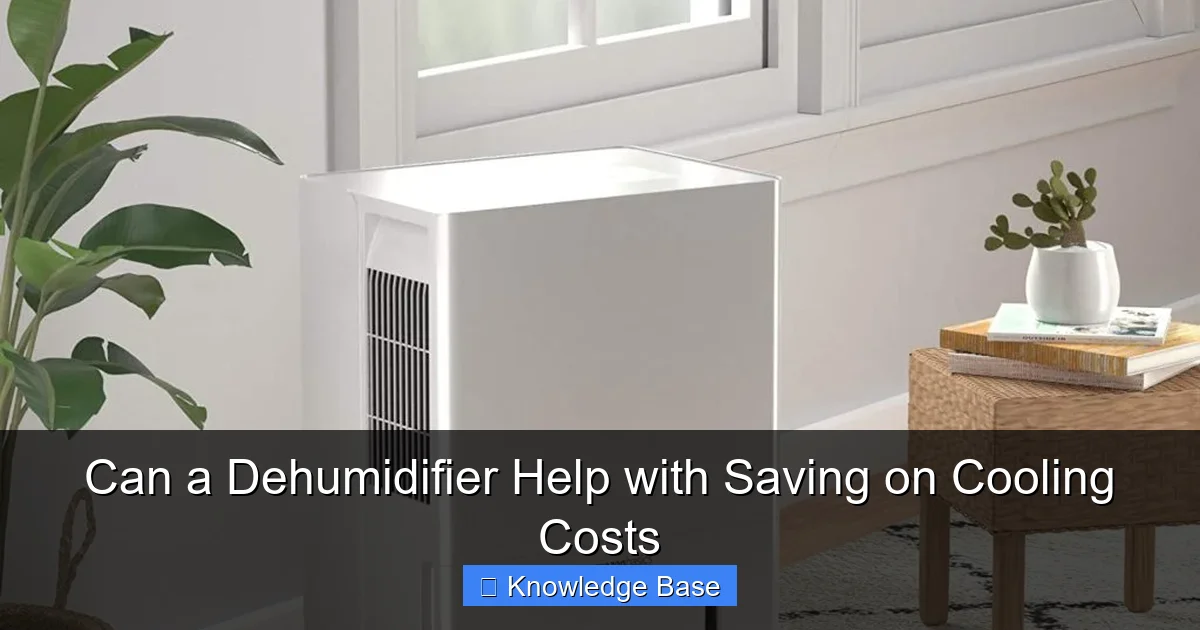
Now that we understand how humidity affects comfort and AC performance, let’s look at how dehumidifiers help. A dehumidifier doesn’t cool the air—it removes moisture. But by doing so, it makes the air feel cooler and reduces the workload on your air conditioner.
The Science Behind Dehumidification
Dehumidifiers work similarly to air conditioners. They pull in warm, moist air from the room, pass it over cold coils to condense the moisture into water, and then release drier, slightly warmer air back into the room. The collected water is either drained away or stored in a tank that needs to be emptied.
There are two main types of dehumidifiers: refrigerant (compressor-based) and desiccant. Refrigerant dehumidifiers are the most common and work best in warm, humid environments—like basements in the summer. Desiccant dehumidifiers use a moisture-absorbing material and are better for cooler, less humid spaces.
Reducing the AC’s Latent Load
When a dehumidifier removes moisture from the air, it reduces the “latent load” on your air conditioner. This means your AC spends less time and energy removing humidity and can focus more on cooling the air. As a result, the system runs more efficiently and uses less electricity.
For example, imagine your home has a relative humidity of 65%. Your AC is working hard to dehumidify the air while also cooling it. Now, you run a dehumidifier that brings the humidity down to 45%. Your AC now has less moisture to remove, so it can cool the space faster and shut off sooner. This shorter runtime directly translates into lower energy use.
Feeling Cooler Without Lowering the Thermostat
One of the biggest benefits of using a dehumidifier is that it allows you to feel comfortable at a higher thermostat setting. Studies have shown that people feel just as comfortable at 75°F with 40% humidity as they do at 72°F with 60% humidity. This means you can raise your thermostat by 3 degrees and still feel cool—saving you money without sacrificing comfort.
In practical terms, this could mean the difference between setting your thermostat to 70°F and 74°F. Over the course of a summer, that small change can add up to significant savings. For a typical household, raising the thermostat by just 2 degrees can save about $10–$20 per month on cooling costs.
Real-World Savings: How Much Can You Expect?
So, how much can a dehumidifier actually save you on cooling costs? The answer depends on several factors, including your climate, home size, insulation, and how much humidity you’re dealing with. But there are some general estimates and real-world examples that can help.
Energy Savings from Reduced AC Runtime
Let’s say your air conditioner uses about 3,500 watts (3.5 kW) when running. If it runs for 8 hours a day during the summer, that’s 28 kWh per day. At an average electricity rate of $0.13 per kWh, that’s about $3.64 per day, or $110 per month.
Now, suppose using a dehumidifier allows your AC to run 20% less because it doesn’t have to work as hard to remove moisture. That’s 2.8 hours less runtime per day. At 3.5 kW, that’s a savings of 9.8 kWh per day, or about $1.27 per day. Over a 90-day cooling season, that adds up to $114 in savings—just from reducing AC runtime.
Dehumidifier Energy Use vs. AC Savings
Of course, a dehumidifier uses electricity too. A typical 50-pint dehumidifier uses about 500–700 watts when running. If it runs for 8 hours a day, that’s 4–5.6 kWh per day, costing about $0.52–$0.73 per day.
But remember: the dehumidifier is reducing the AC’s workload. If the AC saves 9.8 kWh per day and the dehumidifier uses 5 kWh, the net savings is still 4.8 kWh per day—about $0.62 per day, or $56 over the summer.
Regional Differences in Savings
The savings are even greater in humid climates. In places like Louisiana, Florida, or Georgia, where humidity levels often exceed 70%, the benefits of dehumidification are more pronounced. Homeowners in these areas report saving 15–25% on cooling costs when using a dehumidifier regularly.
In contrast, in dry climates like Arizona or Nevada, the benefits are smaller because the air is already dry. In these regions, a dehumidifier may not be necessary for comfort or energy savings.
Case Study: A Family in Atlanta
Consider a family living in a 2,000-square-foot home in Atlanta. During the summer, their indoor humidity averages 65%, and their AC runs constantly. They install a whole-house dehumidifier and see their indoor humidity drop to 45%. As a result, they raise their thermostat from 72°F to 75°F and notice their AC runs less often.
Over the summer, their cooling bill drops from $180 per month to $140—a savings of $40 per month, or $120 for the season. The dehumidifier costs about $600, so they recoup their investment in about five years—just from energy savings alone.
Choosing the Right Dehumidifier for Energy Savings
Not all dehumidifiers are created equal when it comes to energy efficiency. To maximize your cooling cost savings, it’s important to choose the right type and size for your home.
Whole-House vs. Portable Dehumidifiers
Whole-house dehumidifiers are integrated into your HVAC system and treat the entire home. They are more efficient and effective for large spaces or homes with high humidity. Portable dehumidifiers are better for single rooms or basements but may not provide enough dehumidification to impact your AC’s performance.
For maximum energy savings, a whole-house dehumidifier is usually the best choice. It works in tandem with your AC, reducing humidity evenly throughout the home and allowing your thermostat to stay higher.
Energy Star-Certified Models
Look for dehumidifiers with the Energy Star label. These models are at least 10% more efficient than standard units and can save you money on electricity. Energy Star dehumidifiers also come with features like automatic humidity sensors, timers, and low-power modes.
For example, an Energy Star-certified 50-pint dehumidifier might use only 400 watts, compared to 600 watts for a non-certified model. That’s a 33% reduction in energy use.
Proper Sizing Matters
A dehumidifier that’s too small won’t remove enough moisture to make a difference. One that’s too large will cycle on and off frequently, wasting energy and wearing out faster.
To choose the right size, consider the square footage of the area and the humidity level. A 50-pint dehumidifier is good for a 1,500–2,500 sq ft home with moderate to high humidity. For basements or very damp areas, a 70-pint model may be better.
Smart Features for Efficiency
Modern dehumidifiers often come with smart features that improve efficiency. These include:
– Humidity sensors: Automatically adjust operation based on current humidity levels.
– Timers: Let you run the unit during off-peak hours when electricity is cheaper.
– Auto-defrost: Prevents ice buildup on coils in cooler environments.
– Drain hose compatibility: Allows continuous drainage, so you don’t have to empty the tank.
These features help the dehumidifier run only when needed, reducing energy waste.
Tips for Maximizing Cooling Cost Savings
Using a dehumidifier is just one part of the equation. To get the most savings on your cooling costs, follow these practical tips.
Set the Right Humidity Level
Aim to keep indoor humidity between 30% and 50%. This range is comfortable for most people and prevents mold, dust mites, and other allergens. Use a hygrometer to monitor humidity levels and adjust your dehumidifier accordingly.
Avoid setting the dehumidifier too low—below 30%—as this can dry out the air and cause discomfort or respiratory issues.
Use a Programmable Thermostat
Pair your dehumidifier with a programmable or smart thermostat. Set it to raise the temperature when you’re away or asleep. Since the air feels cooler with lower humidity, you won’t notice the higher temperature as much.
For example, set the thermostat to 78°F during the day when you’re at work, and 74°F when you’re home. The dehumidifier keeps the air comfortable, so you don’t need to lower the temperature.
Seal Air Leaks and Improve Insulation
Humid outdoor air can seep into your home through cracks, windows, and doors. Sealing these leaks reduces the moisture load on your dehumidifier and AC. Adding insulation to attics and walls also helps maintain a stable indoor temperature.
Maintain Your HVAC System
A well-maintained air conditioner is more efficient. Change air filters every 1–3 months, clean condenser coils, and schedule annual professional maintenance. A clean, efficient AC works better with a dehumidifier to save energy.
Run Ceiling Fans
Ceiling fans don’t cool the air, but they create a breeze that makes you feel cooler. Use them in conjunction with a dehumidifier and higher thermostat settings. Just remember to turn them off when you leave the room—fans cool people, not spaces.
Common Misconceptions About Dehumidifiers and Cooling
Despite the clear benefits, there are some myths and misunderstandings about dehumidifiers and their impact on cooling costs.
“Dehumidifiers Cool the Air”
This is false. Dehumidifiers remove moisture, not heat. The air they release is slightly warmer than the air they take in. However, because the air feels cooler due to lower humidity, it creates the perception of cooling.
“I Don’t Need a Dehumidifier If My AC Is Working”
Your AC does remove some moisture, but it’s not designed to be a dehumidifier. In high-humidity conditions, it can’t keep up. A dedicated dehumidifier provides more consistent moisture control and reduces the AC’s workload.
“Dehumidifiers Are Too Expensive to Run”
While dehumidifiers do use electricity, the energy savings from reduced AC runtime often outweigh the cost. In humid climates, the net savings can be significant. Plus, Energy Star models are designed to be efficient.
“Only Basements Need Dehumidifiers”
While basements are prone to high humidity, whole-house dehumidifiers can benefit any home in a humid climate. Even upper floors can feel sticky and uncomfortable if humidity isn’t controlled.
Conclusion: Yes, a Dehumidifier Can Save You Money
So, can a dehumidifier help with saving on cooling costs? The answer is a resounding yes—especially if you live in a humid climate or struggle with sticky, uncomfortable indoor air. By reducing indoor humidity, a dehumidifier makes your home feel cooler, allows you to raise your thermostat, and reduces the workload on your air conditioner. This leads to shorter AC runtimes, lower energy bills, and a more comfortable living environment.
The savings may not be massive in dry climates, but in places with high humidity, the benefits are clear. With the right dehumidifier, proper settings, and smart energy habits, you can enjoy cooler, drier air without breaking the bank. Whether you choose a portable unit for a single room or invest in a whole-house system, the combination of dehumidification and efficient cooling is a winning strategy for summer comfort and cost savings.
Frequently Asked Questions
Do dehumidifiers work in all climates?
Dehumidifiers are most effective in humid climates. In dry regions, they may not provide significant cooling cost savings since the air is already low in moisture.
Can I use a dehumidifier instead of an air conditioner?
No, a dehumidifier doesn’t cool the air. It only removes moisture. You still need an AC or fan to lower the temperature.
How often should I run my dehumidifier?
Run it during humid periods, especially in summer. Use a humidistat to automate operation and maintain 30–50% humidity.
Will a dehumidifier help with mold and allergies?
Yes, by reducing moisture, dehumidifiers help prevent mold growth and dust mites, improving indoor air quality and reducing allergy symptoms.
Can a dehumidifier damage my home?
No, when used properly, dehumidifiers protect your home by preventing excess moisture, which can cause wood rot, peeling paint, and structural damage.
Is a whole-house dehumidifier worth the cost?
For large homes or high-humidity areas, a whole-house dehumidifier is worth it for consistent comfort, energy savings, and improved air quality.