
While dehumidifiers help reduce excess moisture and mold, improper use can dry out indoor air, leading to throat irritation. This article explores the connection between dehumidifiers and sore throats, offering practical tips to maintain healthy humidity levels and protect your respiratory comfort.
Key Takeaways
- Dehumidifiers remove moisture from the air: They help prevent mold and dust mites but can over-dry air if not monitored.
- Low humidity can irritate the throat: Dry air strips moisture from mucous membranes, causing dryness, scratchiness, and soreness.
- Ideal indoor humidity is 30–50%: Staying within this range supports respiratory health and prevents throat discomfort.
- Proper dehumidifier use matters: Running it continuously or in already dry environments increases the risk of throat irritation.
- Hydration and humidification balance is key: Drink water regularly and consider using a humidifier in dry climates or winter months.
- Clean your dehumidifier regularly: Dirty units can blow mold or bacteria into the air, worsening throat issues.
- Monitor air quality with a hygrometer: This simple tool helps you track humidity levels and adjust your dehumidifier use accordingly.
Quick Answers to Common Questions
Can a dehumidifier make your throat sore?
Yes, if it lowers indoor humidity too much, dry air can irritate your throat’s mucous membranes, leading to soreness and discomfort.
What humidity level is best for throat health?
The ideal indoor humidity range is 30% to 50%. Levels below 30% can dry out your throat, while levels above 50% promote mold growth.
Should I run my dehumidifier at night?
Only if humidity is high. In dry environments, running it at night can over-dry the air and cause throat irritation—consider using a humidifier instead.
How can I tell if my dehumidifier is too strong?
Signs include dry throat, cracked lips, static electricity, or humidity readings below 30%. Use a hygrometer to monitor levels.
Can I use a dehumidifier and humidifier together?
Yes, in different areas. Use a dehumidifier in damp spaces like basements and a humidifier in dry living areas to maintain balanced humidity.
📑 Table of Contents
Can a Dehumidifier Make Your Throat Sore?
You’ve probably heard that dehumidifiers are great for reducing dampness, preventing mold, and improving indoor air quality. But what if you’ve started using one and suddenly notice a dry, scratchy throat—especially when you wake up? Could your dehumidifier actually be the culprit?
It’s a surprising thought, but yes, a dehumidifier can contribute to a sore throat—especially if it’s used incorrectly or in an environment that’s already on the dry side. While these devices are designed to make your home more comfortable by pulling excess moisture from the air, they can sometimes go too far. When indoor humidity drops too low, the delicate tissues in your throat and nasal passages lose moisture, leading to irritation, dryness, and that uncomfortable sore throat feeling.
This doesn’t mean you should ditch your dehumidifier altogether. In fact, for many people—especially those in humid climates or with allergies—dehumidifiers are essential for health and comfort. The key is understanding how to use them properly. In this article, we’ll explore the science behind humidity and throat health, explain how dehumidifiers can affect your respiratory system, and give you practical tips to avoid throat irritation while still enjoying the benefits of a dry, mold-free home.
Understanding Humidity and Throat Health

Visual guide about Can a Dehumidifier Make Your Throast Sore
Image source: humidifierchoice.com
To understand how a dehumidifier might affect your throat, it’s important to first grasp what humidity is and why it matters for your body.
Humidity refers to the amount of water vapor in the air. Indoor humidity levels can vary widely depending on your climate, season, ventilation, and household activities like cooking or showering. When humidity is too high, it creates a breeding ground for mold, dust mites, and bacteria—all of which can trigger allergies and respiratory issues. That’s where dehumidifiers come in handy.
But when humidity drops too low, the opposite problem occurs. Dry air can strip moisture from your skin, eyes, and mucous membranes—including those in your nose and throat. Your throat relies on a thin layer of mucus to stay lubricated and protect against irritants like dust, pollen, and bacteria. When the air is too dry, this mucus layer dries out, leaving your throat exposed and vulnerable.
This dryness can lead to a range of symptoms, from mild scratchiness to full-blown sore throat discomfort. You might notice it most in the morning after sleeping in a room with low humidity. Your throat may feel tight, itchy, or even painful when you swallow. In some cases, dry air can also trigger coughing, which further irritates the throat.
The Role of Mucous Membranes
Your respiratory system is lined with mucous membranes that act as a natural defense. These membranes produce mucus to trap particles and keep tissues moist. When the air is dry, these membranes can’t function properly. They become inflamed and irritated, leading to that familiar sore throat sensation.
Think of it like a garden hose. If the water pressure is too low, the hose dries out and cracks. Similarly, when your throat doesn’t get enough moisture from the air, the tissues can become dry and inflamed.
How Low Humidity Affects Breathing
Breathing dry air over time can also affect your lungs and sinuses. Dry airways are more prone to irritation and infection. In extreme cases, chronic dryness can contribute to conditions like dry cough, nosebleeds, or even increased susceptibility to colds and flu.
So while dehumidifiers are meant to improve air quality, they can inadvertently create a new problem if they lower humidity too much. The goal is balance—not too wet, not too dry.
How Dehumidifiers Work and Their Impact on Air Moisture

Visual guide about Can a Dehumidifier Make Your Throast Sore
Image source: i.pinimg.com
Dehumidifiers are appliances designed to reduce excess moisture in the air. They work by pulling in humid air, cooling it to condense the water vapor, and then releasing drier air back into the room. The collected water is stored in a tank or drained away.
There are two main types of dehumidifiers: refrigerant (compressor-based) and desiccant (absorption-based). Refrigerant models are the most common and work best in warm, humid environments. Desiccant dehumidifiers are better for cooler climates and can operate effectively at lower temperatures.
While both types are effective at removing moisture, they don’t distinguish between “good” and “bad” humidity. They simply reduce overall moisture levels. This means that if you run a dehumidifier in a room that’s already dry—or if you run it nonstop without monitoring humidity—you can end up with air that’s too dry for comfort.
When Dehumidifiers Go Too Far
Imagine you live in a dry climate like Arizona or Nevada. The outdoor humidity is already low, especially in winter when indoor heating systems dry out the air even more. If you add a dehumidifier to the mix, you’re essentially removing moisture that’s already scarce. The result? Extremely dry indoor air that can quickly lead to throat irritation.
Even in more humid regions, overuse of a dehumidifier can cause problems. For example, if you run it in a small, well-sealed bedroom all night, the humidity can drop below 30%—well into the “too dry” range. This is especially common in winter when windows are closed and heating systems are running.
The Ideal Humidity Range
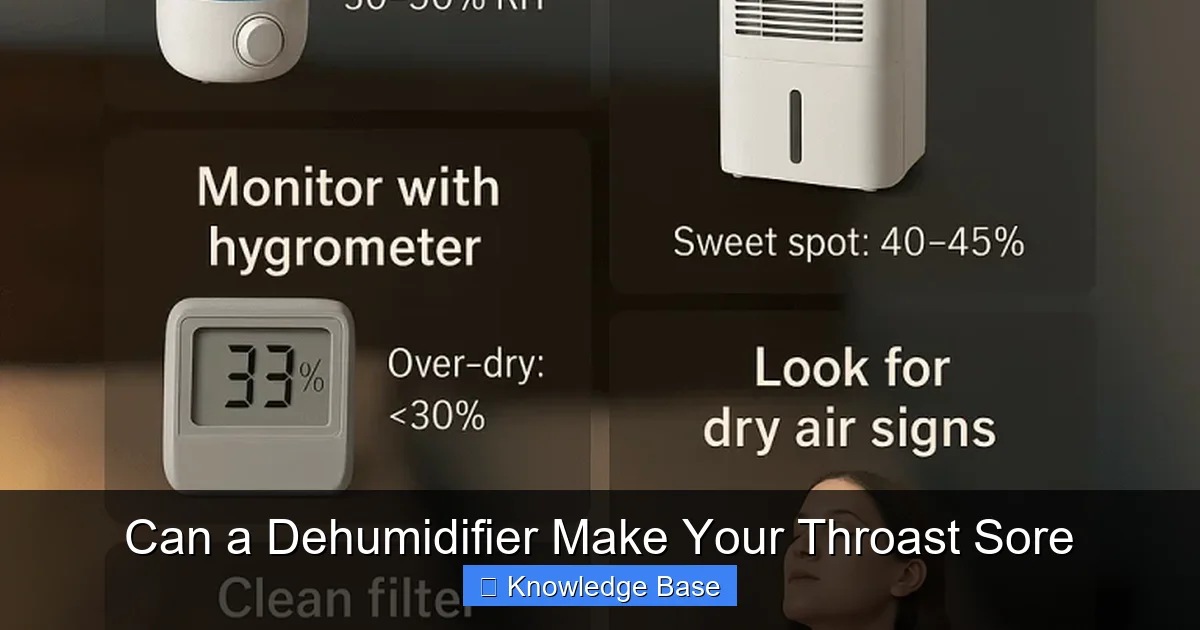
Experts recommend keeping indoor humidity between 30% and 50%. This range supports healthy mucous membranes, reduces mold growth, and minimizes dust mites—without drying out your airways.
– Below 30%: Air is too dry. Risk of throat irritation, dry skin, and static electricity increases.
– Above 50%: Air is too humid. Mold, mildew, and dust mites thrive, which can also trigger respiratory issues.
Using a hygrometer—a simple device that measures humidity—can help you stay in this sweet spot. Many modern dehumidifiers come with built-in hygrometers and automatic shut-off features that turn the unit off once the desired humidity level is reached. If yours doesn’t, consider buying a standalone hygrometer to monitor levels in key areas like your bedroom or living room.
Signs Your Dehumidifier Is Making Your Throat Sore
Not everyone will react the same way to dry air, but there are common signs that your dehumidifier might be contributing to throat discomfort.
One of the most telling clues is waking up with a dry or scratchy throat, especially if it improves as the day goes on. This suggests the problem is related to your sleeping environment—likely low nighttime humidity caused by your dehumidifier running all night.
Other symptoms to watch for include:
– Persistent dry cough
– Nasal congestion or dry nose
– Itchy or irritated eyes
– Cracked lips or dry skin
– Increased static electricity (a sign of very dry air)
If you notice these symptoms only in certain rooms—like the one with the dehumidifier—it’s a strong indication that the device is over-drying the air.
Who Is Most at Risk?
Some people are more sensitive to dry air than others. Children, older adults, and individuals with asthma, allergies, or chronic respiratory conditions are especially vulnerable. Their airways are more reactive, and even mild dryness can trigger symptoms.
People who breathe through their mouth—whether due to nasal congestion, sleep apnea, or habit—are also at higher risk. Mouth breathing bypasses the natural humidifying function of the nose, exposing the throat directly to dry air.
Seasonal Considerations
Winter is the most common time for dehumidifier-related throat issues. Indoor heating systems dry out the air, and closed windows trap that dryness inside. If you’re using a dehumidifier on top of that, you’re doubling down on dryness.
In contrast, summer months usually have higher humidity, so dehumidifiers are more likely to be beneficial. But even in summer, overuse can still cause problems—especially in air-conditioned homes, where AC units also remove moisture from the air.
How to Use a Dehumidifier Without Irritating Your Throat
The good news is that you don’t have to choose between a mold-free home and a comfortable throat. With a few smart adjustments, you can enjoy the benefits of a dehumidifier without the side effects.
1. Monitor Humidity Levels
The first step is knowing your indoor humidity. Use a hygrometer to check levels in the rooms where you spend the most time. Aim to keep humidity between 30% and 50%. If it drops below 30%, it’s time to ease up on the dehumidifier.
Many modern dehumidifiers have built-in humidistats that let you set a target humidity level. Choose a model with this feature, or use a standalone hygrometer to guide your usage.
2. Use the Dehumidifier Strategically
Instead of running your dehumidifier 24/7, use it only when needed. For example:
– Run it during humid weather or after activities that add moisture (like showering or cooking).
– Turn it off at night if your bedroom feels dry.
– Use it in high-moisture areas like basements or laundry rooms, but avoid overuse in living spaces.
If you’re unsure, try running it for a few hours a day and see how your throat feels. Adjust as needed.
3. Balance with a Humidifier
In dry climates or during winter, consider using a humidifier in tandem with your dehumidifier. This might sound contradictory, but it’s about balance. Use the dehumidifier to control excess moisture in damp areas, and the humidifier to add moisture back into dry living spaces.
For example, you might run a dehumidifier in the basement to prevent mold, while using a small humidifier in your bedroom to keep the air comfortable at night.
4. Stay Hydrated
Drinking plenty of water helps your body maintain moisture, even in dry environments. Aim for at least 8 glasses a day, and increase intake if you’re active or in a dry climate.
Warm liquids like herbal tea can also soothe a dry throat and provide temporary relief.
5. Clean Your Dehumidifier Regularly
A dirty dehumidifier can do more harm than good. Mold, bacteria, and mineral buildup in the water tank or filters can be blown back into the air, worsening throat irritation and allergies.
Clean the water tank weekly with a mild bleach solution or vinegar. Replace or clean filters as recommended by the manufacturer. Keep the unit in a well-ventilated area to prevent stagnation.
6. Improve Ventilation
Good airflow helps distribute moisture evenly and prevents pockets of overly dry or humid air. Open windows when weather permits, use exhaust fans in bathrooms and kitchens, and avoid sealing your home too tightly in winter.
When to See a Doctor
While a sore throat from dry air is usually mild and temporary, it’s important to know when to seek medical advice.
If your sore throat persists for more than a week, is accompanied by fever, swollen glands, or difficulty swallowing, it could be a sign of infection—not just dry air. Similarly, if you experience frequent nosebleeds, chronic cough, or worsening asthma symptoms, consult a healthcare provider.
These could indicate an underlying condition that needs treatment, or they might mean your indoor air quality needs professional assessment.
Allergies vs. Dry Air
It can be hard to tell the difference between a sore throat caused by dry air and one caused by allergies. Allergies often come with itchy eyes, sneezing, and a runny nose, while dry air tends to cause more localized throat and nasal dryness.
If symptoms improve when you increase humidity or leave the room, dry air is likely the cause. If they persist or worsen with exposure to pets, dust, or pollen, allergies may be to blame.
Conclusion
So, can a dehumidifier make your throat sore? The answer is yes—but only if it’s used improperly or in an environment that’s already dry. Dehumidifiers are valuable tools for controlling moisture, preventing mold, and improving air quality. But like any appliance, they work best when used with care and awareness.
The key is balance. Aim to keep indoor humidity between 30% and 50%, monitor levels with a hygrometer, and adjust your dehumidifier use accordingly. Stay hydrated, clean your unit regularly, and consider using a humidifier in dry conditions.
By understanding how humidity affects your throat and respiratory health, you can enjoy the benefits of a dehumidifier without the discomfort. Your home will stay mold-free, and your throat will stay happy.
Frequently Asked Questions
Can a dehumidifier cause a sore throat?
Yes, if it reduces indoor humidity too much. Dry air can dry out your throat’s mucous membranes, leading to irritation and soreness.
What is the ideal humidity level to prevent throat dryness?
Keep indoor humidity between 30% and 50%. This range supports healthy mucous membranes and prevents both dryness and mold growth.
How often should I clean my dehumidifier?
Clean the water tank weekly and replace or clean filters monthly. Dirty units can blow mold or bacteria into the air, worsening throat issues.
Should I use a dehumidifier in winter?
Only if humidity is high. Winter air is often dry due to heating systems, so using a dehumidifier can over-dry the air and irritate your throat.
Can a humidifier help if my dehumidifier is making my throat sore?
Yes, especially in dry climates or winter. A humidifier adds moisture back into the air, balancing the drying effect of a dehumidifier.
How can I monitor indoor humidity levels?
Use a hygrometer, a simple device that measures humidity. Many dehumidifiers have built-in hygrometers, or you can buy a standalone one.