
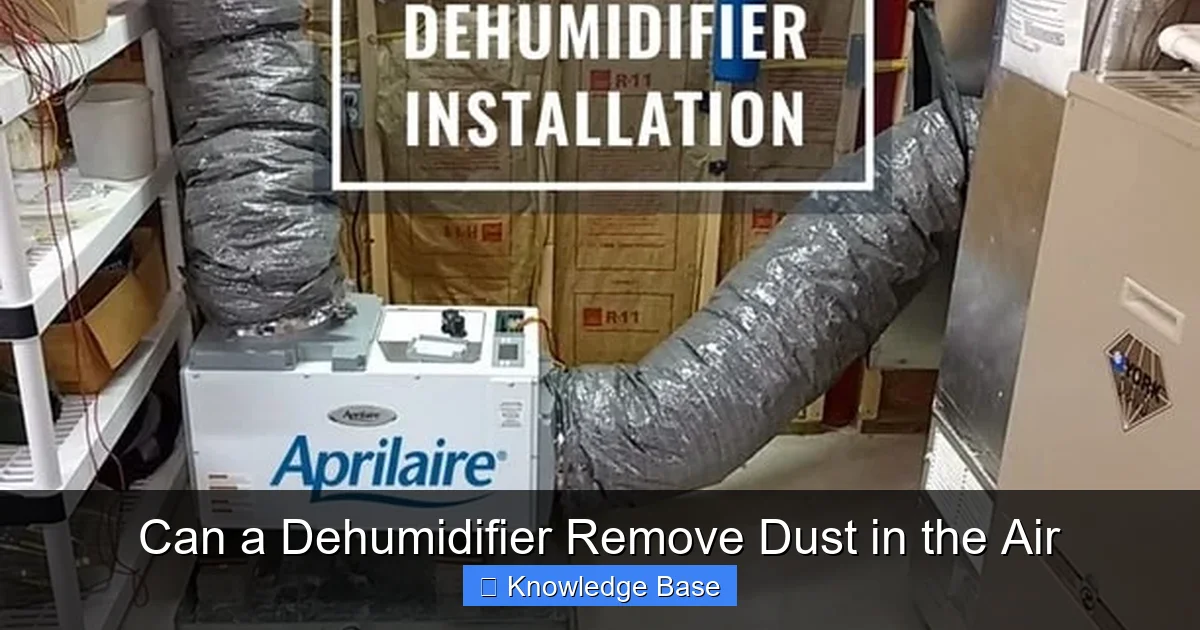
Dehumidifiers don’t directly remove dust from the air, but they can help reduce dust accumulation by lowering humidity. By creating a less hospitable environment for dust mites and mold, they indirectly improve air quality and make cleaning easier.
Key Takeaways
- Dehumidifiers don’t filter dust: Unlike air purifiers, dehumidifiers don’t have filters to capture airborne dust particles.
- They reduce humidity, not dust: Their main job is to remove moisture from the air, which helps prevent conditions that attract dust-related allergens.
- Lower humidity discourages dust mites: Dust mites thrive in humid environments; reducing humidity below 50% can significantly cut their population.
- Dry air may reduce dust circulation: Less moisture means lighter particles may settle faster, reducing how much dust stays airborne.
- Pair with an air purifier for best results: For effective dust removal, combine a dehumidifier with a HEPA air purifier.
- Regular cleaning is still essential: Even with a dehumidifier, vacuuming and dusting remain key to controlling household dust.
- Improved air quality over time: Using a dehumidifier consistently can lead to cleaner, healthier indoor air by reducing mold, mildew, and allergens.
Quick Answers to Common Questions
Can a dehumidifier remove dust from the air?
No, a dehumidifier does not remove dust particles from the air. It only reduces humidity by removing moisture. However, it can help reduce dust buildup by creating an environment less favorable for dust mites and mold.
Do I need both a dehumidifier and an air purifier?
Yes, for best results. An air purifier removes airborne dust and allergens, while a dehumidifier reduces humidity to prevent mold and dust mite growth. They work together to improve air quality.
What humidity level is best for reducing dust?
Keep indoor humidity between 30% and 50%. This range is comfortable for people and inhospitable to dust mites and mold.
Will a dehumidifier help with allergies?
Yes, indirectly. By reducing humidity, it lowers dust mite populations and prevents mold growth—both common allergens. For direct allergen removal, use an air purifier.
How often should I run my dehumidifier?
Run it consistently, especially in humid weather or in damp areas like basements. Many models have auto-settings that turn on only when needed.
📑 Table of Contents
- Can a Dehumidifier Remove Dust in the Air?
- How Dehumidifiers Work: The Science Behind Moisture Removal
- Does a Dehumidifier Actually Remove Dust?
- Dehumidifiers vs. Air Purifiers: What’s the Difference?
- Tips for Using a Dehumidifier to Improve Air Quality
- Common Misconceptions About Dehumidifiers and Dust
- When to Use a Dehumidifier for Dust Control
- Conclusion: A Supportive Role in Dust Management
Can a Dehumidifier Remove Dust in the Air?
If you’ve ever walked into a stuffy basement or noticed a fine layer of dust settling on your furniture, you’ve probably wondered: *Can a dehumidifier help with that?* It’s a common question, especially for people dealing with allergies, asthma, or just a general desire for cleaner air at home. The short answer is: **not directly**. A dehumidifier doesn’t suck dust out of the air like a vacuum or an air purifier. But that doesn’t mean it’s useless when it comes to dust control.
In fact, dehumidifiers play a surprisingly important role in managing the conditions that allow dust and dust-related allergens to thrive. Think of it this way: dust isn’t just dirt—it’s a mix of dead skin cells, fabric fibers, pollen, pet dander, and microscopic creatures like dust mites. Many of these components love moisture. By pulling excess humidity out of the air, a dehumidifier makes your home less inviting to these unwelcome guests. Over time, this can lead to noticeably less dust buildup and improved indoor air quality.
So while a dehumidifier won’t grab dust particles floating around your living room, it can create an environment where dust settles faster, dust mites struggle to survive, and mold—another major contributor to poor air quality—can’t grow. In this article, we’ll dive deep into how dehumidifiers work, their real impact on dust, and how you can use them effectively alongside other tools for a cleaner, healthier home.
How Dehumidifiers Work: The Science Behind Moisture Removal
Visual guide about Can a Dehumidifier Remove Dust in the Air
Image source: bhg.com
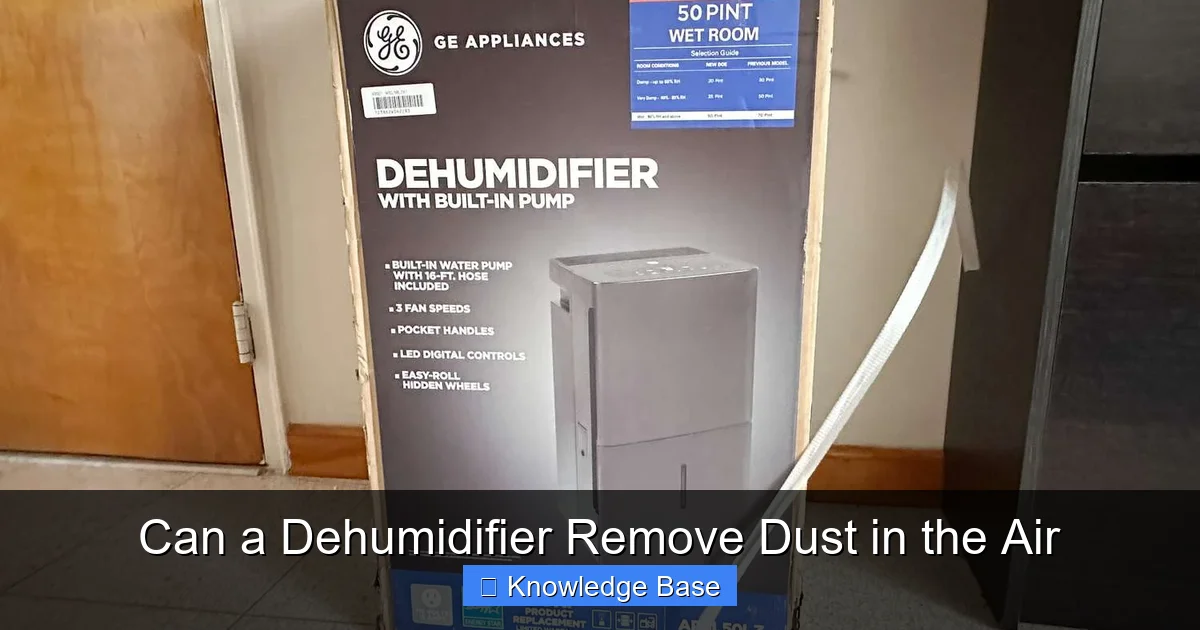
To understand whether a dehumidifier can help with dust, it’s important to first grasp what it actually does. At its core, a dehumidifier is designed to reduce the amount of moisture in the air—also known as humidity. High humidity levels (typically above 60%) can make your home feel sticky, promote mold growth, and create ideal conditions for dust mites and other allergens.
Most residential dehumidifiers use a refrigeration-based system. Here’s how it works in simple terms:
1. **Air is drawn in:** A fan pulls humid air from the room into the dehumidifier.
2. **Cooling process:** The air passes over cold coils inside the unit. As the air cools, its ability to hold moisture decreases.
3. **Condensation forms:** Water vapor in the air condenses into liquid droplets on the coils, just like how dew forms on a cold drink can.
4. **Water collection:** The collected water drips into a built-in tank or is drained directly via a hose.
5. **Air is reheated and released:** The now-drier air passes over warm coils to bring it back to room temperature before being blown back into the space.
This cycle repeats continuously until the desired humidity level is reached—usually set between 30% and 50%, which is considered ideal for comfort and health.
Types of Dehumidifiers
Not all dehumidifiers are the same. The most common types include:
– **Refrigerant (compressor) dehumidifiers:** Best for warm, humid environments. They’re efficient and widely used in homes.
– **Desiccant dehumidifiers:** Use a moisture-absorbing material (like silica gel) instead of cooling coils. They work well in cooler temperatures and are often quieter.
– **Whole-house dehumidifiers:** Integrated into HVAC systems, these handle moisture control for the entire home.
– **Mini or portable units:** Great for small spaces like closets, bathrooms, or RVs.
Each type has its strengths, but all share the same goal: lowering indoor humidity.
Why Humidity Matters for Dust Control
You might be wondering: *What does moisture have to do with dust?* The connection is more significant than you’d think. Dust isn’t just inert particles—it’s a dynamic part of your indoor ecosystem. High humidity encourages the growth of biological contaminants that contribute to dust and worsen air quality.
For example, dust mites—microscopic arachnids that feed on dead skin cells—thrive in humid environments. They need moisture to survive and reproduce. Studies show that when indoor humidity drops below 50%, dust mite populations decline dramatically. Since dust mite waste is a major allergen, reducing their numbers can lead to fewer allergy symptoms and less visible dust over time.
Additionally, high humidity promotes mold and mildew growth on walls, carpets, and furniture. When mold spores become airborne, they mix with dust and can trigger respiratory issues. By keeping humidity in check, a dehumidifier helps prevent mold from taking root, indirectly reducing the amount of organic material that contributes to household dust.
Does a Dehumidifier Actually Remove Dust?
Now for the big question: *Can a dehumidifier remove dust in the air?* The honest answer is **no—not in the way you might hope**.
Unlike air purifiers, which use filters (like HEPA filters) to trap dust, pollen, and other particles as air passes through, dehumidifiers don’t have any mechanism to capture solid particles. They only remove water vapor. So if you’re looking for a device that will suck dust out of the air like a vacuum, a dehumidifier isn’t it.
However, that doesn’t mean dehumidifiers are useless against dust. In fact, they can play a supportive role in reducing dust levels over time—just not by filtering it out.
Indirect Ways Dehumidifiers Help with Dust
Here’s how a dehumidifier can still make a difference:
– **Reduces dust mite populations:** As mentioned earlier, dust mites can’t survive in low-humidity environments. By keeping humidity below 50%, you starve these creatures, leading to fewer allergens and less organic debris in your home.
– **Slows mold growth:** Mold spores are a common component of household dust. When mold grows on walls, carpets, or furniture, it releases spores into the air. These spores mix with other particles and contribute to dust. A dehumidifier prevents mold from growing in the first place, reducing this source of airborne contaminants.
– **Helps dust settle faster:** Dry air is slightly denser than humid air, and some studies suggest that in low-humidity environments, smaller particles may settle more quickly. While this effect is subtle, it can mean less dust floating around and more settling on surfaces—where it’s easier to clean.
– **Makes cleaning more effective:** When humidity is high, dust can cling to surfaces due to static electricity and moisture. In drier air, dust may be easier to wipe or vacuum away, especially if you use a damp cloth or microfiber duster.
Real-World Example: The Basement Test
Imagine two identical basements—one with a dehumidifier running and one without. After a few months, the basement with the dehumidifier will likely have:
– Less visible mold or mildew on walls and corners
– Fewer musty odors
– Less dust buildup on shelves and furniture
– Fewer allergy symptoms for people spending time down there
Why? Because the dehumidifier created an environment where dust mites and mold couldn’t thrive. While it didn’t “remove” dust particles from the air, it reduced the biological contributors to dust and made the space cleaner overall.
Dehumidifiers vs. Air Purifiers: What’s the Difference?
This is where many people get confused. Both dehumidifiers and air purifiers are designed to improve indoor air quality, but they do so in completely different ways.
Air Purifiers: The Dust Fighters
Air purifiers are built specifically to remove airborne particles. They use fans to pull air through one or more filters, capturing contaminants like:
– Dust
– Pollen
– Pet dander
– Smoke
– Bacteria and viruses (in some models)
The most effective air purifiers use **HEPA (High-Efficiency Particulate Air) filters**, which can trap 99.97% of particles as small as 0.3 microns. That includes most household dust.
Some air purifiers also include activated carbon filters to remove odors and volatile organic compounds (VOCs), and UV-C lights to kill germs.
Dehumidifiers: The Moisture Managers
Dehumidifiers, on the other hand, don’t filter air at all. Their sole purpose is to reduce humidity. They don’t capture dust, pollen, or dander. However, by lowering moisture levels, they make your home less hospitable to the organisms that produce allergens.
Why You Might Need Both
For the best results, many experts recommend using both devices—especially if you have allergies, asthma, or live in a humid climate.
– Use an **air purifier** to remove existing dust and allergens from the air.
– Use a **dehumidifier** to prevent conditions that allow dust mites, mold, and mildew to grow.
Think of it like this: an air purifier treats the symptoms (airborne dust), while a dehumidifier treats the cause (humidity that encourages dust-related problems).
Practical Tip: Placement Matters
If you decide to use both, place your air purifier in the room where you spend the most time (like the bedroom or living room). Put the dehumidifier in the area with the highest humidity—often the basement, bathroom, or laundry room. This targeted approach maximizes efficiency and effectiveness.
Tips for Using a Dehumidifier to Improve Air Quality
Even though a dehumidifier doesn’t remove dust directly, you can use it strategically to support a cleaner, healthier home. Here are some practical tips:
1. Set the Right Humidity Level
Aim to keep indoor humidity between **30% and 50%**. This range is comfortable for humans and hostile to dust mites and mold. Most dehumidifiers have a built-in humidistat that lets you set your desired level. Avoid going too low (below 30%), as extremely dry air can irritate your skin, eyes, and respiratory system.
2. Run It Consistently
Dehumidifiers work best when used regularly, especially in humid seasons or in damp areas. Don’t just turn it on when you notice a problem—make it part of your home maintenance routine. Many modern units have auto-shutoff and auto-restart features, so they turn on only when needed.
3. Empty the Water Tank Regularly
Most portable dehumidifiers collect water in a tank that needs to be emptied every few days (or daily in very humid conditions). If the tank overflows, the unit may shut off or leak, reducing efficiency. For convenience, consider a model with a continuous drainage option using a hose.
4. Clean the Unit and Filter
Over time, dust and mold can build up inside the dehumidifier, especially on the coils and in the water tank. Follow the manufacturer’s instructions to clean these parts regularly. Some models have washable air filters that should be cleaned monthly to maintain airflow.
5. Combine with Other Cleaning Habits
A dehumidifier is not a replacement for regular cleaning. To truly control dust, pair it with:
– Weekly vacuuming using a HEPA-filter vacuum
– Dusting with a microfiber cloth (which traps dust instead of spreading it)
– Washing bedding in hot water weekly to kill dust mites
– Using allergen-proof mattress and pillow covers
6. Monitor Air Quality
Consider using a hygrometer (a device that measures humidity) or a smart air quality monitor to track changes in your home. These tools can help you see the impact of your dehumidifier and adjust settings as needed.
Common Misconceptions About Dehumidifiers and Dust
Despite their benefits, dehumidifiers are often misunderstood. Let’s clear up some common myths:
Myth 1: “A dehumidifier will clean the air like an air purifier.”
**Reality:** No. Dehumidifiers remove moisture, not particles. They don’t filter dust, pollen, or smoke. For particle removal, you need an air purifier.
Myth 2: “If I use a dehumidifier, I won’t need to dust anymore.”
**Reality:** While a dehumidifier can reduce dust buildup, it won’t eliminate the need for cleaning. Dust still comes from shedding skin, pets, outdoor pollutants, and fabric wear. Regular cleaning is still essential.
Myth 3: “All dehumidifiers are the same.”
**Reality:** Different models are suited for different environments. A small desiccant dehumidifier might be perfect for a closet, while a large refrigerant model is better for a damp basement. Choose based on room size, humidity level, and climate.
Myth 4: “Dehumidifiers use a lot of energy.”
**Reality:** Modern dehumidifiers are much more energy-efficient than older models. Look for units with an ENERGY STAR rating to save on electricity. Running a dehumidifier can actually reduce the load on your air conditioner, since dry air feels cooler.
Myth 5: “Dehumidifiers only work in basements.”
**Reality:** While basements are common problem areas, dehumidifiers can be useful in any humid space—bathrooms, laundry rooms, crawl spaces, or even whole homes in tropical climates.
When to Use a Dehumidifier for Dust Control
A dehumidifier is most effective for dust control in specific situations:
– **You live in a humid climate:** Areas with high outdoor humidity (like the southeastern U.S. or coastal regions) often have indoor humidity problems.
– **You have a damp basement or crawl space:** These areas are prone to mold and dust mites.
– **You or a family member has allergies or asthma:** Lowering humidity can reduce allergen levels and improve breathing.
– **You notice musty odors or visible mold:** These are signs of excess moisture.
– **Dust builds up quickly on surfaces:** This could indicate high humidity encouraging dust mite activity.
If any of these apply, a dehumidifier is a smart investment—not as a dust remover, but as a tool to create a healthier indoor environment.
Conclusion: A Supportive Role in Dust Management
So, can a dehumidifier remove dust in the air? The answer is nuanced. It won’t pull dust particles out of the air like an air purifier, but it can significantly reduce the conditions that allow dust-related problems to flourish. By lowering humidity, it discourages dust mites, prevents mold growth, and helps dust settle faster—making your home cleaner and your air healthier.
For the best results, think of a dehumidifier as part of a larger strategy for indoor air quality. Pair it with regular cleaning, an air purifier, and good ventilation. Together, these tools create a powerful defense against dust, allergens, and moisture.
If you’re dealing with persistent dust, musty smells, or allergy symptoms, a dehumidifier might be just what your home needs—not to remove dust, but to stop it at the source.
Frequently Asked Questions
Can a dehumidifier filter out dust like an air purifier?
No, dehumidifiers do not have filters to capture dust. They only remove moisture from the air. For dust filtration, you need an air purifier with a HEPA filter.
Will using a dehumidifier reduce how often I need to clean?
It may reduce dust buildup over time, especially in humid areas, but regular cleaning is still necessary. Dust comes from many sources, including skin cells, pets, and outdoor pollutants.
Can a dehumidifier help with pet dander?
Not directly. Pet dander is a solid particle that requires filtration. However, lower humidity can reduce mold and dust mites, which often mix with dander and worsen allergies.
Is it safe to run a dehumidifier all the time?
Yes, as long as you maintain proper humidity levels (30–50%). Modern units are energy-efficient and often have auto-shutoff features to prevent over-drying.
Do dehumidifiers remove odors?
They can reduce musty odors caused by mold and mildew, but they don’t eliminate all smells. For odor control, consider an air purifier with a carbon filter.
Can a dehumidifier help with asthma?
Yes, by reducing humidity, it can lower levels of dust mites and mold—common asthma triggers. For best results, combine it with an air purifier and regular cleaning.