
Yes, a dehumidifier can safely run 24/7, especially in high-humidity environments or during damp seasons. Modern units are designed for continuous operation, but proper maintenance and smart usage ensure efficiency and longevity.
Key Takeaways
- Most dehumidifiers are built for continuous use: Many models feature auto-shutoff, humidity sensors, and energy-saving modes that allow safe 24/7 operation.
- Running non-stop can improve air quality: Constant operation helps prevent mold, mildew, and dust mites in humid climates or basements.
- Energy consumption depends on model and settings: Energy-efficient units with ENERGY STAR ratings use less power, making all-day running more affordable.
- Regular maintenance is essential: Clean filters, empty water tanks, and check coils monthly to keep performance optimal.
- Use a humidistat for better control: A built-in or external humidistat ensures the unit only runs when needed, saving energy and reducing wear.
- Avoid over-drying the air: Running constantly without monitoring can drop humidity below 30%, causing dry skin, static, and wood damage.
- Placement matters: Keep the dehumidifier in a central, well-ventilated area with space around it for proper airflow.
Quick Answers to Common Questions
Can a dehumidifier run 24/7 without overheating?
Yes, most modern dehumidifiers are designed with safety features like thermal cutoffs to prevent overheating, even during continuous use.
Will running a dehumidifier 24/7 increase my electricity bill?
It can, depending on the model and usage. Energy-efficient units with ENERGY STAR ratings minimize cost increases.
Is it bad to run a dehumidifier in winter?
It depends. In cold, unheated spaces like garages, a desiccant dehumidifier works better. In heated homes, monitor humidity to avoid over-drying.
How often should I clean my dehumidifier if running it daily?
Clean the filter every 2–4 weeks and check the tank and coils monthly to maintain performance and prevent mold.
Can a dehumidifier help with allergies?
Yes, by reducing mold, mildew, and dust mites, a dehumidifier can improve indoor air quality and ease allergy symptoms.
📑 Table of Contents
- Can a Dehumidifier Run 24/7? The Truth You Need to Know
- How Dehumidifiers Work: The Basics
- When Is It Safe (and Smart) to Run a Dehumidifier 24/7?
- Potential Risks of Running a Dehumidifier 24/7
- How to Safely Run a Dehumidifier 24/7
- Energy Efficiency Tips for Continuous Use
- Signs Your Dehumidifier Needs a Break (or Repair)
- Conclusion: Should You Run Your Dehumidifier 24/7?
Can a Dehumidifier Run 24/7? The Truth You Need to Know
If you’ve ever walked into a basement that smells like wet socks or noticed condensation on your windows, you know how uncomfortable high humidity can be. It’s not just about feeling sticky—excess moisture can lead to mold growth, musty odors, and even damage to your home’s structure. That’s where a dehumidifier comes in. But if you’re dealing with persistent dampness, you might be wondering: *Can a dehumidifier run 24/7?*
The short answer is yes—most modern dehumidifiers are designed to operate continuously. In fact, running your unit around the clock can be beneficial in certain situations, like during rainy seasons, in humid climates, or in spaces prone to moisture buildup, such as basements, crawl spaces, or laundry rooms. However, just because you *can* run it non-stop doesn’t mean you always *should*. There are important factors to consider, including energy use, maintenance needs, and indoor air quality.
In this guide, we’ll explore everything you need to know about running a dehumidifier 24/7. We’ll break down how dehumidifiers work, when continuous operation makes sense, the potential risks, and how to do it safely and efficiently. Whether you’re a homeowner, renter, or just trying to keep your space comfortable, this article will help you make an informed decision.
How Dehumidifiers Work: The Basics
Visual guide about Can a Dehumidifier Run 24 7
Image source: cdn.mos.cms.futurecdn.net
Before diving into whether you should run your dehumidifier all day, it helps to understand how these appliances function. At their core, dehumidifiers remove excess moisture from the air, helping maintain a healthy indoor humidity level—typically between 30% and 50%.
There are two main types of dehumidifiers: refrigerant (compressor-based) and desiccant. Refrigerant models are the most common and work similarly to air conditioners. They pull in humid air using a fan, pass it over cold coils to condense the moisture into water, and then reheat the air slightly before releasing it back into the room. The collected water drains into a tank or can be connected to a continuous drain hose.
Desiccant dehumidifiers, on the other hand, use a moisture-absorbing material (like silica gel) to trap water vapor. These are often quieter and perform better in colder temperatures, making them ideal for garages or unheated spaces.
Both types are engineered for extended use. Most come with built-in humidistats that measure the room’s humidity and automatically turn the unit on or off to maintain your desired level. This means the dehumidifier isn’t actually running non-stop—it cycles on and off as needed. But in high-humidity environments, it may run for long stretches, sometimes appearing to operate continuously.
Why Humidity Control Matters
Maintaining proper humidity isn’t just about comfort—it’s about health and home protection. High humidity creates the perfect breeding ground for mold, mildew, and dust mites, all of which can trigger allergies and respiratory issues. It can also warp wood furniture, damage electronics, and promote rust on metal surfaces.
On the flip side, air that’s too dry can cause dry skin, irritated sinuses, and static electricity. That’s why consistent humidity control is key. Running a dehumidifier 24/7 in the right conditions helps stabilize moisture levels, creating a healthier, more comfortable living environment.
When Is It Safe (and Smart) to Run a Dehumidifier 24/7?
Visual guide about Can a Dehumidifier Run 24 7
Image source: thehomehacksdiy.com
Not every home needs a dehumidifier running around the clock, but there are several scenarios where it makes perfect sense.
High-Humidity Climates
If you live in a region with high annual humidity—like the southeastern United States, coastal areas, or tropical zones—your indoor air may stay damp year-round. In these cases, running a dehumidifier continuously during the humid months (or even all year) can prevent moisture-related problems. For example, in Florida or Louisiana, where humidity often exceeds 70%, many homeowners rely on dehumidifiers as part of their daily routine.
Basements and Crawl Spaces
Basements are naturally prone to dampness due to their below-ground location and poor ventilation. Even if you don’t see standing water, the air can be saturated with moisture. A dehumidifier running 24/7 in a basement can prevent mold growth, musty smells, and structural damage. Crawl spaces benefit similarly—especially if they’re unventilated or have dirt floors.
After Water Damage or Flooding
If your home has experienced a leak, flood, or burst pipe, running a dehumidifier non-stop is often recommended during the drying process. Professionals use industrial-grade units, but residential models can also help speed up moisture removal. In these cases, continuous operation is not just safe—it’s essential.
During Rainy or Monsoon Seasons
Seasonal weather patterns can drastically increase indoor humidity. During prolonged rainy periods, especially in areas with poor drainage or older homes with less insulation, a dehumidifier may need to work overtime. Running it 24/7 during these times ensures consistent air quality and prevents moisture buildup.
Homes with Poor Ventilation
If your home lacks proper airflow—common in tightly sealed, energy-efficient houses—moisture from showers, cooking, and breathing can accumulate quickly. Without adequate ventilation, a dehumidifier may need to run constantly to keep up. Installing exhaust fans in bathrooms and kitchens helps, but a dehumidifier can be a valuable backup.
Potential Risks of Running a Dehumidifier 24/7
While continuous operation is generally safe, there are some risks and downsides to be aware of.
Increased Energy Bills
Dehumidifiers use electricity, and running one non-stop will increase your energy consumption. The cost depends on the unit’s size, efficiency, and local electricity rates. For example, a 50-pint dehumidifier might use between 500 and 700 watts per hour. If it runs 24 hours a day, that’s 12–17 kWh daily. At $0.13 per kWh, that’s about $1.50 to $2.20 per day—or $45 to $66 per month.
However, energy-efficient models with ENERGY STAR certification use up to 15% less energy than standard units. Look for features like auto-humidistat, timer settings, and low-watt operation to reduce costs.
Over-Drying the Air
One of the biggest risks of running a dehumidifier 24/7 is over-drying the air. If humidity drops below 30%, you may experience dry skin, irritated eyes, and respiratory discomfort. Wood floors and furniture can also crack or warp due to lack of moisture. Static electricity may increase, and houseplants might suffer.
To avoid this, always use a humidistat and set your target humidity between 40% and 50%. Some smart dehumidifiers even connect to apps that let you monitor and adjust settings remotely.
Wear and Tear on the Unit
Even though dehumidifiers are built for long-term use, running them non-stop can accelerate wear on components like the compressor, fan, and coils. Over time, this may shorten the appliance’s lifespan. However, regular maintenance—like cleaning filters and checking for ice buildup—can help mitigate this risk.
Noise and Disruption
Most dehumidifiers make some noise, especially when the compressor kicks on. If you’re running one in a bedroom or living area, the constant hum might be disruptive. Look for models with quiet operation (under 50 decibels) or place the unit in a less-sensitive area like a basement or utility room.
How to Safely Run a Dehumidifier 24/7
If you decide that continuous operation is right for your home, follow these best practices to ensure safety, efficiency, and longevity.
Choose the Right Size and Type
Using an undersized dehumidifier will force it to work harder, increasing wear and energy use. Conversely, an oversized unit may cycle too frequently, reducing efficiency. Match the unit’s capacity (measured in pints per day) to your space:
– Small rooms (up to 500 sq ft): 20–30 pints
– Medium rooms (500–1,500 sq ft): 30–50 pints
– Large spaces (1,500+ sq ft): 50+ pints
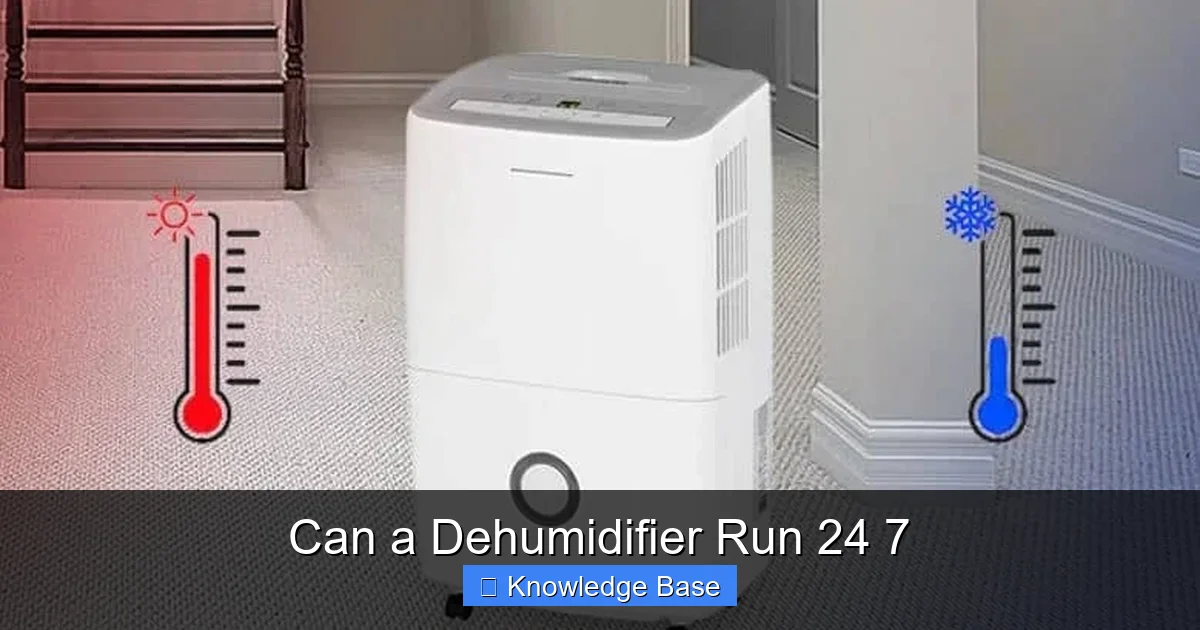
Also, consider the environment. Use a desiccant dehumidifier in cold spaces (below 65°F), as refrigerant models can ice up.
Use a Built-In or External Humidistat
A humidistat is a must-have for 24/7 operation. It measures the room’s humidity and automatically turns the dehumidifier on or off to maintain your set level. This prevents over-drying and saves energy. If your unit doesn’t have one, consider using a smart plug with a humidity sensor or a standalone hygrometer to monitor levels.
Set the Ideal Humidity Level
The ideal indoor humidity range is 40% to 50%. In winter, you may need to lower it slightly (to 30–40%) to prevent condensation on cold windows. Avoid setting it below 30%, as this can cause dryness and static.
Ensure Proper Drainage
If your dehumidifier has a water tank, it will shut off when full—unless you use a continuous drain hose. For 24/7 operation, connect the hose to a floor drain, utility sink, or condensate pump. This prevents overflow and ensures uninterrupted function.
Maintain the Unit Regularly
Follow the manufacturer’s maintenance schedule:
– Clean the air filter every 2–4 weeks.
– Wipe down the water tank to prevent mold.
– Check coils for ice buildup (common in cold environments).
– Inspect the drain hose for clogs.
Regular care keeps the unit running efficiently and extends its life.
Place It Strategically
Position the dehumidifier in a central location with at least 6–12 inches of clearance on all sides. Avoid placing it near walls, furniture, or curtains that can block airflow. In basements, keep it away from damp corners where mold tends to grow.
Energy Efficiency Tips for Continuous Use
Running a dehumidifier 24/7 doesn’t have to break the bank. With a few smart strategies, you can keep your home dry without skyrocketing energy bills.
Choose an ENERGY STAR Certified Model
ENERGY STAR dehumidifiers meet strict efficiency guidelines set by the U.S. Environmental Protection Agency. They use advanced technology to remove moisture with less energy. Over time, the savings can offset the initial cost.
Use Timer and Auto Mode
Many dehumidifiers come with programmable timers and auto modes. Set the unit to run only during peak humidity times (like overnight or after showers) if full-time operation isn’t necessary. Auto mode adjusts operation based on real-time humidity levels.
Seal Air Leaks
Improve your home’s insulation and seal gaps around windows, doors, and ducts. This reduces the amount of humid outdoor air entering your home, easing the workload on your dehumidifier.
Use Exhaust Fans
Run bathroom and kitchen exhaust fans during and after showers or cooking. This removes moisture at the source, reducing the need for constant dehumidifier use.
Monitor Usage with a Smart Plug
A smart plug with energy monitoring lets you track how much power your dehumidifier uses. You can set schedules, receive alerts, and even control it remotely via your phone.
Signs Your Dehumidifier Needs a Break (or Repair)
Even the best units can develop issues with prolonged use. Watch for these warning signs:
– **Frequent cycling on and off:** Could indicate a faulty humidistat or sensor.
– **Ice buildup on coils:** Common in cold environments; may require a defrost cycle or a different unit type.
– **Unusual noises:** Grinding, rattling, or loud humming may signal mechanical problems.
– **Reduced moisture removal:** If the tank fills slower than usual, the filter or coils may be clogged.
– **Musty smell from the unit:** Suggests mold growth inside—clean thoroughly or replace filters.
If problems persist, consult the user manual or contact the manufacturer. Some issues may require professional service.
Conclusion: Should You Run Your Dehumidifier 24/7?
So, can a dehumidifier run 24/7? Absolutely—and in many cases, it should. Whether you’re battling high humidity, protecting a basement, or recovering from water damage, continuous operation can keep your home healthy and comfortable. Modern dehumidifiers are built to handle it, especially when equipped with smart features like auto-humidistats and energy-saving modes.
But success depends on smart usage. Choose the right size, maintain the unit regularly, and monitor humidity levels to avoid over-drying. Use timers and drainage solutions to reduce hassle and energy costs. And remember: just because you *can* run it all the time doesn’t mean you always *should*. Adjust usage based on season, weather, and indoor conditions.
By following these guidelines, you can enjoy the benefits of a dehumidifier without the downsides. Your air will stay fresh, your home will stay protected, and your peace of mind will stay intact—24/7.
Frequently Asked Questions
Can a dehumidifier run 24/7 safely?
Yes, most dehumidifiers are designed for continuous operation. As long as the unit is properly maintained and has safety features like auto-shutoff, running it 24/7 is safe and effective.
How much does it cost to run a dehumidifier 24/7?
Costs vary by model and electricity rates, but a typical 50-pint unit may cost $1.50 to $2.20 per day. Energy-efficient models reduce this expense.
Should I use a drain hose for 24/7 operation?
Yes, a continuous drain hose prevents the unit from shutting off when the tank is full, ensuring uninterrupted operation.
Can running a dehumidifier too much dry out the air?
Yes, if humidity drops below 30%, it can cause dry skin, static, and damage to wood. Use a humidistat to maintain 40–50% humidity.
Do all dehumidifiers have humidistats?
Most modern models do, but not all. Check the product specifications. If yours lacks one, use an external hygrometer to monitor levels.
Is it normal for a dehumidifier to run constantly?
It’s normal in high-humidity environments or during wet seasons. If it runs non-stop in dry conditions, check the settings or sensor for issues.