
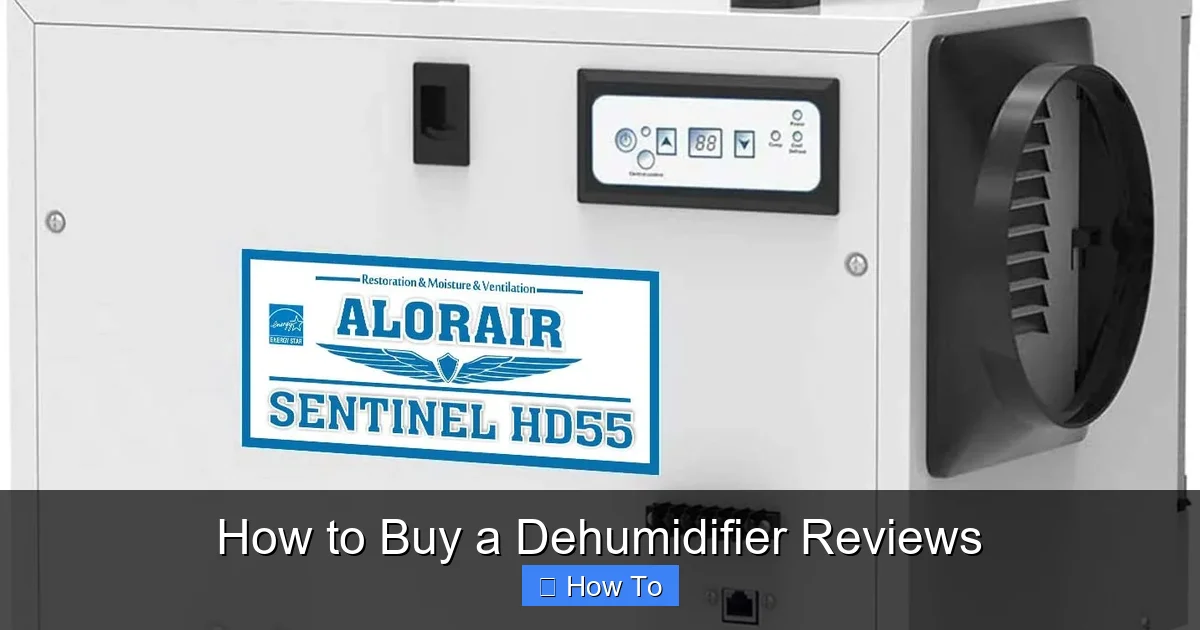
Buying a dehumidifier can improve air quality, reduce mold, and protect your home. This guide walks you through everything you need to know—from understanding capacity to reading reviews—so you can make a smart, informed purchase.
Quick Answers to Common Questions
What size dehumidifier do I need for a 1,000 sq. ft basement?
A 50-pint dehumidifier is usually sufficient for a 1,000 sq. ft basement with moderate dampness. If it’s very wet or has a history of flooding, go for 70 pints.
Should I buy a dehumidifier with a hose drain?
Yes, if you plan to run it continuously or don’t want to empty a bucket daily. A hose lets you drain water directly into a floor drain or sump pump.
Are dehumidifiers noisy?
Most modern models are quiet, especially on low settings. Look for units under 50 decibels—comparable to a quiet conversation.
Can a dehumidifier help with allergies?
Yes! By reducing mold and dust mites, dehumidifiers can significantly improve indoor air quality and ease allergy symptoms.
How often should I clean my dehumidifier?
Clean the filter monthly and wipe the exterior weekly. Deep clean the coils and bucket every 3–6 months for best performance.
How to Buy a Dehumidifier: A Complete Guide with Reviews
If you’ve noticed musty smells, peeling paint, or condensation on windows, your home might have a humidity problem. High moisture levels don’t just feel uncomfortable—they can lead to mold growth, dust mites, and even structural damage. The good news? A dehumidifier can fix all that.
But with so many models on the market, how do you pick the right one? That’s where this guide comes in. We’ll walk you through every step of the buying process, from understanding your needs to reading reviews like a pro. By the end, you’ll know exactly what to look for—and how to avoid common mistakes.
Whether you’re tackling a damp basement, a humid bathroom, or just want better air quality, this guide will help you choose a dehumidifier that works for your space, budget, and lifestyle.
Step 1: Understand Why You Need a Dehumidifier
Visual guide about How to Buy a Dehumidifier Reviews
Image source: bestdehumidifier.reviews
Before you start shopping, it’s important to know *why* you need a dehumidifier. This helps you set realistic expectations and choose the right type.
Common Signs You Need a Dehumidifier
- Musty odors: A damp, earthy smell often means mold or mildew is growing.
- Condensation on windows: Water droplets on glass indicate excess moisture in the air.
- Peeling wallpaper or paint: High humidity can cause finishes to bubble or flake.
- Allergies or respiratory issues: Dust mites and mold thrive in humid environments and can worsen allergies.
- Clothes take forever to dry: If your laundry stays damp indoors, the air is too moist.
If you’re dealing with any of these issues, a dehumidifier is likely a smart investment. But not all dehumidifiers are created equal. The next step is figuring out what kind you need.
Step 2: Determine the Right Size and Capacity
One of the biggest mistakes people make is buying a dehumidifier that’s too small—or too big. Size matters, and it’s not just about physical dimensions. What really counts is the unit’s **capacity**, measured in pints per day (PPD).
How to Calculate the Right Capacity
Start by measuring the square footage of the area you want to dehumidify. Then, assess the humidity level:
- Slightly damp: Feels humid, maybe a little musty. Ideal for 30–50 PPD units.
- Moderately damp: Noticeable moisture, occasional condensation. Look for 50–70 PPD.
- Very damp or wet: Standing water, strong mold smell, or flooding history. Choose 70+ PPD.
Here’s a quick reference:
- Small rooms (up to 500 sq. ft): 20–30 PPD
- Medium rooms (500–1,500 sq. ft): 30–50 PPD
- Large spaces (1,500–2,500 sq. ft): 50–70 PPD
- Basements or crawl spaces (2,500+ sq. ft): 70+ PPD
For example, a 1,200-square-foot basement with moderate dampness would do well with a 50-pint dehumidifier. But if it’s frequently wet, go for 70 pints.
Don’t Forget the Humidity Level
Most homes should maintain 30–50% relative humidity. Use a hygrometer (a cheap digital device) to check your current levels. If it’s above 60%, you definitely need a dehumidifier.
Step 3: Choose the Right Type of Dehumidifier
Not all dehumidifiers work the same way. The two main types are **compressor (refrigerant)** and **desiccant**.
Compressor Dehumidifiers
These are the most common and work by cooling air to condense moisture. They’re efficient in warm, humid climates (above 65°F) and great for basements, laundry rooms, and whole-house use.
Pros:
- High moisture removal
- Energy-efficient in warm conditions
- Affordable upfront cost
Cons:
- Less effective in cold temperatures
- Can be noisy
- May cool the room slightly
Desiccant Dehumidifiers
These use a moisture-absorbing material (like silica gel) and work well in cold or low-humidity environments. They’re quieter and effective down to 32°F, making them ideal for garages, crawl spaces, or RVs.
Pros:
- Works in cold temperatures
- Quiet operation
- Lightweight and portable
Cons:
- Lower moisture removal rate
- Higher energy use
- More expensive
For most homes, a compressor dehumidifier is the best choice. But if you’re dealing with a cold, damp garage, go desiccant.
Step 4: Look for Key Features
Modern dehumidifiers come with a range of features that can make your life easier. Here’s what to look for:
Auto-Humidistat
This built-in sensor measures humidity and turns the unit on/off to maintain your desired level. No more guessing—just set it and forget it.
Continuous Drainage Option
Instead of emptying a bucket every day, you can attach a hose to drain water directly into a floor drain or sump pump. This is a game-changer for basements or 24/7 use.
Washable Air Filter
A reusable filter traps dust and allergens. Just rinse it monthly to keep the unit running efficiently.
Auto-Defrost
If you live in a cold climate, this feature prevents the coils from freezing, so your dehumidifier keeps working in winter.
Timer and Remote Control
Set the unit to run during off-peak hours or control it from across the room. Handy for busy households.
Energy Efficiency
Look for the **ENERGY STAR** label. These models use up to 30% less energy than standard units, saving you money on electricity.
Step 5: Read Dehumidifier Reviews Like a Pro
Now comes the fun part—researching models and reading reviews. But not all reviews are helpful. Here’s how to spot the good ones.
Where to Find Reliable Reviews
- Amazon: Look for verified purchases and detailed comments.
- Consumer Reports: Independent testing with performance ratings.
- YouTube: Watch real users demonstrate the unit in action.
- Home improvement forums: Reddit, Houzz, and DIY sites often have honest, long-term feedback.
What to Look for in Reviews
Don’t just focus on the star rating. Read the text. Ask yourself:
- Did the reviewer use it in a similar space (e.g., basement, bathroom)?
- How loud is it? (Look for mentions of noise levels.)
- How often do they empty the bucket?
- Did it reduce mold or odors?
- Has it lasted more than a year?
For example, a review that says, “I’ve had this in my 1,000 sq. ft basement for 18 months. It runs quietly, empties every 2 days, and the musty smell is gone,” is far more useful than “Great product!”
Watch Out for Fake Reviews
Be skeptical of reviews that:
- Are overly generic (“Amazing! Best ever!”)
- Use the same language across multiple products
- Are posted in quick succession
Stick to reviews with photos, specific details, and balanced feedback.
Step 6: Compare Top Brands and Models
Not all dehumidifiers are created equal. Some brands consistently deliver quality, reliability, and customer support. Here are a few top performers based on expert and user reviews:
Frigidaire FFAD7033R1 (70 Pint)
A favorite for basements. Energy Star certified, auto-humidistat, continuous drain option, and quiet operation. Users praise its durability and effectiveness in damp spaces.
Honeywell TP70WKN (70 Pint)
Great for large areas. Features a digital display, washable filter, and smart humidity control. Reviewers love the ease of use and low noise level.
GE APER50LZ (50 Pint)
Ideal for medium-sized rooms. Compact design, auto-restart after power outages, and affordable price. Users report noticeable improvement in air quality.
hOmeLabs HME020034N (45 Pint)
A budget-friendly option with strong performance. Includes a hose connector, timer, and washable filter. Great for apartments or small homes.
When comparing, look at:
- Price vs. features
- Warranty length (1–2 years is standard)
- Customer service reputation
- Availability of replacement parts
Step 7: Consider Installation and Maintenance
A dehumidifier isn’t a “set it and forget it” appliance. Proper setup and care will keep it running efficiently for years.
Placement Tips
- Place it on a flat, stable surface.
- Keep it at least 6–12 inches away from walls for proper airflow.
- Avoid placing it near heat sources or in direct sunlight.
- For basements, position it near the center or where moisture is worst.
Maintenance Checklist
- Empty the bucket regularly: Most units shut off when full, but don’t wait too long.
- Clean the filter monthly: Rinse with warm water and let dry.
- Wipe the exterior: Dust can build up and affect performance.
- Check the coils annually: If they’re dirty, use a soft brush to clean them.
- Inspect the hose (if used): Make sure it’s not kinked or clogged.
Step 8: Troubleshooting Common Issues
Even the best dehumidifiers can run into problems. Here’s how to fix the most common ones:
Unit Won’t Turn On
- Check the power cord and outlet.
- Make sure the bucket is properly seated.
- Reset the circuit breaker if needed.
Not Removing Enough Moisture
- Ensure the room is sealed (close doors and windows).
- Check if the filter is clogged.
- Verify the humidity setting isn’t too low.
- Make sure the unit is the right size for the space.
Too Noisy
- Place the unit on a rubber mat to reduce vibration.
- Ensure it’s level and not touching walls.
- Check for loose parts or debris in the fan.
Freezing Up (in cold areas)
- Use a model with auto-defrost.
- Move it to a warmer area if possible.
- Reduce runtime in winter months.
Step 9: Make the Purchase and Test It Out
Once you’ve done your research, it’s time to buy. Here’s how to make the final decision:
Where to Buy
- Online retailers: Amazon, Home Depot, Lowe’s—great for reviews and fast shipping.
- Local stores: Test the unit in person, get immediate help, and avoid shipping delays.
- Manufacturer websites: Sometimes offer exclusive deals or extended warranties.
Check the Return Policy
Make sure you can return or exchange the unit if it doesn’t work as expected. Most retailers offer 30-day returns.
Test After Setup
Run the dehumidifier for 24–48 hours. Check:
- Is the bucket filling up?
- Is the air feeling drier?
- Is the noise level acceptable?
- Is the humidity dropping on your hygrometer?
If everything looks good, you’re all set!
Conclusion
Buying a dehumidifier doesn’t have to be overwhelming. By following these steps—assessing your needs, choosing the right size and type, reading honest reviews, and comparing features—you’ll find a model that keeps your home comfortable and healthy.
Remember, the best dehumidifier is the one that fits your space, solves your humidity problems, and fits your budget. Take your time, do your research, and don’t skip the reviews. With the right unit, you’ll enjoy fresher air, fewer allergens, and a home that feels just right.