
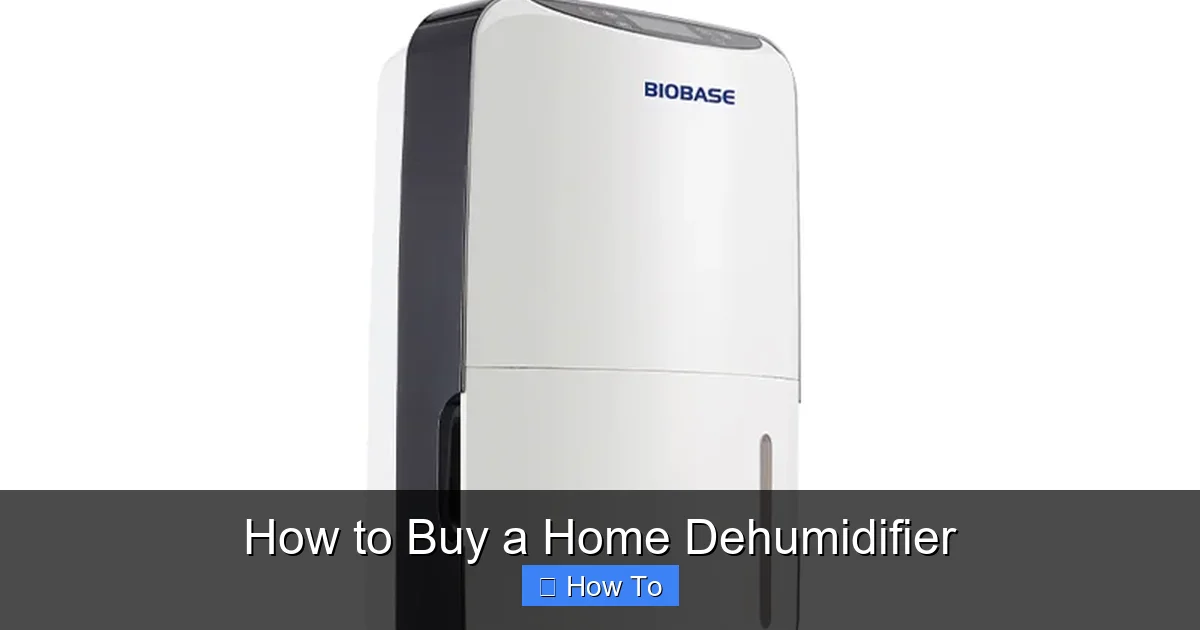
Buying a home dehumidifier doesn’t have to be overwhelming. This guide walks you through everything you need to know—from sizing and types to energy efficiency and smart features—so you can choose the best model for your home. Say goodbye to musty smells and excess moisture with confidence.
Quick Answers to Common Questions
Tip/Question?
How often should I empty the water tank?
It depends on the humidity level and tank size. Most units need emptying every 12–24 hours. Use continuous drainage to avoid this.
Tip/Question?
Can I run a dehumidifier all the time?
Yes, especially in very damp areas. Use the auto-humidistat to maintain ideal levels and save energy.
Tip/Question?
Do dehumidifiers help with allergies?
Yes! By reducing mold and dust mites, they can significantly improve indoor air quality and allergy symptoms.
Tip/Question?
Should I buy a dehumidifier with a built-in pump?
If you’re draining into a sink or upstairs, a built-in pump helps push water upward. It’s a useful feature for basements.
Tip/Question?
Can I use a dehumidifier in winter?
Yes, but choose a model with auto-defrost. Desiccant units work best in cold, unheated spaces.
How to Buy a Home Dehumidifier: A Complete Step-by-Step Guide
Excess moisture in your home isn’t just uncomfortable—it can lead to mold, mildew, musty odors, and even structural damage over time. Whether you live in a humid climate, have a damp basement, or notice condensation on your windows, a home dehumidifier can make a big difference. But with so many models, sizes, and features on the market, how do you choose the right one?
This guide will walk you through every step of buying a home dehumidifier—from understanding your needs to comparing models and installing your unit. By the end, you’ll know exactly what to look for and feel confident in your purchase. Let’s get started!
Step 1: Understand Why You Need a Dehumidifier
Before you start shopping, it’s important to understand why you need a dehumidifier and where the problem areas are in your home. This will help you choose the right type and size.
Visual guide about How to Buy a Home Dehumidifier
Image source: homeairadvisor.com
Common Signs You Need a Dehumidifier
- Persistent musty or earthy smells, especially in basements or bathrooms
- Visible mold or mildew growth on walls, ceilings, or furniture
- Condensation on windows, mirrors, or pipes
- Sticky or clammy feeling in the air
- Allergy symptoms like sneezing, coughing, or itchy eyes that worsen indoors
- Warped wood floors, peeling paint, or rust on metal fixtures
If you notice any of these signs, a dehumidifier can help restore healthy indoor air quality. The ideal indoor humidity level is between 30% and 50%. Anything above 60% creates a breeding ground for mold and dust mites.
Where Dehumidifiers Are Most Useful
- Basements: Often the dampest part of the house due to poor ventilation and ground moisture.
- Bathrooms: High humidity from showers and baths can linger without proper ventilation.
- Laundry rooms: Drying clothes indoors increases moisture levels.
- Closets: Poor airflow can trap moisture and cause mildew on clothes.
- Whole-house areas: If humidity is a problem throughout your home, a whole-house dehumidifier may be needed.
Once you’ve identified the problem areas, you can move on to choosing the right dehumidifier for your space.
Step 2: Determine the Right Size (Capacity)
One of the most common mistakes people make when buying a dehumidifier is choosing the wrong size. A unit that’s too small won’t effectively remove moisture, while one that’s too large may cycle on and off too frequently, wasting energy and reducing lifespan.
How to Calculate the Right Capacity
Dehumidifiers are rated by how many pints of moisture they can remove in 24 hours. This is called the “pint capacity.” To choose the right size, consider two factors: the square footage of the space and the humidity level.
Step-by-Step Sizing Guide
- Measure the square footage: Use a tape measure to find the length and width of the room. Multiply them to get the total square footage. For example, a 10 ft x 12 ft room is 120 square feet.
- Assess the humidity level: Use a hygrometer (a small, inexpensive device that measures humidity) to check the current humidity. You can also judge by how the space feels:
- Slightly damp: Feels a bit sticky, occasional condensation.
- Moderately damp: Musty smell, visible moisture on walls or windows.
- Very damp: Standing water, mold growth, or flooding history.
- Match to the right pint capacity: Use this general guide:
- 10–25 pints: Small spaces (under 500 sq ft), slightly damp conditions.
- 25–50 pints: Medium spaces (500–1,500 sq ft), moderately damp.
- 50+ pints: Large spaces (1,500+ sq ft), very damp or wet conditions.
For example, a 1,200 sq ft basement with a musty smell and occasional puddles would need a 50-pint dehumidifier. A 400 sq ft bathroom with light condensation might only need a 25-pint model.
Pro Tip: Go Slightly Larger
If you’re between sizes, it’s usually better to go one size up. A larger unit will work more efficiently and may run less frequently, saving energy in the long run.
Step 3: Choose the Right Type of Dehumidifier
Not all dehumidifiers are created equal. There are three main types, each with pros and cons depending on your climate, space, and needs.
1. Compressor (Refrigerant) Dehumidifiers
This is the most common type. It uses a compressor and refrigerant coils to cool air, causing moisture to condense and collect in a tank.
- Best for: Warm, humid climates (above 65°F).
- Pros: Highly effective at removing large amounts of moisture; energy-efficient for high-humidity areas.
- Cons: Can be noisy; less effective in cold temperatures; coils may freeze below 60°F.
- Ideal for: Basements, living rooms, and whole-house use in warm regions.
2. Desiccant Dehumidifiers
These use a moisture-absorbing material (like silica gel) to pull water from the air. They don’t rely on cooling, so they work well in cold environments.
- Best for: Cold climates or unheated spaces (below 65°F).
- Pros: Quiet operation; effective in low temperatures; lightweight and portable.
- Cons: Less efficient in very humid conditions; may use more energy; smaller capacity.
- Ideal for: Garages, crawl spaces, RVs, and winter use.
3. Thermoelectric (Peltier) Dehumidifiers
These use a small electric current to create a temperature difference that condenses moisture. They’re compact and quiet but less powerful.
- Best for: Small, enclosed spaces with low humidity.
- Pros: Very quiet; no moving parts; energy-efficient for tiny areas.
- Cons: Low capacity (usually under 10 pints); not effective in large or very damp spaces.
- Ideal for: Closets, gun safes, small bathrooms, or as a supplemental unit.
For most homes, a compressor dehumidifier is the best all-around choice. But if you live in a cold climate or need a unit for an unheated space, a desiccant model may be better.
Step 4: Look for Key Features
Once you’ve narrowed down the size and type, it’s time to compare features. The right features can make your dehumidifier easier to use, more efficient, and more effective.
Essential Features to Consider
- Auto-Humidistat: Measures humidity and turns the unit on/off to maintain your desired level (e.g., 45%). This saves energy and prevents over-drying.
- Continuous Drainage: Allows you to attach a hose so water drains directly into a floor drain or sump pump, eliminating the need to empty the tank.
- Auto-Defrost: Prevents ice buildup on coils in cold temperatures, ensuring the unit keeps working in winter.
- Washable Filter: Captures dust and allergens; easy to clean and reuse.
- Timer: Lets you set the unit to run for a specific time (e.g., 2, 4, or 8 hours).
- Portability: Look for built-in handles and caster wheels for easy movement between rooms.
- Noise Level: Measured in decibels (dB). Look for models under 50 dB for quiet operation, especially in bedrooms or living areas.
Smart and Advanced Features
- Wi-Fi Connectivity: Control the unit via a smartphone app (e.g., set schedules, monitor humidity, receive alerts).
- Remote Sensors: Some models include a remote hygrometer you can place in another room for more accurate readings.
- Energy-Saving Modes: Eco or low-power modes reduce energy use when full capacity isn’t needed.
- Air Purification: Some dehumidifiers include HEPA or carbon filters to remove allergens and odors.
While smart features are convenient, they often come at a higher price. Decide which features are must-haves versus nice-to-haves based on your budget and needs.
Step 5: Check Energy Efficiency
Dehumidifiers can use a lot of electricity, especially if they run frequently. Choosing an energy-efficient model can save you money on your utility bill and reduce your environmental impact.
Look for ENERGY STAR Certification
ENERGY STAR-certified dehumidifiers meet strict efficiency guidelines set by the U.S. Environmental Protection Agency. They use 10–20% less energy than standard models.
Check the Energy Factor (L/kWh)
This number tells you how many liters of water the unit removes per kilowatt-hour of electricity. A higher number means better efficiency. For example:
- 2.0 L/kWh = very efficient
- 1.5 L/kWh = average
- 1.0 L/kWh = less efficient
Aim for a model with an energy factor of at least 1.8 L/kWh.
Estimate Annual Operating Cost
To calculate how much a dehumidifier will cost to run:
- Find the wattage (usually listed on the product or manual).
- Estimate daily usage (e.g., 8 hours).
- Multiply: (Watts ÷ 1,000) × Hours × Electricity Rate ($/kWh).
For example, a 300-watt unit running 8 hours a day at $0.12/kWh costs about $0.29 per day, or $106 per year.
Choosing a more efficient model might cost more upfront but can save you hundreds over its lifetime.
Step 6: Compare Brands and Read Reviews
With so many brands on the market—Frigidaire, Honeywell, GE, hOmeLabs, Eva-Dry, and more—it’s important to compare reliability, customer service, and real-world performance.
Top Brands to Consider
- Frigidaire: Known for reliable, high-capacity models with excellent drainage options.
- hOmeLabs: Popular for modern designs, smart features, and strong performance in basements.
- Honeywell: Offers a wide range of sizes and energy-efficient models with good warranties.
- Eva-Dry: Specializes in small, portable, and desiccant-based units for tight spaces.
- GE: Trusted for durable, quiet units with advanced controls.
How to Read Reviews Like a Pro
- Look for patterns: If multiple reviews mention the same issue (e.g., loud noise or frequent breakdowns), it’s likely a real problem.
- Check recent reviews: Older reviews may not reflect current model quality.
- Read verified purchases: These are more reliable than anonymous or incentivized reviews.
- Watch video reviews: Seeing the unit in action can help you judge noise, size, and ease of use.
Don’t just focus on star ratings—read the details to understand how the dehumidifier performs in real homes.
Step 7: Consider the Warranty and Support
A dehumidifier is an investment, so you want it to last. A good warranty and responsive customer support can save you headaches down the road.
What to Look For in a Warranty
- Length: Most brands offer 1–2 years. Some premium models include 3–5 years.
- Coverage: Does it cover parts, labor, and compressor? Some exclude the compressor, which is the most expensive part to replace.
- Extended options: You may be able to purchase an extended warranty at checkout.
Customer Support Tips
- Check if the company offers phone, email, or chat support.
- Look for online resources like setup videos, troubleshooting guides, and FAQs.
- Read reviews about customer service experiences.
A strong warranty and good support can make a big difference if something goes wrong.
Step 8: Make the Purchase
Now that you’ve done your research, it’s time to buy. Here’s how to get the best deal and ensure a smooth purchase.
Where to Buy
- Online retailers: Amazon, Home Depot, Lowe’s, and Best Buy often have competitive prices, customer reviews, and fast shipping.
- Manufacturer websites: Sometimes offer exclusive models, bundles, or discounts.
- Local appliance stores: Allow you to see the unit in person and get expert advice.
Tips for Saving Money
- Wait for sales (e.g., Black Friday, spring cleaning season).
- Use cashback or credit card rewards.
- Check for rebates from your utility company (some offer incentives for ENERGY STAR appliances).
- Compare prices across sites before buying.
What to Do After Purchase
- Unbox and inspect the unit for damage.
- Register the product for warranty coverage.
- Read the manual thoroughly before setup.
Step 9: Install and Use Your Dehumidifier Correctly
Even the best dehumidifier won’t work well if it’s not set up properly. Follow these tips for optimal performance.
Placement Tips
- Place the unit in the center of the room or near the source of moisture.
- Keep it at least 6–12 inches away from walls and furniture for proper airflow.
- Avoid placing it near heat sources like radiators or direct sunlight.
- In basements, place it on a stable, elevated surface to avoid water damage.
Setup and Maintenance
- Install the hose for continuous drainage if available.
- Set the humidistat to 45–50% for most homes.
- Clean the filter every 2–4 weeks.
- Empty the water tank regularly (if not using continuous drainage).
- Check for ice buildup in cold weather and enable auto-defrost if needed.
Troubleshooting Common Issues
- Unit won’t turn on: Check power source, outlet, and circuit breaker.
- Not removing moisture: Ensure room is closed off, filter is clean, and humidity setting is correct.
- Freezing coils: Enable auto-defrost or move to a warmer area.
- Loud noise: Check for loose parts or obstructions; place on a level surface.
- Water leaking: Ensure the tank is properly seated or the drain hose isn’t clogged.
Regular maintenance keeps your dehumidifier running efficiently for years.
Conclusion
Buying a home dehumidifier doesn’t have to be complicated. By following these steps—assessing your needs, choosing the right size and type, comparing features, and installing correctly—you can find a model that keeps your home comfortable, healthy, and mold-free.
Remember, the best dehumidifier is the one that fits your space, matches your humidity level, and includes the features you’ll actually use. Take your time, read reviews, and don’t rush the decision. With the right unit, you’ll enjoy fresher air, fewer allergens, and a more pleasant living environment.
Now that you know how to buy a home dehumidifier, you’re ready to make an informed choice. Breathe easier and live better—starting today.