
Buying a quality dehumidifier doesn’t have to be overwhelming. This guide walks you through everything you need to know—from sizing and features to energy efficiency and maintenance—so you can choose the best unit for your space. Save money, improve air quality, and prevent mold with the right dehumidifier.
Quick Answers to Common Questions
What size dehumidifier do I need for a 1,000 sq. ft. basement?
A 50–70 pint dehumidifier is ideal for a 1,000 sq. ft. basement, especially if it’s damp or prone to moisture. Choose a higher capacity if humidity levels are consistently above 60%.
Can I leave a dehumidifier on all the time?
Yes, most modern dehumidifiers are designed for continuous use. Just make sure it has an auto-humidistat and continuous drainage to avoid frequent tank emptying.
Are dehumidifiers expensive to run?
ENERGY STAR® models are cost-effective, using about $20–$40 per year in electricity. Larger units cost more, but the energy savings from preventing mold and damage outweigh the cost.
Do dehumidifiers help with allergies?
Yes! By reducing moisture, dehumidifiers limit mold, dust mites, and mildew—common allergy triggers. Look for models with HEPA or washable filters for added air cleaning.
Should I buy a dehumidifier with a built-in pump?
If you’re draining into a sink or upstairs drain, a built-in pump is worth the extra cost. It allows upward drainage without gravity, making setup much easier.
How to Buy a Quality Dehumidifier: A Step-by-Step Guide
If you’ve ever dealt with musty smells, peeling paint, or that sticky feeling in the air, you know how uncomfortable high humidity can be. Excess moisture doesn’t just feel unpleasant—it can damage your home and harm your health. That’s where a quality dehumidifier comes in. But with so many models on the market, how do you pick the right one?
Don’t worry—this guide will walk you through every step of the process. Whether you’re tackling dampness in a basement, controlling humidity in a bedroom, or protecting your entire home, you’ll learn exactly what to look for. By the end, you’ll know how to buy a quality dehumidifier that fits your space, budget, and lifestyle.
Let’s dive in.
Step 1: Understand Why You Need a Dehumidifier

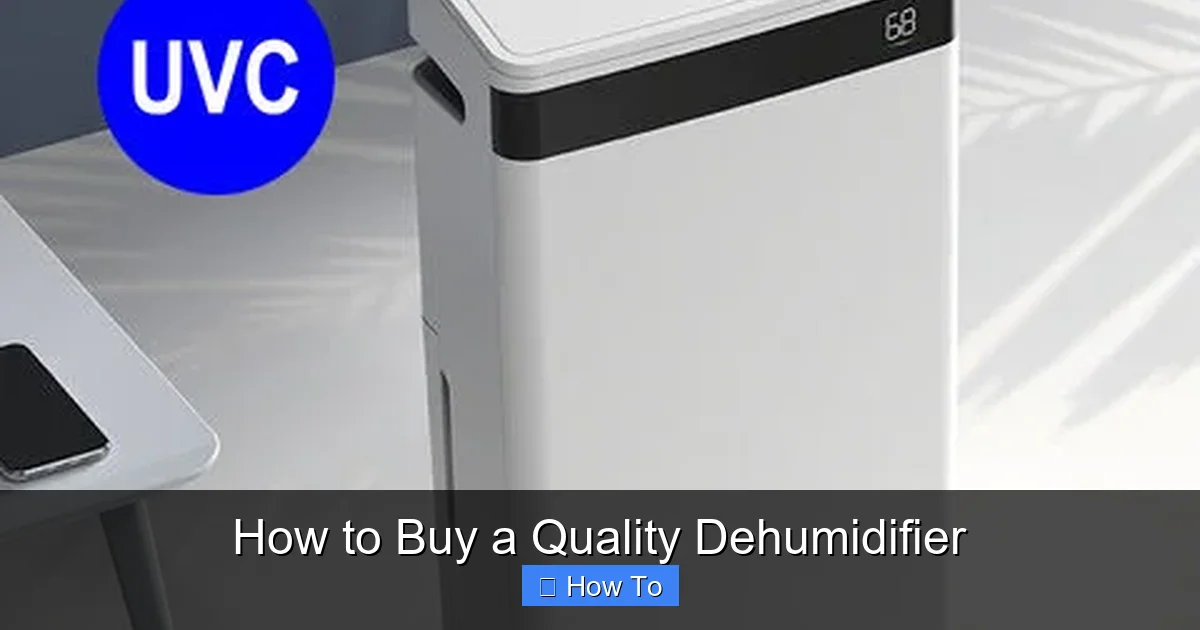
Visual guide about How to Buy a Quality Dehumidifier
Image source: p.globalsources.com
Before you shop, it’s important to understand what a dehumidifier does and why you might need one.
Dehumidifiers remove excess moisture from the air. They work by drawing in humid air, cooling it to condense the water vapor, and then releasing drier air back into the room. The collected water is stored in a tank or drained away.
Common signs you need a dehumidifier include:
- Visible mold or mildew (especially in corners or behind furniture)
- Musty odors that won’t go away
- Condensation on windows, walls, or pipes
- Allergies or respiratory issues that worsen indoors
- Warped wood, peeling wallpaper, or rust on metal fixtures
If you’re dealing with any of these, a dehumidifier can help. But not all units are created equal. The key is finding one that’s powerful enough for your space and built to last.
Step 2: Determine the Right Size and Capacity
One of the biggest mistakes people make is buying a dehumidifier that’s too small—or too big. Size matters, and it’s measured in “pints per day” (PPD), which tells you how much moisture the unit can remove in 24 hours.
Assess Your Room Size
Start by measuring the square footage of the area you want to dehumidify. A small bathroom might be 50 sq. ft., while a basement could be 1,000 sq. ft. or more.
Here’s a general guideline:
- Small (up to 500 sq. ft.): 20–30 pints/day
- Medium (500–1,500 sq. ft.): 30–50 pints/day
- Large (1,500+ sq. ft.): 50+ pints/day
But size isn’t the only factor—humidity level matters too.
Evaluate Humidity Levels
Use a hygrometer (a small, inexpensive device) to check the relative humidity (RH) in your space. Ideal indoor humidity is between 30% and 50%.
If your RH is:
- 50–60%: Moderate humidity—look for a standard-capacity unit.
- 60–70%: High humidity—opt for a higher-capacity model (e.g., 50+ pints).
- Above 70%: Severe dampness—consider a heavy-duty dehumidifier or even a whole-house system.
For example, a 70-pint dehumidifier is ideal for a damp 1,200 sq. ft. basement, while a 30-pint model works well in a humid bedroom.
Consider the Climate
If you live in a humid region like the Southeast U.S., Florida, or the Gulf Coast, you’ll need a more powerful unit than someone in a dry climate like Arizona. Coastal areas and homes with poor ventilation also require higher-capacity models.
Step 3: Choose the Right Type of Dehumidifier
Not all dehumidifiers are the same. There are two main types: refrigerant (compressor) and desiccant.
Refrigerant (Compressor) Dehumidifiers
These are the most common and work best in warm, humid environments (above 65°F). They use a refrigeration cycle to cool air and condense moisture.
Pros:
- High efficiency in warm climates
- Lower upfront cost
- Great for large spaces
Cons:
- Less effective in cold temperatures
- Can be noisy
- May freeze up in unheated basements
Best for: Basements, living rooms, and garages in temperate to warm climates.
Desiccant Dehumidifiers
These use a moisture-absorbing material (like silica gel) to pull water from the air. They work well in cooler temperatures and are often quieter.
Pros:
- Effective in cold environments (down to 40°F)
- Quiet operation
- Compact and lightweight
Cons:
- Higher energy use
- Smaller capacity
- More expensive upfront
Best for: Cold basements, RVs, boats, and small spaces where noise is a concern.
Whole-House vs. Portable Units
Most dehumidifiers are portable—they plug into a wall and can be moved from room to room. These are great for spot treatment.
Whole-house dehumidifiers are installed into your HVAC system and treat your entire home. They’re more expensive but ideal for large homes or chronic humidity problems.
For most people, a high-quality portable unit is the best balance of cost, convenience, and performance.
Step 4: Look for Key Features
A quality dehumidifier isn’t just about capacity—it’s about smart features that make it easier to use and maintain.
Auto-Humidistat
This feature lets you set your desired humidity level (e.g., 45%). The unit automatically turns on and off to maintain that level. It saves energy and prevents over-drying.
Continuous Drainage Option
Instead of emptying a water tank every day, you can attach a hose to drain water directly into a floor drain or sump pump. This is a must-have for basements or unattended areas.
Tip: Look for models with a built-in pump if you need to drain uphill.
Washable or Reusable Filters
Air filters trap dust and allergens. Washable filters save money and reduce waste. Check how easy they are to remove and clean.
Auto-Defrost
If you’re using the dehumidifier in a cold basement, auto-defrost prevents the coils from freezing. This extends the unit’s life and ensures consistent performance.
Timer and Remote Control
A 24-hour timer lets you schedule operation (e.g., run only at night). Remote controls add convenience, especially for units placed in hard-to-reach areas.
Energy Efficiency
Look for the ENERGY STAR® label. These models use up to 15% less energy than standard units, saving you money on electricity.
Check the “Energy Factor” (liters of water removed per kilowatt-hour). Higher numbers mean better efficiency.
Noise Level
Dehumidifiers can be noisy, especially compressor models. For bedrooms or quiet spaces, choose a unit under 50 decibels (dB). Many manufacturers list noise levels in the specs.
Step 5: Set a Realistic Budget
Dehumidifiers range from $100 to $600+, depending on size and features.
Here’s a rough breakdown:
- $100–$200: Small, basic models (20–30 pints). Good for closets or small bathrooms.
- $200–$350: Mid-range units (30–50 pints). Ideal for most homes and basements.
- $350–$600+: High-capacity, feature-rich models (50+ pints). Best for large spaces or severe humidity.
Don’t go for the cheapest option—it may break quickly or lack essential features. Instead, invest in a quality dehumidifier from a trusted brand. It’ll last longer and perform better.
Step 6: Research Top Brands and Models
Not all dehumidifiers are built the same. Stick with reputable brands known for reliability and customer support.
Top brands include:
- Frigidaire: Known for durability and energy efficiency. Great for basements.
- Honeywell: Offers quiet, high-performance models with smart features.
- GE: Reliable and widely available. Good mid-range options.
- hOmeLabs: Popular for large-capacity units with modern designs.
- Eva-Dry: Specializes in compact, portable models for small spaces.
Read customer reviews on sites like Amazon, Home Depot, or Consumer Reports. Look for consistent praise about performance, ease of use, and longevity.
Avoid unknown brands with no warranty or poor support.
Step 7: Check Warranty and Return Policy
A quality dehumidifier should come with at least a 1-year warranty. Some brands offer 2–5 years, especially on compressors.
Before buying, check:
- What’s covered (parts, labor, compressor)?
- Is there a money-back guarantee?
- Can you return it if it doesn’t work for your space?
A good warranty shows the manufacturer stands behind their product.
Step 8: Buy from a Reputable Retailer
Buy from trusted retailers like:
- Amazon (with verified purchases)
- Home Depot
- Lowe’s
- Best Buy
- Manufacturer websites (e.g., Frigidaire.com)
Avoid third-party sellers with no reviews or unclear return policies.
Step 9: Set Up and Maintain Your Dehumidifier
Once you’ve bought your dehumidifier, proper setup and maintenance are key to long-term performance.
Placement Tips
- Place the unit in the center of the room or near the source of moisture.
- Keep it at least 6–12 inches away from walls and furniture for proper airflow.
- Don’t block the air intake or exhaust vents.
Regular Maintenance
- Empty the water tank daily (unless using continuous drainage).
- Clean the filter every 2–4 weeks with warm, soapy water.
- Wipe the coils gently with a soft brush if dust builds up.
- Check for mold inside the tank—rinse with vinegar if needed.
Neglecting maintenance can reduce efficiency and shorten the unit’s life.
Troubleshooting Common Issues
Even the best dehumidifiers can have problems. Here’s how to fix common issues:
Unit Won’t Turn On
- Check the power cord and outlet.
- Make sure the water tank isn’t full (most units shut off when full).
- Reset the unit by unplugging it for 10 minutes.
Not Removing Enough Moisture
- Ensure the room is sealed (close doors and windows).
- Check if the filter is clogged.
- Verify the unit is the right size for the space.
Unit Is Too Noisy
- Place it on a flat, stable surface to reduce vibration.
- Check for loose parts or debris in the fan.
- Consider moving it to a less sensitive area.
Ice Builds Up on Coils
- This happens in cold environments. Use a desiccant model or move the unit to a warmer area.
- Ensure auto-defrost is enabled.
Conclusion
Buying a quality dehumidifier doesn’t have to be complicated. By following these steps—assessing your needs, choosing the right size and type, prioritizing key features, and maintaining your unit—you’ll get a reliable appliance that improves your home’s air quality and protects your property.
Remember: the best dehumidifier is the one that fits your space, your budget, and your lifestyle. Don’t rush the decision. Take time to compare models, read reviews, and invest in a unit that will serve you well for years.
With the right dehumidifier, you’ll enjoy fresher air, fewer allergens, and a more comfortable home—rain or shine.