
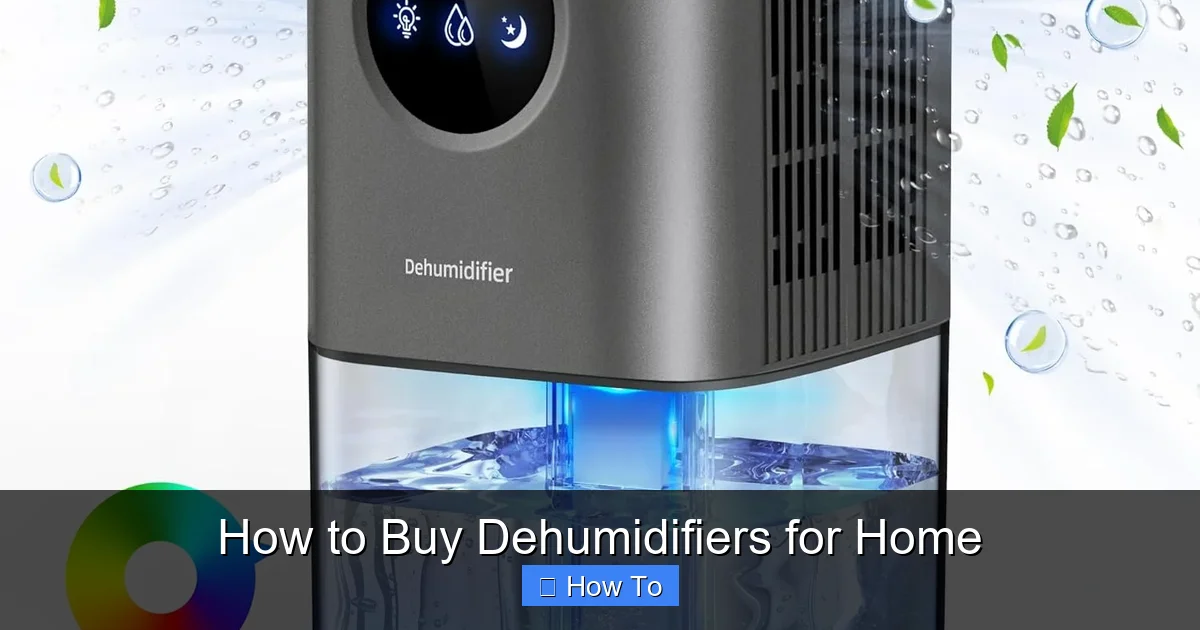
Buying the right dehumidifier for your home can improve air quality, reduce allergens, and prevent mold. This guide walks you through choosing the best size, type, and features for your space.
Quick Answers to Common Questions
Tip/Question?
How do I know if my home is too humid?
Use a hygrometer to measure humidity. If it’s above 60%, you likely need a dehumidifier.
Tip/Question?
Can I run a dehumidifier all the time?
Yes, especially if using an auto-humidistat. It will cycle on and off to maintain ideal levels.
Tip/Question?
Should I buy a dehumidifier with a built-in pump?
Yes, if you can’t gravity-drain. A pump lets you send water upward to a sink or window.
Tip/Question?
Are dehumidifiers expensive to run?
ENERGY STAR® models are efficient. A 50-pint unit may cost $10–$20 per month to run.
Tip/Question?
Can a dehumidifier help with allergies?
Yes, by reducing mold and dust mites, it can improve allergy and asthma symptoms.
How to Buy Dehumidifiers for Home: A Complete Step-by-Step Guide
If your home feels sticky, smells musty, or you’ve noticed condensation on windows, it might be time to buy a dehumidifier. These handy appliances pull excess moisture from the air, helping prevent mold, dust mites, and structural damage. But with so many models on the market, how do you choose the right one?
This guide will walk you through everything you need to know to buy dehumidifiers for home use. Whether you’re tackling dampness in a basement, controlling humidity in a bedroom, or improving air quality in a whole house, we’ll help you make a smart, informed decision. By the end, you’ll know exactly what to look for—and what to avoid.
Step 1: Understand Why You Need a Dehumidifier
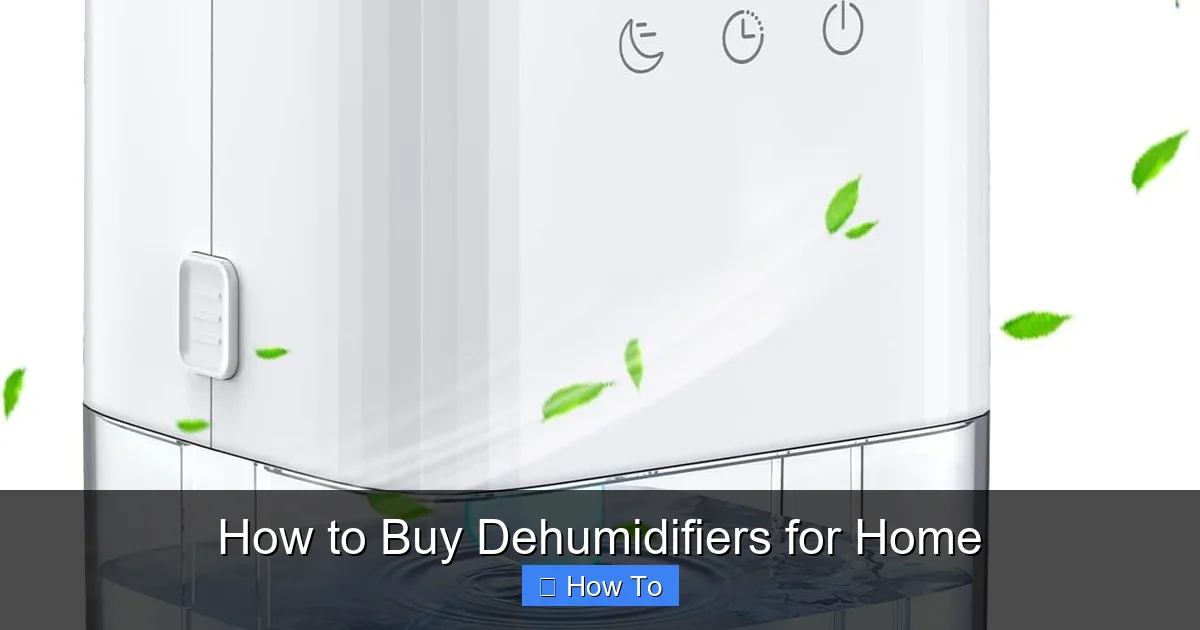
Visual guide about How to Buy Dehumidifiers for Home
Image source: m.media-amazon.com
Before shopping, it’s important to understand what a dehumidifier does and why you might need one.
Dehumidifiers reduce indoor humidity levels, ideally keeping them between 30% and 50%. High humidity can lead to:
– Mold and mildew growth
– Musty odors
– Warped wood or peeling paint
– Increased allergens like dust mites and mold spores
– Reduced comfort, especially in summer
Common signs you need a dehumidifier:
– Condensation on windows or walls
– Damp spots or water stains
– Clothes that take too long to dry indoors
– A persistent “wet” or “earthy” smell
If you live in a humid climate, have a basement, or recently experienced water damage, a dehumidifier is likely a wise investment.
Step 2: Determine the Right Size and Capacity
One of the most important factors when buying a dehumidifier is choosing the right size. Too small, and it won’t keep up. Too large, and you’ll waste money on energy and upfront cost.
Dehumidifiers are rated by how many pints of moisture they can remove in 24 hours. This is called the “pint capacity.”
Match Capacity to Room Size
Use this general guide to match capacity to square footage:
- 10–25 pints: Small spaces (under 500 sq. ft.), like bathrooms, closets, or small bedrooms.
- 30–40 pints: Medium spaces (500–1,500 sq. ft.), such as living rooms, average basements, or large bedrooms.
- 50–70 pints: Large spaces (1,500–2,500 sq. ft.), including finished basements, open-concept homes, or whole-house units.
- 70+ pints: Very large or extremely damp areas, such as crawl spaces, garages, or homes in tropical climates.
Consider Humidity Level
The actual humidity level matters more than just square footage. A damp basement in Florida needs a stronger unit than a slightly humid bedroom in Arizona.
Use a hygrometer (a small, inexpensive device) to measure humidity. Then, adjust your capacity needs:
- Moderately damp (50–60% humidity): Choose a standard capacity for your room size.
- Very damp (60–70% humidity): Go one size up in capacity.
- Wet or flooded (70%+ humidity): Opt for a high-capacity (50+ pint) unit or a commercial-grade model.
For example, a 1,200 sq. ft. basement with moderate dampness might need a 30-pint dehumidifier. But if it floods often, a 50-pint model would be better.
Step 3: Choose the Right Type of Dehumidifier
Not all dehumidifiers work the same way. The three main types are compressor, desiccant, and thermoelectric. Each has pros and cons.
Compressor (Refrigerant) Dehumidifiers
These are the most common and effective for home use. They use a refrigeration cycle to cool air, causing moisture to condense and collect in a tank.
Best for: Warm, humid climates (above 65°F).
Pros:
– Highly efficient at removing moisture
– Good for large spaces
– Affordable and widely available
Cons:
– Can be noisy
– Less effective in cold temperatures
– May slightly warm the room
Example: A 50-pint compressor dehumidifier works well in a basement during summer.
Desiccant Dehumidifiers
These use a moisture-absorbing material (like silica gel) to pull water from the air. They don’t rely on cooling, so they work well in cold environments.
Best for: Cold climates, garages, crawl spaces, or winter use.
Pros:
– Quiet operation
– Effective in low temperatures (down to 40°F)
– Compact and lightweight
Cons:
– Less energy-efficient
– Slower moisture removal
– Often more expensive
Example: A desiccant model is ideal for a chilly cabin or unheated garage.
Thermoelectric (Peltier) Dehumidifiers
These use a small electric current to create a temperature difference, causing condensation. They’re compact and quiet but less powerful.
Best for: Small spaces like closets, RVs, or bathrooms.
Pros:
– Very quiet
– Energy-efficient for small jobs
– No moving parts (low maintenance)
Cons:
– Low capacity (usually under 10 pints)
– Not effective in large or very damp areas
Example: A 5-pint thermoelectric unit can keep a small closet dry.
Step 4: Look for Key Features
Modern dehumidifiers come with features that improve convenience, efficiency, and performance. Here’s what to look for.
Auto-Humidistat
This sensor measures humidity and automatically turns the unit on or off to maintain your desired level. It saves energy and prevents over-drying.
Tip: Set it between 40% and 50% for comfort and health.
Continuous Drainage Option
Instead of emptying a water tank every day, you can attach a hose for continuous drainage. This is essential for basements or unattended areas.
Look for: A built-in hose connection or gravity drain port.
Timer and Auto-Restart
A timer lets you schedule operation (e.g., run only at night). Auto-restart resumes operation after a power outage—great for storm-prone areas.
Washable or Reusable Filter
A clean filter improves air quality and efficiency. Choose models with easy-to-remove, washable filters.
Quiet Operation
Check the decibel (dB) rating. Look for units under 50 dB for bedrooms or living areas.
Example: A 45 dB model is about as loud as a quiet conversation.
Energy Efficiency
Look for the ENERGY STAR® label. These models use 15–30% less energy than standard units, saving you money over time.
Check the Energy Factor (L/kWh): Higher numbers mean better efficiency.
Smart Features (Optional)
Some high-end models offer Wi-Fi connectivity, app control, or voice assistant compatibility (like Alexa or Google Home). These let you monitor and adjust settings remotely.
Great for: Tech-savvy users or frequent travelers.
Step 5: Consider Placement and Installation
Where you place your dehumidifier affects its performance.
Ideal Locations
- Basements: Place near the center or where dampness is worst. Avoid corners with poor airflow.
- Living areas: Keep away from walls and furniture. Allow 6–12 inches of clearance on all sides.
- Bathrooms or laundry rooms: Use a small unit or run the main dehumidifier nearby during high-moisture activities.
Ventilation Tips
– Don’t block air intake or exhaust vents.
– Close windows and doors while running (unless ventilating).
– Use fans to circulate air if needed.
Drainage Setup
If using a hose for continuous drainage:
– Ensure the hose slopes downward to a floor drain, sump pump, or outside.
– Use a hose with a check valve to prevent backflow.
– Secure the hose to avoid leaks.
Step 6: Set a Budget and Compare Models
Dehumidifiers range from $50 to $500+. Set a realistic budget based on your needs.
Price Ranges
- $50–$150: Small, basic models (10–25 pints). Good for closets or bathrooms.
- $150–$300: Mid-range units (30–50 pints). Best for most homes.
- $300–$500+: High-capacity, smart, or whole-house models. Ideal for large or very damp spaces.
What to Avoid
– Extremely cheap models with poor reviews (they break quickly).
– Units with no warranty or customer support.
– Overpowered models for small spaces (they cycle too often and waste energy).
Top Brands to Consider
- Frigidaire: Reliable, energy-efficient, great for basements.
- hOmeLabs: High-capacity, user-friendly, popular for large spaces.
- Eva-Dry: Compact and quiet, ideal for small areas.
- GE: Durable with smart features.
- Keystone: Affordable and effective for medium rooms.
Step 7: Read Reviews and Check Warranty
Before buying, research real user experiences.
Where to Read Reviews
– Amazon, Home Depot, or Lowe’s customer reviews
– Consumer Reports or Wirecutter
– YouTube unboxing and testing videos
What to Look For in Reviews
– Noise level
– Ease of emptying the tank
– Durability over time
– Customer service responsiveness
Warranty
A good warranty shows the manufacturer stands behind the product. Look for:
– At least 1–2 years on parts and labor
– Extended warranty options
– Clear return policy
Step 8: Install and Maintain Your Dehumidifier
Once you’ve bought your unit, proper setup and care ensure long-term performance.
Initial Setup
1. Unbox and inspect for damage.
2. Place on a level surface with good airflow.
3. Plug into a grounded outlet (avoid extension cords).
4. Set humidity level and turn on.
Daily Use Tips
– Empty the water tank regularly (unless using continuous drainage).
– Clean the filter every 2–4 weeks.
– Wipe the exterior with a damp cloth.
Seasonal Maintenance
– In winter, store portable units if not in use.
– Check hoses and connections for leaks.
– Deep-clean the unit annually.
Troubleshooting Common Issues
Even the best dehumidifiers can have problems. Here’s how to fix common issues.
Unit Won’t Turn On
– Check power source and outlet.
– Ensure the tank isn’t full (most units shut off automatically).
– Reset the unit by unplugging for 10 minutes.
Not Removing Moisture
– Room may be too cold (compressor models struggle below 65°F).
– Filter is clogged—clean or replace it.
– Unit is undersized for the space.
Too Noisy
– Place on a flat, stable surface.
– Check for loose parts or vibrations.
– Consider a quieter model if noise persists.
Water Leaking
– Tank may be overfilled—empty it.
– Drain hose is kinked or blocked—straighten or clear it.
– Unit is tilted—level it.
Ice Buildup on Coils
– Common in cold environments.
– Switch to a desiccant model or use only in warmer areas.
Conclusion
Buying a dehumidifier for your home doesn’t have to be overwhelming. By following these steps—assessing your needs, choosing the right size and type, and looking for key features—you can find a model that improves your indoor air quality and comfort.
Remember: the best dehumidifier is the one that fits your space, matches your humidity level, and fits your budget. Don’t rush the decision. Take time to compare models, read reviews, and consider long-term savings from energy efficiency.
With the right dehumidifier, you’ll enjoy fresher air, fewer allergens, and a healthier home environment. So breathe easy—your ideal unit is out there.