

Choosing the right dehumidifier starts with accurate calculations. This guide walks you through measuring your space, assessing humidity, and selecting the ideal unit. Save energy and improve air quality with the perfect fit.
Quick Answers to Common Questions
Tip/Question?
How do I know if my dehumidifier is the right size?
Check if it runs frequently but humidity stays high—this signals it’s too small. If it cycles on/off quickly and the room feels dry, it may be too large.
Tip/Question?
Can I use one dehumidifier for my whole house?
Portable units work best for single rooms. For whole-house control, consider a whole-house dehumidifier integrated with your HVAC system.
Tip/Question?
Should I run my dehumidifier all the time?
Use the auto-humidistat feature to run only when needed. This saves energy and prevents over-drying the air.
Tip/Question?
What’s the best place to put a dehumidifier in a basement?
Place it in the center or near the dampest area, away from walls, with good airflow. Use a hose for continuous drainage.
Tip/Question?
How often should I clean my dehumidifier filter?
Clean the filter every 4–6 weeks during heavy use, or monthly if running daily. A dirty filter reduces efficiency and airflow.
How to Calculate Dehumidifier: A Complete Step-by-Step Guide
Are you tired of sticky air, musty smells, or mold growing in your basement? A dehumidifier can help—but only if you choose the right one. The secret to success? Knowing how to calculate dehumidifier size and capacity for your specific space. Too small, and it won’t keep up. Too big, and you’ll waste energy and money.
In this guide, you’ll learn exactly how to calculate the perfect dehumidifier for your home. We’ll walk you through measuring your space, checking humidity levels, understanding capacity ratings, and making smart choices based on your environment. By the end, you’ll be confident in selecting a unit that keeps your air fresh, dry, and healthy—without overspending.
Step 1: Measure Your Room Size
The first step in calculating your dehumidifier needs is determining the size of the space you want to dehumidify. Most dehumidifiers are rated based on the square footage they can effectively cover. So, start by measuring the length and width of the room.
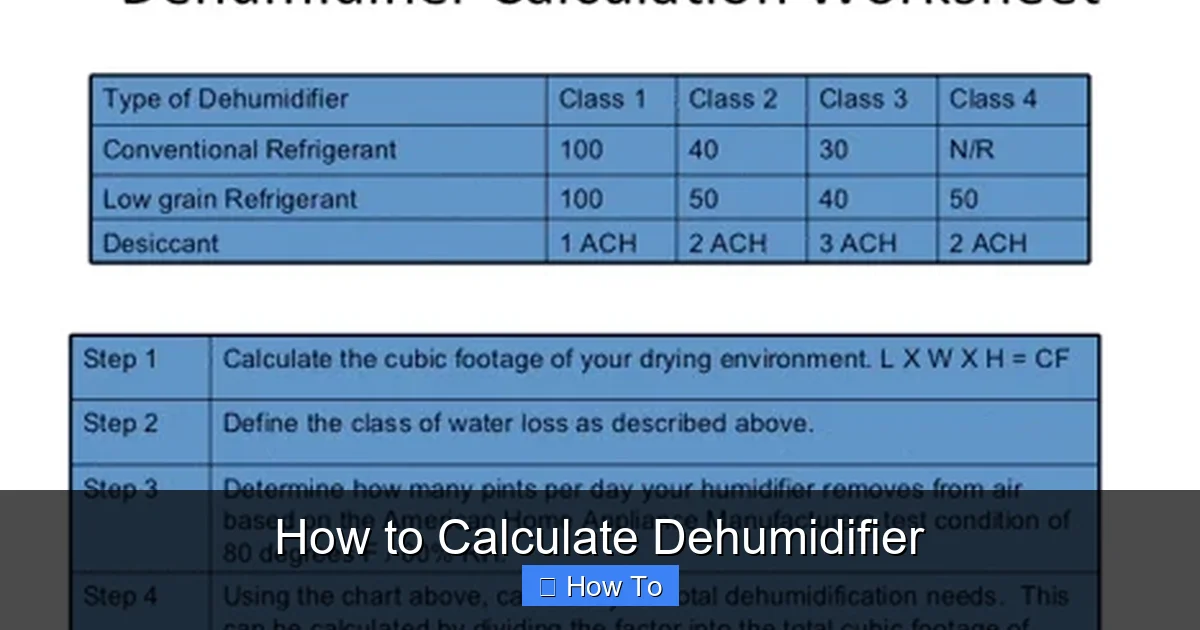
Visual guide about How to Calculate Dehumidifier
Image source: agileequipment.com.au
How to Calculate Square Footage
Use a tape measure to find the length and width of the room in feet. Multiply these two numbers to get the total square footage.
- Example: A room that is 12 feet long and 10 feet wide = 12 × 10 = 120 square feet.
For irregularly shaped rooms, break the area into smaller rectangles, calculate each, and add them together. Don’t forget to include closets, alcoves, or other enclosed spaces if they’re part of the area you’re treating.
Why Room Size Matters
Dehumidifiers are designed to handle specific room sizes. A unit rated for 500 square feet won’t work well in a 1,000-square-foot basement. Oversized units may cycle on and off too quickly, reducing efficiency and lifespan. Undersized units will run constantly, wear out faster, and fail to control humidity.
As a general rule:
- Small rooms (up to 500 sq ft): 10–20 pint capacity
- Medium rooms (500–1,500 sq ft): 20–30 pint capacity
- Large rooms (1,500+ sq ft): 30+ pint capacity
These are starting points—your actual needs depend on humidity levels and room conditions, which we’ll cover next.
Step 2: Check the Humidity Level
Room size tells you part of the story, but humidity level is just as important. A small, damp basement may need a stronger dehumidifier than a large, dry living room. That’s why measuring moisture in the air is a critical step in calculating your dehumidifier needs.
Use a Hygrometer
A hygrometer is a simple, inexpensive device that measures relative humidity (RH). You can find digital hygrometers at hardware stores or online for under $20. Place it in the room for 24 hours to get an accurate reading.
Ideal indoor humidity levels are between 30% and 50%. Here’s how to interpret your results:
- Below 30%: Air is too dry—consider a humidifier instead.
- 30–50%: Comfortable and healthy—your current setup may be fine.
- 50–60%: Slightly high—monitor for mold or musty odors.
- Above 60%: High humidity—definitely needs a dehumidifier.
Test at Different Times
Humidity can vary throughout the day. Check levels in the morning, afternoon, and evening. Basements often feel dampest in the morning after overnight cooling. Laundry rooms spike in humidity when the dryer runs.
If you don’t have a hygrometer, look for signs of high humidity:
- Condensation on windows or walls
- Musty smells
- Peeling paint or wallpaper
- Mold or mildew growth
- Warped wood or rust on metal
These are clear indicators that moisture is a problem—and a dehumidifier is needed.
Step 3: Understand Dehumidifier Capacity (Pints Per Day)
Dehumidifiers are rated by how many pints of moisture they can remove in 24 hours. This is called the pints per day (PPD) rating. But here’s the catch: manufacturers test these ratings under standard conditions (80°F and 60% humidity). Real-world performance can differ.
How to Match PPD to Your Needs
Use your room size and humidity level to choose the right PPD. Here’s a practical guide:
| Room Size | Humidity Level | Recommended PPD |
|---|---|---|
| Up to 500 sq ft | Moderate (50–60%) | 10–20 pints |
| Up to 500 sq ft | High (60%+) | 20–30 pints |
| 500–1,000 sq ft | Moderate | 20–30 pints |
| 500–1,000 sq ft | High | 30–50 pints |
| 1,000+ sq ft | High or very damp | 50+ pints |
For example, a 1,200-square-foot basement with 70% humidity and visible mold would need a 50-pint or larger unit. A 300-square-foot bathroom with occasional steam might only need a 15-pint model.
Don’t Overbuy Based on PPD Alone
Some manufacturers inflate PPD ratings. Look for third-party certifications like AHAM (Association of Home Appliance Manufacturers) to ensure accuracy. AHAM-tested units provide realistic performance data under controlled conditions.
Also, remember that higher PPD often means larger size, louder operation, and higher energy use. Balance power with practicality.
Step 4: Consider Room Conditions and Usage
Not all rooms are created equal. A dehumidifier that works in a dry bedroom might fail in a damp basement. Consider these factors when calculating your needs:
Basements and Crawl Spaces
These areas are prone to high humidity due to ground moisture, poor ventilation, and cooler temperatures. Even if your basement is only 800 square feet, it may act like a 1,200-square-foot space in terms of moisture load.
Tip: Choose a unit with a built-in pump or hose drain option. This allows continuous drainage without emptying a bucket.
Bathrooms and Laundry Rooms
These rooms generate steam and moisture regularly. A small, portable dehumidifier can help, but for frequent use, consider a larger unit or one with auto-humidistat control.
Garages and Workshops
Garages often have concrete floors that wick moisture from the ground. Plus, tools and vehicles can introduce dampness. A 30–50 pint unit is usually sufficient for a 2-car garage.
Whole-House vs. Portable Units
If you have high humidity throughout your home, a whole-house dehumidifier connected to your HVAC system may be better than multiple portable units. These are more expensive but offer consistent, whole-home control.
Portable units are great for targeted areas but require manual maintenance. Choose based on your budget, space, and humidity distribution.
Step 5: Factor in Energy Efficiency
A dehumidifier can run for hours each day, so energy use adds up. When calculating your dehumidifier needs, don’t ignore efficiency. A cheaper, less efficient model may cost more in the long run.
Look for the ENERGY STAR Label
ENERGY STAR-certified dehumidifiers use 15–30% less energy than standard models. They meet strict efficiency guidelines set by the EPA. Over time, this can save you $50–$100 per year on electricity.
Check the Energy Factor (EF)
The Energy Factor measures how efficiently a dehumidifier removes moisture per kilowatt-hour (kWh). Higher EF = better efficiency.
- EF of 1.0–1.5: Standard efficiency
- EF of 1.5–2.0: High efficiency
- EF above 2.0: Very high efficiency
For example, a 50-pint ENERGY STAR model with an EF of 2.0 removes more moisture per kWh than a non-certified 50-pint unit with an EF of 1.2.
Consider Operating Costs
Estimate your annual cost using this formula:
Annual Cost = (Pints per day × 0.0025 kWh per pint) × 365 days × Electricity rate ($/kWh)
Example: A 30-pint unit running daily in an area with $0.12/kWh electricity:
(30 × 0.0025) × 365 × 0.12 = $3.29 per year
That seems low—but remember, dehumidifiers don’t run 24/7. Most cycle on and off based on humidity. Still, efficiency matters over time.
Step 6: Account for Air Circulation and Ventilation
Even the best dehumidifier can’t work miracles in a sealed, stagnant room. Poor air circulation reduces efficiency and increases run time. Improve airflow to get the most from your unit.
Use Fans to Improve Circulation
Place a box fan or ceiling fan in the room to help distribute dry air. This prevents moisture from pooling in corners and ensures the dehumidifier samples air evenly.
Open Doors and Vents (When Safe)
If possible, open interior doors to allow air to move between rooms. In basements, consider installing vents or using an exhaust fan to remove humid air.
Seal Air Leaks
Check for gaps around windows, doors, and foundations. Use weatherstripping or caulk to seal leaks. This prevents humid outdoor air from entering and overworking your dehumidifier.
Use Exhaust Fans
Run bathroom and kitchen exhaust fans during and after showers or cooking. This removes moisture at the source, reducing the load on your dehumidifier.
Step 7: Choose the Right Features
Modern dehumidifiers come with features that make them easier to use and more effective. When calculating your needs, consider which features add value.
Auto-Humidistat
This sensor monitors humidity and turns the unit on/off to maintain your desired level. Set it to 45%, and it will run only when needed—saving energy and preventing over-drying.
Continuous Drainage
Instead of emptying a bucket every day, connect a hose to drain water directly into a floor drain or sump pump. Essential for basements or 24/7 operation.
Built-in Pump
Some units have a pump that pushes water upward—perfect for draining into a sink or window. Great for spaces without floor drains.
Timer and Remote Control
Set the dehumidifier to run during off-peak hours or when you’re away. Remote control lets you adjust settings without bending down.
Washable Filter
A reusable filter saves money and reduces waste. Clean it monthly to maintain airflow and efficiency.
Step 8: Install and Maintain Your Dehumidifier
Even the best calculations won’t help if the unit isn’t installed or maintained properly. Follow these steps for optimal performance.
Placement Tips
- Place the unit on a flat, stable surface.
- Keep it at least 6–12 inches away from walls and furniture for proper airflow.
- Avoid placing it near heat sources like furnaces or water heaters.
- In basements, position it near the center or in the dampest area.
Regular Maintenance
- Clean the filter monthly: Rinse with warm water and let dry.
- Empty the bucket: If not using continuous drainage, check daily.
- Inspect the coils: Dust buildup reduces efficiency—clean gently with a soft brush.
- Check the hose: Ensure it’s not kinked or clogged.
- Store properly in winter: Clean and cover the unit if not in use.
Troubleshooting Common Issues
Even with perfect calculations, problems can arise. Here’s how to fix common issues:
Unit Runs But Doesn’t Remove Moisture
- Check the filter—clean or replace if dirty.
- Ensure the room isn’t too cold (below 65°F). Most dehumidifiers work best above this temperature.
- Verify the humidistat setting—it may be set too low.
Unit Freezes Up
- This happens in cold environments. Move the unit to a warmer area or use a cold-weather model.
- Clean the coils—ice buildup blocks airflow.
Water Leaks
- Check the bucket—it may be overfull or misaligned.
- Inspect the drain hose for cracks or clogs.
- Ensure the unit is level—tilting can cause spills.
Loud Operation
- Place the unit on a rubber mat to reduce vibration.
- Check for loose parts or debris in the fan.
- Ensure it’s not touching walls or furniture.
Conclusion
Learning how to calculate dehumidifier size and capacity doesn’t have to be complicated. Start by measuring your room, checking humidity levels, and matching those to the right pint rating. Factor in room conditions, energy efficiency, and smart features. With the right unit, you’ll enjoy fresher air, fewer allergens, and a healthier home.
Remember: the best dehumidifier is the one that fits your space and lifestyle. Don’t rush the process. Take time to assess your needs, compare models, and choose wisely. Your comfort—and your wallet—will thank you.