
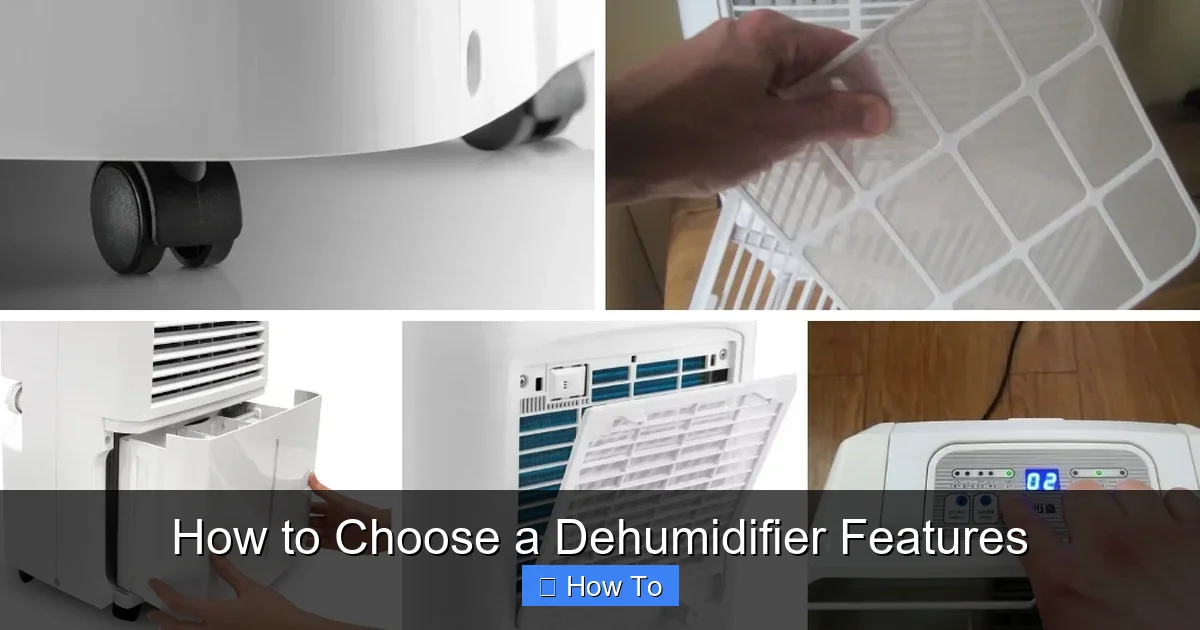
Choosing the right dehumidifier features can improve air quality, prevent mold, and protect your home. This guide walks you through key factors like size, capacity, noise level, and smart controls so you can pick the best model for your space.
Quick Answers to Common Questions
What size dehumidifier do I need for a 1,000 sq. ft. basement?
A 50-pint dehumidifier is usually sufficient for a moderately damp 1,000 sq. ft. basement. If it’s very damp or has water issues, consider a 70-pint model with a pump.
Should I get a dehumidifier with a pump?
Yes, if your basement lacks a floor drain or you need to drain water upward. A built-in pump lets you route water to a sink or window, making maintenance much easier.
How often should I clean the filter?
Clean the filter every 2–4 weeks during heavy use. A dirty filter reduces efficiency and can cause the unit to overheat or freeze.
Can I run a dehumidifier in winter?
Yes, but only if the temperature stays above 60°F. Below that, compressor units lose efficiency. Use a desiccant model or one with low-temperature operation for cold spaces.
Do smart dehumidifiers use more energy?
Not necessarily. Smart features like auto-humidistat and scheduling can actually reduce energy use by running only when needed. Look for ENERGY STAR models for the best efficiency.
How to Choose a Dehumidifier Features: A Complete Step-by-Step Guide
High humidity doesn’t just feel sticky—it can damage your home, trigger allergies, and encourage mold growth. Whether you’re dealing with a damp basement, a humid bathroom, or just want better indoor air quality, a dehumidifier can make a big difference. But with so many models on the market, how do you know which one is right for you?
This guide will walk you through everything you need to know about how to choose a dehumidifier features that match your needs. We’ll cover size, capacity, noise, energy efficiency, smart controls, drainage options, and more. By the end, you’ll be able to confidently pick a dehumidifier that keeps your home comfortable, healthy, and dry.
Step 1: Understand Your Space and Humidity Level
Before you even look at dehumidifier models, you need to understand the problem you’re trying to solve. Is your basement damp after rain? Does your bathroom stay foggy long after a shower? Or is your whole house feeling muggy in the summer?
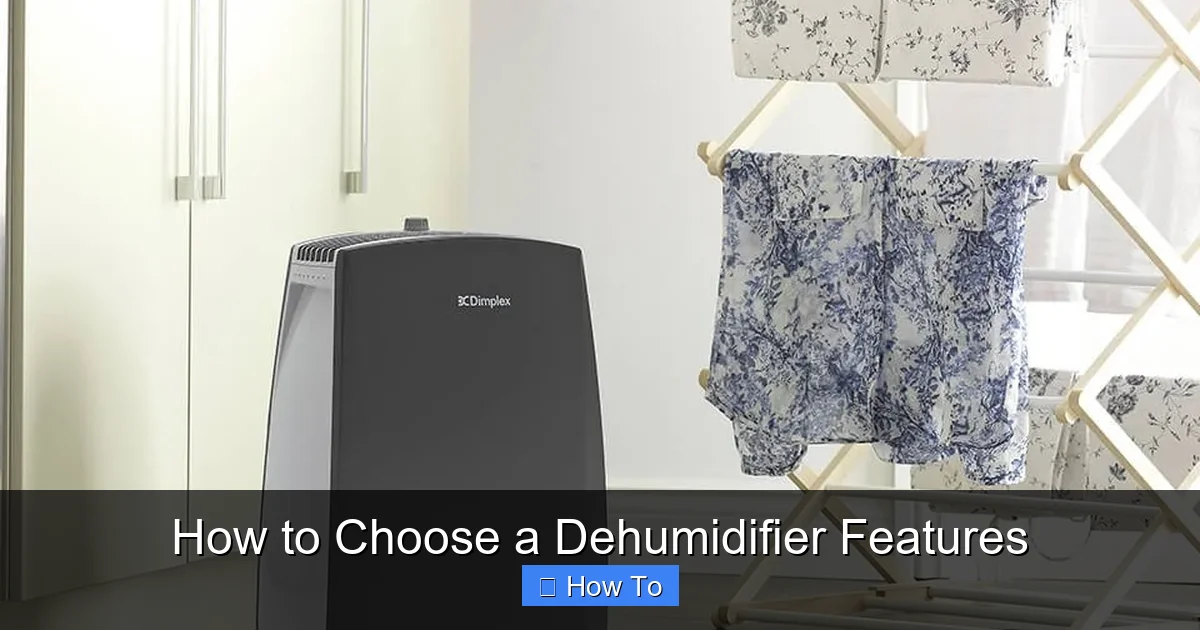
Visual guide about How to Choose a Dehumidifier Features
Image source: media.4rgos.it
Assess the Room Size
The first step is measuring the area where you plan to use the dehumidifier. Most manufacturers list coverage in square feet. For example:
- Up to 1,500 sq. ft.: Ideal for small basements, bathrooms, or single rooms.
- 1,500–3,000 sq. ft.: Good for medium-sized basements or open-concept living areas.
- Over 3,000 sq. ft.: Best for large homes, crawl spaces, or whole-house systems.
Use a tape measure or a room calculator app to get accurate dimensions. Don’t forget to include closets, hallways, or connected spaces if moisture spreads easily.
Test the Humidity Level
Normal indoor humidity should be between 30% and 50%. Anything above 60% increases the risk of mold and dust mites. You can check this with a hygrometer—a small, inexpensive device available at hardware stores or online.
If your humidity is consistently above 60%, you’ll need a dehumidifier with strong moisture removal power. In very damp areas like basements with water seepage, you may need a heavy-duty unit or even a whole-house system.
Identify the Source of Moisture
Understanding where the moisture comes from helps you choose the right features. For example:
- Condensation: Common in bathrooms, kitchens, or poorly insulated windows. A small, quiet unit with a timer may work best.
- Groundwater or leaks: Basements with damp walls or standing water need powerful units with continuous drainage.
- Poor ventilation: Crawl spaces or laundry rooms benefit from units with built-in pumps or ducting options.
Step 2: Choose the Right Capacity (Pint Rating)
Dehumidifier capacity is measured in “pints per day” (PPD)—how much moisture the unit can remove in 24 hours. This is one of the most important dehumidifier features to get right.
Match Capacity to Room Conditions
Manufacturers often provide a guide based on room size and humidity level:
- 30-pint: Best for small, moderately damp spaces (e.g., a 500 sq. ft. bathroom or closet).
- 50-pint: Ideal for average basements (1,000–1,500 sq. ft.) with moderate humidity.
- 70-pint or higher: Needed for large, very damp areas like flooded basements or whole-house use.
But don’t just go by square footage. A small basement with a water leak may need a 70-pint unit, while a large, well-ventilated garage might only need 30 pints.
Consider the “Moisture Level” Rating
Many dehumidifiers are labeled for “slightly damp,” “moderately damp,” or “very damp” conditions. Here’s what that means:
- Slightly damp: Humidity around 50–60%. A 30- or 50-pint unit usually suffices.
- Moderately damp: Humidity 60–70%, with occasional musty smells. Go for 50–70 pints.
- Very damp or wet: Standing water, mold, or persistent dampness. Choose 70+ pints with a pump.
When in doubt, round up. It’s better to have a slightly oversized unit than one that struggles to keep up.
Step 3: Look for Energy Efficiency
Dehumidifiers run for hours each day, so energy use adds up. Choosing an efficient model saves money and reduces your carbon footprint.
Check for ENERGY STAR Certification
ENERGY STAR-certified dehumidifiers use 15–30% less energy than standard models. Look for the blue label on the unit or product listing. These models meet strict efficiency guidelines set by the U.S. Environmental Protection Agency.
Compare the Energy Factor (L/kWh)
The energy factor tells you how many liters of water the unit removes per kilowatt-hour of electricity. Higher is better. For example:
- 1.5–1.8 L/kWh: Standard efficiency.
- 1.9–2.2 L/kWh: High efficiency (common in ENERGY STAR models).
- 2.3+ L/kWh: Top-tier efficiency, often in newer compressor or desiccant models.
A higher energy factor means lower operating costs. Over a year, this can save you $20–$50 or more, depending on usage and electricity rates.
Consider the Type of Dehumidifier
There are two main types:
- Compressor (refrigerant) dehumidifiers: Most common. Work best in warm, humid conditions (above 65°F). Efficient and affordable.
- Desiccant dehumidifiers: Use a moisture-absorbing material. Better in cold environments (like unheated basements) but typically use more energy.
For most homes, a compressor model is the best balance of performance and efficiency.
Step 4: Evaluate Noise Level
Dehumidifiers aren’t silent. They use fans and compressors, which create noise. If you’re placing the unit in a bedroom, home office, or living room, noise level is a key feature.
Check the Decibel (dB) Rating
Noise is measured in decibels (dB). Here’s a quick guide:
- Under 50 dB: Quiet, like a whisper or soft conversation. Ideal for bedrooms.
- 50–55 dB: Moderate, like a refrigerator hum. Fine for living rooms or basements.
- Over 55 dB: Noticeable, like a dishwasher. May be disruptive in quiet spaces.
Look for models labeled “quiet” or “low-noise.” Some brands advertise noise levels as low as 45 dB.
Consider Fan Speed Settings
Many dehumidifiers have multiple fan speeds. A low-speed setting reduces noise but may remove moisture more slowly. Use high speed for quick drying, then switch to low for maintenance.
Placement Matters
Even a quiet unit can sound louder if placed on a hard surface or near a wall. Use a rubber mat to reduce vibration, and keep the unit at least 6–12 inches from walls for proper airflow.
Step 5: Choose the Right Drainage Option
All dehumidifiers collect water, but how you remove it varies. This is one of the most practical dehumidifier features to consider.
Built-in Water Tank
Most portable dehumidifiers have a removable tank (usually 1–2 gallons). When full, the unit shuts off and alerts you. You then empty it manually.
Pros: Simple, no setup needed.
Cons: Requires frequent emptying (every 6–12 hours in humid conditions).
Best for small spaces or occasional use.
Continuous Drainage with Hose
Many models include a hose connection. You attach a standard garden hose and route it to a floor drain, sink, or sump pump.
Pros: No need to empty the tank. Great for basements or 24/7 operation.
Cons: Requires access to a drain. Hose must slope downward to avoid backups.
Ideal for damp basements, laundry rooms, or crawl spaces.
Built-in Pump (Auto-Pump)
Some high-end models have a built-in pump that pushes water upward through a hose—even to a sink or window.
Pros: Can drain vertically (up to 15 feet). No gravity needed. Perfect for basements without floor drains.
Cons: More expensive. Pump may add slight noise.
Best for hard-to-reach areas or whole-house systems.
Smart Drainage Alerts
Some models send notifications when the tank is full or if drainage is blocked. This is especially useful if you’re away from home.
Step 6: Look for Smart and Convenience Features
Modern dehumidifiers come with features that make them easier to use and more effective.
Auto-Humidistat
This sensor measures humidity and turns the unit on/off to maintain your desired level (e.g., 45%). No more guessing or constant adjustments.
Tip: Set it between 40% and 50% for comfort and mold prevention.
Auto-Restart
If the power goes out, the unit will automatically resume its previous settings when power returns. Essential for storm-prone areas or unattended basements.
Timer Function
Set the dehumidifier to run for a specific time (e.g., 2, 4, or 8 hours). Great for energy savings or running it overnight.
Defrost Mode
In cold environments, the coils can freeze. A defrost mode automatically melts ice, keeping the unit running efficiently. Important for unheated basements or garages.
Washable or Replaceable Air Filter
A good filter traps dust, allergens, and mold spores. Washable filters save money, while HEPA filters offer superior air cleaning.
Maintenance tip: Clean the filter every 2–4 weeks during heavy use.
Wi-Fi and App Control
Smart dehumidifiers connect to your home Wi-Fi. You can monitor humidity, adjust settings, and receive alerts from your phone.
Popular brands like Frigidaire, Honeywell, and GE offer app-controlled models. Great for vacation homes or busy households.
Remote Sensors
Some systems include a wireless sensor you can place in another room. The dehumidifier adjusts based on the sensor’s reading, not just its own location.
Step 7: Consider Portability and Design
Even the best dehumidifier is useless if it’s hard to move or doesn’t fit your space.
Weight and Handles
Portable units should have sturdy handles and wheels. A 50-pint model can weigh 40–50 pounds—look for recessed wheels and a telescoping handle.
Size and Shape
Measure the space where you’ll place the unit. Some models are tall and narrow, others short and wide. Check clearance for air intake and exhaust (usually 6–12 inches).
Operating Temperature Range
Most compressor dehumidifiers work best between 65°F and 80°F. In colder basements (below 60°F), performance drops. Look for models with “low-temperature operation” or consider a desiccant unit.
Aesthetics
If the dehumidifier will be in a living area, you might prefer a sleek, modern design. Some models come in white, black, or stainless steel finishes.
Step 8: Set a Budget and Compare Brands
Dehumidifiers range from $150 to $600+, depending on size and features.
Entry-Level ($150–$250)
Basic 30–50 pint models with manual controls, tank drainage, and standard efficiency. Good for small spaces or occasional use.
Mid-Range ($250–$400)
50–70 pint units with auto-humidistat, continuous drainage, and ENERGY STAR rating. Best value for most homes.
High-End ($400+)
70+ pint models with pumps, Wi-Fi, smart sensors, and advanced filtration. Ideal for large homes, flood recovery, or whole-house use.
Top Brands to Consider
- Frigidaire: Reliable, energy-efficient, wide range of sizes.
- Honeywell: Quiet operation, smart features, durable build.
- GE: Affordable, good for basements, app-controlled options.
- hOmeLabs: Popular for basements, strong performance, easy setup.
- AprilAire: Whole-house systems, professional installation.
Troubleshooting Common Issues
Even the best dehumidifier can have problems. Here’s how to fix common issues:
Unit Won’t Turn On
- Check the power cord and outlet.
- Ensure the tank isn’t full (most units have a safety shutoff).
- Reset the circuit breaker if needed.
Not Removing Enough Moisture
- Clean the air filter—clogged filters reduce airflow.
- Check for frost on coils (enable defrost mode).
- Make sure the room isn’t too cold (below 60°F).
- Close windows and doors to prevent humid air from entering.
Too Noisy
- Place the unit on a flat, stable surface.
- Use a vibration pad or rubber mat.
- Ensure nothing is blocking the fan or vents.
Water Leaking
- Check the tank for cracks or improper seating.
- Inspect the drain hose for kinks or clogs.
- Ensure the unit is level—tilting can cause spills.
Frequent Cycling On/Off
- Adjust the humidistat setting (too low = short cycles).
- Clean the sensor (usually near the air intake).
- Check for drafts or temperature fluctuations.
Conclusion
Choosing the right dehumidifier features doesn’t have to be overwhelming. Start by assessing your space, humidity level, and moisture source. Then match the capacity, energy efficiency, noise level, and drainage options to your needs. Smart features like auto-humidistat, Wi-Fi control, and built-in pumps add convenience and performance.
Remember: a dehumidifier is an investment in your home’s health and comfort. Spending a little extra on the right features can save you money on energy bills, prevent costly mold damage, and improve your quality of life. Use this guide to make an informed decision—and enjoy drier, fresher air year-round.