
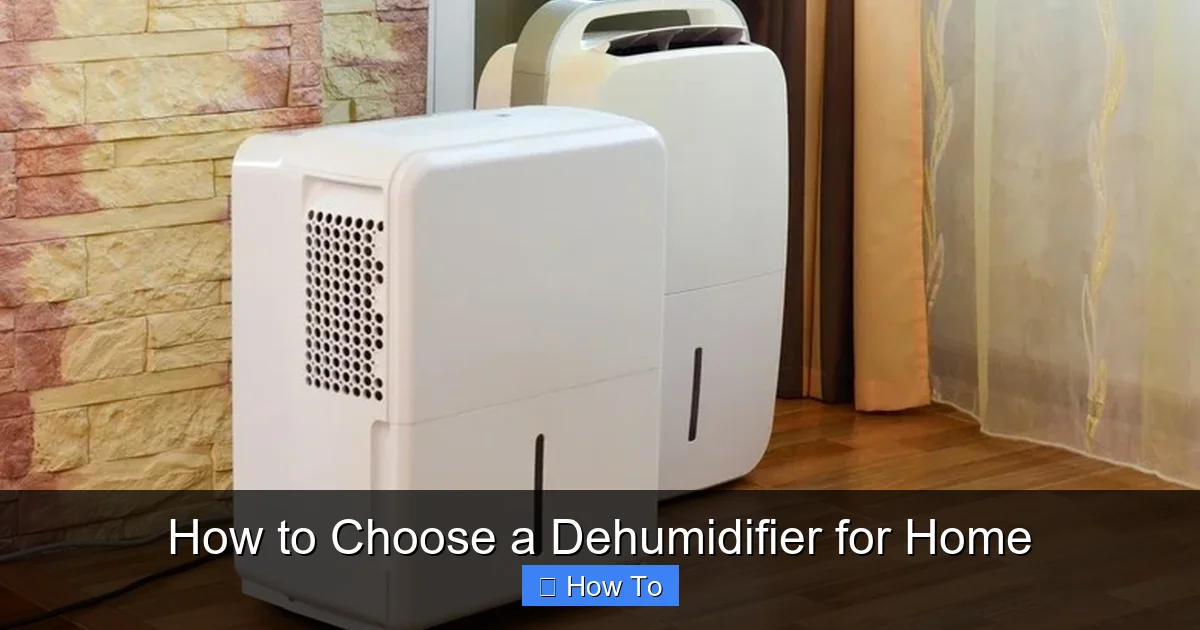
Choosing the right dehumidifier for your home can improve air quality, reduce mold, and enhance comfort. This guide walks you through key factors like size, capacity, features, and placement to help you pick the perfect unit for your needs.
Quick Answers to Common Questions
What size dehumidifier do I need for a 1,000 sq ft basement?
For a 1,000 sq ft basement, choose a 50–70 pint dehumidifier if it’s damp or very damp. Use a higher capacity if there’s visible moisture or poor ventilation.
Can I run a dehumidifier all the time?
Yes, especially if you have a humidistat. The unit will cycle on and off to maintain your set humidity level, saving energy and preventing over-drying.
Do dehumidifiers use a lot of electricity?
It depends on the model and usage. Energy Star-certified units are more efficient. On average, a 50-pint dehumidifier uses about 500–700 watts per hour.
Where should I place my dehumidifier in a basement?
Place it near the center or close to the source of moisture (like a sump pump or laundry area). Keep it away from walls and ensure good airflow.
How often should I clean my dehumidifier?
Clean the air filter monthly and empty the water tank as needed. Deep clean the tank and coils every 3–6 months to prevent mold and maintain efficiency.
How to Choose a Dehumidifier for Home
Is your home feeling sticky, musty, or clammy? Are you noticing condensation on windows, peeling paint, or that unmistakable smell of mildew? These are all signs of excess moisture—and they’re more than just uncomfortable. High humidity can lead to mold growth, dust mites, and even structural damage over time. The good news? A dehumidifier can help.
But with so many models on the market, how do you choose the right one? Don’t worry—this step-by-step guide will walk you through everything you need to know to pick the perfect dehumidifier for your home. From understanding capacity and features to placement and maintenance, we’ll cover it all in simple, practical terms. By the end, you’ll feel confident making a smart, informed decision that improves your indoor air quality and comfort.
Step 1: Understand Why You Need a Dehumidifier
Before you start shopping, it’s important to know why you need a dehumidifier. Not every home needs one, but if you’re experiencing any of the following, it’s likely time to invest:

Visual guide about How to Choose a Dehumidifier for Home
Image source: m.media-amazon.com
- Persistent musty odors
- Visible mold or mildew (especially in bathrooms, basements, or laundry rooms)
- Condensation on windows, walls, or pipes
- Allergies or respiratory issues that worsen indoors
- Clothes that take forever to dry or smell damp
- Wood furniture or flooring warping
Humidity levels above 60% create the perfect environment for mold and dust mites. The ideal indoor humidity range is between 30% and 50%. A dehumidifier helps maintain this balance, making your home healthier and more comfortable.
Step 2: Measure Your Space
The first step in choosing the right dehumidifier is knowing the size of the area you want to treat. Dehumidifiers are rated based on the square footage they can effectively cover. If you buy one that’s too small, it won’t keep up with the moisture. If it’s too large, you’ll waste energy and money.
How to Calculate Square Footage
To find the square footage of a room, simply multiply the length by the width. For example, a basement that’s 20 feet long and 15 feet wide is 300 square feet.
If you have an open-concept space, add the areas together. For multi-level homes, consider whether you need one unit per floor or a whole-house system.
Consider the Room Type
Different rooms have different humidity challenges:
- Basements: Often the dampest area in a home due to poor ventilation and ground moisture. These typically require high-capacity units.
- Bathrooms: High humidity from showers, but usually small in size. A compact unit or even a mini dehumidifier may suffice.
- Laundry rooms: Wet clothes and dryers add moisture. A medium-capacity unit works well here.
- Closets: Small, enclosed spaces prone to mildew. A mini or portable dehumidifier is ideal.
- Whole house: If humidity is a problem throughout your home, consider a whole-house dehumidifier integrated with your HVAC system.
Step 3: Determine the Right Capacity
Dehumidifier capacity is measured in pints per day (PPD)—the amount of moisture the unit can remove in 24 hours. This is one of the most important factors when choosing a dehumidifier for home use.
Match Capacity to Moisture Level
Manufacturers typically categorize rooms by moisture level:
- Damp: Feels damp and may have occasional musty smells. Ideal for 30–50 PPD units.
- Very Damp: Noticeable moisture, damp spots, and strong odors. Look for 50–70 PPD.
- Wet: Standing water, frequent condensation, and visible mold. Requires 70+ PPD.
- Extremely Wet: Flooding or chronic water intrusion. May need a commercial-grade unit or professional remediation.
For example, a 500-square-foot damp basement might need a 50-pint dehumidifier, while a 1,500-square-foot very damp basement could require a 70-pint model.
Use the AHAM Guidelines
The Association of Home Appliance Manufacturers (AHAM) provides standardized testing for dehumidifiers. Look for the AHAM seal and their recommended capacity chart, which matches room size and moisture level to the appropriate pint rating.
Keep in mind: real-world conditions may vary. If your home has poor insulation, high outdoor humidity, or frequent water intrusion, you may need a higher-capacity unit than the chart suggests.
Step 4: Choose the Right Type of Dehumidifier
There are several types of dehumidifiers, each suited to different needs:
Compressor (Refrigerant) Dehumidifiers
The most common type, these work by pulling air over cold coils to condense moisture. They’re effective in warm, humid environments (above 65°F) and ideal for basements, living rooms, and garages.
Pros: Affordable, widely available, good for moderate to high humidity.
Cons: Less efficient in cold temperatures; coils can freeze below 60°F.
Desiccant Dehumidifiers
These use a moisture-absorbing material (like silica gel) to pull water from the air. They work well in cooler temperatures and are often quieter.
Pros: Effective in cold spaces (like crawl spaces or winterized cabins), quiet operation.
Cons: Less energy-efficient in warm, humid climates; higher upfront cost.
Whole-House Dehumidifiers
Installed as part of your HVAC system, these treat the entire home. They’re ideal for large homes or areas with consistent humidity problems.
Pros: Consistent humidity control, no need to move units, energy-efficient for whole-home use.
Cons: Expensive to install; requires professional setup.
Mini and Portable Dehumidifiers
Small, lightweight units for closets, RVs, or small bathrooms. Some use rechargeable desiccant cartridges.
Pros: Affordable, easy to move, great for targeted use.
Cons: Low capacity; not suitable for large spaces.
Step 5: Look for Key Features
Modern dehumidifiers come with a range of features that improve convenience, efficiency, and performance. Here’s what to look for:
Humidistat
A built-in humidistat lets you set your desired humidity level (e.g., 45%). The unit will automatically turn on and off to maintain that level, saving energy and preventing over-drying.
Auto Shut-Off and Tank Full Indicator
When the water tank is full, the unit shuts off to prevent overflow. A light or alarm alerts you to empty it. This is essential if you can’t check the tank daily.
Continuous Drainage Option
Instead of manually emptying the tank, you can attach a hose to drain water directly into a floor drain, sink, or sump pump. This is a must-have for basements or 24/7 operation.
Washable Air Filter
A reusable filter captures dust and allergens. Look for one that’s easy to remove and clean—this improves air quality and maintains efficiency.
Adjustable Fan Speeds
Multiple fan speeds let you control noise and airflow. Use high speed for quick drying, low speed for quiet nighttime operation.
Defrost Function
Important for cold environments. Prevents ice buildup on coils, ensuring the unit works efficiently even in unheated spaces.
Timer and Remote Control
A timer lets you schedule operation (e.g., run for 8 hours overnight). Remote controls add convenience, especially for units placed in hard-to-reach areas.
Energy Efficiency
Look for the Energy Star label. These models use 15–30% less energy than standard units, saving you money on electricity bills over time.
Step 6: Consider Noise Level
Dehumidifiers can be noisy, especially when running at high speeds. If you plan to use it in a bedroom, living room, or home office, noise matters.
Check the decibel (dB) rating—most residential units range from 45 to 65 dB. For comparison:
- 45 dB: Quiet library
- 55 dB: Normal conversation
- 65 dB: Vacuum cleaner
Desiccant models tend to be quieter than compressor types. If noise is a concern, look for units labeled “quiet” or “low noise.”
Step 7: Think About Placement and Airflow
Even the best dehumidifier won’t work well if it’s placed incorrectly. Proper placement ensures maximum airflow and efficiency.
Where to Place Your Dehumidifier
- In the center of the room, if possible.
- At least 6–12 inches away from walls, furniture, and curtains.
- Near the source of moisture (e.g., laundry area, basement stairs).
- Avoid placing it behind doors or in corners where airflow is restricted.
Improve Air Circulation
Use fans to help circulate air, especially in large or poorly ventilated spaces. Open interior doors to allow moisture to travel to the dehumidifier.
Elevate the Unit
Place the dehumidifier on a small stand or platform to improve airflow underneath. This is especially helpful in carpeted basements.
Step 8: Set a Budget
Dehumidifiers range from $50 for a mini unit to $1,000+ for a whole-house system. Here’s a general price guide:
- Mini/portable: $50–$150
- Compact (30–50 pints): $150–$300
- High-capacity (70+ pints): $300–$600
- Whole-house: $800–$1,500+ (plus installation)
While it’s tempting to go for the cheapest option, remember: a poorly performing dehumidifier can cost more in energy bills and repairs. Invest in a reliable brand with good reviews and a solid warranty (at least 2 years).
Step 9: Read Reviews and Compare Brands
Before buying, do your research. Check customer reviews on retail sites like Amazon, Home Depot, or Best Buy. Look for consistent feedback on:
- Performance in real-world conditions
- Ease of use and maintenance
- Noise level
- Durability and reliability
- Customer service and warranty support
Top brands to consider include Frigidaire, hOmeLabs, GE, AprilAire, and Keepsafe. Each offers a range of models suited to different needs and budgets.
Step 10: Maintain Your Dehumidifier
A dehumidifier is only as good as its maintenance. Regular care ensures it runs efficiently and lasts longer.
Clean the Filter Monthly
Remove the air filter and wash it with warm, soapy water. Let it dry completely before reinserting. A clogged filter reduces airflow and efficiency.
Empty the Water Tank Regularly
Even with auto shut-off, it’s good practice to check the tank daily. Rinse it with a mild bleach solution (1 tablespoon per gallon of water) to prevent mold and bacteria growth.
Inspect the Coils and Drain Hose
Every few months, check the coils for dust or ice buildup. If using a drain hose, ensure it’s not kinked or clogged.
Store Properly Off-Season
If you only use your dehumidifier seasonally, clean it thoroughly, remove the water, and store it in a dry place. Cover it to prevent dust accumulation.
Troubleshooting Common Issues
Even the best dehumidifiers can run into problems. Here’s how to fix common issues:
Unit Won’t Turn On
- Check the power cord and outlet.
- Ensure the tank isn’t full (auto shut-off may be engaged).
- Verify the humidistat is set correctly.
Not Removing Enough Moisture
- Clean the air filter.
- Check for blocked airflow (move away from walls).
- Ensure the room isn’t too large for the unit’s capacity.
- Close windows and doors to prevent humid air from entering.
Unit Freezes Up
- Common in cold environments. Use a model with a defrost function.
- Move the unit to a warmer area if possible.
- Reduce fan speed to allow coils to warm up.
Loud or Unusual Noises
- Check for loose parts or debris in the fan.
- Ensure the unit is level and stable.
- Contact customer support if the noise persists.
Conclusion
Choosing the right dehumidifier for your home doesn’t have to be overwhelming. By following these steps—assessing your space, matching capacity to needs, selecting the right features, and maintaining the unit—you can enjoy a healthier, more comfortable living environment.
Remember, the best dehumidifier is one that fits your specific situation. Whether you’re tackling a damp basement, a musty closet, or whole-home humidity, there’s a model out there that’s perfect for you. Take your time, do your research, and invest in quality. Your home—and your health—will thank you.