
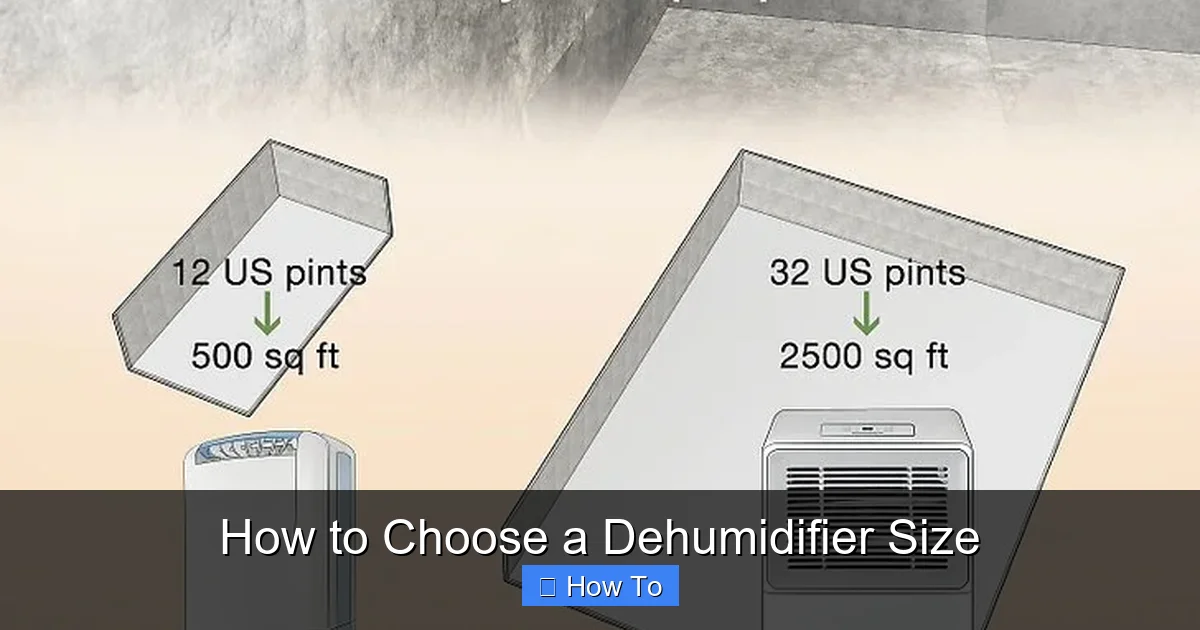
Choosing the right dehumidifier size ensures efficient moisture control, energy savings, and better air quality. This guide walks you through room size, humidity levels, and capacity ratings to help you pick the perfect unit for your home or basement.
Quick Answers to Common Questions
Tip/Question?
Should I buy a dehumidifier based on room size or humidity level?
Both matter, but humidity level is often more important. A small, very damp room may need a larger dehumidifier than a big, dry one. Always assess moisture with a hygrometer first.
Tip/Question?
Can I use one dehumidifier for my whole house?
It’s possible, but only if your home is small and well-sealed. For larger homes, consider a whole-house dehumidifier installed with your HVAC system or use multiple portable units.
Tip/Question?
How often should I empty the water tank?
It depends on the unit size and humidity. Check daily during humid weather. Models with continuous drainage eliminate the need for manual emptying.
Tip/Question?
Is a 50-pint dehumidifier too big for a 600-square-foot basement?
Not if the basement is very damp or wet. A 50-pint unit is ideal for 500–1,000 sq. ft. in moderate to high humidity. Match capacity to conditions, not just square footage.
Tip/Question?
Do dehumidifiers use a lot of electricity?
They use moderate energy—similar to a refrigerator. Choose an ENERGY STAR model and run it only when needed to minimize costs.
How to Choose a Dehumidifier Size
Excess moisture in your home can lead to musty odors, mold growth, and even structural damage. A dehumidifier helps maintain healthy indoor air quality by removing excess humidity from the air. But here’s the catch: not all dehumidifiers are created equal. Choosing the wrong size can leave your space damp or waste energy and money.
In this guide, you’ll learn exactly how to choose a dehumidifier size that matches your needs. We’ll walk you through measuring your space, understanding humidity levels, interpreting capacity ratings, and considering environmental factors. Whether you’re dealing with a damp basement, a humid bathroom, or a stuffy bedroom, this step-by-step guide will help you pick the perfect dehumidifier—no guesswork required.
Step 1: Measure the Square Footage of Your Space
The first step in choosing the right dehumidifier size is knowing how much area you need to cover. Dehumidifiers are designed to handle specific room sizes, so an undersized unit will struggle to keep up, while an oversized one may cycle on and off too frequently, reducing efficiency.
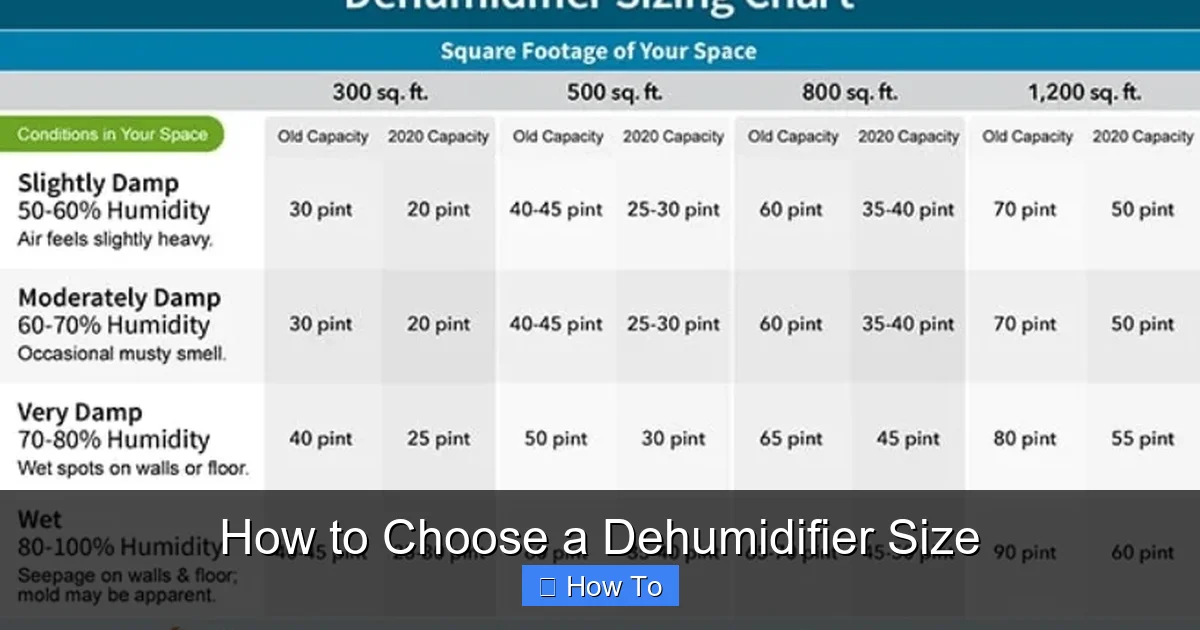
Visual guide about How to Choose a Dehumidifier Size
Image source: bestdehumidifier.reviews
How to Calculate Square Footage
To find the square footage of a room, simply multiply the length by the width. For example, a room that is 12 feet long and 10 feet wide equals 120 square feet. If your space is irregularly shaped, break it into smaller rectangles, calculate each area, and add them together.
For open-concept areas like living rooms connected to kitchens, measure the total combined space. However, keep in mind that dehumidifiers work best in enclosed areas. If airflow is unrestricted, you may need a more powerful unit or multiple smaller ones.
Why Room Size Matters
A dehumidifier rated for 30 pints per day might be perfect for a 500-square-foot basement but completely inadequate for a 1,500-square-foot crawl space. Matching the unit’s capacity to the room size ensures consistent moisture control without overworking the machine.
As a general rule:
- Up to 500 sq. ft.: 20–30 pint capacity
- 500–1,000 sq. ft.: 30–50 pint capacity
- 1,000–1,500 sq. ft.: 50–70 pint capacity
- Over 1,500 sq. ft.: 70+ pint capacity or multiple units
Keep in mind these are starting points—other factors like humidity level and room use will influence your final choice.
Step 2: Assess the Humidity Level in Your Space
Room size is important, but it’s not the only factor. The actual moisture level in your space plays a huge role in determining the right dehumidifier size. A small bathroom with constant steam from showers may need a more powerful unit than a large, dry basement.
Use a Hygrometer to Measure Humidity
A hygrometer is a small, inexpensive device that measures relative humidity (RH) in the air. You can find digital hygrometers at hardware stores or online for under $20. Place it in the room for 24–48 hours to get an accurate reading, especially at different times of day.
Ideal indoor humidity levels range from 30% to 50%. Anything above 60% is considered high and can promote mold and dust mites. If your reading is consistently above 60%, you’ll need a dehumidifier with higher capacity or one designed for “very wet” conditions.
Classify Your Room’s Moisture Condition
Most dehumidifier manufacturers categorize rooms based on moisture levels. Understanding these categories helps you choose the right model:
- Dry: RH below 50%. Common in well-ventilated homes or during winter.
- Moderately damp: RH between 50% and 60%. You may notice occasional musty smells or condensation on windows.
- Very damp: RH between 60% and 70%. Visible moisture, damp spots, or frequent condensation.
- Wet: RH above 70%. Standing water, mold, or strong odors. Often found in flooded basements or poorly ventilated areas.
For example, a 700-square-foot basement with 65% humidity would need a larger dehumidifier than a 700-square-foot living room with 45% humidity—even though the square footage is the same.
Step 3: Understand Dehumidifier Capacity Ratings
Dehumidifiers are rated by how many pints of moisture they can remove from the air in 24 hours. This is known as the “pint capacity.” But don’t just go for the biggest number—capacity must match your room’s size and moisture level.
How Pint Ratings Work
A 30-pint dehumidifier removes up to 30 pints of water per day under standard test conditions (80°F and 60% RH). However, real-world performance can vary based on temperature and humidity. In cooler or drier environments, the unit may remove less moisture.
Here’s a quick reference guide based on room size and moisture level:
| Room Size | Moisture Level | Recommended Capacity |
|---|---|---|
| Up to 500 sq. ft. | Dry | 20 pints |
| Up to 500 sq. ft. | Moderately damp | 30 pints |
| Up to 500 sq. ft. | Very damp | 50 pints |
| 500–1,000 sq. ft. | Dry | 30 pints |
| 500–1,000 sq. ft. | Moderately damp | 50 pints |
| 500–1,000 sq. ft. | Very damp | 70 pints |
| 1,000+ sq. ft. | Any level | 70+ pints or multiple units |
Note: These are general recommendations. Always check the manufacturer’s guidelines for specific models.
Don’t Overbuy (or Underbuy)
Choosing a dehumidifier that’s too small means it will run constantly, wear out faster, and fail to control humidity. On the other hand, a unit that’s too large may cycle on and off too frequently, which can reduce efficiency and shorten the lifespan of the compressor.
For example, a 70-pint dehumidifier in a small, dry bedroom will remove moisture quickly but may not run long enough to maintain consistent humidity. It could also be louder and more expensive than necessary.
Step 4: Consider the Room’s Use and Environment
Not all rooms are created equal when it comes to moisture. The function of the space and its environmental conditions can significantly impact your dehumidifier choice.
High-Moisture Areas Need More Power
Certain rooms naturally produce more moisture and require larger or specialized dehumidifiers:
- Basements: Often cool, dark, and poorly ventilated. Prone to dampness and mold. Choose a unit rated for “basement use” with a built-in pump for continuous drainage.
- Laundry rooms: Humid from washing machines and dryers. A 30–50 pint unit is usually sufficient for a standard laundry room.
- Bathrooms: Steam from showers increases humidity quickly. A small 15–20 pint unit or a portable model may work, but for frequent use, consider a larger capacity.
- Crawl spaces: Enclosed and hard to ventilate. Look for compact, high-capacity models with automatic drainage.
- Garages: Can be damp in humid climates or during rainy seasons. A 30–50 pint unit is often ideal.
Climate and Seasonal Factors
Your local climate plays a big role. Homes in humid regions like the Southeast U.S., Gulf Coast, or tropical areas may need larger dehumidifiers or year-round use. In contrast, dry climates like the Southwest may only require seasonal dehumidification.
Also consider seasonal changes. Spring and summer bring higher humidity, while winter air is typically drier. If you only need a dehumidifier during certain months, a mid-sized unit may suffice. But if you’re dealing with year-round moisture, invest in a larger, energy-efficient model.
Step 5: Evaluate Drainage and Maintenance Needs
A dehumidifier’s size isn’t just about capacity—it’s also about convenience. Larger units remove more water, which means more frequent emptying unless you have a drainage solution.
Manual vs. Continuous Drainage
Most dehumidifiers have a built-in water tank that needs to be emptied when full. Tank sizes vary, but a typical 30-pint unit holds about 10–12 pints before needing to be emptied. If you’re not home often or don’t want to check it daily, this can be a hassle.
For convenience, look for models with:
- Continuous drainage: A hose attachment that lets you drain water directly into a floor drain, sink, or sump pump.
- Built-in pump: Essential for basements or areas where gravity drainage isn’t possible. The pump pushes water upward to a sink or window.
- Auto-shutoff: Turns off the unit when the tank is full to prevent overflow.
If you choose a large-capacity dehumidifier (50+ pints), continuous drainage is almost a must. Otherwise, you’ll be emptying the tank multiple times a day during humid weather.
Filter and Maintenance
Larger dehumidifiers often have bigger filters that need regular cleaning. Check the manufacturer’s instructions—most recommend cleaning the filter every 2–4 weeks. Some models have washable filters, while others require replacement.
Also consider noise levels. Larger units tend to be louder, which may matter if you’re placing the dehumidifier in a bedroom or living area. Look for models with a “quiet mode” or low decibel rating (under 50 dB).
Step 6: Check Energy Efficiency and Certifications
A bigger dehumidifier isn’t always better—especially if it wastes energy. Running a large unit in a small space can spike your electricity bill without providing extra benefits.
Look for ENERGY STAR Certification
ENERGY STAR-certified dehumidifiers are up to 15% more efficient than standard models. They use advanced compressors and fans to remove moisture using less energy. Over time, this can save you hundreds of dollars on utility bills.
Check the Energy Factor (EF) rating—the higher the number, the more efficient the unit. For example, an EF of 1.5 means the dehumidifier removes 1.5 liters of water per kilowatt-hour of electricity.
Calculate Operating Costs
To estimate how much a dehumidifier will cost to run, use this formula:
Daily cost = (Wattage × Hours used per day × Electricity rate) ÷ 1,000
For example, a 300-watt dehumidifier running 8 hours a day at $0.12 per kWh would cost about $0.29 per day, or $8.70 per month.
Larger units (50+ pints) may use 500–700 watts, so running them constantly can add up. Choose the smallest effective size to balance performance and cost.
Step 7: Read Reviews and Compare Models
Once you’ve narrowed down your options, it’s time to research specific models. Don’t rely solely on specs—real-world performance matters.
What to Look for in Reviews
Check customer reviews on retail sites like Amazon, Home Depot, or Lowe’s. Pay attention to:
- Actual moisture removal: Some units underperform in real homes compared to lab tests.
- Noise level: Look for comments about how loud the unit is during operation.
- Ease of use: Is the control panel intuitive? Is the tank easy to remove?
- Durability: Does it last more than a few years? Any common issues?
- Customer service: How responsive is the manufacturer if something goes wrong?
Compare Features
Modern dehumidifiers come with helpful features that can influence your decision:
- Humidistat: Lets you set a target humidity level (e.g., 45%). The unit turns on and off automatically to maintain it.
- Timer: Schedule operation for specific times, like overnight or during humid afternoons.
- Defrost mode: Prevents ice buildup in cold environments (below 65°F).
- Portability: Casters and handles make it easy to move the unit between rooms.
- Air filter: Some models include HEPA or activated carbon filters to improve air quality.
While these features are nice to have, prioritize capacity and efficiency first. A feature-rich dehumidifier won’t help if it’s the wrong size.
Troubleshooting Common Sizing Mistakes
Even with careful planning, it’s easy to make mistakes when choosing a dehumidifier size. Here are common issues and how to fix them:
Problem: The dehumidifier runs constantly but humidity stays high
Solution: The unit is too small for the space or moisture level. Upgrade to a higher-capacity model or add a second unit. Also check for air leaks, poor ventilation, or sources of moisture (like a leaking pipe).
Problem: The dehumidifier cycles on and off too frequently
Solution: The unit is too large for the room. It removes moisture too quickly and shuts off before circulating air properly. Consider a smaller model or use a humidistat to fine-tune operation.
Problem: The water tank fills up too fast
Solution: This is normal for high-moisture areas. Install a continuous drainage hose or choose a model with a built-in pump. If the tank is small, upgrade to a unit with a larger reservoir.
Problem: The dehumidifier freezes up in cold basements
Solution: Most standard dehumidifiers stop working below 65°F. Use a “low-temperature” or “basement” model with auto-defrost functionality.
Conclusion
Choosing the right dehumidifier size doesn’t have to be overwhelming. By measuring your space, checking humidity levels, understanding capacity ratings, and considering your room’s unique needs, you can find a unit that keeps your home comfortable and healthy.
Remember: the best dehumidifier is the one that matches your specific conditions. Don’t just go for the biggest or cheapest option—think about long-term performance, energy use, and maintenance. With the right size, you’ll enjoy drier air, fewer allergens, and a more pleasant living environment year-round.
Take your time, do the research, and don’t hesitate to consult a professional if you’re dealing with severe moisture issues. Your home—and your health—will thank you.