
Choosing the correct dehumidifier size for your apartment ensures comfort, protects your health, and saves energy. This guide walks you through room size, humidity levels, and capacity ratings to help you pick the perfect unit.
Quick Answers to Common Questions
Tip/Question?
What’s the ideal humidity level for an apartment?
Answer: The ideal relative humidity for indoor comfort and health is between 30% and 50%. Levels above 60% can promote mold and dust mites.
Tip/Question?
Can I use one dehumidifier for my whole apartment?
Answer: Yes, if it’s centrally located and your apartment is open-concept. For larger or segmented spaces, consider multiple units or a high-capacity model.
Tip/Question?
How often should I empty the water tank?
Answer: It depends on humidity and usage. In high-humidity areas, you may need to empty it daily. Use continuous drainage to avoid frequent checks.
Tip/Question?
Is a bigger dehumidifier always better?
Answer: No. An oversized unit can short-cycle, reducing efficiency. Choose a size that matches your space and humidity level.
Tip/Question?
Do dehumidifiers use a lot of electricity?
Answer: They use moderate energy. ENERGY STAR models are more efficient and can save you money in the long run.
How to Choose Dehumidifier Size Apartment
Living in an apartment can be cozy, but it often comes with one pesky problem: excess moisture. Whether you’re dealing with damp walls, musty smells, or allergy flare-ups, a dehumidifier can make a world of difference. But here’s the catch—choosing the right dehumidifier size for your apartment is crucial. Too small, and it won’t do the job. Too big, and you’re wasting energy and money.
In this guide, you’ll learn exactly how to pick the perfect dehumidifier size for your apartment. We’ll walk you through measuring your space, understanding humidity levels, interpreting capacity ratings, and avoiding common mistakes. By the end, you’ll be confident in selecting a unit that keeps your home dry, comfortable, and healthy—without overpaying or underperforming.
Step 1: Measure Your Apartment’s Square Footage
The first step in choosing a dehumidifier is knowing how much space you need to cover. Most dehumidifiers are rated by the square footage they can effectively treat. If your unit is too small for the area, it will struggle to reduce humidity. If it’s too large, it may cycle on and off too quickly, which can reduce efficiency and shorten the lifespan of the machine.
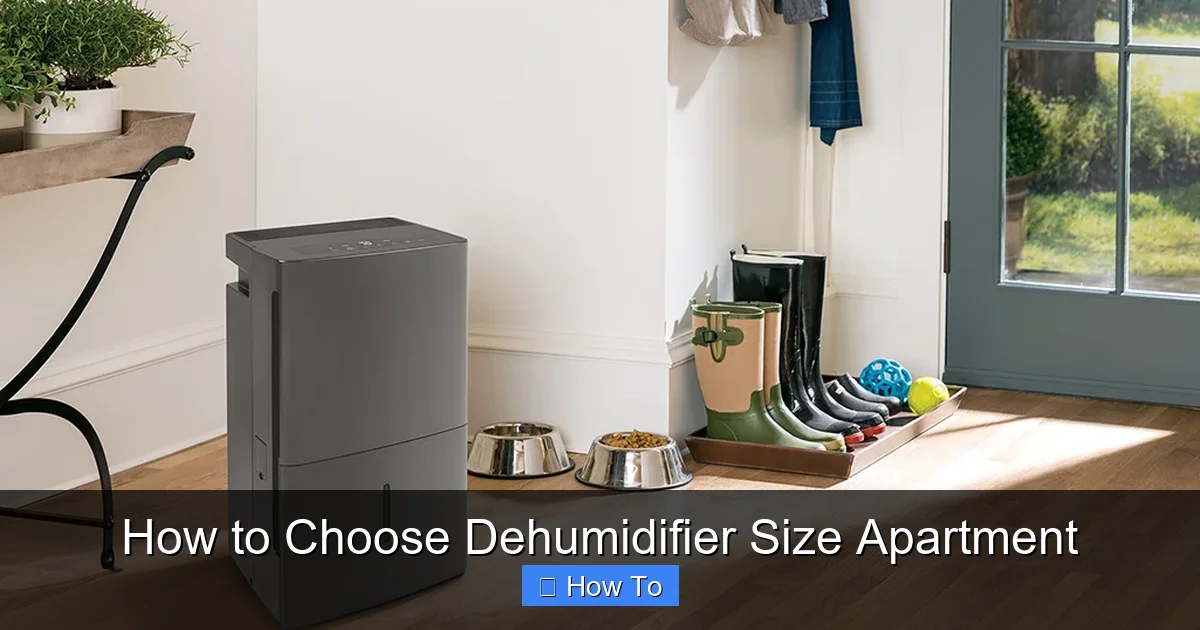
Visual guide about How to Choose Dehumidifier Size Apartment
Image source: contentgrid.homedepot-static.com
How to Calculate Square Footage
To find the square footage of the room or area where you plan to use the dehumidifier, multiply the length by the width. For example, if your living room is 12 feet long and 10 feet wide, the area is 120 square feet. If you’re treating multiple connected rooms (like an open-plan living and dining area), add up the total square footage.
Keep in mind that you don’t necessarily need a dehumidifier for every room. Many people place one in a central location—like the living room or bedroom—and let it run to improve air quality throughout the apartment. However, if you have a particularly damp basement, bathroom, or closet, you might consider a smaller, portable unit for targeted use.
Example Scenarios
- Small studio apartment (300–500 sq ft): A compact 20–30 pint dehumidifier should suffice for mild to moderate humidity.
- One-bedroom apartment (600–800 sq ft): Look for a 30–50 pint unit, especially if the space is open-concept.
- Large apartment or loft (900+ sq ft): A 50–70 pint dehumidifier may be needed, particularly in humid climates.
Remember, these are general guidelines. The actual capacity you need also depends on how damp your apartment is.
Step 2: Assess the Humidity Level in Your Apartment
Not all apartments have the same moisture problems. Some are naturally dry, while others feel like a rainforest. To choose the right dehumidifier size, you need to know how humid your space actually is.
Use a Hygrometer to Measure Humidity
A hygrometer is a small, inexpensive device that measures relative humidity (RH) in the air. You can find digital hygrometers at hardware stores or online for under $20. Place it in the room where you’ll use the dehumidifier and let it sit for 24 hours to get an accurate reading.
Here’s what the numbers mean:
- 30–50% RH: Ideal range. If your apartment is in this range, you may not need a dehumidifier—or only a small one for occasional use.
- 50–60% RH: Slightly high. You might notice minor dampness or odors. A small to mid-sized dehumidifier can help.
- 60–70% RH: Moderately humid. You may see condensation on windows, feel clammy air, or notice mold growth. A mid-sized unit is recommended.
- 70%+ RH: Very humid. This level can lead to mold, dust mites, and structural damage. A large-capacity dehumidifier is essential.
Signs of High Humidity
If you don’t have a hygrometer yet, look for these common signs of excess moisture:
- Condensation on windows or mirrors
- Musty or mildew smells
- Peeling paint or wallpaper
- Warped wood furniture or floors
- Allergy symptoms like sneezing or congestion
If you notice several of these, your apartment likely needs a dehumidifier—and possibly a larger one.
Step 3: Understand Dehumidifier Capacity Ratings
Dehumidifiers are rated by how many pints of moisture they can remove from the air in 24 hours. This is called the “pint-per-day” (PPD) rating. But here’s the thing: not all pint ratings are created equal. Manufacturers test under different conditions, so a “50-pint” dehumidifier from one brand might not perform the same as another.
Standard Testing Conditions
Most manufacturers use the AHAM (Association of Home Appliance Manufacturers) standard, which tests dehumidifiers at 60% relative humidity and 80°F (27°C). This is considered a “normal” indoor environment. However, if your apartment is hotter or more humid, the actual performance may differ.
For example, a 30-pint dehumidifier tested at 60% RH might only remove 20 pints in a 70% RH environment. That’s why it’s important to consider both the rating and your actual conditions.
Matching Capacity to Your Needs
Use this general guide to match dehumidifier capacity to your apartment size and humidity level:
| Room Size (sq ft) | Humidity Level | Recommended Capacity (pints/day) |
|---|---|---|
| 100–400 | Normal (30–50%) | 10–20 |
| 100–400 | Slightly Damp (50–60%) | 20–30 |
| 400–800 | Moderately Damp (60–70%) | 30–50 |
| 800–1,200 | Very Damp (70%+) | 50–70 |
| 1,200+ | Extremely Damp or Wet | 70+ (or multiple units) |
Keep in mind that these are estimates. If your apartment has poor ventilation, frequent cooking or showering, or is in a humid climate (like Florida or the Pacific Northwest), you may need to go one size up.
Step 4: Consider Your Climate and Seasonal Needs
Where you live plays a big role in how much moisture is in the air. If you’re in a humid region, your dehumidifier will work harder—and you’ll need a more powerful unit.
Climate Zones and Humidity
- Coastal or tropical areas: High humidity year-round. Choose a larger capacity and look for units with high moisture removal rates.
- Humid continental climates (e.g., Midwest, Northeast): Humidity peaks in summer. A mid-sized dehumidifier that can handle seasonal spikes is ideal.
- Arid or dry climates (e.g., Southwest): You may only need a small dehumidifier for occasional use, or none at all.
Also consider seasonal changes. You might not need a dehumidifier in winter when the air is dry, but it could be essential in summer. Some people use a dehumidifier only during humid months, while others run it year-round in damp basements or bathrooms.
Seasonal Tips
- Run your dehumidifier during peak humidity months (usually May–September in most U.S. regions).
- Use a timer or smart plug to automate operation and save energy.
- Clean the filter monthly to maintain efficiency, especially during heavy use.
Step 5: Evaluate Energy Efficiency and Operating Costs
A dehumidifier that’s too large or inefficient can drive up your electricity bill. To save money and reduce environmental impact, look for energy-efficient models.
Look for ENERGY STAR Certification
ENERGY STAR-certified dehumidifiers use 15–30% less energy than standard models. They’re tested for performance and efficiency, so you know you’re getting a quality product. Over time, the savings on your utility bill can offset the higher upfront cost.
Check the Energy Factor (EF)
The Energy Factor measures how efficiently a dehumidifier removes moisture per kilowatt-hour of electricity. A higher EF means better efficiency. For example:
- EF of 1.0–1.5: Low efficiency
- EF of 1.5–2.0: Moderate efficiency
- EF of 2.0+: High efficiency (ideal)
When comparing models, prioritize those with an EF of 2.0 or higher, especially if you plan to run the unit frequently.
Estimate Operating Costs
To calculate how much it costs to run your dehumidifier, use this formula:
Daily cost = (Wattage × Hours used per day × Electricity rate) ÷ 1,000
For example, a 300-watt dehumidifier running 8 hours a day at $0.12 per kWh costs about $0.29 per day, or $8.70 per month. A more efficient 200-watt model would cost around $0.19 per day.
While this may seem small, it adds up—especially if you run the unit daily during humid months.
Step 6: Think About Noise, Portability, and Features
Since you’re using the dehumidifier in an apartment, noise and convenience matter. You don’t want a loud machine disrupting your sleep or TV time.
Noise Levels
Dehumidifiers typically produce 40–60 decibels (dB) of noise—similar to a quiet conversation or refrigerator hum. Look for models with a noise rating below 50 dB for bedroom or living room use. Some units have “quiet mode” or “sleep mode” settings that reduce fan speed and noise.
Portability and Design
Choose a dehumidifier with:
- Wheels or handles: Makes it easy to move between rooms.
- Compact size: Fits in small spaces like closets or under sinks.
- Top-mounted controls: Easier to access than side or front panels.
If you live in a small apartment, a compact unit that fits under a table or in a corner is ideal.
Smart Features to Look For
Modern dehumidifiers come with helpful features that improve performance and convenience:
- Auto-humidistat: Monitors humidity and turns the unit on/off to maintain your desired level (e.g., 45% RH).
- Timer: Lets you set it to run for a specific number of hours.
- Auto-defrost: Prevents ice buildup in cold environments (under 65°F).
- Continuous drainage: Connect a hose to drain water automatically—no need to empty the tank.
- Filter indicator: Alerts you when it’s time to clean the air filter.
These features not only make life easier but also help the dehumidifier run more efficiently.
Step 7: Avoid Common Mistakes When Choosing Size
Even with the best intentions, it’s easy to make errors when selecting a dehumidifier. Here are some common pitfalls to avoid:
Oversizing the Unit
It might seem logical to buy the biggest dehumidifier you can find, but that can backfire. A unit that’s too large will remove moisture too quickly, causing it to cycle on and off frequently. This “short cycling” reduces efficiency, increases wear and tear, and may not allow the unit to run long enough to properly dehumidify the air.
For example, a 70-pint dehumidifier in a 400 sq ft apartment with mild humidity will turn off after removing just a few pints, never reaching optimal operating temperature. The result? Poor performance and higher energy use.
Ignoring Ventilation and Airflow
Even the best dehumidifier won’t work well if the air isn’t circulating. Make sure the unit is placed in an open area, not blocked by furniture or walls. Keep doors open between rooms to allow moisture to flow toward the dehumidifier.
Forgetting About Maintenance
A dirty filter or full water tank can reduce performance. Check the tank daily during humid weather and clean the filter monthly. Some models have washable filters; others require replacement.
Not Considering Drainage Options
Most dehumidifiers collect water in a built-in tank that needs to be emptied. If you plan to run the unit continuously, look for one with a continuous drainage option—just attach a hose and let it drain into a sink or floor drain.
This is especially useful in basements or bathrooms where you can’t check the tank often.
Troubleshooting Common Issues
Even with the right size, dehumidifiers can run into problems. Here’s how to fix common issues:
Dehumidifier Isn’t Removing Enough Moisture
- Check the humidity setting—make sure it’s set below the current room humidity.
- Clean the air filter—a clogged filter restricts airflow.
- Ensure the room is sealed—close windows and doors to prevent outside moisture from entering.
- Verify the unit is the right size for the space and humidity level.
Unit Is Too Loud
- Place the dehumidifier on a flat, stable surface to reduce vibration.
- Check for loose parts or debris in the fan.
- Use a quieter model with noise-reduction features.
Water Tank Keeps Filling Up Too Fast
- The humidity may be higher than expected—consider upgrading to a larger unit.
- Use continuous drainage to avoid frequent emptying.
- Run the unit during cooler parts of the day when humidity is lower.
Ice Builds Up on Coils
- This happens in cold environments (below 65°F). Use a dehumidifier with auto-defrost or move it to a warmer area.
- Avoid using the unit in unheated basements during winter unless it’s specifically designed for low temperatures.
Conclusion
Choosing the right dehumidifier size for your apartment doesn’t have to be complicated. By measuring your space, checking humidity levels, understanding capacity ratings, and considering energy efficiency, you can find a unit that keeps your home dry and comfortable. Remember: the best dehumidifier is the one that matches your specific needs—not the biggest or most expensive one.
Take your time, compare models, and don’t overlook features like noise level, portability, and smart controls. With the right dehumidifier, you’ll breathe easier, protect your belongings, and enjoy a healthier living environment—all without breaking the bank.