
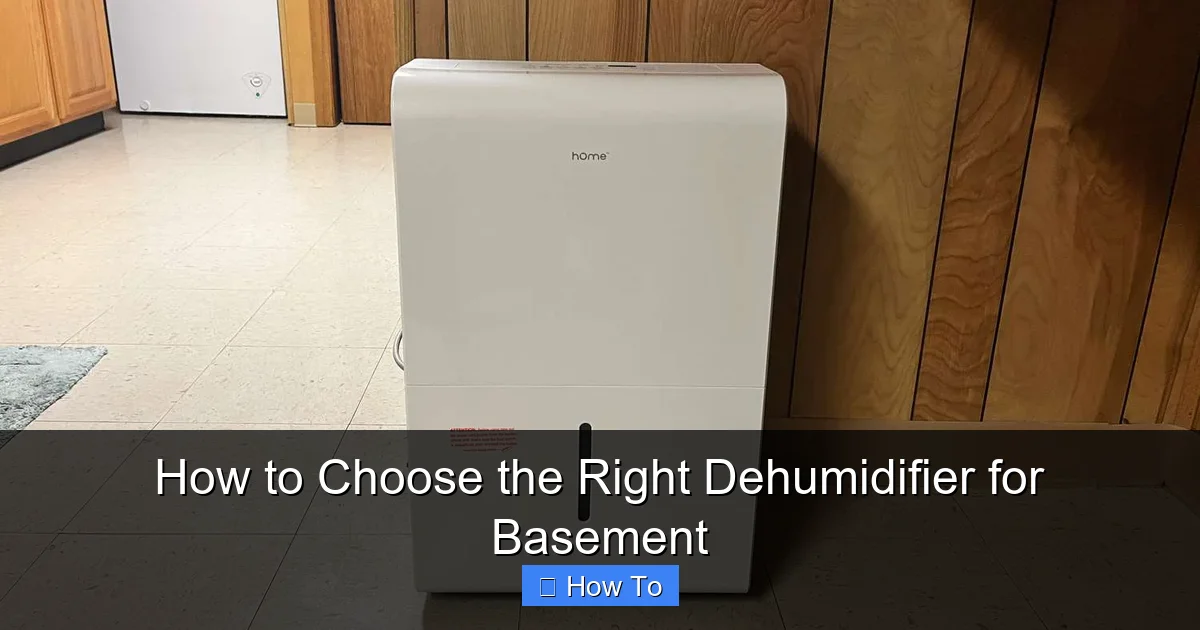
Choosing the right dehumidifier for your basement can prevent mold, musty odors, and structural damage. This guide walks you through size, capacity, features, and placement tips to help you pick the best unit for your needs.
Quick Answers to Common Questions
Tip/Question?
How often should I run my basement dehumidifier?
Run it continuously during humid months or set it to maintain 45% humidity. In drier seasons, use it only when needed.
Tip/Question?
Can I use a dehumidifier in a cold basement?
Yes, but choose a desiccant model. Compressor units lose efficiency below 65°F and may freeze.
Tip/Question?
Should I get a dehumidifier with a built-in pump?
Only if you need to pump water upward. Most basements can use gravity drainage to a floor drain.
Tip/Question?
Is a 50-pint dehumidifier enough for a 1,000 sq ft basement?
Yes, if it’s very damp. For wet conditions, consider a 70-pint model.
Tip/Question?
Do dehumidifiers use a lot of electricity?
They can, but ENERGY STAR models are efficient. Look for high energy factor ratings to save money.
How to Choose the Right Dehumidifier for Basement
If your basement feels damp, smells musty, or shows signs of mold, it’s time to consider a dehumidifier. Basements are naturally prone to high humidity due to poor ventilation, groundwater seepage, and cooler temperatures. A good dehumidifier can make a huge difference—improving air quality, protecting your belongings, and even boosting your home’s overall comfort.
But with so many models on the market, how do you pick the right one? This guide will walk you through every step, from measuring humidity levels to comparing features and types. By the end, you’ll know exactly what to look for when choosing a dehumidifier for your basement.
Step 1: Understand Why You Need a Dehumidifier in Your Basement
Before buying anything, it helps to understand why basements are so humid. Unlike other rooms in your home, basements are below ground level. This means they’re surrounded by soil, which naturally holds moisture. Water can seep through cracks in the foundation, especially during rainy seasons or snowmelt.

Visual guide about How to Choose the Right Dehumidifier for Basement
Image source: checkappliance.co.uk
Additionally, basements often lack proper airflow and sunlight—two natural enemies of humidity. Without ventilation, moisture gets trapped, leading to condensation on walls, floors, and stored items. Over time, this creates the perfect environment for mold, mildew, and dust mites.
A dehumidifier works by pulling in moist air, removing the water vapor, and releasing drier air back into the room. This process helps maintain a healthy humidity level, typically between 30% and 50%. Keeping humidity in check protects your home’s structure, prevents health issues like allergies, and preserves furniture, books, and electronics stored in the basement.
Step 2: Measure Your Basement’s Humidity Level
The first step in choosing the right dehumidifier is knowing how humid your basement actually is. You can’t rely on how it “feels”—humidity levels are invisible but measurable.
Use a Hygrometer
A hygrometer is a small, inexpensive device that measures relative humidity (RH). You can find digital hygrometers at hardware stores or online for under $20. Place it in your basement for 24–48 hours, checking it at different times of day. Humidity can vary based on weather, temperature, and usage.
Interpret the Results
- Below 30%: Too dry. This is rare in basements but can happen in heated spaces. Consider a humidifier instead.
- 30%–50%: Ideal. Your basement is in good shape. A small dehumidifier may only be needed during wet seasons.
- 50%–60%: Moderately humid. You may notice dampness or musty smells. A standard dehumidifier is recommended.
- Above 60%: Highly humid. Mold and mildew are likely. You’ll need a high-capacity dehumidifier and possibly additional moisture control measures.
Pro tip: Check multiple spots in your basement. Corners, near windows, and behind furniture often have higher humidity than open areas.
Step 3: Determine Your Basement’s Size and Condition
Dehumidifiers are rated by how many pints of moisture they can remove in 24 hours. But that number only matters if it matches your basement’s size and moisture level.
Calculate Square Footage
Measure the length and width of your basement in feet. Multiply them to get the square footage. For example, a 20 ft x 30 ft basement is 600 square feet.
Assess Moisture Severity
Dehumidifiers are often categorized by “dampness level”:
- Moderately damp: Feels damp, occasional musty smell, no standing water. Common in finished basements.
- Very damp: Always feels wet, visible moisture on walls, frequent odors.
- Wet: Standing water after rain, flooding, or seepage. Requires serious moisture control.
Match your basement’s condition to the dehumidifier’s capacity:
- 30-pint unit: Best for small (under 500 sq ft), moderately damp basements.
- 50-pint unit: Ideal for medium (500–1,000 sq ft), very damp spaces.
- 70-pint or higher: Needed for large (1,000+ sq ft), wet basements or flood-prone areas.
Example: A 750 sq ft basement that’s very damp would benefit from a 50-pint dehumidifier. If it’s also prone to flooding, consider a 70-pint model with a built-in pump.
Step 4: Choose the Right Type of Dehumidifier
Not all dehumidifiers work the same way. The two main types are compressor (refrigerant) and desiccant. Each has pros and cons depending on your basement’s temperature and humidity.
Compressor (Refrigerant) Dehumidifiers
These are the most common and affordable. They use a cold coil to condense moisture from the air. The water drips into a tank or drains out.
- Best for: Warm basements (above 65°F / 18°C).
- Pros: Energy-efficient, high capacity, good for large spaces.
- Cons: Less effective in cold temperatures; coils can freeze.
Desiccant Dehumidifiers
These use a moisture-absorbing material (like silica gel) to pull water from the air. They don’t rely on cooling, so they work well in cold environments.
- Best for: Cold basements (below 65°F / 18°C), garages, or crawl spaces.
- Pros: Works in low temperatures, quiet operation.
- Cons: Less energy-efficient, lower capacity, often more expensive.
If your basement is unfinished and stays cool year-round, a desiccant model might be better. For finished basements with central heating, a compressor unit is usually the smarter choice.
Step 5: Look for Key Features
Modern dehumidifiers come with a range of features that improve performance, convenience, and safety. Here’s what to look for:
Auto-Humidistat
This built-in sensor measures humidity and automatically turns the unit on or off to maintain your desired level. Set it to 45%, and the dehumidifier will run only when needed. This saves energy and prevents over-drying.
Continuous Drainage Option
Most dehumidifiers have a water tank that needs emptying every 12–24 hours. But if you’re not around to empty it, look for a model with a hose connection for continuous drainage. Just attach a garden hose and route it to a floor drain, sump pump, or outside.
Auto-Restart
If the power goes out, this feature restarts the dehumidifier at its previous settings once power returns. Essential for areas with frequent outages.
Washable Air Filter
A clean filter improves airflow and efficiency. Washable filters can be rinsed and reused, saving money and reducing waste.
Built-in Pump (Optional but Helpful)
Some high-end models include a condensate pump. This allows you to pump water upward—great if your basement drain is below the unit or you want to send water to a window or sink.
Timer and Remote Control
A timer lets you schedule operation (e.g., run only at night). Remote controls add convenience, especially if the unit is placed in a hard-to-reach spot.
Quiet Operation
Look for models under 50 decibels if your basement is used as a living space. Desiccant units are typically quieter than compressor models.
Step 6: Check Energy Efficiency
Dehumidifiers run for hours each day, so energy use adds up. An inefficient model can cost you hundreds in electricity over its lifetime.
Look for ENERGY STAR Certification
ENERGY STAR-certified dehumidifiers use 10–20% less energy than standard models. They meet strict efficiency guidelines set by the EPA. On average, they remove the same amount of moisture using less power.
Check the Energy Factor (L/kWh)
This number tells you how many liters of water the unit removes per kilowatt-hour of electricity. Higher is better. For example:
- ENERGY STAR models: 1.5–2.5 L/kWh
- Standard models: 1.0–1.4 L/kWh
A higher energy factor means lower operating costs.
Estimate Annual Cost
To calculate yearly energy cost:
- Find the unit’s wattage (usually on the label or manual).
- Estimate daily runtime (e.g., 12 hours).
- Multiply: Watts × Hours × Days ÷ 1,000 = kWh per year.
- Multiply kWh by your electricity rate (e.g., $0.12/kWh).
Example: A 300-watt dehumidifier running 12 hours/day for 180 days uses 648 kWh/year. At $0.12/kWh, that’s about $78 per year.
Step 7: Consider Placement and Installation
Even the best dehumidifier won’t work well if it’s in the wrong spot.
Choose a Central Location
Place the unit in the center of the basement or near the most humid area. Avoid corners or behind furniture, which can block airflow.
Keep Vents Clear
Leave at least 6–12 inches of space around the intake and exhaust vents. Don’t place it against walls or curtains.
Elevate if Possible
Place the dehumidifier on a stand or platform to improve airflow and reduce vibration noise.
Use Multiple Units for Large Basements
If your basement is over 1,500 sq ft or has isolated damp zones (like a laundry corner), consider using two smaller units instead of one large one. This ensures even moisture control.
Step 8: Maintain Your Dehumidifier
Regular maintenance keeps your dehumidifier running efficiently and extends its lifespan.
Clean the Filter Monthly
Remove the air filter and rinse it with warm water. Let it dry completely before reinserting. A clogged filter reduces airflow and forces the unit to work harder.
Empty the Water Tank Regularly
If you’re not using continuous drainage, empty the tank when it’s ¾ full. Wipe it with a mild disinfectant to prevent mold growth.
Inspect the Coils and Drain Hose
Once a year, check the coils for dust or frost (on compressor models). Clean gently with a soft brush. If using a drain hose, flush it to prevent clogs.
Store Properly in Off-Seasons
If you turn off the dehumidifier in winter, clean it thoroughly, remove the tank, and store it in a dry place. Cover it to keep dust out.
Troubleshooting Common Issues
Even the best dehumidifiers can run into problems. Here’s how to fix common issues:
Unit Isn’t Removing Moisture
- Check the filter—clean or replace it.
- Ensure the room isn’t too cold (for compressor models).
- Verify the humidistat is set correctly.
- Make sure the unit is sized properly for the space.
Water Tank Fills Too Fast
- Your basement may be wetter than expected. Consider a higher-capacity unit.
- Check for leaks or poor drainage around the foundation.
- Use a drain hose to avoid frequent emptying.
Unit Freezes Up (Compressor Models)
- Room temperature is too low. Move the unit to a warmer area or switch to a desiccant model.
- Dirty coils can cause freezing—clean them.
Loud or Unusual Noises
- Check for loose parts or vibrations. Tighten screws or place on a rubber mat.
- Ensure the fan isn’t hitting anything.
Conclusion
Choosing the right dehumidifier for your basement doesn’t have to be overwhelming. Start by measuring humidity and assessing your space. Match the unit’s capacity and type to your basement’s size, dampness, and temperature. Prioritize features like auto-humidistat, continuous drainage, and energy efficiency. Finally, place and maintain the unit properly for long-term success.
A good dehumidifier is an investment in your home’s health and comfort. It prevents mold, protects your belongings, and makes your basement a more usable space. With the tips in this guide, you’re ready to make a smart, informed choice.