
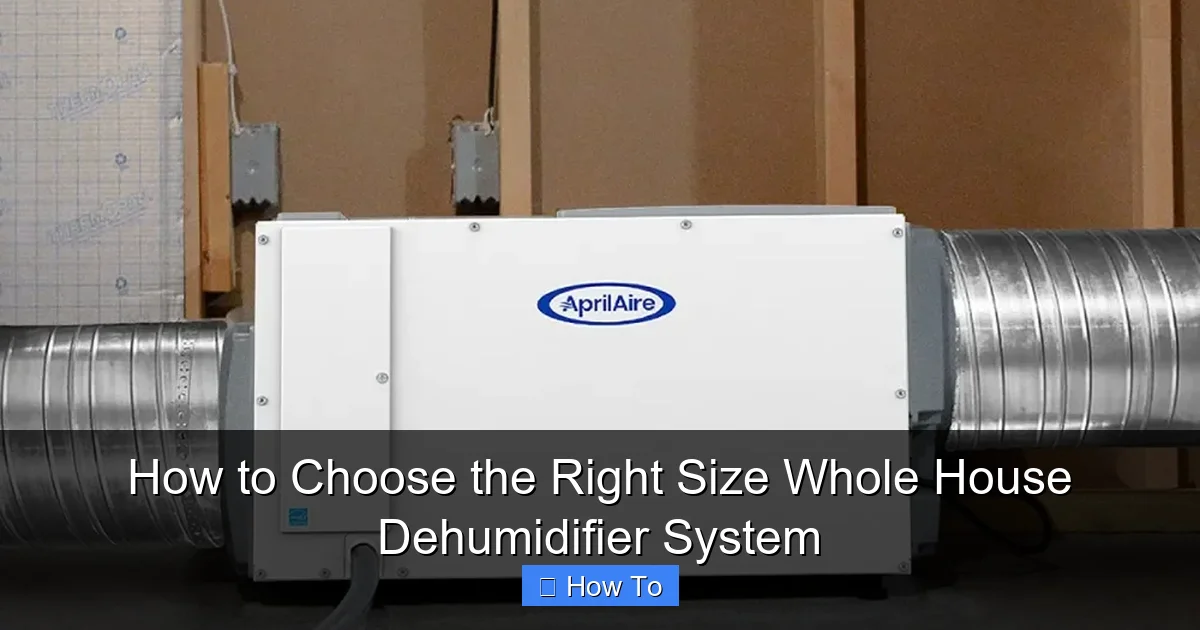
Choosing the right size whole house dehumidifier system ensures optimal moisture control, energy efficiency, and indoor air quality. This guide walks you through room size, humidity levels, climate, and more to help you pick the perfect unit. Follow our expert tips to avoid overspending or underperforming systems.
Quick Answers to Common Questions
Tip/Question?
How do I know if my home is too humid?
Use a hygrometer to measure humidity. If it’s above 50%, or you notice musty smells, condensation, or mold, your home is too humid.
Tip/Question?
Can I install a whole house dehumidifier myself?
Ducted systems require professional installation. Standalone units are easier but still benefit from expert advice on placement and drainage.
Tip/Question?
What’s the ideal humidity level for my home?
Keep indoor humidity between 30% and 50%. This range prevents mold, dust mites, and discomfort.
Tip/Question?
Do I need a dehumidifier if I have central air?
Yes, especially in humid climates. Central AC removes some moisture, but not enough in damp homes or basements.
Tip/Question?
How much does a whole house dehumidifier cost?
Prices range from $1,500 to $4,000+, including installation. High-capacity or smart models cost more but offer long-term savings.
How to Choose the Right Size Whole House Dehumidifier System
If you’ve noticed musty odors, peeling paint, or condensation on windows, your home might be battling excess humidity. A whole house dehumidifier system can solve these problems by removing moisture from the air throughout your entire home—not just one room. But here’s the catch: choosing the wrong size can lead to wasted energy, poor performance, or even mold growth.
In this guide, we’ll walk you through everything you need to know to select the right size whole house dehumidifier system. You’ll learn how to measure your space, assess humidity levels, understand capacity ratings, and make smart decisions based on your home’s unique needs. By the end, you’ll be confident in picking a system that keeps your home comfortable, healthy, and energy-efficient.
Step 1: Understand What a Whole House Dehumidifier Does
Before diving into sizing, it’s important to know how a whole house dehumidifier works. Unlike portable units that target single rooms, a whole house system is integrated into your HVAC (heating, ventilation, and air conditioning) system. It pulls air from various parts of your home, removes excess moisture, and returns dry air back through your ductwork.
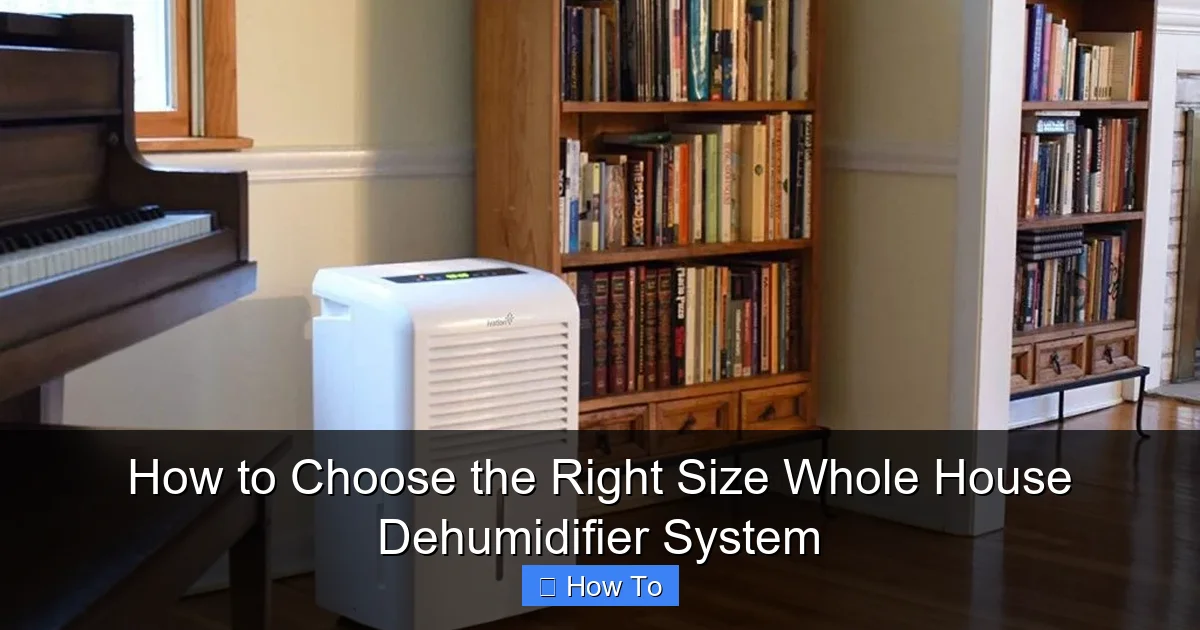
Visual guide about How to Choose the Right Size Whole House Dehumidifier System
Image source: hvaclifehack.com
These systems are ideal for homes with consistent humidity issues, especially in basements, crawl spaces, or regions with high outdoor humidity. They help prevent mold, dust mites, and structural damage while improving indoor air quality and comfort.
Whole house dehumidifiers come in two main types:
- Ducted systems: Installed directly into your HVAC ductwork and work with your furnace or air handler.
- Standalone (portable) whole house units: Larger versions of room dehumidifiers that can cover multiple rooms but aren’t integrated into ducts.
For most homes, a ducted system is the best choice because it provides even moisture control and operates quietly and efficiently.
Step 2: Measure Your Home’s Square Footage
The first step in choosing the right size is knowing how much space your dehumidifier needs to cover. Start by measuring the total square footage of the area that needs dehumidification.
How to Calculate Square Footage
Use a tape measure to find the length and width of each room. Multiply length by width to get the square footage of that room. Add up all the rooms to get your total.
For example:
- Living room: 15 ft x 20 ft = 300 sq ft
- Bedroom: 12 ft x 12 ft = 144 sq ft
- Basement: 20 ft x 30 ft = 600 sq ft
- Total: 300 + 144 + 600 = 1,044 sq ft
Don’t forget to include finished basements, attics (if conditioned), and crawl spaces if they’re part of your living area or connected to your HVAC system.
Why Accurate Measurements Matter
Underestimating your square footage can lead to a dehumidifier that’s too small, struggling to keep up with moisture. Overestimating might result in overspending on a system that’s larger than necessary. Both scenarios waste money and reduce efficiency.
Tip: If your home has an open floor plan, treat it as one large room. For split-level homes, measure each level separately and add them together.
Step 3: Assess Your Home’s Humidity Level
Square footage tells part of the story, but humidity level is just as important. A 1,000 sq ft home in a swampy Florida basement needs a much stronger dehumidifier than the same size home in dry Arizona.
Use a Hygrometer to Measure Humidity
A hygrometer is a small, inexpensive device that measures relative humidity (RH). You can find digital models for under $20 at hardware stores or online.
Place the hygrometer in the most humid area of your home—usually the basement, bathroom, or laundry room. Let it sit for 24 hours and record the average reading.
Ideal indoor humidity should be between 30% and 50%. Here’s how to interpret your results:
- 30–50%: Normal—your home may not need a dehumidifier unless you have specific moisture issues.
- 50–60%: Moderately damp—consider a dehumidifier, especially if you notice odors or condensation.
- 60–70%: Very damp—a dehumidifier is recommended.
- 70%+: Extremely damp—urgent action needed to prevent mold and structural damage.
Look for Signs of High Humidity
Even without a hygrometer, you can spot clues:
- Musty smells
- Water stains on walls or ceilings
- Peeling wallpaper or paint
- Warped wood floors or furniture
- Condensation on windows, pipes, or mirrors
- Visible mold or mildew
If you see multiple signs, your home likely needs a dehumidifier—and possibly a larger capacity one.
Step 4: Consider Your Climate and Region
Your geographic location plays a big role in dehumidifier sizing. Homes in humid climates need more powerful systems than those in dry areas.
Humid vs. Dry Climates
In the southeastern U.S.—think Florida, Georgia, or Louisiana—summer humidity often exceeds 70%. These homes typically need high-capacity dehumidifiers (70–100+ pints per day).
In contrast, homes in the Southwest (Arizona, Nevada) have low outdoor humidity. Even if indoor moisture builds up from showers or cooking, a smaller system (30–50 pints) may suffice.
Coastal areas and regions with frequent rain or flooding also require stronger dehumidification.
Seasonal Changes Matter
Some homes only need dehumidification during certain seasons. For example, a mountain cabin might be dry in winter but humid in summer. In such cases, a system with adjustable settings or a timer can save energy.
If you live in a four-season climate, choose a dehumidifier that can handle peak humidity months without overworking.
Step 5: Factor in Home Features and Airflow
Not all homes are created equal. Certain features increase moisture levels and affect dehumidifier performance.
Basements and Crawl Spaces
Basements are naturally damp due to ground moisture and poor ventilation. A finished basement used as a living space needs dehumidification just like the rest of the house.
Crawl spaces are even trickier. They’re often dark, enclosed, and prone to mold. If your crawl space is vented or connected to your HVAC, it should be included in your square footage calculation.
Tip: Consider a dedicated crawl space dehumidifier if your main system can’t reach that area effectively.
Ventilation and Airflow
Homes with poor ventilation—like those with sealed windows, no exhaust fans, or blocked ducts—trap moisture. This increases the load on your dehumidifier.
Conversely, well-ventilated homes with exhaust fans in kitchens and bathrooms may need a slightly smaller unit.
Number of Occupants and Activities
More people = more moisture. Cooking, showering, laundry, and even breathing release water vapor into the air.
A family of five generates significantly more humidity than a single occupant. If you frequently host guests or run a home business (like a salon or gym), factor in extra moisture.
Construction Materials and Age
Older homes may have leaks, poor insulation, or foundation cracks that let in groundwater. Newer homes are often more airtight, which can trap indoor moisture.
Homes with concrete walls, tile floors, or large windows may also retain more humidity.
Step 6: Understand Dehumidifier Capacity (Pints per Day)
Dehumidifiers are rated by how many pints of moisture they can remove in 24 hours. This is called the “pint capacity” or “removal rate.”
Common sizes include:
- 30 pints/day: Small homes, mild humidity
- 50 pints/day: Medium homes, moderate humidity
- 70 pints/day: Large homes, high humidity
- 100+ pints/day: Very large or extremely damp homes
How to Match Capacity to Your Needs
Use this general guide based on square footage and humidity level:
| Home Size | Humidity Level | Recommended Capacity |
|---|---|---|
| Up to 1,500 sq ft | Mild (50–60%) | 30–50 pints/day |
| 1,500–2,500 sq ft | Moderate (60–70%) | 50–70 pints/day |
| 2,500–4,000 sq ft | High (70%+) | 70–100 pints/day |
| Over 4,000 sq ft | Extreme (flooding, mold) | 100+ pints/day or multiple units |
Note: These are estimates. Always consult a professional for precise sizing.
Don’t Overbuy
A dehumidifier that’s too large will cycle on and off frequently, wasting energy and reducing lifespan. It may also fail to run long enough to remove moisture effectively, leading to “short cycling.”
Conversely, a unit that’s too small will run constantly, increase your electric bill, and still not solve the problem.
Step 7: Choose the Right Type and Features
Once you know the size, consider the type and features that best fit your home.
Ducted vs. Standalone Systems
Ducted systems are ideal for central HVAC homes. They’re hidden, quiet, and provide even coverage. Installation requires a professional.
Standalone whole house units are easier to install and can be moved if needed. However, they’re louder and may not cover large areas as efficiently.
Key Features to Look For
- Humidistat: Lets you set your desired humidity level (e.g., 45%). The system turns on/off automatically.
- Auto-defrost: Prevents ice buildup in cold climates or basements.
- Drain pump: Allows continuous drainage without needing a gravity-fed hose.
- Air filter: Removes dust and allergens as it dehumidifies.
- Remote monitoring: Some models connect to Wi-Fi for app control.
Energy Efficiency Matters
Look for ENERGY STAR-certified models. They use 15–30% less energy than standard units and often qualify for rebates.
Check the “energy factor” (liters of water removed per kilowatt-hour). Higher numbers mean better efficiency.
Step 8: Get a Professional Assessment
While this guide helps you understand the basics, a professional HVAC technician can provide a precise load calculation.
Why Hire a Pro?
Technicians use tools like the Manual D (for duct design) and Manual J (for HVAC load calculations) to determine the exact dehumidifier size needed. They consider factors like insulation, window type, and local weather patterns.
A professional can also assess your ductwork to ensure it can handle the added airflow from the dehumidifier.
What to Expect During an Assessment
- Home inspection (including basement and attic)
- Humidity and temperature readings
- Ductwork evaluation
- Recommendation for size, type, and placement
- Installation quote
Many HVAC companies offer free consultations. It’s worth the investment to avoid costly mistakes.
Step 9: Install and Maintain Your System
Even the best dehumidifier won’t work well if it’s installed incorrectly or neglected.
Professional Installation
Ducted systems must be installed by a licensed HVAC technician. Improper installation can lead to leaks, poor airflow, or damage to your furnace.
The dehumidifier should be placed where it can draw air from the most humid areas and distribute dry air evenly.
Regular Maintenance
To keep your system running efficiently:
- Clean or replace the air filter every 1–3 months
- Check the drain hose for clogs
- Inspect coils for dust or ice buildup
- Test the humidistat monthly
- Schedule annual professional servicing
Neglecting maintenance can reduce efficiency by up to 30% and shorten the system’s lifespan.
Troubleshooting Common Issues
Even with the right size, problems can occur. Here’s how to fix common issues:
Dehumidifier Runs But Doesn’t Remove Moisture
- Check the air filter—replace if dirty
- Ensure the unit is sized correctly for humidity level
- Verify the humidistat is set low enough (e.g., 45%)
- Look for blocked airflow around the unit
Unit Cycles On and Off Too Often
- May be oversized—consult a technician
- Check for refrigerant leaks
- Ensure the room isn’t too cold (below 65°F)
Water Leaks or Overflowing Tank
- Clear the drain hose
- Install a drain pump if gravity drainage isn’t working
- Check for cracks in the water tank
Strange Noises or Odors
- Clean the coils and fan
- Replace the air filter
- Inspect for mold inside the unit
If problems persist, contact the manufacturer or a technician.
Conclusion
Choosing the right size whole house dehumidifier system doesn’t have to be overwhelming. Start by measuring your home, checking humidity levels, and considering your climate and home features. Use the pint capacity guide to narrow your options, and don’t skip the professional assessment.
A properly sized dehumidifier improves air quality, protects your home from damage, and saves energy. It’s an investment in comfort and health that pays off for years to come.
Remember: bigger isn’t always better. The goal is a system that matches your home’s unique needs—efficient, effective, and reliable.