
Choosing the right dehumidifier can improve air quality, prevent mold, and protect your home. This guide walks you through every step—from sizing and placement to features and maintenance—so you can pick the perfect model with confidence.
Quick Answers to Common Questions
What size dehumidifier do I need for a 1,000 sq ft basement?
For a 1,000 sq ft moderately damp basement, choose a 50–70 pint dehumidifier. If it’s very damp or has standing water, go for 70+ pints.
Can I run a dehumidifier all the time?
Yes, especially if you use a model with an auto-humidistat. It will cycle on and off as needed, saving energy while maintaining ideal humidity.
Do dehumidifiers use a lot of electricity?
It depends on the model and usage. ENERGY STAR units are more efficient. A 50-pint model may use 500–700 watts per hour—check the label for exact numbers.
Where should I place my dehumidifier?
Place it in the most humid area, with good airflow. Avoid corners and keep vents clear. Close doors and windows for best results.
How often should I clean my dehumidifier?
Clean the water tank weekly, the filter monthly, and the exterior as needed. Regular maintenance prevents mold and keeps it running efficiently.
How to Choose a Dehumidifier: A Complete Step-by-Step Guide
If you’ve ever noticed damp walls, musty smells, or condensation on windows, your home might have a humidity problem. Too much moisture in the air doesn’t just feel uncomfortable—it can lead to mold, dust mites, and even structural damage over time. That’s where a dehumidifier comes in.
But with so many models, sizes, and features on the market, how do you choose the right one? Don’t worry—this guide will walk you through everything you need to know to pick the perfect dehumidifier for your home. Whether you’re tackling a damp basement, a humid bathroom, or just want better air quality, we’ve got you covered.
By the end of this guide, you’ll know exactly what to look for, how to size your unit, which features matter most, and how to keep it running smoothly for years. Let’s dive in.
Step 1: Understand Why You Need a Dehumidifier
Visual guide about How to Chose a Dehumidifier
Image source: hvacseer.com
Before buying anything, it helps to understand what a dehumidifier does and why you might need one.
Dehumidifiers remove excess moisture from the air, helping to maintain a healthy indoor humidity level—ideally between 30% and 50%. When humidity climbs above 60%, you create a breeding ground for mold, mildew, and allergens.
Common signs you need a dehumidifier include:
- Persistent musty odors
- Visible mold or mildew spots
- Condensation on windows, walls, or pipes
- Peeling paint or wallpaper
- Allergy symptoms like sneezing or congestion
- Clothes or towels that stay damp after drying
If you’re dealing with any of these issues, a dehumidifier can make a big difference. But not all dehumidifiers are created equal—so let’s figure out which one is right for you.
Step 2: Determine the Size You Need
One of the most common mistakes people make is buying a dehumidifier that’s too small—or too big. The right size depends on two main factors: the square footage of the space and the level of moisture.
Measure Your Space
Start by measuring the area where you’ll use the dehumidifier. Use a tape measure to get the length and width of the room, then multiply them to get the square footage.
For example:
- A 10 ft x 12 ft room = 120 sq ft
- A basement that’s 20 ft x 30 ft = 600 sq ft
Most dehumidifiers list their coverage area in square feet, so this number is essential.
Assess the Humidity Level
Next, determine how damp the space is. This affects how much moisture the unit needs to remove per day, measured in “pints.”
Here’s a quick guide:
- Slightly damp: Feels humid, maybe a little musty. No standing water. (30–50 pints/day)
- Moderately damp: Noticeable moisture, occasional condensation. (50–70 pints/day)
- Very damp: Frequent condensation, damp spots, or small puddles. (70–90 pints/day)
- Wet or flooded: Standing water, strong mold smell, or recent flooding. (90+ pints/day)
You can use a hygrometer (a small, inexpensive device) to measure humidity levels. If you don’t have one, trust your senses—how the air feels and smells is a good indicator.
Match Size to Capacity
Now, match your space and humidity level to the dehumidifier’s capacity. Here’s a general rule of thumb:
- Up to 500 sq ft, slightly damp: 20–30 pint unit
- 500–1,000 sq ft, moderately damp: 30–50 pint unit
- 1,000–1,500 sq ft, very damp: 50–70 pint unit
- 1,500+ sq ft or wet conditions: 70+ pint unit or multiple units
Keep in mind: a larger unit isn’t always better. An oversized dehumidifier may cycle on and off too quickly, reducing efficiency and not removing moisture evenly.
Step 3: Choose the Right Type of Dehumidifier
There are two main types of dehumidifiers: refrigerant (compressor) and desiccant. Each works differently and suits different environments.
Refrigerant (Compressor) Dehumidifiers
These are the most common and work like a mini air conditioner. They pull in moist air, cool it to condense the moisture, then reheat the air before releasing it back into the room.
Best for: Warm, humid climates (above 65°F / 18°C)
Pros:
- High moisture removal rate
- Energy-efficient in warm conditions
- Affordable upfront cost
Cons:
- Less effective in cold temperatures
- Can be noisy
- May freeze up in unheated spaces
If you’re using the dehumidifier in a basement, garage, or crawl space that gets cold in winter, this type might not be ideal.
Desiccant Dehumidifiers
These use a moisture-absorbing material (like silica gel) to trap water vapor. The desiccant is then heated to release the moisture, which is collected or drained.
Best for: Cool or cold environments (below 65°F / 18°C)
Pros:
- Works well in low temperatures
- Quieter operation
- No risk of freezing
Cons:
- Higher energy use
- Lower moisture removal rate
- More expensive upfront
Desiccant models are great for RVs, cabins, or unheated basements. They’re also quieter, making them a good choice for bedrooms or living areas.
Hybrid and Specialty Models
Some newer models combine both technologies or offer specialized features. For example:
- Whole-house dehumidifiers: Installed with your HVAC system to treat the entire home. Ideal for large spaces or high humidity.
- Mini dehumidifiers: Small, portable units for closets, RVs, or small bathrooms. Often use desiccant technology.
- Laundry dehumidifiers: Designed to speed up drying clothes indoors by removing moisture quickly.
Choose based on your specific needs and environment.
Step 4: Look for Key Features
Once you’ve narrowed down the size and type, it’s time to compare features. The right features can make your dehumidifier easier to use, more efficient, and more effective.
Auto-Humidistat
This built-in sensor measures the humidity level and automatically turns the unit on or off to maintain your desired setting.
Why it matters: You don’t have to manually adjust it. Set it to 45%, and it will keep the air right where you want it.
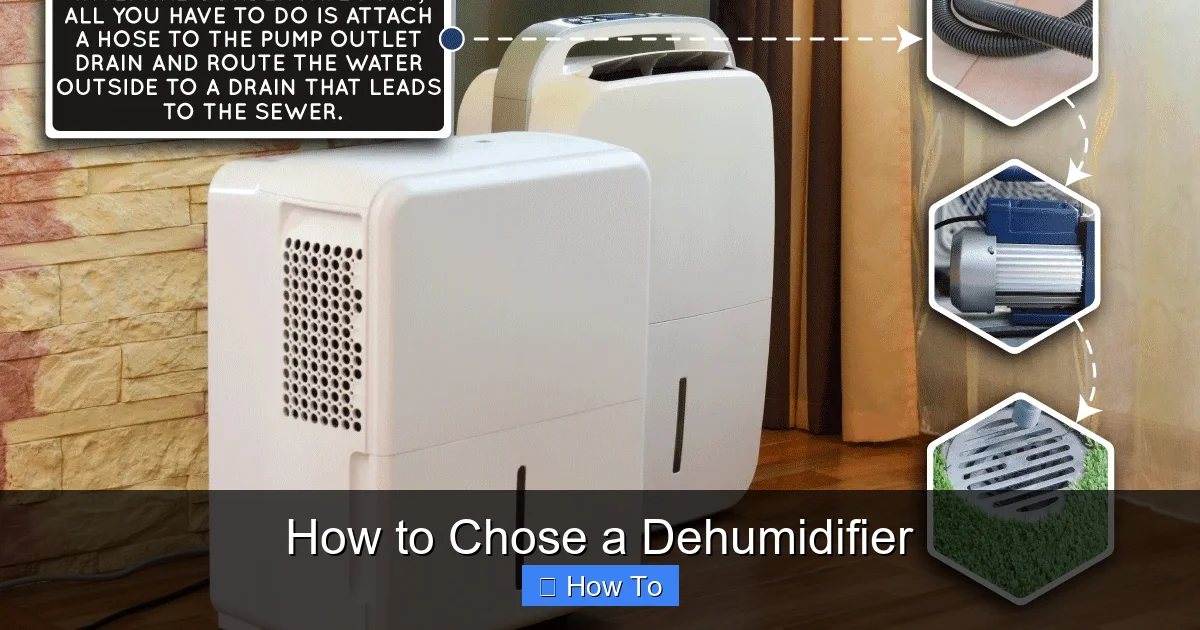
Continuous Drainage Option
Most dehumidifiers collect water in a bucket that needs to be emptied regularly. But if you’re running it 24/7, that’s a hassle.
A continuous drainage feature lets you attach a hose so water flows directly into a floor drain, sink, or sump pump.
Tip: Make sure the unit has a built-in pump or gravity drain option if you’re placing it far from a drain.
Timer and Auto-Restart
A timer lets you schedule when the dehumidifier runs—great for saving energy or running it during off-peak hours.
Auto-restart remembers your settings after a power outage, so you don’t have to reprogram it.
Energy Efficiency
Look for the ENERGY STAR label. These models use up to 30% less energy than standard units, saving you money on electricity.
Check the “Energy Factor” (liters of water removed per kilowatt-hour). Higher is better.
Noise Level
Dehumidifiers can be noisy, especially compressor models. Look for units rated at 50 decibels (dB) or lower for quiet operation.
For comparison:
- 50 dB = quiet conversation
- 60 dB = normal talking
- 70 dB = vacuum cleaner
If you’re using it in a bedroom or living room, go for a quieter model.
Portability and Design
Wheels and handles make it easy to move the unit between rooms. A compact design fits better in tight spaces.
Some models have digital displays, remote controls, or app connectivity for smart homes.
Step 5: Consider Placement and Installation
Where you place your dehumidifier affects how well it works.
Best Locations
- Basements: Place near the center or where moisture is worst. Avoid corners with poor airflow.
- Bathrooms: Use a small unit or run it during and after showers.
- Laundry rooms: Run it while drying clothes to prevent dampness.
- Whole-house: Install near your HVAC system or in a central location.
Airflow Tips
- Keep at least 6–12 inches of space around the unit for proper airflow.
- Don’t block the intake or exhaust vents.
- Close doors and windows when running to prevent outside humidity from entering.
Drainage Setup
If using a hose for continuous drainage:
- Use a 3/8” or 1/2” garden hose.
- Ensure the hose slopes downward to the drain.
- Secure it with clips to prevent leaks.
For basements without drains, consider a model with a built-in pump that can push water upward.
Step 6: Set a Budget and Compare Brands
Dehumidifiers range from $100 to $1,000+, depending on size and features.
Budget Tips
- Under $200: Good for small spaces (up to 500 sq ft). Basic features, may lack efficiency.
- $200–$400: Mid-range models with better capacity, energy efficiency, and features like auto-humidistats.
- $400–$700: High-capacity, whole-home, or specialty models. Often ENERGY STAR certified.
- $700+: Premium or industrial-grade units. Best for large homes or severe moisture problems.
Don’t just go for the cheapest option. A more efficient model may cost more upfront but save you money on energy bills over time.
Top Brands to Consider
- Frigidaire: Reliable, affordable, great for basements.
- hOmeLabs: High-capacity, user-friendly, popular for large spaces.
- GE: ENERGY STAR models with smart features.
- Eva-Dry: Compact, quiet, ideal for small areas.
- AprilAire: Whole-house systems, professional installation.
Read customer reviews and check warranty terms (look for at least 1–2 years).
Step 7: Maintain Your Dehumidifier
A well-maintained dehumidifier lasts longer and works better.
Regular Cleaning
- Empty the water tank daily (if not using continuous drainage).
- Wash the tank with mild soap and water weekly to prevent mold.
- Clean or replace the air filter every 1–2 months.
- Wipe down the exterior and vents with a damp cloth.
Seasonal Care
- Store the unit in a dry place during off-seasons.
- Check for dust buildup before restarting.
- Inspect hoses and seals for cracks or leaks.
Troubleshooting Common Issues
- Unit won’t turn on: Check power cord, outlet, and settings.
- Not removing moisture: Clean filter, check for blockages, ensure proper placement.
- Leaking water: Empty tank, check hose connections, inspect seals.
- Freezing up: Move to a warmer area or switch to a desiccant model.
Conclusion
Choosing the right dehumidifier doesn’t have to be overwhelming. Start by assessing your space and humidity level, then pick the right size and type for your needs. Look for energy-efficient models with useful features like auto-humidistats and continuous drainage. Don’t forget to consider noise, portability, and maintenance.
A good dehumidifier can transform your home—reducing allergens, preventing mold, and making the air feel fresher and more comfortable. With the tips in this guide, you’re ready to make a smart, informed decision.
Take your time, compare options, and invest in a unit that will serve you well for years to come. Your home—and your health—will thank you.