

If your dehumidifier doesn’t collect water, it’s often due to low humidity, dirty filters, or airflow issues. Understanding the root cause helps you fix it quickly and restore moisture removal. Regular maintenance and proper placement are key to consistent performance.
You’ve just bought a shiny new dehumidifier, plugged it in, and set it to work in your damp basement. You wait… and wait… but the water tank remains empty. Or maybe your trusty old unit suddenly stopped collecting water after years of reliable service. Frustrating, right? You’re not alone. Many people face this exact problem—and it’s more common than you might think.
A dehumidifier that doesn’t collect water isn’t always broken. In fact, most of the time, the issue is fixable with a little troubleshooting. Whether it’s a simple cleaning task or adjusting where you’ve placed the unit, understanding *why* your dehumidifier isn’t pulling moisture from the air is the first step to solving the problem. This guide will walk you through the most common reasons—and how to fix them—so you can get back to enjoying a drier, more comfortable home.
Key Takeaways
- Low humidity levels: Dehumidifiers need a minimum humidity (usually 40–50%) to collect water; below that, they won’t produce much.
- Dirty or clogged air filter: A blocked filter restricts airflow, reducing the unit’s ability to pull moisture from the air.
- Frost buildup on coils: In cold environments, evaporator coils can freeze, halting the dehumidification process.
- Incorrect room temperature: Most dehumidifiers work best between 65°F and 80°F; colder rooms reduce efficiency.
- Faulty humidistat or sensor: A malfunctioning sensor may prevent the unit from detecting humidity accurately.
- Improper placement or ventilation: Blocked vents or poor airflow around the unit can limit moisture collection.
- Mechanical or refrigerant issues: Compressor failure or low refrigerant can stop the dehumidifier from working entirely.
📑 Table of Contents
- Understanding How Dehumidifiers Work
- Low Humidity: The Most Common Culprit
- Dirty or Clogged Air Filter
- Frost or Ice Buildup on the Coils
- Incorrect Room Temperature or Placement
- Faulty Humidistat or Sensor
- Mechanical or Refrigerant Issues
- Other Possible Causes and Quick Fixes
- Preventative Maintenance Tips
- Conclusion
Understanding How Dehumidifiers Work
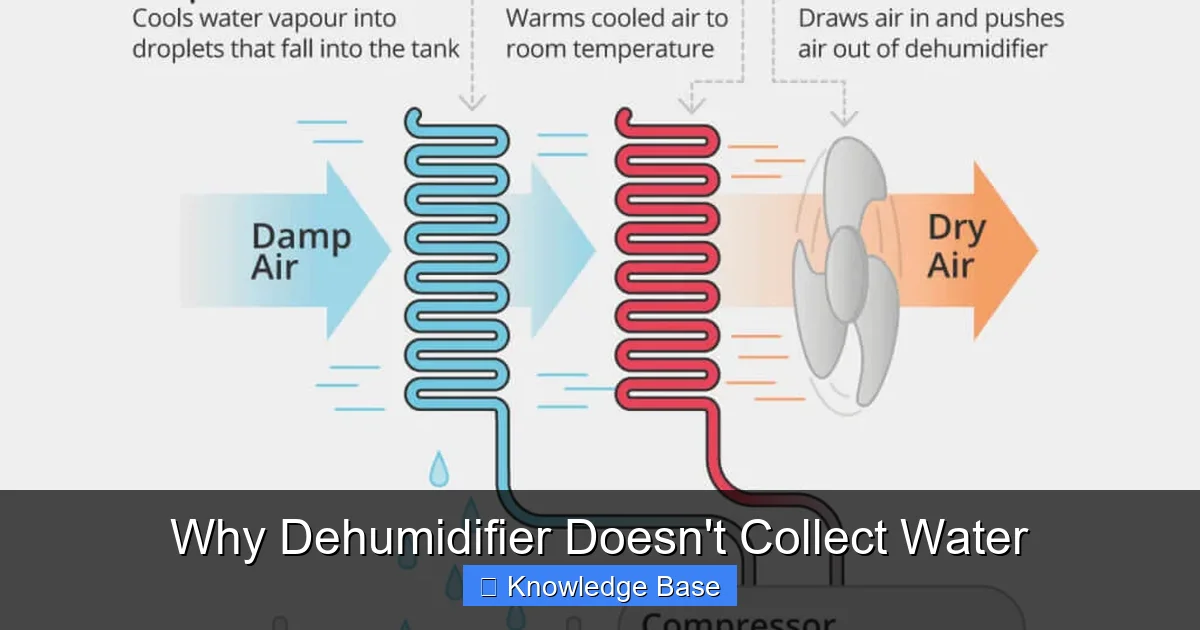
Before diving into why your dehumidifier isn’t collecting water, it helps to know how these devices actually function. Think of a dehumidifier like a vacuum cleaner for moisture. It pulls in humid air, removes the water, and then releases drier air back into the room.
Most residential dehumidifiers use a refrigeration-based system. Here’s a quick breakdown:
The Air Intake Process
A fan draws warm, moist air from the room into the dehumidifier through an intake vent. This air passes over cold evaporator coils inside the unit.
Condensation on the Coils
As the air cools, the moisture in it condenses into water droplets—just like how dew forms on a cold drink can. These droplets collect on the coils and drip into a built-in water tank or drain hose.
Reheating and Releasing Air
The now-dry air passes over warm condenser coils, which reheat it slightly before it’s blown back into the room. This ensures the air isn’t too cold when it exits, maintaining room comfort.
The Role of the Humidistat
A built-in humidistat (humidity sensor) monitors the air’s moisture level. When humidity drops below your set point (say, 50%), the unit may cycle off or reduce power to save energy.
Understanding this process helps explain why certain conditions—like low humidity or cold temperatures—can stop water collection. If any part of this cycle is disrupted, your dehumidifier won’t work as expected.
Low Humidity: The Most Common Culprit

Visual guide about Why Dehumidifier Doesn’t Collect Water
Image source: housefresh.com
One of the top reasons your dehumidifier doesn’t collect water is simple: there’s not enough moisture in the air to begin with.
What Is the Ideal Humidity Range?
Most dehumidifiers are designed to operate efficiently when indoor humidity is between 40% and 60%. If your home’s humidity is already below 40%, the unit may run but collect very little—or no—water. This is especially common in dry climates or during winter when indoor air becomes naturally drier due to heating systems.
For example, if you live in Arizona and run your dehumidifier in a well-insulated living room during January, the air might already be at 30% humidity. In this case, the dehumidifier isn’t broken—it’s just doing its job too well!
How to Check Your Home’s Humidity
Use a hygrometer (a small, inexpensive device that measures humidity) to check the actual moisture level in the room. Many smart thermostats and weather stations also include humidity readings. If the humidity is below 40%, your dehumidifier may not collect water simply because there’s not enough moisture to remove.
When to Use a Dehumidifier
Dehumidifiers are most useful in damp areas like basements, laundry rooms, or bathrooms—especially after showers or during humid seasons. If you’re using one in a dry bedroom or living room during winter, it might not be necessary.
Tip: Only run your dehumidifier when humidity is above 50%. This saves energy and prevents over-drying, which can cause dry skin, irritated sinuses, or damage to wooden furniture.
Dirty or Clogged Air Filter
Visual guide about Why Dehumidifier Doesn’t Collect Water
Image source: housefresh.com
A dirty air filter is one of the easiest problems to fix—and one of the most overlooked.
Why the Filter Matters
The air filter sits at the intake vent and traps dust, pet hair, and other particles. Over time, it gets clogged, restricting airflow. When air can’t flow freely, the dehumidifier can’t pull in enough humid air to remove moisture effectively.
Imagine trying to drink through a straw that’s half-blocked—it just doesn’t work as well. The same principle applies here.
Signs of a Clogged Filter
– The dehumidifier runs but the tank stays empty
– The unit feels hotter than usual
– You notice reduced airflow from the vents
– Dust buildup around the intake
How to Clean the Filter
1. Turn off and unplug the dehumidifier.
2. Locate the filter (usually behind a front or side panel).
3. Remove it and gently vacuum or rinse it with warm water.
4. Let it dry completely before reinserting.
5. Reassemble and restart the unit.
Most manufacturers recommend cleaning the filter every 2–4 weeks during heavy use. If the filter is damaged or extremely dirty, replace it with a new one.
Pro Tip: Use a HEPA Filter (If Compatible)
Some dehumidifiers allow you to upgrade to a HEPA filter, which captures even smaller particles. This improves air quality but may slightly reduce airflow—so check your model’s specifications first.
Frost or Ice Buildup on the Coils
If your dehumidifier runs but doesn’t collect water—and you notice frost or ice on the coils—this is likely the issue.
Why Coils Freeze
Dehumidifiers cool the evaporator coils to condense moisture. But if the room is too cold (below 65°F), the coils can get so cold that moisture freezes instead of dripping into the tank. This ice buildup acts like a blanket, insulating the coils and stopping the dehumidification process.
This is especially common in unheated basements, garages, or crawl spaces during winter.
Signs of Frost Buildup
– Ice or frost visible on the front or back of the unit
– The dehumidifier runs continuously but produces no water
– The unit shuts off unexpectedly
– A “defrost” light or error code appears (on some models)
How to Fix Frost Buildup
1. Turn off the dehumidifier and let it sit for 1–2 hours to thaw.
2. Move the unit to a warmer room (above 65°F) if possible.
3. Clean the air filter to improve airflow.
4. Ensure vents aren’t blocked by furniture or walls.
Some dehumidifiers have an automatic defrost feature that kicks in when ice is detected. If yours doesn’t, consider upgrading to a model with this function—or use it only in warmer areas.
Preventing Future Freezing
– Use the dehumidifier only in rooms above 65°F.
– Choose a “low-temperature” or “cold-climate” model if you need one for a basement or garage.
– Keep the unit away from cold drafts or concrete floors that draw heat.
Incorrect Room Temperature or Placement
Where and how you place your dehumidifier matters more than you might think.
Temperature Matters
As mentioned, most dehumidifiers work best between 65°F and 80°F. In colder environments, the refrigeration cycle slows down, reducing efficiency. In very hot rooms (above 90°F), the unit may overheat or shut down as a safety measure.
For example, a dehumidifier in a 55°F basement may run constantly but collect almost no water—because the coils are too cold to function properly.
Placement Tips for Maximum Efficiency
– Place the unit in the center of the room, away from walls and furniture.
– Leave at least 6–12 inches of space around all vents for airflow.
– Avoid placing it near heat sources (like furnaces) or in direct sunlight.
– Don’t put it on carpet unless it has elevated feet—this can block the intake.
Ventilation and Air Circulation
Stagnant air reduces dehumidifier performance. If the room has poor airflow, the unit may only treat a small area.
Solution: Use a fan to circulate air around the room. This helps the dehumidifier pull in more humid air from different areas, improving moisture collection.
Example: Basement Setup
Imagine your basement has a damp corner near the washing machine. If you place the dehumidifier in the opposite corner, it may not reach the source of moisture. Instead, position it centrally or near the problem area—and use a fan to help distribute dry air.
Faulty Humidistat or Sensor
The humidistat is the “brain” of your dehumidifier. It tells the unit when to turn on and off based on humidity levels. If it’s broken or miscalibrated, the dehumidifier may not collect water—even if the air is humid.
How the Humidistat Works
The sensor measures the moisture in the air and compares it to your set humidity level (e.g., 50%). If the reading is higher, the unit runs. If it’s lower, the unit may pause or shut off.
Signs of a Faulty Sensor
– The dehumidifier runs constantly but the tank is empty
– It turns on and off randomly
– The humidity reading on the display doesn’t match a separate hygrometer
– The unit doesn’t respond to humidity changes
Testing the Humidistat
1. Use a reliable hygrometer to check the actual room humidity.
2. Compare it to the dehumidifier’s display.
3. If there’s a big difference (more than 5–10%), the sensor may be faulty.
Some models allow you to recalibrate the sensor through the settings menu. Check your user manual for instructions.
When to Replace the Sensor
If recalibration doesn’t work, the sensor may need replacement. This usually requires a technician, as it involves opening the unit and handling electrical components.
Tip: If your dehumidifier is over 5 years old and the sensor is faulty, it may be more cost-effective to replace the entire unit—especially if other parts are aging.
Mechanical or Refrigerant Issues
If none of the above fixes work, the problem may be internal—like a broken compressor or low refrigerant.
The Compressor’s Role
The compressor is the heart of the refrigeration system. It pumps refrigerant through the coils, creating the cold and hot surfaces needed for condensation. If it fails, the coils won’t cool properly, and no water will collect.
Signs of Compressor Failure
– The dehumidifier hums but doesn’t cool the coils
– The unit runs but feels warm all over
– You hear clicking or buzzing sounds
– The circuit breaker trips frequently
Refrigerant Leaks
Refrigerant is the chemical that absorbs and releases heat. If it leaks, the system can’t cool the coils. This is rare but possible, especially in older units or those damaged during moving.
Signs include:
– Reduced cooling performance
– Hissing sounds near the coils
– Oil stains around the unit
What to Do
Compressor and refrigerant issues require professional repair. These components are sealed and should only be handled by certified technicians. Attempting DIY fixes can be dangerous and may void your warranty.
If repair costs exceed 50% of a new unit’s price, consider replacing it. Modern dehumidifiers are more energy-efficient and often come with better features like auto-defrost, smart controls, and larger tanks.
Other Possible Causes and Quick Fixes
Sometimes, the issue is simpler than you think.
Full or Misaligned Water Tank
If the tank is full but not properly seated, the dehumidifier may shut off as a safety measure. Always check that the tank is empty and correctly inserted.
Drain Hose Issues
If you’re using a continuous drain hose, make sure it’s not kinked, clogged, or higher than the outlet. Water needs to flow downhill.
Power or Settings Problems
– Ensure the unit is plugged in and the outlet is working.
– Check that the humidity setting isn’t too low (e.g., set to 30% in a 45% room).
– Make sure the “continuous” or “auto” mode is selected.
Age and Wear
Dehumidifiers typically last 5–10 years. Over time, parts wear out, efficiency drops, and repairs become frequent. If your unit is old and struggling, it might be time for an upgrade.
Preventative Maintenance Tips
Regular care keeps your dehumidifier running smoothly and prevents water collection issues.
Monthly Maintenance
– Clean the air filter
– Wipe down the exterior with a damp cloth
– Check the water tank for mold or residue
Seasonal Checks
– Inspect coils for dust or frost
– Test the humidistat with a hygrometer
– Ensure drain hoses are clear
Annual Deep Clean
– Vacuum the interior (with the unit unplugged)
– Clean the coils with a soft brush or coil cleaner
– Check for loose wires or worn parts
Storage Tips
If you’re not using the dehumidifier for months (e.g., during dry seasons), empty the tank, clean the filter, and store it in a dry place. Cover it to prevent dust buildup.
Conclusion
A dehumidifier that doesn’t collect water can be frustrating, but it’s rarely a sign of total failure. Most issues—like low humidity, dirty filters, or frost buildup—are easy to fix with a little know-how. By understanding how your unit works and performing regular maintenance, you can keep it running efficiently for years.
Remember: your dehumidifier is designed to remove excess moisture, not create dryness. If the air is already dry, it won’t collect water—and that’s okay. Use a hygrometer to monitor humidity levels and only run the unit when needed.
When in doubt, consult your user manual or contact the manufacturer. And if the problem persists despite troubleshooting, it may be time for a repair or replacement. With the right care, your dehumidifier will keep your home comfortable, healthy, and mold-free—one drop at a time.
Frequently Asked Questions
Why is my dehumidifier running but not collecting water?
This is often due to low humidity, a dirty filter, or frost on the coils. Check the room’s humidity level and clean the air filter. If the room is cold, the coils may be frozen.
Can a dehumidifier work in cold temperatures?
Most standard models struggle below 65°F. Cold-climate dehumidifiers are designed for lower temperatures and include features like auto-defrost to prevent freezing.
How often should I clean my dehumidifier’s filter?
Clean the filter every 2–4 weeks during heavy use. A clogged filter restricts airflow and reduces moisture collection.
Is it normal for a dehumidifier to not collect water in winter?
Yes, especially in dry or heated indoor environments. Winter air is often too dry for dehumidifiers to collect much water.
What should I do if my dehumidifier has ice on the coils?
Turn it off and let it thaw. Move it to a warmer room and ensure the filter is clean. Avoid using it in temperatures below 65°F unless it’s a cold-climate model.
Can a faulty humidistat stop water collection?
Yes. If the sensor misreads humidity levels, the unit may not run when needed. Test it with a separate hygrometer and recalibrate or replace if necessary.