
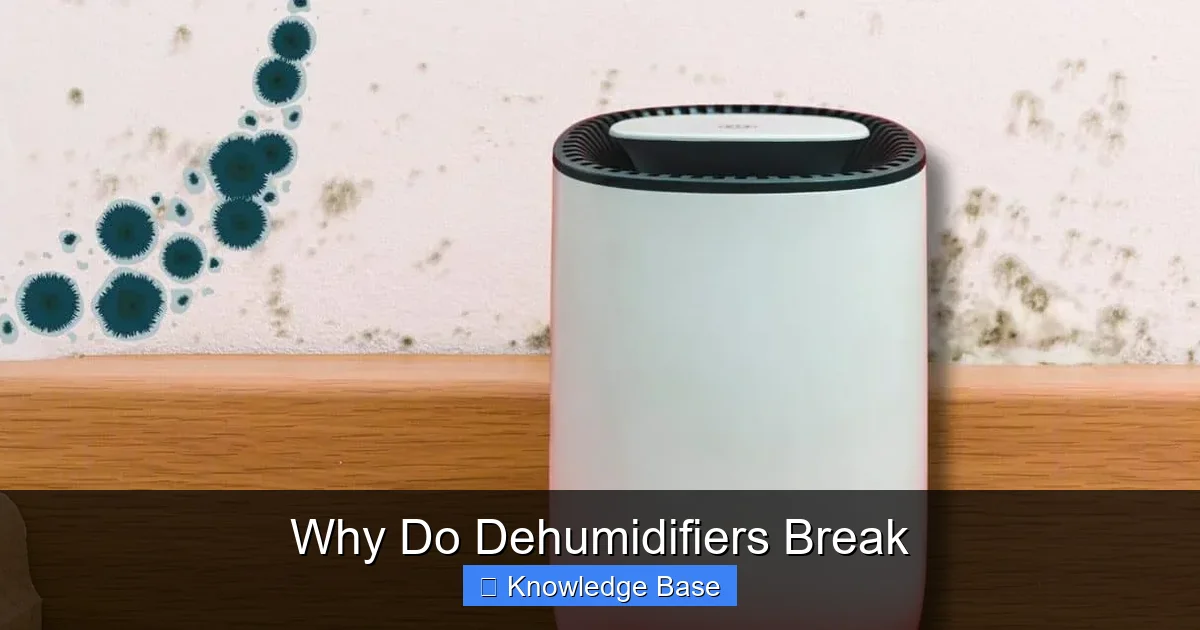
Dehumidifiers break for many reasons—most of which are preventable. From clogged filters to refrigerant leaks, understanding the root causes helps you avoid costly repairs and extend your unit’s life. Regular maintenance and smart usage are key to keeping your dehumidifier running smoothly.
Key Takeaways
- Poor maintenance is the #1 cause of dehumidifier failure: Dirty filters, full water tanks, and neglected coils drastically reduce efficiency and can lead to breakdowns.
- Operating in extreme temperatures damages components: Most dehumidifiers aren’t designed to work in very cold or hot environments, which can freeze coils or overheat motors.
- Overuse without breaks strains the compressor: Running a dehumidifier 24/7 without rest periods can cause overheating and premature wear.
- Using the wrong size unit for your space leads to inefficiency: An undersized unit works too hard, while an oversized one cycles too frequently, both causing stress.
- Refrigerant leaks and electrical issues are common in older models: These often require professional repair or replacement, especially if the unit is past its warranty.
- Improper storage during off-seasons can cause damage: Leaving water inside or storing in damp areas promotes mold, rust, and corrosion.
- Cheap or low-quality models are more prone to early failure: Investing in a reputable brand with good reviews often pays off in durability and performance.
📑 Table of Contents
- Introduction: The Silent Struggle of Your Dehumidifier
- Common Causes of Dehumidifier Failure
- Environmental and Usage Factors That Lead to Breakdowns
- Mechanical and Electrical Failures
- Maintenance Mistakes That Shorten Lifespan
- How to Prevent Dehumidifier Breakdowns
- Conclusion: Keep Your Dehumidifier Running Strong
Introduction: The Silent Struggle of Your Dehumidifier
You’ve probably never thought much about your dehumidifier—until it stops working. One day it’s quietly pulling moisture from the air, keeping your basement dry and your laundry smelling fresh. The next, it’s making a weird noise, leaking water, or just refusing to turn on. Suddenly, you’re left wondering: why do dehumidifiers break?
It’s a frustrating experience, especially when you rely on your unit to protect your home from mold, musty odors, and structural damage. But here’s the good news: most dehumidifier failures aren’t random. They’re often the result of predictable issues—many of which you can prevent with a little knowledge and routine care.
In this guide, we’ll explore the most common reasons dehumidifiers break, from everyday wear and tear to environmental stressors. Whether you’re dealing with a malfunctioning unit or just want to keep yours running longer, understanding these causes will help you make smarter decisions about maintenance, usage, and even replacement.
Common Causes of Dehumidifier Failure

Visual guide about Why Do Dehumidifiers Break
Image source: odoranswers.com
Dehumidifiers are built to last, but like any appliance, they have limits. When those limits are pushed—or when basic care is ignored—they start to fail. Let’s break down the most frequent culprits behind dehumidifier breakdowns.
1. Clogged or Dirty Air Filters
One of the simplest yet most overlooked causes of dehumidifier failure is a dirty air filter. The filter’s job is to trap dust, pet dander, and other airborne particles before they enter the internal components. Over time, this filter gets clogged, restricting airflow.
When airflow is reduced, the evaporator coils can’t absorb moisture efficiently. This causes the unit to work harder, which increases energy use and puts stress on the compressor. In cold environments, restricted airflow can even cause the coils to freeze over, leading to a complete shutdown.
Real-life example: Sarah from Ohio noticed her dehumidifier was running nonstop but not collecting much water. After checking the manual, she found the filter was caked with dust. Once she cleaned it, performance improved dramatically.
Tip: Check and clean your filter every 2–4 weeks during heavy use. Most filters are washable—just rinse with warm water and let dry completely before reinstalling.
2. Full or Improperly Drained Water Tank
Most dehumidifiers collect moisture in a built-in tank that needs to be emptied regularly. If the tank fills up and isn’t emptied, the unit will automatically shut off as a safety feature. But if you ignore this, or if the tank isn’t seated properly, the dehumidifier may stop working altogether.
Some models use continuous drainage via a hose, which is convenient—but only if the hose is positioned correctly. If it’s kinked, clogged, or placed higher than the drain port, water can back up and damage internal components.
Real-life example: Mike in Florida set up a hose for continuous drainage but didn’t secure it properly. Overnight, the hose came loose, and water spilled into the unit’s electrical panel, causing a short circuit.
Tip: If using a hose, ensure it slopes downward and is free of bends. Check it weekly. For tank models, empty it daily during humid seasons.
3. Frozen Evaporator Coils
If your dehumidifier is running but not collecting water—and you notice ice buildup on the coils—you’re likely dealing with frozen evaporator coils. This usually happens when the unit operates in temperatures below 65°F (18°C), especially in unheated basements or garages during winter.
Cold air holds less moisture, so the coils get colder than intended. When warm, humid air passes over them, moisture condenses and freezes. Over time, this ice layer insulates the coils, preventing heat exchange and stopping dehumidification.
Real-life example: Linda in Minnesota used her dehumidifier in a cold basement all winter. By spring, the coils were completely iced over, and the unit wouldn’t turn on. A technician confirmed the compressor had overheated due to prolonged strain.
Tip: Only use dehumidifiers in environments above 65°F. If you must use one in a cold space, consider a model specifically designed for low-temperature operation (often labeled as “cold climate” or “low-temp” dehumidifiers).
Environmental and Usage Factors That Lead to Breakdowns
Visual guide about Why Do Dehumidifiers Break
Image source: i.pinimg.com
Your dehumidifier doesn’t operate in a vacuum. The environment it’s in—and how you use it—plays a huge role in its longevity. Let’s look at how temperature, humidity levels, and usage habits can cause problems.
Extreme Temperatures: Too Hot or Too Cold
Most standard dehumidifiers are designed to work best between 65°F and 80°F (18°C–27°C). Go outside that range, and you risk damaging the unit.
In cold environments, as we’ve seen, coils can freeze. But in hot environments—like a poorly ventilated attic or garage in summer—the opposite problem occurs. The compressor and motor can overheat, especially if the unit is running nonstop without adequate airflow.
Overheating can warp internal components, degrade insulation on wires, and even trigger thermal cutoffs that shut the unit down permanently.
Real-life example: James in Arizona ran his dehumidifier in a hot garage during summer. After a few weeks, it started making a burning smell and then died. A repair shop found the motor had seized due to overheating.
Tip: Keep your dehumidifier in a climate-controlled space. If that’s not possible, choose a model rated for extreme temperatures and ensure it has proper ventilation.
Running Nonstop Without Breaks
It’s tempting to let your dehumidifier run 24/7, especially during humid seasons. But continuous operation puts constant stress on the compressor—the heart of the unit. Like any motor, it needs rest to cool down and prevent wear.
Over time, this can lead to compressor failure, which is often costly to fix—sometimes more than the price of a new unit.
Real-life example: Emma in Louisiana ran her dehumidifier around the clock for three months straight. Eventually, it stopped cooling and started making a loud knocking noise. A technician said the compressor had burned out.
Tip: Use a humidistat to automate operation. Set it to maintain 40–50% humidity and let the unit cycle on and off as needed. This reduces strain and saves energy.
Using the Wrong Size for Your Space
Dehumidifiers come in different capacities, measured in pints per day (e.g., 30-pint, 50-pint, 70-pint). Choosing the wrong size is a common mistake.
An undersized unit will run constantly, trying—and failing—to keep up with moisture levels. This leads to overheating and early failure.
An oversized unit, on the other hand, will cycle on and off too frequently. Short cycling wears out the compressor faster and reduces efficiency.
Real-life example: Tom bought a 30-pint dehumidifier for his 1,500-square-foot basement. It ran nonstop but never got the humidity below 60%. He later learned he needed at least a 50-pint model.
Tip: Match the unit size to your space and humidity level. Use online calculators or consult the manufacturer’s guidelines. For very damp areas (like crawl spaces), consider a commercial-grade model.
Mechanical and Electrical Failures
Even with perfect care, dehumidifiers can fail due to internal mechanical or electrical issues. These are often harder to diagnose and fix, but understanding them helps you know when to call a pro—or when to replace the unit.
Compressor Failure
The compressor is the most critical—and expensive—component in a dehumidifier. It circulates refrigerant through the system, enabling the cooling process that removes moisture from the air.
Compressor failure can result from overheating, refrigerant leaks, or simply age. Symptoms include the unit running but not dehumidifying, loud noises, or a burning smell.
In many cases, replacing a compressor costs nearly as much as buying a new dehumidifier—especially for older models.
Real-life example: After eight years of use, Maria’s dehumidifier stopped cooling. A technician confirmed the compressor had failed. Since the unit was out of warranty and repair costs were high, she opted for a replacement.
Tip: If your unit is over 5–7 years old and the compressor fails, replacement is usually more cost-effective than repair.
Refrigerant Leaks
Refrigerant is the chemical that absorbs and releases heat during the dehumidification process. If the system develops a leak—due to corrosion, vibration, or manufacturing defects—the unit can’t cool properly.
Signs of a refrigerant leak include reduced moisture removal, ice buildup on coils, or a hissing sound. Because refrigerant is hazardous, only certified technicians should handle leaks.
Real-life example: David noticed his dehumidifier wasn’t working as well as before. He also saw a greasy residue near the coils. A technician found a small refrigerant leak and sealed it, but the repair cost $150—plus refrigerant recharge.
Tip: Avoid moving the unit roughly, which can damage refrigerant lines. If you suspect a leak, turn off the unit and contact a professional.
Fan Motor or Blower Issues
The fan motor pulls air through the unit and over the coils. If it fails, airflow stops, and the dehumidifier can’t function.
Common causes include worn bearings, electrical faults, or debris blocking the fan blades. A failing motor may make grinding or squealing noises before it stops completely.
Real-life example: After years of use, Lisa’s dehumidifier started making a loud whining noise. The fan motor had worn out. She replaced it herself for $40, saving hundreds on labor.
Tip: Clean the fan area regularly to prevent debris buildup. If you hear unusual noises, inspect the fan before the motor fails completely.
Maintenance Mistakes That Shorten Lifespan
You might think you’re taking good care of your dehumidifier—but small oversights can add up. Here are common maintenance mistakes that lead to early breakdowns.
Neglecting Regular Cleaning
Beyond the filter, other parts need cleaning too. The water tank can grow mold or bacteria if not washed regularly. The coils and fins can collect dust, reducing efficiency.
Tip: Clean the tank with a mild bleach solution (1 tablespoon per gallon of water) monthly. Wipe coils with a soft brush or vacuum attachment every 3–6 months.
Improper Storage During Off-Seasons
If you only use your dehumidifier in summer, storing it incorrectly can cause problems. Leaving water in the tank or hose promotes mold and corrosion. Storing in a damp basement or garage exposes it to humidity and pests.
Tip: Before storing, empty and dry all components. Run the fan for 10–15 minutes to evaporate residual moisture. Store in a dry, climate-controlled area, preferably in its original box or a breathable cover.
Ignoring Error Codes or Warning Signs
Many modern dehumidifiers have diagnostic lights or error codes. Ignoring them—like a “FULL” tank light or “CHECK FILTER” alert—can lead to bigger problems.
Tip: Read your manual and respond to alerts immediately. Don’t assume the issue will resolve itself.
How to Prevent Dehumidifier Breakdowns
Now that you know why dehumidifiers break, let’s talk prevention. A little effort goes a long way in extending your unit’s life and saving money.
Follow a Maintenance Schedule
Create a simple checklist:
– Weekly: Check and empty the water tank.
– Bi-weekly: Clean the air filter.
– Monthly: Clean the water tank and inspect for mold.
– Seasonally: Clean coils and fan, check drainage hose.
– Annually: Inspect for refrigerant leaks or electrical issues.
Use Smart Settings and Automation
Use a built-in humidistat or smart plug to control operation. Set it to maintain 40–50% humidity. This prevents overuse and reduces wear.
Choose the Right Location
Place your dehumidifier in a central, well-ventilated area. Keep it at least 6 inches away from walls and furniture to ensure proper airflow.
Invest in Quality
Cheap dehumidifiers often use lower-grade components that fail faster. Look for models with good warranties (at least 2–5 years), energy efficiency ratings, and positive user reviews.
Conclusion: Keep Your Dehumidifier Running Strong
So, why do dehumidifiers break? The answer is rarely a mystery. Most failures stem from preventable issues—dirty filters, full tanks, extreme temperatures, overuse, and poor maintenance. By understanding these causes, you can take simple steps to protect your investment and keep your home comfortable and dry.
Remember, your dehumidifier is a hardworking appliance. Treat it well, and it will serve you for years. Clean it regularly, use it wisely, and don’t ignore warning signs. When problems do arise, assess whether repair or replacement makes more sense.
With the right care, your dehumidifier can go the distance—keeping your air fresh, your walls dry, and your peace of mind intact.
Frequently Asked Questions
Why does my dehumidifier stop working after a few years?
Most dehumidifiers last 5–10 years with proper care. Early failure is often due to poor maintenance, overuse, or operating in unsuitable conditions. Compressor and fan motor wear are common in older units.
Can a dehumidifier break from being too cold?
Yes. Most standard dehumidifiers aren’t designed for temperatures below 65°F. Cold air causes coils to freeze, reducing efficiency and potentially damaging the compressor.
Is it bad to run a dehumidifier 24/7?
Running nonstop can overheat the compressor and shorten the unit’s lifespan. Use a humidistat to automate operation and allow rest periods.
How often should I clean my dehumidifier filter?
Clean the filter every 2–4 weeks during heavy use. A clogged filter restricts airflow, reduces efficiency, and can cause coils to freeze.
Can I fix a dehumidifier that’s not collecting water?
First, check the filter, tank, and coils. If those are clean and the unit still isn’t working, it may have a refrigerant leak or compressor issue—best handled by a professional.
Should I unplug my dehumidifier when not in use?
Yes, especially during off-seasons. Unplugging saves energy and prevents electrical issues. Always empty and dry the unit before storage.