
Keeping a dehumidifier away from your dryer is crucial for safety, efficiency, and appliance longevity. The dryer’s hot, moist exhaust can overwhelm the dehumidifier, reduce performance, and even cause fire hazards or mold growth if not properly managed.
Key Takeaways
- Prevents Overheating: Dryers emit hot air that can cause dehumidifiers to overheat, reducing efficiency and risking damage.
- Maintains Efficiency: Dehumidifiers work best in stable, cooler environments; dryer exhaust disrupts their moisture removal process.
- Reduces Fire Risk: Lint buildup near dehumidifiers can ignite from dryer heat, creating a serious fire hazard.
- Avoids Mold Growth: Mixing humid dryer air with dehumidifier operation can trap moisture, encouraging mold in hidden areas.
- Extends Appliance Life: Proper spacing reduces strain on both appliances, helping them last longer and perform better.
- Improves Air Quality: Separating the units ensures cleaner, drier air without contamination from dryer lint or chemicals.
- Follows Manufacturer Guidelines: Most dehumidifier and dryer manuals recommend distance for safe, optimal operation.
📑 Table of Contents
Why Do You Keep a Dehumidifier Away from Dryer?
You’ve probably seen both a dehumidifier and a dryer in the same laundry room or basement. They both deal with moisture, right? So why shouldn’t they be best friends? The truth is, keeping them too close can cause more problems than it solves. While they both manage humidity, they do it in very different ways—and placing them near each other can actually make both less effective, or worse, create safety risks.
Think of your dehumidifier as a quiet, hardworking air purifier that pulls moisture from the air to prevent mold, musty smells, and dust mites. Your dryer, on the other hand, is a high-energy machine that blasts hot, damp air out through a vent. When these two meet in close quarters, it’s like trying to dry your hair with a fan while standing in a steam room. The dehumidifier fights a losing battle against the constant stream of wet, hot air from the dryer.
This guide will walk you through the key reasons why you should keep a dehumidifier away from your dryer. We’ll cover safety concerns, efficiency issues, long-term appliance health, and practical tips for placement. Whether you’re dealing with a cramped basement laundry area or just trying to optimize your home’s air quality, understanding this separation is essential.
The Science Behind Moisture and Airflow

Visual guide about Why Do You Keep a Dehumidifier Away from Dryer
Image source: outdooralive.com
To understand why distance matters, let’s break down how each appliance works. Your dehumidifier pulls in humid air, cools it to condense moisture into water, then reheats the air slightly before releasing it back into the room. This process works best in a stable environment with consistent temperature and humidity levels. It’s designed to handle the natural moisture in your home—not the intense, sudden bursts from a dryer.
Now, your dryer heats air to high temperatures (often over 140°F or 60°C) to evaporate water from clothes. That hot, wet air is then pushed out through a vent hose. If that vent is near your dehumidifier, the dehumidifier is suddenly hit with a wave of hot, saturated air. It has to work much harder to cool and dry that air, which can overwhelm its coils and compressor.
Imagine trying to drink from a firehose. That’s what happens when a dehumidifier tries to process dryer exhaust. The sudden influx of moisture and heat disrupts its normal cycle. Instead of gradually reducing humidity, it’s stuck in overdrive, constantly trying to catch up. This not only reduces efficiency but can also lead to premature wear and tear.
How Airflow Interferes with Dehumidifier Performance
Airflow plays a major role in how well your dehumidifier functions. Most models rely on a steady intake of room air. If that air is constantly being replaced by hot, damp exhaust from the dryer, the dehumidifier never gets a chance to stabilize the environment. It’s like trying to bail out a boat while someone is pouring water in from a bucket.
For example, if your dryer vents into the same room where the dehumidifier is running, the dehumidifier will keep pulling in that moist air, only to release slightly drier air back into the room. But the dryer keeps adding more moisture. The result? A never-ending cycle where the dehumidifier runs constantly, uses more electricity, and never truly dries the space.
This is especially problematic in small, enclosed areas like basements or laundry closets. Without proper ventilation, the moisture just circulates, creating a damp, humid environment that’s perfect for mold and mildew. The dehumidifier becomes a band-aid on a broken system—it can’t fix the root cause, which is the constant input of wet air.
Temperature Fluctuations and Appliance Stress
Dehumidifiers are designed to operate within a specific temperature range—usually between 65°F and 80°F (18°C to 27°C). When exposed to the hot exhaust from a dryer, the internal components can overheat. This is especially true for the compressor and cooling coils, which are sensitive to extreme temperatures.
Overheating can cause the dehumidifier to shut down temporarily or trigger safety mechanisms. In some cases, it may lead to permanent damage. Repeated exposure to high heat can warp internal parts, reduce refrigerant efficiency, or even cause electrical failures.
Think of it like running your car engine at full throttle for hours. Eventually, it overheats and breaks down. The same principle applies here. Your dehumidifier isn’t built to handle the intense heat output of a dryer. Keeping them apart helps maintain a stable operating temperature and prevents unnecessary stress on the machine.
Safety Risks of Placing a Dehumidifier Near a Dryer
Visual guide about Why Do You Keep a Dehumidifier Away from Dryer
Image source: aeroventic.com
Safety should always be the top priority when placing appliances. Unfortunately, putting a dehumidifier too close to a dryer can create several hazards—some of which are easy to overlook.
Fire Hazard from Lint and Heat
One of the biggest dangers is fire. Dryers produce lint—tiny fibers from clothes that can build up in the vent hose, around the dryer, and in the surrounding area. Lint is highly flammable. When combined with the high heat from the dryer, even a small spark can ignite it.
Now, if your dehumidifier is nearby, it can suck in that lint through its air intake. Over time, lint can accumulate inside the dehumidifier, especially around the fan and coils. If the dehumidifier overheats or has an electrical fault, that lint could catch fire.
This risk is even higher if the dryer vent isn’t properly maintained. A clogged or poorly installed vent can cause lint to escape into the room instead of being safely expelled outside. If that lint reaches your dehumidifier, you’re essentially creating a fire trap.
For example, imagine running your dryer for an hour. It produces heat, moisture, and lint. If the dehumidifier is just a few feet away, it’s pulling in that contaminated air. Over weeks or months, the lint builds up. One day, the dehumidifier’s motor overheats slightly, and—poof—a small flame starts. It’s a worst-case scenario, but it’s not impossible.
Electrical and Overheating Risks
Both dryers and dehumidifiers draw significant power. When placed too close, especially on the same circuit, they can overload electrical outlets or wiring. This increases the risk of short circuits, power surges, or even electrical fires.
Additionally, the heat from the dryer can raise the ambient temperature around the dehumidifier. Most dehumidifiers have internal temperature sensors that shut them off if they get too hot. But if they’re constantly exposed to dryer heat, they may cycle on and off frequently, which stresses the motor and reduces lifespan.
In extreme cases, the dehumidifier’s internal components could fail due to prolonged heat exposure. This not only means costly repairs or replacement but also poses a risk if the failure leads to sparks or smoke.
Moisture Trapping and Mold Growth
Here’s a surprising risk: placing a dehumidifier near a dryer can actually increase mold growth. How? Because the dryer is adding moisture to the air, and the dehumidifier is trying to remove it. But if the dryer vent isn’t sealed properly, or if the dehumidifier can’t keep up, moisture can get trapped in walls, insulation, or behind appliances.
For instance, if your dryer vents into the basement and the dehumidifier is running nearby, the moist air might seep into cracks or under flooring. Over time, that hidden moisture creates the perfect breeding ground for mold. You might not see it, but you could smell it—musty odors are a telltale sign.
Mold isn’t just unpleasant; it’s a health hazard. It can trigger allergies, asthma, and respiratory issues, especially in children or people with weakened immune systems. By keeping the dehumidifier away from the dryer, you reduce the chance of creating these hidden moisture pockets.
Impact on Appliance Efficiency and Lifespan
Even if there’s no immediate safety issue, placing a dehumidifier near a dryer can seriously affect how well both appliances work—and how long they last.
Reduced Dehumidifier Efficiency
As mentioned earlier, dehumidifiers work best in stable environments. When a dryer is running, it dumps a large amount of moisture into the air in a short time. The dehumidifier has to work overtime to remove that moisture, often running nonstop.
This constant strain reduces its efficiency. Instead of maintaining a steady humidity level (ideally between 30% and 50%), it struggles to keep up. You might notice that your basement still feels damp, or that the dehumidifier’s water tank fills up much faster than usual.
For example, a dehumidifier rated to remove 30 pints of moisture per day might only manage 20 pints when constantly fighting dryer exhaust. That’s a 33% drop in performance—just because of placement.
Increased Energy Consumption
When appliances work harder, they use more energy. A dehumidifier battling dryer moisture will run longer cycles, drawing more electricity. Over time, this can significantly increase your utility bill.
Let’s say your dehumidifier normally uses 500 watts and runs 8 hours a day. That’s 4 kWh per day. But if it’s forced to run 12 hours due to dryer interference, it uses 6 kWh—a 50% increase. Multiply that by 30 days, and you’re looking at an extra 60 kWh per month. At $0.15 per kWh, that’s an extra $9 on your bill—just from poor placement.
Shortened Appliance Lifespan
Both the dehumidifier and the dryer can suffer from being too close. The dehumidifier’s compressor, coils, and fan are designed for moderate use. Constant exposure to heat and moisture pushes them beyond their limits.
Similarly, the dryer may have to work harder if the surrounding air is already hot and humid. Hot air holds more moisture, so the dryer has to heat the air even more to evaporate water from clothes. This increases wear on the heating element and motor.
Over time, this extra strain can lead to breakdowns, costly repairs, or the need for early replacement. A dehumidifier that should last 5–10 years might fail in 3. A dryer that could run for 12 years might conk out after 7.
Best Practices for Safe and Effective Placement
Now that you know the risks, let’s talk solutions. How far should you keep a dehumidifier from a dryer? And where should each be placed for optimal performance?
Recommended Distance and Placement
As a general rule, keep your dehumidifier at least 6 to 10 feet away from the dryer. This distance helps ensure that the dehumidifier isn’t directly exposed to hot, moist exhaust.
If possible, place the dehumidifier on the opposite side of the room. For example, if your dryer is near a wall vent, put the dehumidifier near a window or in a central area where it can draw in air from the entire space.
Avoid placing the dehumidifier directly downwind of the dryer vent. Even if it’s 8 feet away, if the vent blows air toward the dehumidifier, it will still interfere.
Proper Dryer Venting
One of the best ways to protect your dehumidifier is to ensure your dryer is properly vented to the outside. The vent hose should be short, straight, and free of kinks or blockages. Use rigid metal ducting instead of flexible plastic, which can trap lint.
Clean the lint trap after every load, and have the vent professionally cleaned at least once a year. This reduces the amount of lint and moisture released into the room.
If your dryer vents into the basement or laundry room instead of outside, consider installing an outdoor vent. This keeps moist, hot air from circulating indoors and protects both your dehumidifier and your home’s air quality.
Using Exhaust Fans and Ventilation
Improve airflow in your laundry area by installing an exhaust fan. This helps remove moist air from the room, reducing the load on your dehumidifier.
Open windows when possible, especially during or after running the dryer. Fresh air circulation helps balance humidity and prevents stagnant, damp conditions.
If you’re in a basement, consider using a fan to direct air away from the dehumidifier. A simple box fan can make a big difference in airflow patterns.
Choosing the Right Dehumidifier Location
Place your dehumidifier in a central, open area where air can flow freely. Avoid corners, behind furniture, or near walls where airflow is restricted.
Keep it away from heat sources like furnaces, water heaters, or space heaters. These can also raise the ambient temperature and reduce efficiency.
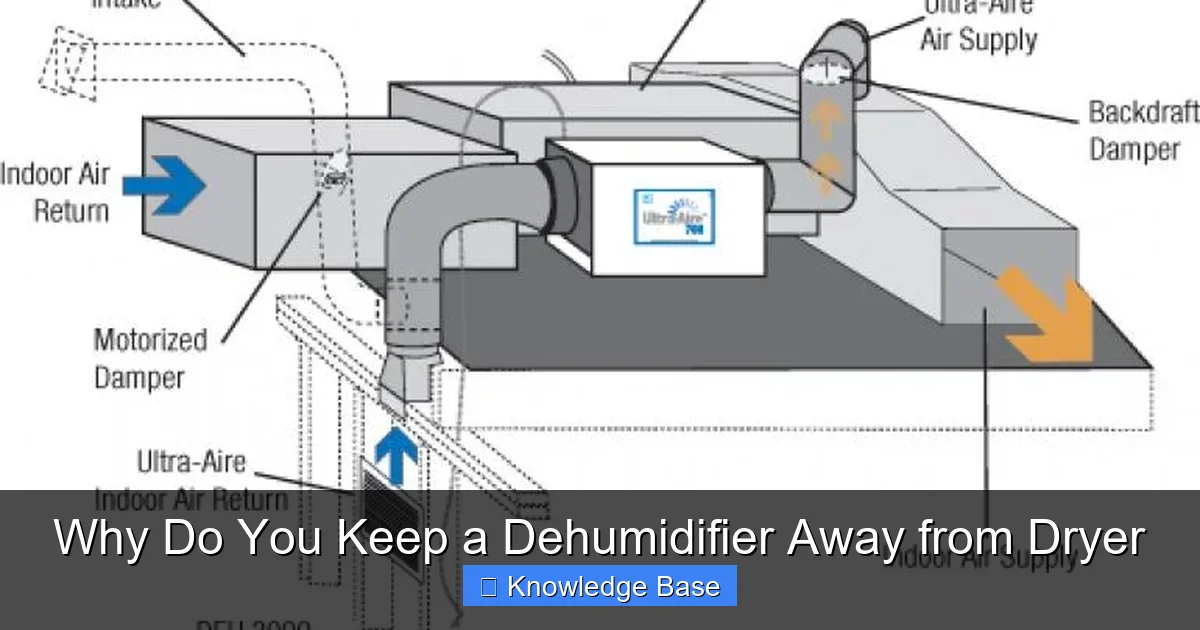
If you have multiple rooms with moisture issues, consider using a whole-house dehumidifier connected to your HVAC system. This central unit can manage humidity throughout your home without being affected by laundry appliances.
Common Misconceptions and Myths
There are a few myths about dehumidifiers and dryers that can lead to poor placement decisions. Let’s clear them up.
“They Both Remove Moisture, So They Should Work Together”
It’s easy to think that since both appliances deal with moisture, they’re natural allies. But they operate in opposite ways. The dryer adds moisture to the air as a byproduct of drying clothes. The dehumidifier removes moisture from the air. Putting them together is like trying to fill a bucket with a hose while someone else is scooping water out with a cup.
They don’t complement each other—they compete. The dryer wins every time, because it’s adding far more moisture than the dehumidifier can remove in the same timeframe.
“A Little Moisture Won’t Hurt”
Some people think that as long as the dehumidifier is running, a little extra moisture from the dryer won’t matter. But even small amounts of hot, damp air can disrupt the dehumidifier’s cycle and reduce efficiency.
Think of it like adding a cup of water to a swimming pool. It might not seem like much, but if you keep adding cups, the pool level rises. The same happens with humidity. Every load of laundry adds moisture. Over time, it builds up.
“I Can Just Run the Dehumidifier Longer”
While you can run the dehumidifier longer to compensate, this isn’t a sustainable solution. It increases energy use, strains the motor, and doesn’t address the root cause—poor placement.
It’s like trying to fix a leaky roof by putting out more buckets. Eventually, the buckets overflow, and the roof still needs repair.
Conclusion
Keeping a dehumidifier away from your dryer isn’t just a suggestion—it’s a smart, necessary step for safety, efficiency, and long-term appliance health. The dryer’s hot, moist exhaust can overwhelm the dehumidifier, reduce its performance, and create fire or mold risks. By maintaining proper distance and ensuring good ventilation, you protect both machines and improve your home’s air quality.
Remember: your dehumidifier is designed to manage ambient humidity, not handle the intense output of a dryer. Give it space to do its job. Keep it at least 6 to 10 feet away, ensure your dryer vents outside, and improve airflow in the room. These simple steps can save you money, prevent hazards, and keep your home comfortable and healthy.
When it comes to moisture control, less really is more—especially when it comes to keeping these two appliances apart.
Frequently Asked Questions
Can I run a dehumidifier and dryer at the same time?
Yes, but only if they are properly spaced and the dryer is vented outside. Running them too close together reduces efficiency and increases safety risks.
How far should a dehumidifier be from a dryer?
At least 6 to 10 feet is recommended. This distance helps prevent heat and moisture interference and reduces fire hazards from lint.
What happens if a dehumidifier gets too hot?
It may shut down automatically, reduce efficiency, or suffer long-term damage to internal components like the compressor and coils.
Can dryer lint damage a dehumidifier?
Yes. Lint can be sucked into the dehumidifier, accumulate inside, and pose a fire risk if exposed to heat or electrical faults.
Should I vent my dryer into the basement?
No. Always vent your dryer to the outside. Indoor venting increases humidity, promotes mold, and interferes with dehumidifier performance.
Does a dehumidifier help with dryer efficiency?
Not directly. While a drier environment can help clothes dry slightly faster, the effect is minimal. Proper dryer maintenance and venting are far more important.