

Many people wonder why a dehumidifier makes a room cold, but the cooling effect is often subtle and misunderstood. While dehumidifiers don’t function like air conditioners, they can lower perceived temperature by removing moisture, improving air circulation, and sometimes releasing slightly cooler air. Understanding the mechanics helps you use your dehumidifier more effectively for comfort and efficiency.
Key Takeaways
- Dehumidifiers reduce humidity, not temperature directly: They remove excess moisture from the air, which can make a room feel cooler and more comfortable.
- The cooling effect is mostly perceptual: Lower humidity allows sweat to evaporate more easily, creating a natural cooling sensation on the skin.
- Some models emit slightly cooler air: As moisture condenses inside the unit, the exhaust air may feel cooler, especially in high-humidity environments.
- Air circulation contributes to the chill: Built-in fans move air across cool coils, increasing airflow and enhancing the feeling of coolness.
- Energy use generates minimal heat: Unlike heaters, dehumidifiers produce very little waste heat, so they don’t warm the room significantly.
- Room size and insulation matter: In small, poorly insulated spaces, the cooling effect may be more noticeable due to concentrated airflow.
- Proper placement improves comfort: Positioning the dehumidifier away from seating areas can reduce direct exposure to cool air drafts.
📑 Table of Contents
- Introduction: The Cooling Confusion Around Dehumidifiers
- How Dehumidifiers Work: The Science Behind Moisture Removal
- Why Does Lower Humidity Feel Cooler?
- The Physics of Airflow and Heat Exchange
- Common Misconceptions About Dehumidifier Cooling
- Practical Tips to Manage Temperature and Comfort
- When to Be Concerned: Signs of Overcooling or Malfunction
- Conclusion: Embracing the Comfort Benefits of Dehumidifiers
Introduction: The Cooling Confusion Around Dehumidifiers
You’ve just turned on your dehumidifier to tackle that sticky, muggy feeling in your basement or living room. Within minutes, you notice the air feels… cooler. But wait—dehumidifiers aren’t supposed to cool, right? That’s the job of an air conditioner. So why does a dehumidifier make a room cold?
This common observation sparks curiosity and confusion. After all, dehumidifiers are designed to remove moisture, not lower temperature. Yet many users report a noticeable drop in perceived warmth, especially in humid climates or during summer months. The truth lies in the science of humidity, human comfort, and how these appliances actually work.
Understanding this phenomenon isn’t just about satisfying curiosity—it’s about using your dehumidifier more effectively. Whether you’re trying to improve indoor air quality, prevent mold, or simply feel more comfortable, knowing how and why your dehumidifier affects room temperature can help you optimize its performance. In this article, we’ll explore the mechanics behind dehumidifier cooling, the role of humidity in comfort, and practical tips to manage the temperature in your space.
How Dehumidifiers Work: The Science Behind Moisture Removal
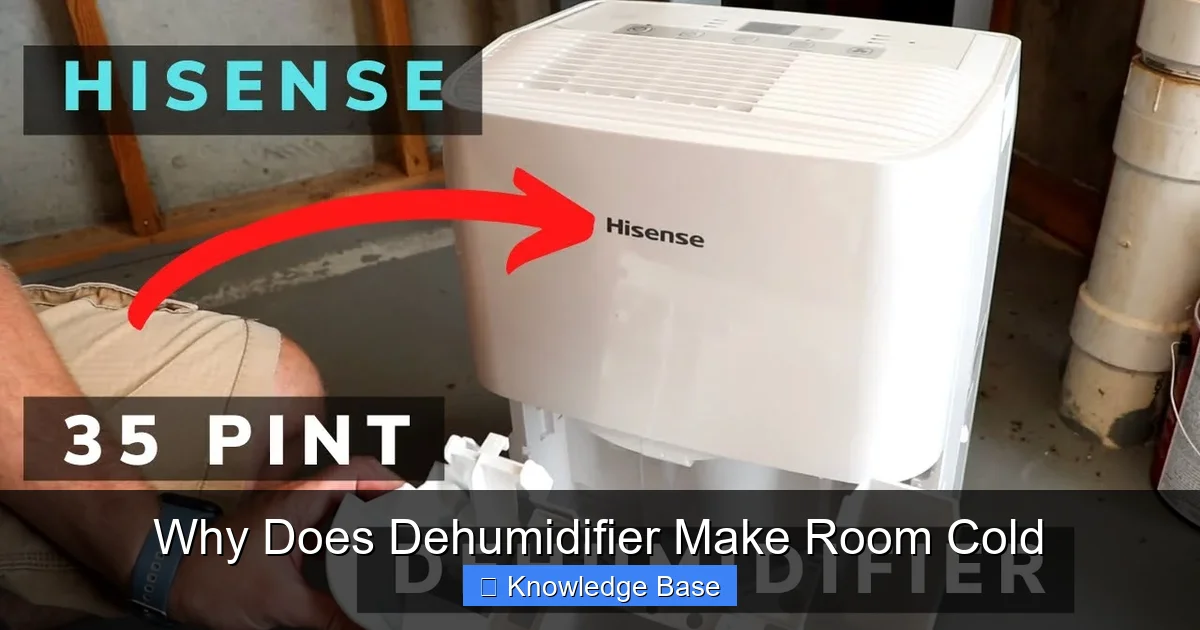
Visual guide about Why Does Dehumidifier Make Room Cold
Image source: i.ytimg.com
To understand why a dehumidifier might make a room feel cold, we first need to know how it operates. At its core, a dehumidifier is a device that pulls in moist air, removes the water vapor, and releases drier air back into the room. But the process involves several steps that can influence temperature—even if only slightly.
The Basic Mechanism: Refrigerant-Based Dehumidification
Most household dehumidifiers use a refrigeration cycle, similar to that of an air conditioner or refrigerator. Here’s how it works:
First, a fan draws humid indoor air into the unit. This air passes over a set of cold evaporator coils. As the air cools, its ability to hold moisture decreases. When the air temperature drops below the dew point, water vapor condenses into liquid droplets—just like dew forming on grass in the morning. These droplets collect in a built-in water tank or drain hose.
Next, the now-drier (and cooler) air moves over a set of warm condenser coils. Here, the air is reheated before being blown back into the room. The reheating step is crucial—it ensures the air isn’t released too cold, which could make the room uncomfortably chilly.
Finally, the collected water is either stored in a tank for manual emptying or sent out through a continuous drain line. The cycle repeats continuously until the desired humidity level is reached.
Desiccant vs. Compressor Dehumidifiers: Different Cooling Effects
Not all dehumidifiers work the same way. There are two main types: refrigerant (compressor-based) and desiccant models. Each has a slightly different impact on room temperature.
Refrigerant dehumidifiers—the most common type—use the cooling and reheating process described above. Because they cool air to condense moisture and then reheat it, the exhaust air is usually close to room temperature or slightly warmer. However, in high-humidity environments, the cooling phase can be more intense, and if the reheating isn’t perfectly balanced, the output air may feel cooler.
Desiccant dehumidifiers, on the other hand, use a moisture-absorbing material (like silica gel) to pull water from the air. They don’t rely on cooling coils, so they don’t produce cold air during operation. In fact, desiccant units often release slightly warmer air because the process of regenerating the desiccant material generates heat. These models are typically used in colder climates or for specialized applications, like drying clothes or protecting electronics.
So, if your dehumidifier is making the room feel cold, it’s most likely a refrigerant model—and the cooling effect is a side effect of the moisture removal process.
Why Does Lower Humidity Feel Cooler?
Now that we know how dehumidifiers work, let’s tackle the big question: why does a room feel cooler when humidity drops—even if the actual temperature hasn’t changed much?
The answer lies in how our bodies regulate temperature and how moisture in the air affects that process.
The Role of Sweat and Evaporative Cooling
Humans cool themselves primarily through sweat evaporation. When you’re hot, your body produces sweat, which sits on your skin. As that sweat evaporates into the air, it pulls heat away from your body, creating a cooling effect. This is why a breeze feels refreshing on a hot day—it speeds up evaporation.
But here’s the catch: evaporation only works if the air can absorb more moisture. In high-humidity environments, the air is already saturated with water vapor. It can’t take in much more, so sweat doesn’t evaporate efficiently. The result? You feel sticky, clammy, and uncomfortably warm—even if the thermometer says it’s only 75°F (24°C).
When a dehumidifier removes moisture from the air, it increases the air’s capacity to absorb sweat. This allows your body to cool itself more effectively. The improved evaporation creates a natural cooling sensation, making you feel cooler—even though the room’s actual temperature hasn’t dropped.
Perceived Temperature vs. Actual Temperature
This is a key distinction: dehumidifiers don’t lower the thermometer reading, but they do lower the *perceived* temperature. Think of it like this—on a humid 80°F (27°C) day, you might feel like it’s 85°F (29°C) or hotter. But if the humidity drops, that same 80°F can feel like a comfortable 75°F (24°C).
This phenomenon is captured in the “heat index,” a measure that combines air temperature and relative humidity to estimate how hot it feels to the human body. For example, at 80°F with 80% humidity, the heat index is around 86°F. But at 80°F with 40% humidity, it feels closer to 78°F.
So when your dehumidifier reduces indoor humidity from, say, 70% to 50%, you’re not just improving air quality—you’re making the room feel noticeably cooler and more comfortable.
Real-World Example: The Basement Effect
Let’s say you have a basement that’s always damp and feels chilly, even in summer. You run a dehumidifier for a few hours, and suddenly it feels warmer—or at least less clammy. Wait, that seems backwards, right? If the dehumidifier is making the air cooler, why does the basement feel *less* cold?
Actually, this makes perfect sense. In a damp basement, high humidity makes the air feel heavy and cold against your skin. By removing moisture, the dehumidifier reduces that clammy sensation. The air feels lighter, drier, and more comfortable—even if the temperature is the same. In some cases, people mistake this improved comfort for warmth, but it’s really just the absence of that sticky, cold feeling.
The Physics of Airflow and Heat Exchange
Beyond humidity, the physical operation of a dehumidifier can contribute to a cooling sensation—especially if you’re sitting near the unit.
Fan-Driven Air Circulation
Every dehumidifier has a built-in fan that pulls air in and pushes it back out. This constant airflow creates a breeze effect, similar to a ceiling fan or portable fan. Moving air enhances evaporative cooling on your skin, making you feel cooler—even if the air temperature hasn’t changed.
If you’re sitting close to the dehumidifier, you’ll feel this airflow directly. It might feel like a cool draft, especially if the unit is working hard to remove moisture. This is particularly noticeable in still, stagnant rooms where air doesn’t circulate well.
Heat Exchange and Energy Transfer
During the dehumidification process, energy is transferred within the unit. The refrigerant absorbs heat from the incoming air to cool it down (during condensation), and then releases that heat when reheating the air (during the condenser phase). However, no system is 100% efficient.
In some cases, especially in older or less efficient models, the reheating phase may not fully restore the air to its original temperature. This means the exhaust air could be slightly cooler than the room air—by a few degrees. While this isn’t enough to significantly lower the room temperature, it can create a localized cooling effect near the outlet.
Additionally, the compressor and motor generate a small amount of heat as they operate. But this waste heat is usually minimal and quickly dissipated. In fact, the cooling effect from moisture removal and airflow often outweighs the slight warming from the motor, leading to a net cooling sensation.
Room Size and Insulation Factors
The size and insulation of your room also play a role. In a small, enclosed space like a closet or bathroom, a dehumidifier can have a more noticeable impact. The concentrated airflow and rapid moisture removal can make the area feel cooler faster.
Conversely, in a large, well-insulated room, the cooling effect may be subtle or barely noticeable. The dehumidifier works steadily, but the air mixes with the rest of the room, diluting any localized temperature changes.
Poor insulation can amplify the effect. If warm, humid air from outside seeps into the room, the dehumidifier has to work harder. This increased activity can lead to more noticeable airflow and a stronger cooling sensation—especially near the unit.
Common Misconceptions About Dehumidifier Cooling
Despite the science, there are several myths and misunderstandings about why dehumidifiers make rooms feel cold. Let’s clear them up.
Myth 1: Dehumidifiers Are Mini Air Conditioners
This is a common misconception. While both devices can make a room feel cooler, they work very differently. Air conditioners remove heat from the air and expel it outside, actively lowering the temperature. Dehumidifiers, on the other hand, focus on moisture removal. They don’t remove heat—they just make the existing air feel cooler by improving evaporation and airflow.
Think of it this way: an air conditioner is like a refrigerator for your room. A dehumidifier is more like a sponge that soaks up moisture, making the air feel lighter and more comfortable.
Myth 2: All Dehumidifiers Make the Room Colder
Not necessarily. The cooling effect depends on several factors, including the model, room conditions, and humidity levels. In a dry climate with low humidity, a dehumidifier may not produce any noticeable cooling. In fact, in very dry environments, running a dehumidifier could make the air feel *warmer* by reducing the natural cooling effect of evaporation.
Similarly, desiccant dehumidifiers often release warm air, so they can actually increase room temperature slightly.
Myth 3: The Cooling Effect Is Harmful or Inefficient
Some people worry that if a dehumidifier makes the room cold, it must be wasting energy or working too hard. But that’s not the case. The cooling sensation is usually a sign that the unit is working properly—removing moisture and improving comfort.
As long as the dehumidifier is the right size for the room and set to an appropriate humidity level (typically 30–50%), it’s operating efficiently. The slight cooling effect is a bonus, not a flaw.
Practical Tips to Manage Temperature and Comfort
If your dehumidifier is making the room too cold or creating an uncomfortable draft, here are some practical tips to balance comfort and performance.
1. Adjust the Fan Speed
Many dehumidifiers come with adjustable fan settings. If the airflow feels too strong or cool, try lowering the fan speed. This reduces the breeze effect while still allowing the unit to remove moisture effectively.
2. Reposition the Unit
Place the dehumidifier away from seating areas, beds, or frequently used spaces. Position it in a corner or near a wall, facing outward. This helps disperse the airflow and prevents direct exposure to cool air.
3. Use a Hygrometer to Monitor Humidity
Instead of relying on how the room feels, use a hygrometer to measure actual humidity levels. Aim for 30–50% relative humidity. Once the target is reached, the dehumidifier will cycle off, reducing continuous airflow and cooling.
4. Combine with a Ceiling Fan
If the room still feels too warm after dehumidification, use a ceiling fan to circulate air. Fans don’t lower temperature, but they enhance evaporative cooling and make the space feel more comfortable—without the draft from the dehumidifier.
5. Choose the Right Size and Model
An oversized dehumidifier can cool a small room too quickly, while an undersized one may run constantly without making a difference. Check the pint-per-day rating and match it to your room’s square footage and humidity level. For example, a 30-pint unit is ideal for a 500–1,000 sq ft basement.
6. Consider a Smart Dehumidifier
Modern smart dehumidifiers can connect to your home’s HVAC system or be controlled via an app. Some models even integrate with thermostats to balance humidity and temperature automatically, preventing overcooling.
When to Be Concerned: Signs of Overcooling or Malfunction
While a slight cooling effect is normal, there are times when it could indicate a problem.
Excessive Cooling or Frost Buildup
If the room feels significantly colder than usual—or if you notice frost forming on the coils—the dehumidifier may be operating in conditions that are too cold or dry. Refrigerant dehumidifiers work best in temperatures above 65°F (18°C). In colder environments, the coils can freeze, reducing efficiency and potentially damaging the unit.
Solution: Use a desiccant dehumidifier in cold spaces like garages or unheated basements. Or, ensure the room is adequately warmed before running a refrigerant model.
Constant Running Without Humidity Improvement
If the dehumidifier runs nonstop but humidity levels aren’t dropping, it may be undersized, malfunctioning, or placed in a poorly ventilated area. This can lead to unnecessary cooling and higher energy bills.
Solution: Check the water tank, clean the air filter, and ensure proper airflow around the unit. If problems persist, consult the manufacturer or a technician.
Unusual Noises or Odors
Strange sounds or musty smells could indicate mold growth inside the unit or a refrigerant leak. These issues can affect performance and air quality.
Solution: Clean the unit regularly, replace filters, and have it serviced if needed.
Conclusion: Embracing the Comfort Benefits of Dehumidifiers
So, why does a dehumidifier make a room cold? The answer is a blend of science, perception, and airflow. While dehumidifiers don’t actively cool the air like air conditioners, they create a cooling sensation by removing moisture, improving sweat evaporation, and circulating air. In high-humidity environments, this effect can be quite noticeable—and welcome.
Understanding this process helps you use your dehumidifier more effectively. You can optimize placement, adjust settings, and monitor humidity levels to achieve the perfect balance of comfort and efficiency. Whether you’re fighting mold in a basement, reducing allergens in a bedroom, or simply trying to feel more comfortable on a humid day, your dehumidifier is doing more than just drying the air—it’s enhancing your indoor climate.
So the next time you feel that gentle coolness after turning on your dehumidifier, don’t be alarmed. It’s not a malfunction—it’s a sign that your home is becoming a healthier, more comfortable place to live.
Frequently Asked Questions
Does a dehumidifier actually lower room temperature?
No, a dehumidifier does not significantly lower the actual air temperature. However, it can make a room feel cooler by removing moisture, which improves sweat evaporation and enhances comfort.
Why does my room feel cold when the dehumidifier is on?
The cooling sensation comes from reduced humidity and increased airflow. Lower humidity allows your body to cool more efficiently, and the fan creates a breeze that enhances the feeling of coolness.
Can a dehumidifier replace an air conditioner?
Not entirely. While a dehumidifier can make a room feel more comfortable in humid conditions, it doesn’t remove heat like an air conditioner. For significant cooling, you’ll still need AC—especially in hot climates.
Is it normal for a dehumidifier to blow cold air?
Yes, especially in high-humidity environments. The air may feel slightly cooler as it passes over the cold evaporator coils, though most units reheat the air before releasing it.
Should I turn off my dehumidifier if the room feels too cold?
Not necessarily. Try adjusting the fan speed or repositioning the unit first. If the room is consistently too cold, check the humidity level—once it’s in the ideal range (30–50%), the dehumidifier will cycle off automatically.
Do all dehumidifiers make rooms feel cold?
No. The cooling effect depends on the type of dehumidifier, room conditions, and humidity levels. Desiccant models, for example, often release warm air and may make a room feel slightly warmer.