
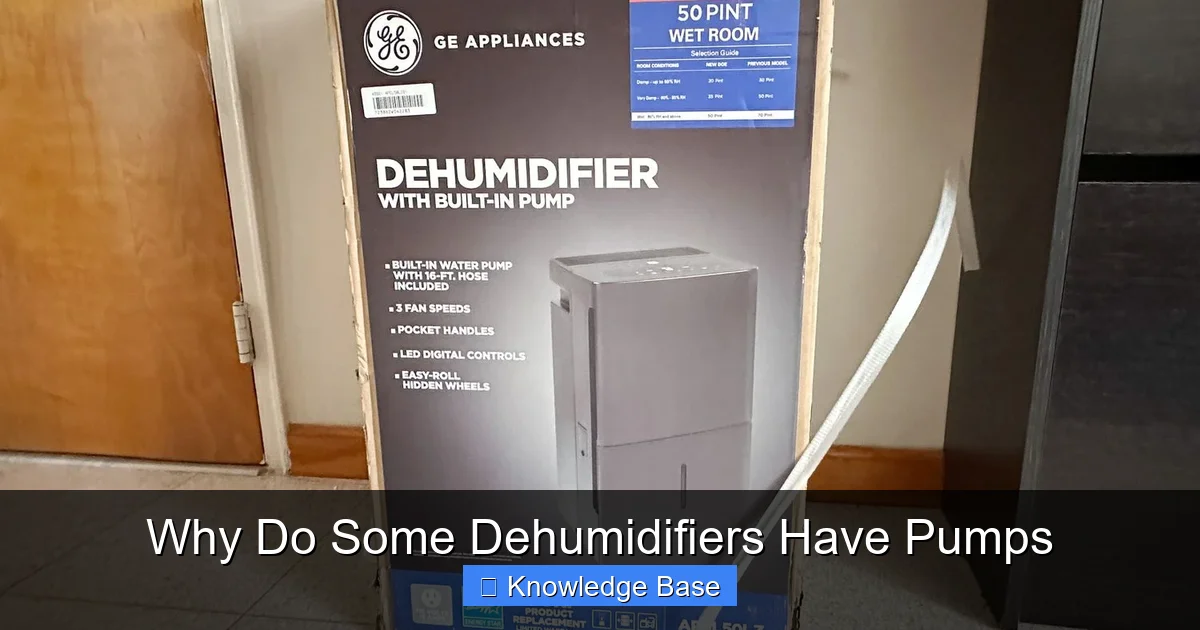
Some dehumidifiers come with built-in pumps to make water removal easier and more efficient. Instead of relying on gravity or manual emptying, these pumps allow continuous operation by pushing collected water upward or over long distances—perfect for basements, crawl spaces, or areas without floor drains.
Key Takeaways
- Continuous Operation: Pumps enable dehumidifiers to run nonstop by automatically removing water, even when the unit is placed below drain level.
- Greater Placement Flexibility: With a pump, you can install your dehumidifier in basements, crawl spaces, or tight areas without needing a nearby floor drain.
- Improved Efficiency in High-Humidity Areas: Pumps help maintain optimal performance in damp environments like laundry rooms, garages, or flood-prone basements.
- Reduced Maintenance: Automatic water removal means less frequent manual emptying, saving time and effort.
- Longer Hose Drainage: Pumps can push water through hoses up to 15–20 feet vertically or horizontally, offering more installation options.
- Ideal for Rental Properties and Off-Grid Use: Pumps eliminate the need for permanent drainage setups, making them perfect for temporary or off-grid living.
- Enhanced Air Quality and Mold Prevention: By removing moisture efficiently, pump-equipped dehumidifiers help prevent mold, mildew, and musty odors.
📑 Table of Contents
- Why Do Some Dehumidifiers Have Pumps?
- How Dehumidifiers Work: The Basics
- The Role of a Pump in a Dehumidifier
- When Is a Pump Essential? Key Use Cases
- Types of Dehumidifier Pumps: What to Look For
- Pros and Cons of Dehumidifiers with Pumps
- How to Choose the Right Dehumidifier with a Pump
- Maintenance Tips for Pump-Equipped Dehumidifiers
- Conclusion
Why Do Some Dehumidifiers Have Pumps?
If you’ve ever shopped for a dehumidifier, you’ve probably noticed that some models come with a built-in pump, while others don’t. At first glance, it might seem like an unnecessary add-on—after all, doesn’t the machine just collect water in a bucket? But once you understand the real-world challenges of moisture control, especially in basements, crawl spaces, or laundry rooms, the value of a pump becomes crystal clear.
Imagine this: You’ve installed a dehumidifier in your basement to combat that damp, musty smell. It’s working great—until the water tank fills up. Now you have to go downstairs every day (or even multiple times a day during humid seasons) to empty it. Not only is this a hassle, but if you forget, the unit shuts off, and moisture starts building up again. That’s where a pump comes in. A dehumidifier with a pump solves this problem by automatically removing the collected water, often sending it directly to a sink, drain, or even outside your home. This means continuous operation, less maintenance, and better moisture control—no manual intervention required.
But why don’t all dehumidifiers have pumps? The answer lies in cost, complexity, and use case. Basic models are designed for smaller spaces or occasional use, where a simple bucket and gravity drain are sufficient. However, for serious moisture problems or hard-to-reach areas, a pump isn’t just convenient—it’s essential. In this article, we’ll explore exactly why some dehumidifiers have pumps, how they work, and when you should consider investing in one. Whether you’re dealing with a flooded basement, a humid crawl space, or just want a hands-off solution for your laundry room, understanding the role of a pump can make all the difference.
How Dehumidifiers Work: The Basics

Visual guide about Why Do Some Dehumidifiers Have Pumps
Image source: royalqueenseeds.com
Before diving into why pumps matter, it’s important to understand how dehumidifiers function in the first place. At their core, dehumidifiers are designed to remove excess moisture from the air, helping to maintain a healthy indoor environment. They do this by pulling in humid air, cooling it to condense the moisture, and then reheating the air before releasing it back into the room.
Here’s a simple breakdown of the process:
– **Air Intake:** A fan draws humid air from the room into the dehumidifier.
– **Cooling Coils:** The air passes over cold evaporator coils, causing water vapor to condense into liquid droplets.
– **Water Collection:** The collected water drips into a built-in reservoir or bucket.
– **Reheating:** The now-dry air passes over warm condenser coils, reheating it to room temperature.
– **Air Output:** The dry, warm air is blown back into the room.
This cycle repeats continuously, gradually lowering the humidity level. Most residential dehumidifiers aim to maintain a relative humidity between 30% and 50%, which is ideal for comfort and health.
Now, the key challenge comes at the water collection stage. In basic models, the water simply collects in a bucket that must be manually emptied when full. This is fine for small spaces or light use, but it becomes impractical in larger or harder-to-access areas. That’s where the pump comes into play—by automating the water removal process, it allows the dehumidifier to keep running without interruption.
The Role of a Pump in a Dehumidifier

Visual guide about Why Do Some Dehumidifiers Have Pumps
Image source: cdn.thepipingmart.com
So, what exactly does a pump do in a dehumidifier? In simple terms, it’s a small, built-in device that actively moves the collected water out of the unit, rather than relying on gravity or manual removal. Think of it like a mini sump pump—it takes the water from the internal reservoir and pushes it through a hose to a designated drain point.
This might seem like a small feature, but it has a huge impact on usability and performance. Here’s how:
– **Automatic Water Removal:** Instead of waiting for the bucket to fill, the pump kicks in as soon as water reaches a certain level, sending it directly to a drain.
– **Continuous Operation:** Because the water is removed automatically, the dehumidifier doesn’t need to shut off, ensuring consistent moisture control.
– **Flexible Installation:** You’re not limited to placing the unit near a floor drain. With a pump, you can send water upward (like to a sink) or over long distances (like to an outdoor drain).
For example, imagine installing a dehumidifier in a crawl space under your home. There’s no floor drain, and the space is tight and hard to access. Without a pump, you’d have to crawl under the house every few days to empty the bucket—something most people would rather avoid. But with a pump, you can run a hose from the dehumidifier up through the floor and into a nearby utility sink. The pump does all the work, and you never have to think about it again.
Pumps are especially useful in commercial or industrial settings, where dehumidifiers run 24/7 and manual maintenance isn’t practical. But even in homes, the convenience and efficiency they offer make them a worthwhile upgrade for many users.
When Is a Pump Essential? Key Use Cases
Not every dehumidifier needs a pump, but there are certain situations where it’s practically essential. If you’re dealing with high humidity in hard-to-reach or below-grade areas, a pump-equipped model can save you time, effort, and frustration. Let’s look at some of the most common scenarios where a pump makes all the difference.
Basements and Crawl Spaces
Basements are notorious for high humidity, poor ventilation, and water intrusion. Whether it’s from groundwater seepage, condensation, or seasonal flooding, basements often require constant dehumidification. But most basements don’t have convenient floor drains, and emptying a bucket every day is a chore.
A dehumidifier with a pump solves this by allowing you to run a hose from the unit to a sump pump pit, a utility sink, or even outside through a basement window. Some models can pump water vertically up to 15 feet, which means you can place the dehumidifier in a low corner and still send the water up to a higher drain point. This is especially useful in finished basements where aesthetics matter—no unsightly hoses lying on the floor.
Laundry Rooms and Utility Areas
Laundry rooms are another hotspot for moisture. Washing machines and dryers (especially vented dryers) release a lot of steam and humidity into the air. Over time, this can lead to mold growth, warped cabinets, and musty odors.
A dehumidifier with a pump can be placed near the washing machine and connected directly to the drain hose. This creates a seamless system: the dehumidifier collects moisture from the air, and the pump sends it right into the same drain used by the washer. No buckets, no mess, no hassle.
Garages and Workshops
Garages often suffer from temperature swings and poor insulation, leading to condensation on cold surfaces like concrete floors and metal tools. This moisture can damage stored items, promote rust, and create a breeding ground for mold.
A pump-equipped dehumidifier can be installed in a corner and connected to a nearby floor drain or even a garden hose leading outside. This keeps the garage dry year-round without requiring frequent maintenance.
Rental Properties and Off-Grid Living
If you’re managing a rental property or living off-grid (like in an RV, tiny home, or cabin), you may not have access to permanent plumbing or floor drains. In these cases, a dehumidifier with a pump offers a flexible, self-contained solution. You can route the pump hose to a bucket, a sink, or even a rain barrel for reuse.
Some advanced models even include timers and humidity sensors, so the unit only runs when needed—saving energy and extending the life of the pump.
Flood Recovery and Water Damage Restoration
After a flood or water leak, rapid dehumidification is critical to prevent mold growth and structural damage. Professional restoration teams often use industrial-grade dehumidifiers with powerful pumps to remove large volumes of water quickly.
Even for homeowners, a pump-equipped dehumidifier can be a lifesaver during recovery. It allows for continuous operation without supervision, which is crucial when you’re dealing with extensive water damage.
Types of Dehumidifier Pumps: What to Look For
Not all dehumidifier pumps are created equal. When shopping for a model with a pump, it’s important to understand the different types and features available. Here’s what to consider:
Built-In vs. External Pumps
Most modern dehumidifiers with pumps have the pump integrated directly into the unit. This keeps everything compact and easy to install. However, some high-capacity or commercial models may use external pumps that connect via a hose. These are more powerful but require additional setup.
Pump Capacity and Lift Height
Pump performance is measured in two key ways: flow rate (how much water it can move per hour) and lift height (how high it can pump water vertically). For home use, a pump that can lift water 10–15 feet is usually sufficient. But if you need to send water up multiple floors or over long distances, look for a model with a higher lift capacity.
For example, the Frigidaire FFAD7033R1 has a built-in pump that can lift water up to 15 feet, making it ideal for basement installations. Meanwhile, the hOmeLabs 70 Pint Dehumidifier with Pump offers a 12-foot lift and a 20-foot hose, giving you plenty of flexibility.
Hose Compatibility and Length
Check what kind of hose the pump uses and how long it is. Most models come with a standard garden hose thread (GHT) connection, which makes it easy to attach extension hoses. A longer hose (15–20 feet) gives you more placement options, especially in large basements or crawl spaces.
Some units also include a hose reel or storage compartment, which keeps the hose neat and protected when not in use.
Noise Level
Pumps do make some noise—usually a low hum or gentle whir. While not loud, it’s something to consider if you’re placing the dehumidifier in a living area or bedroom. Look for models with quiet operation ratings (under 50 decibels) if noise is a concern.
Energy Efficiency
Pumps consume a small amount of additional electricity, but the impact on overall energy use is minimal—usually less than 5% of the total power consumption. Still, if you’re running the dehumidifier 24/7, it’s worth choosing an Energy Star-certified model with an efficient pump system.
Pros and Cons of Dehumidifiers with Pumps
Like any feature, dehumidifier pumps come with advantages and trade-offs. Here’s a balanced look at the pros and cons to help you decide if a pump is right for your needs.
Pros
- Hands-Free Operation: No more emptying buckets—ideal for busy households or hard-to-reach areas.
- Continuous Moisture Control: The unit runs nonstop, maintaining consistent humidity levels.
- Greater Installation Flexibility: You can place the dehumidifier almost anywhere, even below drain level.
- Reduced Risk of Overflow: Automatic pumping prevents water spills and potential water damage.
- Better for High-Humidity Environments: Pumps handle heavy moisture loads more efficiently than gravity drains.
- Improved Air Quality: By removing moisture consistently, pumps help prevent mold, mildew, and allergens.
Cons
- Higher Upfront Cost: Models with pumps are typically 20–40% more expensive than basic units.
- Slightly Higher Energy Use: The pump adds a small amount of power consumption, though it’s usually negligible.
- Potential for Pump Failure: Like any mechanical part, pumps can wear out over time and may need replacement.
- Noise: The pump adds a low-level hum, which might be noticeable in quiet environments.
- Requires Drain Access: You still need a place to send the water—like a sink, drain, or outdoor outlet.
Overall, the benefits far outweigh the drawbacks for most users, especially in challenging environments. But if you’re using a dehumidifier in a small, easily accessible space with low humidity, a basic model without a pump may be sufficient.
How to Choose the Right Dehumidifier with a Pump
If you’ve decided a pump-equipped dehumidifier is right for you, here are some tips to help you pick the best model for your needs.
Assess Your Space
Start by evaluating the size and layout of the area you want to dehumidify. Measure the square footage and note any obstacles, like stairs, walls, or tight corners. This will help you determine the required capacity (in pints per day) and pump lift height.
For example:
– A 500-square-foot basement may need a 30–50 pint dehumidifier.
– A 1,000-square-foot crawl space might require a 70-pint model with a strong pump.
Check Drainage Options
Where will the pump send the water? Make sure you have access to a suitable drain point—like a utility sink, sump pit, or outdoor area. Measure the distance and vertical lift from the dehumidifier to the drain to ensure the pump can handle it.
Read Reviews and Specifications
Look for models with reliable pumps and good user feedback. Check the manufacturer’s specs for pump lift height, hose length, and noise level. Brands like Frigidaire, hOmeLabs, and AprilAire are known for high-quality pump systems.
Consider Smart Features
Some advanced models include Wi-Fi connectivity, humidity sensors, and programmable timers. These features let you monitor and control the dehumidifier remotely, which is especially useful if it’s installed in a remote area.
Budget Wisely
Pump-equipped dehumidifiers range from $200 to $600+, depending on capacity and features. While they cost more upfront, the long-term convenience and performance often justify the investment—especially if you’re dealing with persistent moisture issues.
Maintenance Tips for Pump-Equipped Dehumidifiers
To keep your dehumidifier with a pump running smoothly, regular maintenance is key. Here are some simple tips:
– **Clean the Air Filter Monthly:** A clogged filter reduces airflow and efficiency. Most filters are washable—just rinse with water and let dry.
– **Inspect the Pump and Hose:** Check for clogs, kinks, or leaks in the pump and drainage hose. Clean the pump inlet if necessary.
– **Empty the Bucket (If Applicable):** Even with a pump, some models have a backup bucket. Empty it regularly to prevent overflow.
– **Check Drainage Path:** Make sure the hose isn’t blocked and the water is flowing freely to the drain.
– **Service the Pump Annually:** If your model allows, have the pump inspected or serviced by a professional every 1–2 years.
With proper care, a dehumidifier with a pump can last 5–10 years or more, providing reliable moisture control year after year.
Conclusion
So, why do some dehumidifiers have pumps? The answer is simple: to make moisture control easier, more efficient, and more reliable. While basic models rely on gravity and manual emptying, pump-equipped units offer continuous operation, greater flexibility, and hands-free convenience—especially in basements, crawl spaces, and other challenging environments.
Whether you’re fighting mold in a damp basement, protecting tools in a garage, or managing humidity in a rental property, a dehumidifier with a pump can be a game-changer. It eliminates the hassle of frequent maintenance, ensures consistent performance, and gives you peace of mind knowing your space is protected from excess moisture.
Of course, pumps come at a higher cost and add a bit of complexity, but for many homeowners, the benefits far outweigh the drawbacks. When choosing a model, consider your space, drainage options, and long-term needs. With the right dehumidifier and pump system, you can enjoy a drier, healthier, and more comfortable home—without ever having to empty a bucket again.
Frequently Asked Questions
Do all dehumidifiers come with pumps?
No, not all dehumidifiers have pumps. Basic models rely on gravity drainage or manual bucket emptying. Pumps are typically found in mid-to-high-end models designed for continuous use in hard-to-reach areas.
Can a dehumidifier pump water upstairs?
Yes, many dehumidifiers with pumps can lift water vertically up to 10–15 feet, allowing you to send water from a basement to a second-floor sink or drain.
How often do dehumidifier pumps need maintenance?
Pumps require minimal maintenance. Check the hose and pump inlet every few months for clogs, and have the system inspected annually for optimal performance.
What happens if the pump fails?
If the pump stops working, the dehumidifier may shut off when the bucket fills. Most models have a backup bucket, but you’ll need to empty it manually until the pump is repaired or replaced.
Can I add a pump to a dehumidifier that doesn’t have one?
Generally, no. Pumps are integrated into the unit’s design. However, you can use an external condensate pump with some models, though this requires additional setup.
Are dehumidifiers with pumps louder?
Pumps add a low hum, but most are designed to operate quietly. Noise levels typically range from 45–55 decibels—similar to a quiet conversation.