
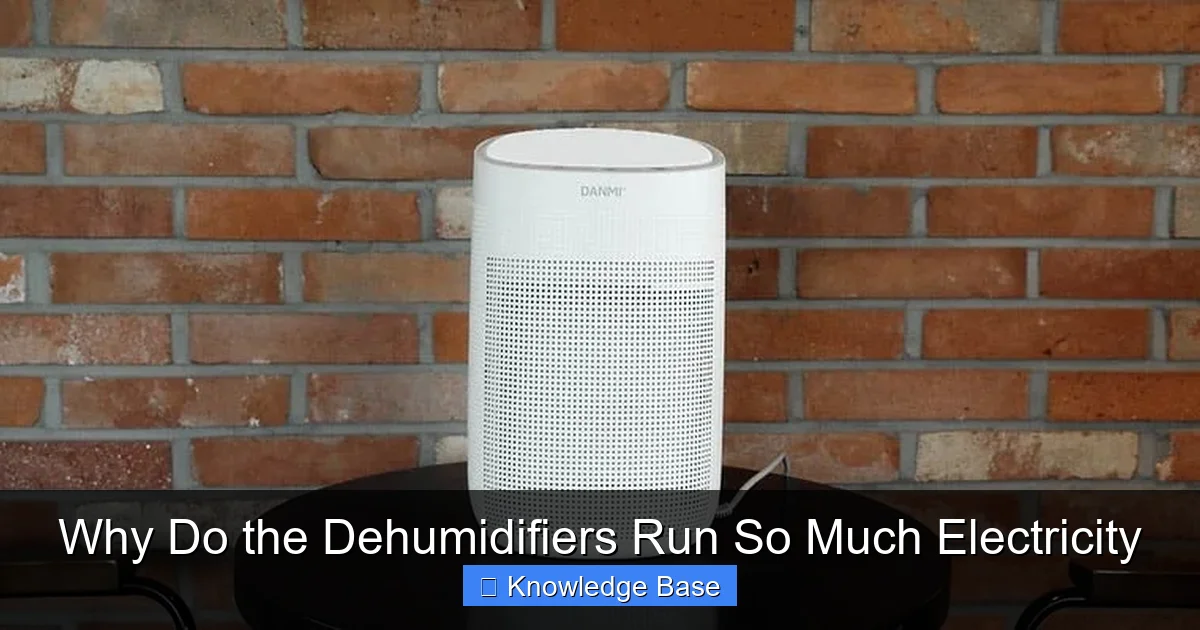
Dehumidifiers use a lot of electricity because they run compressors, fans, and refrigeration systems continuously to remove moisture from the air. Their energy consumption depends on size, settings, humidity levels, and efficiency—but smart usage and maintenance can significantly cut costs.
Key Takeaways
- Dehumidifiers consume significant electricity due to continuous operation of compressors and fans. These components work hard to condense moisture from the air, especially in high-humidity environments.
- Energy use varies by model, capacity, and efficiency rating. ENERGY STAR-certified units use up to 40% less energy than standard models.
- Running a dehumidifier in damp basements or humid climates increases runtime and power draw. The more moisture in the air, the longer it must operate to maintain target humidity.
- Proper sizing is critical—oversized units cycle inefficiently, while undersized ones run nonstop. Match the unit’s pint capacity to your space’s square footage and humidity level.
- Regular maintenance like cleaning filters and coils improves efficiency. A dirty unit works harder, using more electricity to achieve the same results.
- Smart features like humidistats and auto-shutoff help reduce unnecessary runtime. These tools prevent over-drying and save energy by turning off when desired humidity is reached.
- Seasonal use and strategic placement can lower overall energy consumption. Running the unit only when needed and placing it centrally improves airflow and effectiveness.
📑 Table of Contents
- Why Do Dehumidifiers Use So Much Electricity? Understanding the Energy Behind Moisture Removal
- How Dehumidifiers Work: The Science Behind the Energy Use
- Factors That Influence a Dehumidifier’s Energy Consumption
- Comparing Dehumidifier Types: Which Uses Less Electricity?
- How to Reduce Your Dehumidifier’s Electricity Usage
- Real-World Examples: How Much Electricity Do Dehumidifiers Actually Use?
- Conclusion: Balancing Comfort, Moisture Control, and Energy Use
Why Do Dehumidifiers Use So Much Electricity? Understanding the Energy Behind Moisture Removal
If you’ve ever plugged in a dehumidifier and watched your electricity meter spin faster than expected, you’re not alone. Many homeowners are surprised by how much power these seemingly simple appliances consume. At first glance, a dehumidifier might look like a basic box with a fan and a hose—but under the hood, it’s a complex system that works hard to pull moisture from the air. And that hard work comes at an energy cost.
So, why do dehumidifiers run so much electricity? The short answer is that they rely on energy-intensive mechanical processes to extract water vapor from indoor air. Unlike fans or lights, which use relatively little power, dehumidifiers operate like mini air conditioners. They use compressors, refrigerants, and fans to cool air, condense moisture, and then reheat the air before releasing it back into the room. This cycle repeats continuously until the desired humidity level is reached—and in humid environments, that can mean running for hours each day.
But it’s not just about how they work—it’s also about how long they run and under what conditions. A dehumidifier in a damp basement during summer might operate nearly nonstop, while one in a dry garage may only run a few hours a week. Understanding the factors that influence energy use can help you make smarter choices about when and how to use your unit—and potentially save a significant amount on your utility bill.
How Dehumidifiers Work: The Science Behind the Energy Use

Visual guide about Why Do the Dehumidifiers Run So Much Electricity
Image source: i.pinimg.com
To truly grasp why dehumidifiers consume so much electricity, it helps to understand what’s happening inside the machine. Most residential dehumidifiers use a refrigeration-based system, similar to an air conditioner or refrigerator. Here’s a step-by-step breakdown of how it works—and why each step requires energy.
The Refrigeration Cycle: Cooling the Air to Remove Moisture
The core of a dehumidifier’s operation is the refrigeration cycle. It starts when a fan pulls humid air from the room into the unit. This air passes over a set of cold evaporator coils, which are cooled by a refrigerant gas. As the air cools, its ability to hold moisture decreases—just like how cold car windows fog up on a humid day. The excess moisture condenses into water droplets, which drip into a collection tank or drain hose.
This cooling process requires a compressor to pressurize the refrigerant, which is one of the most energy-intensive parts of the system. Compressors are powerful motors that consume a lot of electricity, especially when they start up. In fact, the compressor alone can account for over half of a dehumidifier’s total energy use.
Reheating the Air: Energy for Comfort and Efficiency
After the air is cooled and dehumidified, it’s still cold—too cold to be comfortable when released back into the room. So, the dehumidifier passes the air over a second set of coils, called the condenser coils, which are warm. This reheats the air to near room temperature before it exits the unit.
Reheating also requires energy, typically from the same compressor system. While this step improves comfort, it adds to the overall power consumption. Some energy-efficient models use heat exchangers or other technologies to recover waste heat, but most standard units still rely on direct reheating.
Fan Operation: Keeping Air Moving
The fan is another key component that uses electricity. It must run continuously to pull air into the unit and push dehumidified air back out. Even though fans use less power than compressors, they still contribute to the total energy draw—especially if the unit runs for long periods.
In summary, every part of the dehumidifier’s operation—cooling, reheating, and airflow—requires electricity. When you combine these processes with long runtimes, it’s easy to see why these appliances can be power-hungry.
Factors That Influence a Dehumidifier’s Energy Consumption

Visual guide about Why Do the Dehumidifiers Run So Much Electricity
Image source: simplerandsmarter.com.au
Not all dehumidifiers use the same amount of electricity. Several factors determine how much power your unit will consume. Understanding these can help you choose a more efficient model and use it wisely.
Size and Capacity: Bigger Isn’t Always Better
Dehumidifiers are rated by how many pints of moisture they can remove in 24 hours. A 30-pint unit is suitable for a small basement, while a 70-pint model might be needed for a large, damp space. However, larger units don’t just remove more moisture—they also use more electricity.
For example, a 70-pint dehumidifier might use 700–800 watts per hour, while a 30-pint model uses around 300–400 watts. If you buy a unit that’s too large for your space, it may cycle on and off frequently, which can be less efficient than running steadily. Conversely, an undersized unit will run nonstop, trying to keep up with moisture levels, which also wastes energy.
The key is to match the unit’s capacity to your room size and humidity level. A 50-pint dehumidifier is often ideal for a 1,000-square-foot basement with moderate humidity.
Humidity Levels and Runtime
The higher the humidity, the harder your dehumidifier must work. In a damp basement during summer, humidity can exceed 70%, requiring the unit to run for 12–16 hours a day. In contrast, a dry crawl space might only need 4–6 hours of operation.
Some models come with built-in humidistats that measure indoor humidity and automatically adjust runtime. This prevents over-drying and saves energy. Without this feature, the unit may continue running even when the air is already dry.
Temperature and Climate
Dehumidifiers work best in warm, humid conditions—typically between 65°F and 80°F. In colder environments, such as unheated garages or winter basements, the evaporator coils can frost over, reducing efficiency and increasing energy use. Many units have automatic defrost features, but these also consume extra power.
In very hot climates, the compressor may work harder to maintain cooling, increasing electricity use. If you live in a region with high heat and humidity, consider a model designed for extreme conditions.
Energy Efficiency Ratings
Not all dehumidifiers are created equal when it comes to efficiency. Look for the ENERGY STAR label, which indicates the unit meets strict energy guidelines set by the U.S. Environmental Protection Agency. ENERGY STAR-certified dehumidifiers use 10–40% less energy than standard models, depending on size and technology.
You can also check the unit’s Energy Factor (EF), measured in liters of water removed per kilowatt-hour (kWh) of electricity. A higher EF means greater efficiency. For example, a model with an EF of 2.0 removes 2 liters of water for every kWh used, while one with an EF of 1.5 removes only 1.5 liters.
Maintenance and Cleanliness
A dirty dehumidifier is an inefficient dehumidifier. Over time, dust and debris can clog the air filter, reducing airflow and forcing the unit to work harder. Similarly, frost or dirt on the coils can impair heat exchange, lowering performance.
Regular maintenance—such as cleaning the filter monthly and checking the coils—can improve efficiency by up to 15%. It’s a simple step that pays off in lower electricity bills and longer appliance life.
Comparing Dehumidifier Types: Which Uses Less Electricity?
Not all dehumidifiers use the same technology. The two main types—refrigerant (compressor) and desiccant—have different energy profiles.
Refrigerant Dehumidifiers: The Most Common Type
Refrigerant dehumidifiers are the most widely used in homes. They use a compressor and refrigerant gas to cool air and remove moisture, as described earlier. These units are effective in warm, humid environments but can be less efficient in cold spaces.
On average, a refrigerant dehumidifier uses between 300 and 800 watts per hour, depending on size and settings. While they consume more electricity than desiccant models in some cases, they are generally more effective at removing large amounts of moisture quickly.
Desiccant Dehumidifiers: Lower Power, Different Performance
Desiccant dehumidifiers use a moisture-absorbing material (like silica gel) to pull water from the air. They don’t rely on compressors, so they typically use less electricity—often between 200 and 500 watts. However, they are better suited for smaller spaces and lower humidity levels.
One downside is that desiccant units often produce more heat, which can raise room temperature. They also tend to be quieter but less powerful than refrigerant models. For a damp basement, a refrigerant unit is usually the better choice, even if it uses more power.
Hybrid and Smart Models: The Future of Efficiency
Newer hybrid models combine refrigerant and desiccant technologies to optimize performance and energy use. Some also include smart features like Wi-Fi connectivity, remote monitoring, and adaptive humidity control.
These advanced units can adjust their operation based on real-time conditions, reducing unnecessary runtime. While they may cost more upfront, the long-term energy savings can be significant.
How to Reduce Your Dehumidifier’s Electricity Usage
Even though dehumidifiers use a lot of electricity, there are practical steps you can take to minimize their impact on your energy bill.
Choose the Right Size and Model
Start by selecting a unit that matches your needs. Use online calculators or consult with a professional to determine the appropriate capacity for your space. Look for ENERGY STAR certification and a high Energy Factor.
For example, if you have a 500-square-foot basement with moderate humidity, a 30- to 50-pint model should suffice. Avoid oversizing—it leads to short cycling and wasted energy.
Use a Humidistat and Auto-Shutoff
Set your dehumidifier to maintain a humidity level between 30% and 50%. Most models allow you to adjust this setting. A built-in humidistat will automatically turn the unit off when the target is reached, preventing overuse.
Some advanced models also have timers or smart sensors that detect when the tank is full or when humidity drops, further reducing runtime.
Maintain Your Unit Regularly
Clean the air filter every 4–6 weeks, or more often if you live in a dusty area. Check the coils for frost or dirt, especially in cold weather. Empty the water tank promptly to avoid overflow and unnecessary restarts.
A well-maintained dehumidifier runs more efficiently and lasts longer.
Optimize Placement and Airflow
Place your dehumidifier in a central location with good airflow. Avoid blocking the intake or exhaust vents with furniture or walls. Keep doors and windows closed while it’s running to prevent humid outdoor air from entering.
In basements, consider using a drain hose to continuously remove water, so the unit doesn’t stop when the tank fills.
Run It Strategically
Instead of running the dehumidifier 24/7, use it during peak humidity times—typically in the morning and evening. If you have a smart model, schedule it to run only when needed.
In winter, you may not need it at all, especially if your home is well-insulated and dry.
Seal Air Leaks and Improve Ventilation
Reduce the moisture load by sealing cracks in walls, windows, and foundations. Use exhaust fans in bathrooms and kitchens to vent humid air outside. Proper insulation and ventilation can decrease the need for constant dehumidification.
Real-World Examples: How Much Electricity Do Dehumidifiers Actually Use?
Let’s put this into perspective with some real-world examples.
Imagine you have a 50-pint ENERGY STAR-certified dehumidifier that uses 500 watts per hour. If it runs for 10 hours a day, it consumes 5,000 watt-hours (or 5 kWh) daily. At an average electricity rate of $0.13 per kWh, that’s about $0.65 per day, or $19.50 per month.
Now, compare that to a non-certified 70-pint model using 750 watts and running 14 hours a day. That’s 10.5 kWh daily, costing around $1.37 per day or $41 per month. Over a year, the difference adds up to over $250.
These examples show how efficiency, runtime, and electricity rates all affect your bill. By choosing a smaller, more efficient unit and reducing runtime, you can save significantly.
Conclusion: Balancing Comfort, Moisture Control, and Energy Use
Dehumidifiers are essential tools for maintaining healthy, comfortable indoor air—especially in humid climates or damp spaces. But their effectiveness comes with an energy cost. Understanding why dehumidifiers run so much electricity helps you make informed decisions about which model to buy, how to use it, and how to maintain it.
The key is balance. You don’t have to choose between dry air and high energy bills. With the right unit, smart settings, and regular maintenance, you can enjoy the benefits of moisture control without breaking the bank. Look for energy-efficient models, use humidistats and timers, and keep your unit clean. Over time, these small steps add up to big savings.
Remember, a dehumidifier is an investment in your home’s health and comfort. By using it wisely, you can protect your property from mold, mildew, and structural damage—all while keeping your electricity usage in check.
Frequently Asked Questions
Why do dehumidifiers use more electricity than fans?
Dehumidifiers use compressors and refrigeration systems to remove moisture, which requires far more energy than a fan’s simple motor. While fans move air, dehumidifiers cool, condense, and reheat it—processes that demand significant power.
Can a dehumidifier increase my electricity bill significantly?
Yes, especially if it runs for long hours or is oversized. A typical dehumidifier can add $20–$50 per month to your bill, depending on usage, efficiency, and local electricity rates. Smart usage and maintenance can reduce this cost.
Are ENERGY STAR dehumidifiers worth the extra cost?
Yes. ENERGY STAR models use 10–40% less energy than standard units, leading to lower electricity bills and faster payback on the initial investment. They’re especially worthwhile in humid climates or for frequent use.
Should I run my dehumidifier all the time?
Not necessarily. Use a humidistat to set a target humidity (30–50%) and let the unit run only when needed. Running it continuously wastes energy and can over-dry the air, causing discomfort or damage to wood furniture.
How often should I clean my dehumidifier’s filter?
Clean the filter every 4–6 weeks, or more often in dusty or high-humidity environments. A clogged filter restricts airflow, forcing the unit to work harder and use more electricity.
Do dehumidifiers work in cold basements?
Most refrigerant models lose efficiency below 65°F and may frost over. Look for a unit with auto-defrost or consider a desiccant dehumidifier, which performs better in cold temperatures.