
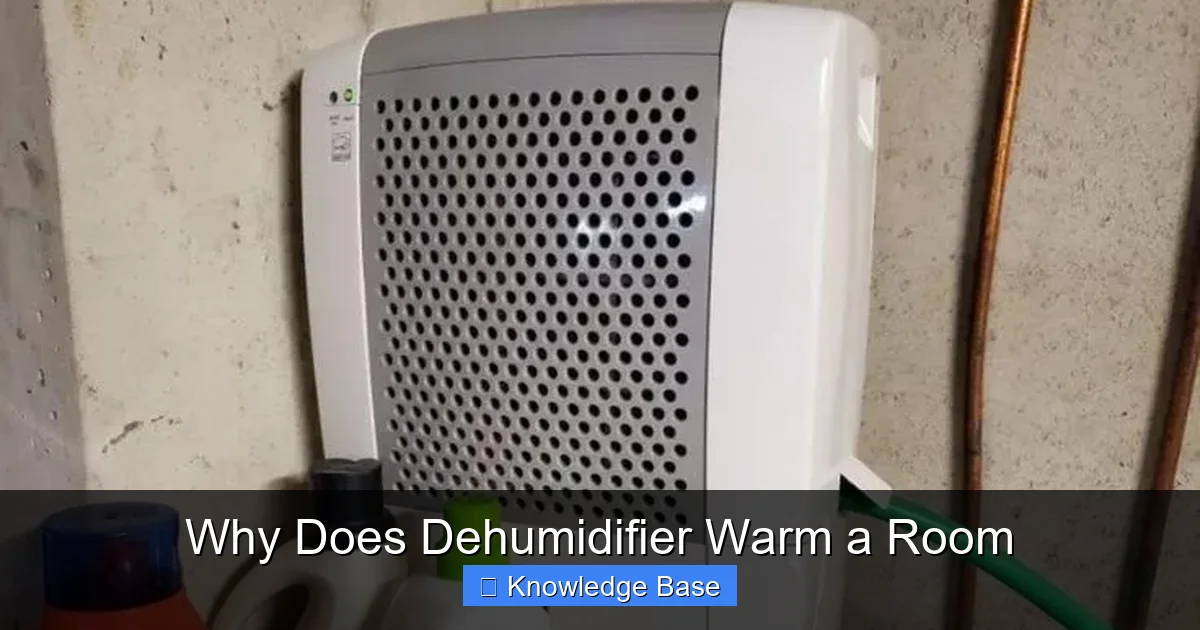
Dehumidifiers warm a room because they generate heat during the moisture removal process. This happens as the unit’s compressor and fan motor convert electrical energy into heat, and the condensation process releases latent heat back into the air. Understanding this helps you use your dehumidifier more efficiently without overheating your space.
Have you ever turned on your dehumidifier to tackle dampness and noticed your room getting warmer? You’re not imagining things. While dehumidifiers are designed to remove excess moisture from the air, they often come with an unexpected side effect: warming the room. At first glance, this might seem counterintuitive. After all, you’re trying to make your space more comfortable, not hotter. But understanding why this happens can help you use your dehumidifier more wisely and avoid discomfort—especially during warmer months.
So, why does a dehumidifier warm a room? The answer lies in the physics of how these appliances work. Dehumidifiers pull in humid air, cool it to remove moisture, and then release drier air back into the room. But in the process, they generate heat through mechanical components like the compressor and fan motor. Additionally, the act of condensing water vapor releases heat energy. This combination of mechanical and thermodynamic processes means that while your air becomes less humid, it also becomes slightly warmer. The effect is usually mild, but in small or poorly ventilated rooms, it can be noticeable.
This article will walk you through the science behind dehumidifier heat output, explain how different models vary, and offer practical tips to manage the warming effect. Whether you’re dealing with a damp basement, a humid bedroom, or a stuffy garage, knowing how your dehumidifier impacts room temperature will help you maintain a balanced, comfortable environment year-round.
Key Takeaways
- Heat is a byproduct of dehumidification: The compressor and fan motor generate heat as they run, warming the surrounding air.
- Latent heat is released during condensation: When moisture condenses from vapor to liquid, it releases heat energy back into the room.
- Energy conversion plays a role: Electrical energy powering the unit is partially converted into heat, not just moisture removal.
- Room size and insulation matter: Smaller or poorly insulated rooms feel the warming effect more than larger, well-ventilated spaces.
- Modern units vary in heat output: Some energy-efficient models produce less heat, while older or high-capacity units may warm a room noticeably.
- Placement affects temperature rise: Keeping the dehumidifier away from walls and in open areas helps dissipate heat more effectively.
- Seasonal use can offset heating costs: In cooler months, the extra warmth can be beneficial, reducing reliance on heaters.
📑 Table of Contents
- How Dehumidifiers Work: The Science Behind Moisture Removal
- Why Heat Is Generated During Dehumidification
- Factors That Influence How Much a Dehumidifier Warms a Room
- Does the Type of Dehumidifier Affect Heat Output?
- Practical Tips to Minimize Heat from Your Dehumidifier
- When the Heat Is Actually Beneficial
- Conclusion
How Dehumidifiers Work: The Science Behind Moisture Removal
To understand why dehumidifiers warm a room, it helps to first grasp how they function. Most residential dehumidifiers use a refrigeration-based system, similar to an air conditioner. Here’s a step-by-step breakdown of the process:
The unit draws in humid air from the room using an internal fan. This air passes over a set of cold coils, typically cooled by a refrigerant. As the warm, moist air contacts these cold surfaces, the moisture in the air condenses into water droplets—just like how dew forms on a cold drink can. This water collects in a removable tank or drains out through a hose. The now-drier air then passes over a set of warm coils (the condenser) before being blown back into the room.
It’s during this final stage that heat is reintroduced. The warm coils are part of the refrigeration cycle, where the refrigerant releases heat as it changes from a gas back to a liquid. This heat is transferred to the air passing over the coils, which is then expelled into the room. So, even though the air has been dried, it’s also been warmed slightly before re-entering your space.
Another key factor is the energy conversion that occurs within the unit. The compressor, which is the heart of the dehumidifier, uses electricity to pressurize the refrigerant. This process generates heat as a byproduct—similar to how a laptop or refrigerator warms up when running. The fan motor also produces a small amount of heat due to friction and electrical resistance. All of these components contribute to the overall temperature increase in the room.
It’s important to note that not all dehumidifiers work the same way. Some high-end or industrial models use desiccant-based systems, which absorb moisture using a moisture-attracting material rather than cooling coils. These units also generate heat, though the mechanism is slightly different. Desiccant dehumidifiers use heat to regenerate the drying material, which can lead to even higher air temperatures being released. However, for most home users, refrigeration-based models are the standard.
Why Heat Is Generated During Dehumidification

Visual guide about Why Does Dehumidifier Warm a Room
Image source: homeinspectioninsider.com
Now that we know how dehumidifiers operate, let’s dive deeper into why they produce heat. There are three main sources of heat generation: mechanical components, the refrigeration cycle, and the physics of condensation.
First, the mechanical parts—especially the compressor and fan—generate heat simply by functioning. The compressor is essentially a pump that increases the pressure of the refrigerant gas. This process requires energy, and not all of that energy goes into moving the refrigerant. Some is lost as heat due to inefficiencies in the motor and friction within the system. Similarly, the fan motor, which circulates air through the unit, also produces heat as it spins. While this heat output is relatively small, it adds up over time, especially in enclosed spaces.
Second, the refrigeration cycle itself is inherently a heat-moving process. In a dehumidifier, the refrigerant absorbs heat from the incoming air to cool it down and condense moisture. But later in the cycle, that same heat—plus additional heat from the compressor—is released into the air as the refrigerant condenses back into a liquid. This heat is expelled through the condenser coils and blown back into the room. So, the unit isn’t just removing moisture; it’s also transferring heat from one part of the system to the room air.
Third, and perhaps most interestingly, the act of condensing water vapor releases latent heat. When water changes from a gas (water vapor) to a liquid (droplets), it gives off energy in the form of heat. This is known as the latent heat of vaporization. You’ve probably experienced this when you feel warmth rising from a boiling pot of water—the steam carries heat with it. In reverse, when vapor condenses, that heat is released back into the surrounding environment. In a dehumidifier, this means that the moisture being removed from the air isn’t just disappearing; it’s contributing to a slight rise in room temperature.
To put this into perspective, imagine a room with 50% humidity at 75°F. When the dehumidifier runs, it might lower the humidity to 40%, but the air temperature could rise to 77°F or 78°F. The change isn’t dramatic, but it’s measurable—and noticeable in smaller rooms or during hot weather.
Factors That Influence How Much a Dehumidifier Warms a Room

Visual guide about Why Does Dehumidifier Warm a Room
Image source: cleanersadvisor.com
Not all dehumidifiers warm a room to the same degree. Several factors determine how much heat a unit will generate and how noticeable the effect will be. Understanding these can help you choose the right model and use it more effectively.
Room Size and Air Circulation
One of the biggest factors is the size of the room. In a small, enclosed space like a closet or basement corner, the heat from a dehumidifier can accumulate quickly. There’s less air volume to absorb the warmth, so the temperature rise is more pronounced. In contrast, a large, open living area with good airflow will dissipate the heat more efficiently, making the warming effect barely noticeable.
Air circulation also plays a role. If the room has windows, vents, or fans that promote airflow, heat can escape more easily. But in a sealed room with no ventilation, the dehumidifier’s heat output can create a noticeable microclimate. For example, running a dehumidifier in a sealed bathroom after a shower might make the room feel stuffy and warm, even though the humidity is dropping.
Dehumidifier Capacity and Efficiency
The capacity of the dehumidifier—measured in pints of moisture removed per day—also affects heat output. Larger units designed for high-moisture environments (like flood-damaged basements) typically have more powerful compressors and motors. These components generate more heat simply because they’re working harder. A 70-pint dehumidifier will produce more warmth than a 30-pint model, even if both are running for the same amount of time.
Energy efficiency is another consideration. Modern ENERGY STAR-certified dehumidifiers are designed to remove moisture using less electricity, which can reduce heat generation. These models often have advanced compressors and better insulation, minimizing wasted energy. Older or less efficient units, on the other hand, may convert more of their electrical input into heat rather than useful work.
Ambient Temperature and Humidity Levels
The starting temperature and humidity of the room also influence how much the dehumidifier warms the space. In cooler environments, the heat output can actually be beneficial. For instance, using a dehumidifier in a chilly basement during winter might help take the edge off the cold while drying out damp air. But in already warm or humid conditions—like a summer laundry room—the added heat can make the space feel uncomfortable.
Additionally, the dehumidifier works harder in high-humidity environments. The more moisture it removes, the more condensation occurs, and the more latent heat is released. So, on a very humid day, you might notice a greater temperature increase than on a moderately damp day.
Placement and Ventilation
Where you place the dehumidifier matters more than you might think. If it’s tucked into a corner or blocked by furniture, airflow is restricted. This not only reduces its efficiency but also traps heat around the unit. Ideally, the dehumidifier should be placed in an open area with at least 6–12 inches of clearance on all sides. This allows hot air to dissipate and cool air to be drawn in effectively.
Some people also use fans to help circulate air around the dehumidifier. A ceiling fan or oscillating floor fan can help distribute the warmed air more evenly, preventing hot spots and improving overall comfort.
Does the Type of Dehumidifier Affect Heat Output?
Yes—different types of dehumidifiers generate different amounts of heat. The two main types used in homes are refrigeration (compressor-based) and desiccant dehumidifiers. Each has its own heat profile.
Refrigeration Dehumidifiers
These are the most common type found in homes. As explained earlier, they use a cold coil to condense moisture and a warm coil to reheat the air before releasing it. The heat output is moderate and consistent. Most residential models will raise the room temperature by 2°F to 5°F, depending on the factors mentioned above. They’re most effective in temperatures above 65°F, which is why they’re less efficient in cold basements.
Desiccant Dehumidifiers
Desiccant models use a moisture-absorbing material (like silica gel) to pull water from the air. They don’t rely on cooling coils, so they can work effectively in colder environments. However, they require a heating element to “recharge” the desiccant material, which means they often release more heat into the room. In some cases, desiccant dehumidifiers can warm a room by 10°F or more, especially if they’re running continuously.
These units are often used in RVs, boats, or cold storage areas where refrigeration models struggle. But because of their higher heat output, they’re not ideal for warm climates or small living spaces unless ventilation is excellent.
Hybrid and Smart Dehumidifiers
Some newer models combine technologies or include smart features to manage heat and efficiency. For example, a hybrid dehumidifier might use a desiccant wheel for moisture removal but include a heat exchanger to recover some of the waste heat. Smart dehumidifiers can adjust their operation based on room conditions, reducing runtime and heat output when humidity levels are low.
These advanced units are more expensive but can offer better temperature control and energy savings over time.
Practical Tips to Minimize Heat from Your Dehumidifier
If the warming effect of your dehumidifier is becoming an issue, there are several strategies you can use to reduce it without sacrificing moisture control.
Optimize Placement
Place your dehumidifier in a central, open area with good airflow. Avoid corners, behind furniture, or near walls. If possible, position it near a vent or window where heat can escape. In basements, consider placing it on a stand or rack to improve air circulation underneath.
Use a Timer or Humidity Sensor
Many dehumidifiers come with built-in humidistats that automatically turn the unit on and off based on humidity levels. This prevents it from running unnecessarily, which reduces both energy use and heat output. If your model doesn’t have this feature, consider using a smart plug with a timer to limit runtime—especially during cooler parts of the day.
Improve Room Ventilation
Open windows or use exhaust fans to allow warm, moist air to escape and cooler air to enter. Even cracking a window slightly can make a big difference in preventing heat buildup. In bathrooms or kitchens, run the exhaust fan while using the dehumidifier to enhance airflow.
Choose the Right Size
Using a dehumidifier that’s too large for your space can lead to short cycling (frequent on/off cycles) and excess heat. Conversely, a unit that’s too small will run constantly, also generating more heat over time. Match the pint capacity to your room size and moisture level. For example, a 30-pint unit is usually sufficient for a 500-square-foot basement, while a 70-pint model is better for larger or high-moisture areas.
Consider Seasonal Use
In winter, the heat from a dehumidifier can actually be helpful. It can reduce the need for supplemental heating in damp areas like basements or crawl spaces. But in summer, you might want to run it only during cooler morning or evening hours, or use it in conjunction with an air conditioner to balance temperature and humidity.
Maintain Your Unit
A dirty filter or clogged coils can reduce efficiency and cause the unit to work harder, generating more heat. Clean the air filter monthly and check the coils for dust buildup. A well-maintained dehumidifier runs more smoothly and produces less waste heat.
When the Heat Is Actually Beneficial
While the warming effect is often seen as a downside, there are situations where it’s actually a benefit. In colder months or in unheated spaces like garages or crawl spaces, the extra warmth can improve comfort and prevent freezing. For example, running a dehumidifier in a winter cabin can help keep the air dry and slightly warmer, reducing the risk of mold and mildew.
Additionally, in homes with radiant floor heating or poor insulation, the gentle warmth from a dehumidifier can supplement other heating sources. It’s not a replacement for a furnace, but it can take the chill off a damp room without significantly increasing energy bills.
Some homeowners even use dehumidifiers in greenhouses or grow rooms, where controlled humidity and warmth are essential for plant health. In these cases, the heat output is carefully managed to create the ideal microclimate.
Conclusion
So, why does a dehumidifier warm a room? The answer lies in the combination of mechanical operation, energy conversion, and the physics of condensation. As the unit removes moisture, it generates heat through its compressor, fan, and the release of latent heat during the condensation process. This warming effect is usually mild but can be noticeable in small or poorly ventilated spaces.
Understanding this phenomenon allows you to use your dehumidifier more effectively. By choosing the right size, optimizing placement, and managing runtime, you can enjoy the benefits of lower humidity without overheating your home. And in some cases—like during cold weather—the extra warmth can even be a welcome bonus.
Ultimately, a dehumidifier is a powerful tool for improving indoor air quality and comfort. With a little knowledge and smart usage, you can keep your space dry, healthy, and at just the right temperature—no matter the season.
Frequently Asked Questions
Why does my dehumidifier make the room hotter?
Your dehumidifier warms the room because its compressor and fan generate heat as they run, and the condensation process releases latent heat back into the air. This is a normal byproduct of moisture removal.
Can a dehumidifier increase room temperature significantly?
Most residential dehumidifiers raise the temperature by 2°F to 5°F. In small or poorly ventilated rooms, the effect may feel more noticeable, but it’s rarely extreme.
Is it safe to run a dehumidifier in a closed room?
Yes, but ensure there’s some airflow to prevent excessive heat buildup. Use a fan or crack a window to help dissipate warmth and maintain comfort.
Do all dehumidifiers produce the same amount of heat?
No. Refrigeration models produce moderate heat, while desiccant units can generate more due to their heating elements. Size, efficiency, and runtime also affect heat output.
Should I turn off my dehumidifier if the room gets too warm?
If the warmth is uncomfortable, consider using a timer, improving ventilation, or running it during cooler times of day. You can also pair it with an air conditioner for balance.
Can the heat from a dehumidifier help reduce heating costs?
In cold, damp areas like basements, the extra warmth can slightly reduce reliance on heaters. However, it’s not a primary heating source and won’t significantly lower energy bills.