
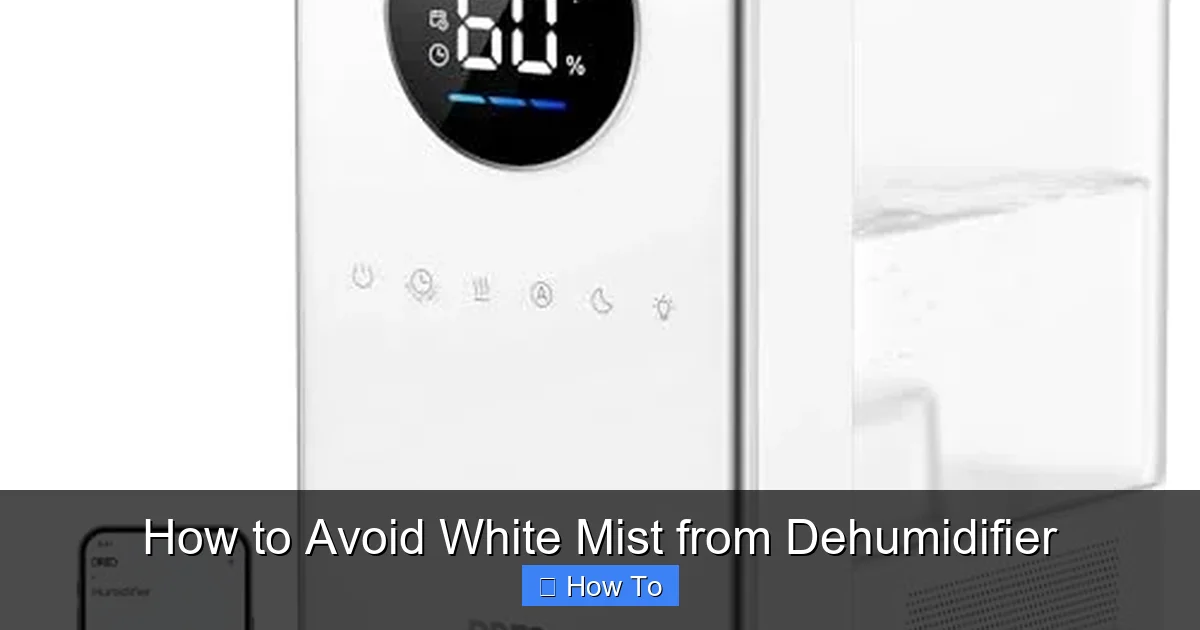
White mist from a dehumidifier is often caused by cold coils, high humidity, or improper placement. This guide walks you through practical steps to stop the mist, improve efficiency, and keep your home comfortable. Follow these expert tips to enjoy cleaner, drier air without the annoying fog.
Quick Answers to Common Questions
Tip/Question?
Can I use a dehumidifier in a cold basement?
Yes, but choose a desiccant model or a refrigerant unit rated for low temperatures. Keep the room above 65°F if possible.
Tip/Question?
How often should I clean the dehumidifier filter?
Clean or replace the filter every 1–3 months, or more often in dusty environments.
Tip/Question?
Is white mist dangerous?
No, it’s just condensed water vapor. It’s not harmful, but it indicates the unit may not be running efficiently.
Tip/Question?
Why does my dehumidifier make mist only at night?
Nighttime temperatures drop, cooling the coils more. Use a space heater or move the unit to a warmer area.
Tip/Question?
Can I drain my dehumidifier continuously to reduce mist?
Yes, continuous drainage reduces the need for frequent tank emptying and helps maintain steady operation.
How to Avoid White Mist from Dehumidifier: A Complete Guide
If you’ve ever noticed a fine white mist coming from your dehumidifier, you’re not alone. This common issue can be confusing, frustrating, and even a little alarming. Is it normal? Is it dangerous? Should you turn the unit off?
The good news is that white mist is usually harmless—but it’s a sign that something isn’t quite right with your dehumidifier’s operation. In most cases, it’s caused by condensation forming on cold internal components, especially the evaporator coils. When warm, humid air hits these cold surfaces, moisture condenses and sometimes turns into a visible mist as it’s expelled.
In this comprehensive guide, you’ll learn exactly why white mist happens, how to prevent it, and what to do if it keeps returning. Whether you’re dealing with a brand-new unit or an older model, these step-by-step solutions will help you keep your dehumidifier running smoothly, quietly, and mist-free.
By the end of this guide, you’ll know how to:
– Identify the root cause of white mist
– Adjust your dehumidifier settings for optimal performance
– Maintain your unit to prevent future issues
– Choose the right type of dehumidifier for your environment
Let’s dive in and clear the air—literally.
What Causes White Mist from a Dehumidifier?
Visual guide about How to Avoid White Mist from Dehumidifier
Image source: media.karousell.com
Before we fix the problem, it’s important to understand what’s causing it. White mist from a dehumidifier is typically the result of condensation forming on cold internal parts, especially the evaporator coils. Here’s a breakdown of the most common causes:
1. Cold Evaporator Coils
Most dehumidifiers use a refrigeration system similar to an air conditioner. They pull in warm, humid air, pass it over cold evaporator coils, and extract moisture. If the coils get too cold—especially in cooler rooms—they can drop below the dew point, causing water vapor in the air to condense rapidly. This excess moisture can turn into a fine mist when it’s released back into the room.
2. Low Room Temperature
Dehumidifiers are designed to work best in temperatures above 65°F (18°C). If your basement, garage, or utility room is too cold, the unit may struggle to operate efficiently. The coils can freeze or become excessively cold, leading to condensation and mist.
3. High Humidity Levels
While dehumidifiers are meant to reduce humidity, extremely high moisture levels (above 80% relative humidity) can overwhelm the system. The unit works harder, cools the coils more, and increases the chance of mist formation.
4. Poor Airflow
If the dehumidifier is placed in a tight space—like a closet or behind furniture—air can’t circulate properly. This traps humid air around the unit, causing the coils to stay cold longer and increasing condensation.
5. Dirty or Clogged Air Filter
The air filter traps dust and debris, but if it’s clogged, airflow is restricted. This forces the unit to work harder, cools the coils more than necessary, and can lead to mist.
6. Frozen Coils
In cold environments, the evaporator coils can actually freeze over. When the unit tries to defrost, melting ice can mix with humid air and create a visible mist.
7. Improper Placement
Placing the dehumidifier near a cold wall, on a damp floor, or in a drafty area can expose it to temperature fluctuations that promote condensation.
8. Sudden Temperature Changes
Moving a dehumidifier from a cold area (like a garage) to a warm, humid room can cause rapid condensation inside the unit, leading to mist when it’s turned on.
Understanding these causes is the first step to solving the problem. Now, let’s look at how to prevent and fix white mist for good.
Step-by-Step Guide to Preventing White Mist
Follow these practical steps to stop white mist from forming and keep your dehumidifier running efficiently.
Step 1: Check and Adjust Room Temperature
The ideal operating temperature for most refrigerant dehumidifiers is between 65°F and 80°F (18°C to 27°C). If your room is colder than 65°F, the coils are more likely to get too cold and cause condensation.
– Use a thermometer to check the room temperature.
– If it’s too cold, consider using a space heater (safely) to warm the area slightly.
– Avoid running the dehumidifier in unheated spaces like garages or crawl spaces during winter unless it’s specifically designed for cold climates.
Step 2: Improve Ventilation and Airflow
Good airflow is essential for efficient dehumidifier operation. Without it, humid air gets trapped, and the coils stay cold longer.
– Place the dehumidifier at least 6–12 inches away from walls, furniture, and curtains.
– Avoid enclosing it in cabinets or closets.
– Keep doors and windows closed while the unit runs to prevent outside humidity from entering.
– Use a fan to circulate air in the room, helping the dehumidifier work more evenly.
Step 3: Clean or Replace the Air Filter
A dirty filter is one of the most overlooked causes of white mist. It restricts airflow, making the coils colder and increasing condensation.
– Turn off and unplug the dehumidifier.
– Locate the air filter (usually behind a front or side panel).
– Remove the filter and vacuum it gently or wash it with warm, soapy water if it’s washable.
– Let it dry completely before reinserting.
– Replace disposable filters every 3–6 months, or as recommended by the manufacturer.
Step 4: Defrost Frozen Coils
If you see ice buildup on the coils, the unit is likely freezing up. This can happen in cold rooms or if the filter is dirty.
– Turn off the dehumidifier and unplug it.
– Let it sit for 2–4 hours to allow the ice to melt naturally.
– Use a fan to speed up the defrosting process (do not use a hairdryer or heat gun).
– Once the coils are dry, clean the filter and restart the unit.
– If freezing happens frequently, consider upgrading to a desiccant dehumidifier (see Step 7).
Step 5: Choose the Right Size Dehumidifier
An undersized dehumidifier will run constantly, overcooling the coils and increasing the chance of mist. An oversized unit may cycle too quickly, not removing enough moisture.
– Measure your room’s square footage.
– Check the dehumidifier’s capacity (measured in pints per day).
– Use this general guide:
– 500 sq. ft. or less: 20–30 pints
– 500–1,000 sq. ft.: 30–50 pints
– 1,000+ sq. ft.: 50+ pints
– For very damp areas (like basements), choose a higher capacity.
Step 6: Avoid Sudden Temperature Changes
Moving a dehumidifier from a cold to a warm environment can cause internal condensation.
– If you’re bringing a unit from a cold garage into your home, let it sit in the room for at least 2 hours before plugging it in.
– This allows the internal components to acclimate and prevents thermal shock.
Step 7: Consider a Desiccant Dehumidifier
Refrigerant dehumidifiers (the most common type) rely on cold coils, which can cause mist in cool or humid conditions. Desiccant dehumidifiers use a moisture-absorbing material (like silica gel) and don’t rely on cold surfaces.
– Desiccant models work better in cold temperatures (as low as 40°F or 4°C).
– They’re quieter and less likely to produce white mist.
– They’re ideal for basements, garages, and RVs.
– The downside: they use more electricity and may need periodic reactivation (some models have built-in heaters).
Step 8: Maintain Regular Cleaning and Care
Prevention is key. Regular maintenance keeps your dehumidifier running smoothly and reduces the risk of mist.
– Clean the water tank weekly with a mild bleach solution (1 tsp bleach per gallon of water) to prevent mold and bacteria.
– Wipe down the exterior with a damp cloth.
– Check the drain hose (if using continuous drainage) for clogs.
– Inspect coils for dust buildup (use a soft brush or compressed air).
Troubleshooting Persistent White Mist
If you’ve followed all the steps above and the white mist continues, there may be a deeper issue. Here’s how to troubleshoot:
1. Check for Refrigerant Leaks
A refrigerant leak can cause the coils to overcool, leading to excessive condensation and mist. Signs include:
– The unit isn’t removing much moisture
– Unusual noises (hissing, gurgling)
– Ice buildup that doesn’t go away
If you suspect a leak, contact a professional technician. Do not attempt to repair it yourself.
2. Inspect the Defrost Sensor
Some dehumidifiers have a defrost sensor that prevents coil freezing. If it’s faulty, the unit won’t defrost properly, leading to ice and mist.
– Consult your user manual for the sensor location.
– If the sensor is damaged or disconnected, have it replaced by a qualified repair person.
3. Evaluate Humidity Levels
Use a hygrometer to measure the room’s humidity. If it’s consistently above 80%, the dehumidifier may be overwhelmed.
– Run the unit continuously for 24–48 hours.
– If humidity doesn’t drop, consider a larger unit or additional ventilation (like an exhaust fan).
4. Test in a Different Location
Try moving the dehumidifier to a warmer, better-ventilated room. If the mist stops, the original location was the problem.
5. Contact the Manufacturer
If the unit is under warranty and the mist persists despite troubleshooting, contact customer support. There may be a defect or design flaw.
When Is White Mist Normal?
In some cases, a small amount of white mist is normal—especially when the dehumidifier first starts up or during defrost cycles.
– If the mist is light, disappears quickly, and the unit is otherwise working well, it’s likely harmless.
– However, if the mist is thick, continuous, or accompanied by reduced performance, it’s a sign of a problem.
Always monitor the unit and address any changes in behavior.
Conclusion
White mist from a dehumidifier is usually a sign of cold coils, poor airflow, or environmental factors—not a defect. By following the steps in this guide, you can prevent mist, improve efficiency, and extend the life of your appliance.
Remember:
– Keep the room warm and well-ventilated
– Clean the filter regularly
– Defrost frozen coils promptly
– Choose the right size and type of dehumidifier
– Avoid sudden temperature changes
With proper care, your dehumidifier will keep your home dry, comfortable, and mist-free all year round.