

Choosing the right dehumidifier can improve your home’s air quality, prevent mold, and increase comfort. This guide walks you through everything you need to know—from sizing and types to features and placement—so you can make a smart, informed purchase.
Quick Answers to Common Questions
Tip/Question?
What’s the ideal humidity level for a home?
Answer: Keep indoor humidity between 30% and 50%. Use a hygrometer to monitor levels.
Tip/Question?
Can I use a dehumidifier in winter?
Answer: Yes, but compressor models work best above 65°F. Use a desiccant model in cold spaces.
Tip/Question?
Should I run my dehumidifier all the time?
Answer: Only if humidity stays high. Use a humidistat to automate operation and save energy.
Tip/Question?
How often should I clean the filter?
Answer: Clean the filter every 4–6 weeks during heavy use, or monthly if running daily.
Tip/Question?
Can a dehumidifier help with allergies?
Answer: Yes! By reducing mold and dust mites, it can ease allergy and asthma symptoms.
How to Buy a Dehumidifier for Your Home
If your home feels sticky, smells musty, or you’ve spotted mold in the corners, it might be time to buy a dehumidifier. These handy appliances pull excess moisture from the air, making your space more comfortable and healthier. But with so many models on the market, how do you pick the right one?
This step-by-step guide will help you choose the perfect dehumidifier for your home. You’ll learn how to assess your needs, understand key features, compare types, and avoid common mistakes. By the end, you’ll feel confident picking a unit that fits your space, budget, and lifestyle.
Step 1: Understand Why You Need a Dehumidifier
Before you shop, it’s important to know why you’re buying a dehumidifier. High humidity doesn’t just feel uncomfortable—it can cause real problems.
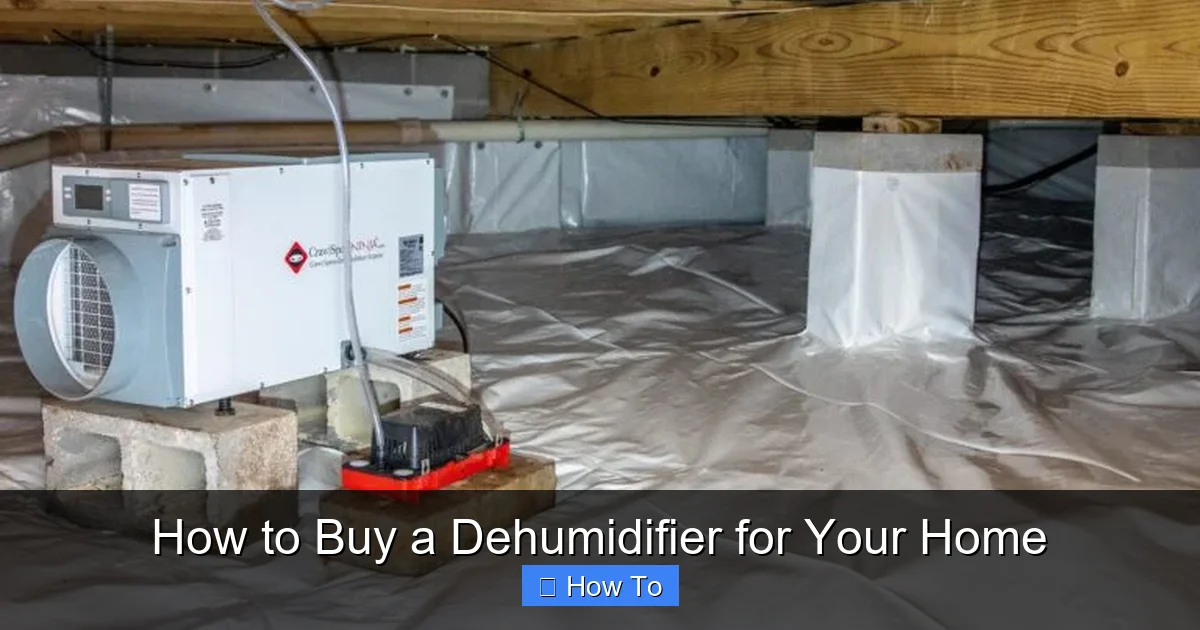
Visual guide about How to Buy a Dehumidifier for Your Home
Image source: crawlspaceninja.com
Common Signs You Need a Dehumidifier
- Condensation on windows: Water droplets on glass mean excess moisture in the air.
- Musty odors: A damp, earthy smell often indicates mold or mildew growth.
- Visible mold or mildew: Black or green spots on walls, ceilings, or in bathrooms.
- Peeling paint or wallpaper: Moisture can cause finishes to bubble or flake.
- Allergies or respiratory issues: Dust mites and mold thrive in humid environments and can worsen symptoms.
If you notice any of these signs, a dehumidifier can help. It reduces humidity to a healthy range—ideally between 30% and 50%—making your home less inviting to allergens and mold.
Step 2: Measure Your Space
Dehumidifiers are sized by the area they can effectively treat. Buying one too small won’t solve your problem. One too big wastes energy and money.
Calculate Square Footage
Start by measuring the length and width of the room or area you want to dehumidify. Multiply them to get the square footage. For example, a 10 ft x 12 ft room is 120 square feet.
Consider the Room’s Condition
Not all rooms with the same size need the same dehumidifier. A damp basement needs more power than a slightly humid bedroom. Use this guide:
- Normal dampness (slight odor, occasional condensation): Choose a unit rated for your room size.
- Very damp (persistent musty smell, damp spots): Go one size up in capacity.
- Wet (standing water, frequent mold): Consider a heavy-duty model or multiple units.
For open-plan areas like basements, measure the total space. If your basement is 800 sq ft and very damp, look for a 50-pint or higher model.
Step 3: Choose the Right Type of Dehumidifier
There are three main types of dehumidifiers: compressor (refrigerant), desiccant, and thermoelectric. Each works differently and suits different needs.
Compressor (Refrigerant) Dehumidifiers
These are the most common and effective for home use. They use a cooling coil to condense moisture from the air. The water drips into a tank or drains out.
- Best for: Warm, humid climates (like the southern U.S.).
- Pros: High moisture removal, energy-efficient at scale, affordable.
- Cons: Less effective in cold temperatures (below 65°F), can be noisy.
Example: A 50-pint compressor model is ideal for a 1,000 sq ft basement in Florida.
Desiccant Dehumidifiers
These use a moisture-absorbing material (like silica gel) to pull water from the air. They don’t rely on cooling, so they work well in cold spaces.
- Best for: Cold climates, garages, crawl spaces, or RVs.
- Pros: Effective in low temperatures, quiet operation, compact.
- Cons: Slower moisture removal, higher energy use, smaller capacity.
Example: A desiccant model is great for a 300 sq ft cabin in Minnesota during winter.
Thermoelectric Dehumidifiers
These use a small fan and Peltier module to cool a surface and condense moisture. They’re small and quiet but not very powerful.
- Best for: Small spaces like closets, RVs, or under sinks.
- Pros: Very quiet, energy-efficient, compact.
- Cons: Low capacity, not suitable for large or very damp areas.
Example: A thermoelectric unit works well in a 50 sq ft bathroom with mild humidity.
For most homes, a compressor dehumidifier is the best choice. But if you live in a cold area or need a unit for a small space, consider desiccant or thermoelectric models.
Step 4: Match the Pint Capacity to Your Needs
Dehumidifiers are rated by how many pints of moisture they can remove in 24 hours. This is called the “pint rating.”
How to Choose the Right Pint Rating
Use this general guide based on room size and dampness:
- 20–30 pints: Small rooms (up to 500 sq ft), slightly damp.
- 30–50 pints: Medium rooms (500–1,500 sq ft), moderately damp.
- 50–70 pints: Large rooms or basements (1,500+ sq ft), very damp or wet.
For example, a 700 sq ft basement with a musty smell might need a 50-pint model. But if it’s frequently wet, go for 70 pints.
Don’t Overbuy
A dehumidifier that’s too powerful can cycle on and off too quickly, wasting energy and not running long enough to remove moisture effectively. It may also dry the air too much, causing discomfort.
Tip: Check the product’s “AHAM rating.” The Association of Home Appliance Manufacturers tests dehumidifiers under standard conditions (80°F, 60% humidity). This gives a more accurate comparison than manufacturer claims.
Step 5: Look for Key Features
Modern dehumidifiers come with helpful features that improve performance, convenience, and energy efficiency.
Auto-Humidistat
This sensor measures the room’s humidity and turns the unit on or off to maintain your desired level (e.g., 45%). It saves energy and prevents over-drying.
Continuous Drainage Option
Instead of emptying a tank every few hours, you can attach a hose to drain water directly into a floor drain or sump pump. This is essential for basements or 24/7 operation.
Washable Air Filter
A reusable filter traps dust and allergens. Look for one that’s easy to remove and clean—this improves air quality and protects the unit.
Auto-Defrost
On compressor models, this feature prevents ice buildup on the coils in cold temperatures. It’s crucial if you’re using the dehumidifier in a garage or unheated basement.
Timer and Delay Start
Set the unit to run during off-peak hours or turn off after a few hours. Great for saving energy or controlling noise at night.
Energy Star Certification
Energy Star-rated models use 15–30% less energy than standard units. They cost more upfront but save money on electricity over time.
Noise Level (Decibels)
Check the dB rating. Most dehumidifiers run between 45–60 dB. For bedrooms or living areas, aim for under 50 dB for quiet operation.
Step 6: Consider Placement and Installation
Where you place your dehumidifier affects how well it works.
Best Locations
- Basements: The most common spot. Place near the center or where moisture is worst.
- Laundry rooms: High humidity from dryers makes these ideal.
- Bathrooms: Use a small unit if you don’t have good ventilation.
- Closets: For mildew prevention, a compact thermoelectric model works.
Installation Tips
- Keep the unit at least 6–12 inches away from walls for proper airflow.
- Use a surge protector to protect the motor.
- If using a hose for drainage, ensure it slopes downward to avoid backflow.
- Avoid placing near heat sources like furnaces or water heaters.
For whole-house dehumidification, consider a whole-home model that integrates with your HVAC system. These are more expensive but offer consistent control.
Step 7: Compare Brands and Read Reviews
Not all dehumidifiers are created equal. Some brands offer better reliability, customer service, and warranties.
Top Brands to Consider
- Frigidaire: Known for durable, high-capacity models with good warranties.
- hOmeLabs: Popular for smart features and quiet operation.
- GE: Reliable and widely available, with Energy Star options.
- Eva-Dry: Specializes in small, portable, and desiccant units.
- Keystone: Budget-friendly with solid performance.
What to Look for in Reviews
- Real-world performance in similar homes.
- Noise levels during operation.
- Ease of emptying the tank or setting up drainage.
- Customer service and warranty support.
- Energy usage over time.
Check sites like Amazon, Home Depot, and Consumer Reports for honest feedback. Avoid models with frequent complaints about leaks, noise, or short lifespans.
Step 8: Set a Budget
Dehumidifiers range from $100 to $600+, depending on size and features.
Price Ranges
- $100–$200: Small thermoelectric or basic compressor models (20–30 pints).
- $200–$400: Mid-range compressor units (30–50 pints) with smart features.
- $400–$600+: High-capacity, Energy Star, or whole-home models.
Don’t just go for the cheapest option. A $250 model that lasts 8 years is better value than a $150 one that breaks in 2.
Tip: Look for sales during spring and summer—many retailers discount dehumidifiers when demand drops in fall.
Step 9: Buy from a Reputable Retailer
Buy from trusted stores that offer warranties, return policies, and customer support.
Recommended Retailers
- Amazon (wide selection, reviews, fast shipping)
- Home Depot or Lowe’s (in-store pickup, expert advice)
- Best Buy (good for smart models)
- Manufacturer websites (Frigidaire, hOmeLabs)
Avoid unknown online sellers or deals that seem too good to be true. Check return policies—some units can’t be returned once opened.
Step 10: Maintain Your Dehumidifier
Regular maintenance keeps your unit running efficiently and extends its life.
Maintenance Checklist
- Clean the filter monthly: Rinse with water and let dry.
- Empty the tank regularly: Unless using continuous drainage.
- Wipe the coils and interior: Use a soft cloth to remove dust.
- Check the hose and drain: Ensure no clogs or leaks.
- Store properly in off-seasons: Clean and cover if not using for months.
Neglecting maintenance can lead to mold inside the unit, reduced performance, and higher energy bills.
Troubleshooting Common Issues
Even the best dehumidifiers can have problems. Here’s how to fix common ones.
Unit Isn’t Removing Moisture
- Check if the room is too cold (below 65°F for compressor models).
- Ensure the filter isn’t clogged.
- Verify the humidistat is set correctly.
- Make sure the unit is sized properly for the space.
Water Tank Keeps Overflowing
- Empty it more often.
- Switch to continuous drainage with a hose.
- Check if the auto-shutoff sensor is working.
Unit Is Too Noisy
- Place on a flat, stable surface to reduce vibration.
- Ensure it’s not touching walls or furniture.
- Check for loose parts or debris in the fan.
Ice Builds Up on Coils
- Turn off the unit and let it defrost.
- Enable auto-defrost if available.
- Move to a warmer location or use a desiccant model.
Conclusion
Buying a dehumidifier doesn’t have to be overwhelming. By following these steps—assessing your needs, choosing the right type and size, and picking smart features—you’ll find a unit that keeps your home dry, comfortable, and healthy.
Remember: the best dehumidifier is the one that fits your space, matches your humidity level, and includes features that make your life easier. Take your time, read reviews, and don’t rush the decision. With the right model, you’ll enjoy fresher air, fewer allergens, and a home that feels just right.