
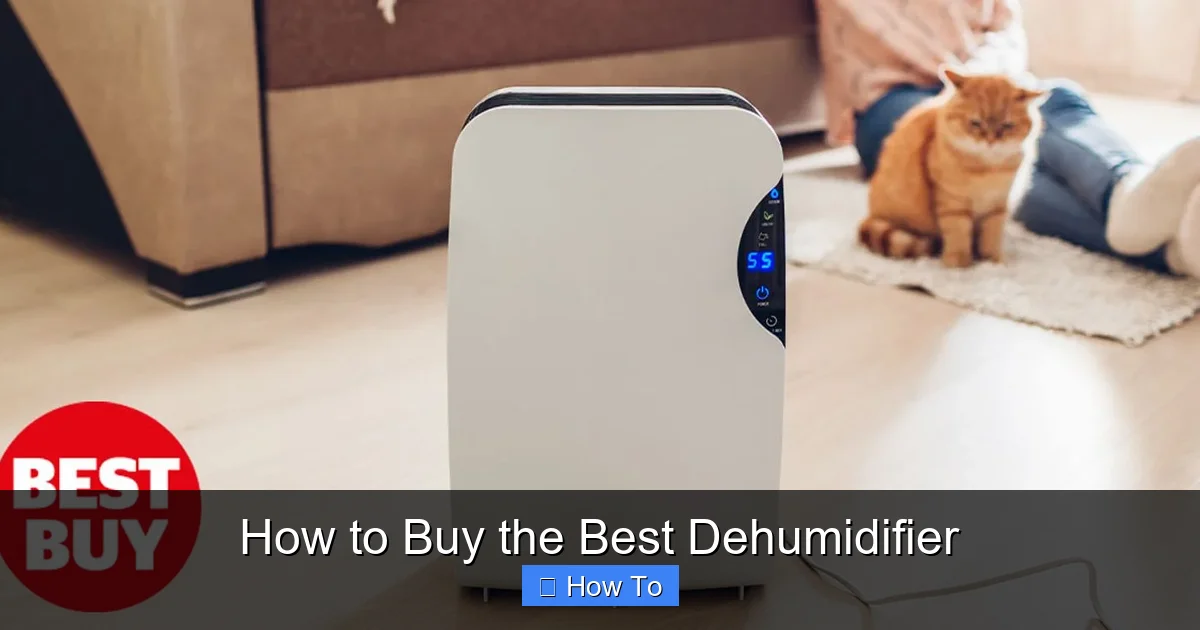
Choosing the right dehumidifier can improve air quality, reduce allergens, and protect your home from moisture damage. This guide walks you through every step—from assessing your space to comparing features—so you can buy the best dehumidifier with confidence.
Quick Answers to Common Questions
Tip/Question?
How often should I empty the water tank?
It depends on the humidity level and tank size. Most 30–50 pint models need emptying every 12–24 hours in very damp conditions. Use continuous drainage to avoid frequent trips.
Tip/Question?
Can I use a dehumidifier in winter?
Yes, but compressor models lose efficiency below 65°F. Use a desiccant dehumidifier in cold spaces like garages or unheated basements.
Tip/Question?
Should I run my dehumidifier all the time?
Not necessarily. Use the auto-humidistat to maintain 30–50% humidity. It will run only when needed, saving energy.
Tip/Question?
Is a bigger dehumidifier always better?
No. An oversized unit may cycle on and off too quickly, reducing efficiency and not removing moisture evenly. Match the size to your space.
Tip/Question?
Can a dehumidifier help with allergies?
Yes. By reducing mold, mildew, and dust mites, a dehumidifier can ease allergy and asthma symptoms, especially in damp areas.
How to Buy the Best Dehumidifier
If you’ve ever walked into a damp basement, noticed peeling paint, or smelled that musty odor in your closet, you know how frustrating excess moisture can be. High humidity doesn’t just feel uncomfortable—it can lead to mold, mildew, dust mites, and even structural damage over time. That’s where a dehumidifier comes in. But with so many models, sizes, and features on the market, how do you choose the right one?
This guide will walk you through everything you need to know to buy the best dehumidifier for your home. Whether you’re tackling a damp crawl space, a humid bathroom, or a whole-house moisture problem, we’ll help you make a smart, informed decision. You’ll learn how to assess your needs, compare types and features, understand energy efficiency, and avoid common buying mistakes. By the end, you’ll feel confident picking a dehumidifier that works hard, lasts long, and fits your budget.
Step 1: Understand Why You Need a Dehumidifier
Visual guide about How to Buy the Best Dehumidifier
Image source: i.ytimg.com
Before you start shopping, it’s important to understand what a dehumidifier does and why you might need one. A dehumidifier removes excess moisture from the air, helping to maintain a healthy indoor humidity level—ideally between 30% and 50%. Too much humidity creates a breeding ground for mold, mildew, and dust mites. Too little can dry out your skin and respiratory system.
Common signs you need a dehumidifier include:
- Condensation on windows or walls
- Musty smells in basements, bathrooms, or closets
- Peeling wallpaper or paint
- Warped wood furniture or flooring
- Allergy or asthma symptoms that worsen indoors
If you’re dealing with any of these issues, a dehumidifier can make a big difference. But not all dehumidifiers are created equal. The right one depends on your specific situation.
Step 2: Measure Your Space and Humidity Level
The first step in choosing the best dehumidifier is knowing where you’ll use it and how damp that area is. Two key factors matter: square footage and humidity level.
Measure the Room Size
Use a tape measure to find the length and width of the room. Multiply them to get the square footage. For example, a 10 ft x 12 ft room is 120 square feet. Most dehumidifiers are rated for specific room sizes, so this helps narrow your options.
Test the Humidity Level
You can’t rely on how the air “feels.” Use a hygrometer—a small, inexpensive device that measures humidity—to get an accurate reading. You can find digital hygrometers at hardware stores or online for under $20.
Once you have your humidity level, categorize it:
- Moderately damp: 50–60% humidity, occasional musty smell
- Very damp: 60–70% humidity, frequent dampness, mildew spots
- Wet: 70–80% humidity, standing water, strong mildew odor
- Extremely wet: Over 80% humidity, flooding or chronic leaks
This classification helps determine the dehumidifier’s capacity and power needs.
Step 3: Choose the Right Type of Dehumidifier
There are three main types of dehumidifiers: compressor (refrigerant), desiccant, and thermoelectric. Each works differently and suits different environments.
Compressor (Refrigerant) Dehumidifiers
These are the most common and effective for home use. They use a refrigeration cycle to cool air, causing moisture to condense and collect in a tank. They work best in warm, humid climates (above 65°F) and are ideal for basements, laundry rooms, and large living spaces.
Pros:
- High moisture removal capacity
- Energy-efficient for large spaces
- Affordable upfront cost
Cons:
- Less effective in cold temperatures
- Can be noisy
- May produce warm air as a byproduct
Desiccant Dehumidifiers
These use a moisture-absorbing material (like silica gel) to pull water from the air. They don’t rely on cooling, so they work well in cold environments—like garages, crawl spaces, or unheated basements.
Pros:
- Effective in low temperatures (down to 40°F)
- Quiet operation
- Lightweight and portable
Cons:
- Lower moisture removal rate
- Higher energy use over time
- Often more expensive
Thermoelectric Dehumidifiers
These use a small fan and Peltier module to cool air and remove moisture. They’re compact, quiet, and great for small spaces like closets, RVs, or bathrooms.
Pros:
- Very quiet
- Energy-efficient for tiny areas
- No moving parts (except the fan)
Cons:
- Low capacity (usually under 10 pints/day)
- Not suitable for large or very damp spaces
- Can overheat with prolonged use
For most homes, a compressor dehumidifier is the best all-around choice. But if you’re dealing with cold spaces or need something ultra-quiet, consider desiccant or thermoelectric models.
Step 4: Match the Pint Capacity to Your Needs
Dehumidifiers are rated by how many pints of moisture they can remove in 24 hours. This is called the “pint rating.” But don’t just go for the highest number—match it to your room size and humidity level.
Here’s a general guide:
| Room Size | Moderately Damp | Very Damp | Wet | Extremely Wet |
|---|---|---|---|---|
| Up to 500 sq ft | 10–15 pints | 15–20 pints | 20–30 pints | 30+ pints |
| 500–1,000 sq ft | 15–20 pints | 20–30 pints | 30–50 pints | 50+ pints |
| 1,000–1,500 sq ft | 20–30 pints | 30–50 pints | 50–70 pints | 70+ pints |
For example, a 700 sq ft basement with a musty smell and occasional damp spots (very damp) would need a 30-pint dehumidifier. But if it floods regularly, you might need a 50-pint model.
Tip: Some manufacturers overstate capacity. Look for AHAM (Association of Home Appliance Manufacturers) certified ratings—they’re tested under standard conditions and more reliable.
Step 5: Consider Key Features and Functions
Modern dehumidifiers come with a range of features that improve convenience, efficiency, and performance. Here are the most important ones to look for.
Auto-Humidistat
This built-in sensor measures the room’s humidity and automatically turns the unit on or off to maintain your desired level. Set it to 45%, and it will run only when needed—saving energy and preventing over-drying.
Continuous Drainage Option
Most dehumidifiers have a water tank that needs to be emptied manually. But if you’re using it in a basement or unattended space, look for a model with a hose connection for continuous drainage. Just attach a garden hose and let the water flow into a floor drain or sump pump.
Washable Air Filter
A clean filter improves air quality and efficiency. Washable filters can be rinsed under water and reused, saving money and reducing waste. Check if the filter is easy to remove and clean.
Auto Defrost
If you’re using a compressor dehumidifier in a cold space (like a garage), ice can build up on the coils. Auto defrost prevents this by briefly heating the coils to melt ice, ensuring continuous operation.
Programmable Timer
Set the dehumidifier to run at specific times—like during off-peak energy hours or when you’re away. This helps save electricity and gives you more control.
Portability and Design
Look for built-in handles, caster wheels, and a compact design if you plan to move the unit between rooms. A sleek, quiet model is better for living areas, while a rugged build suits basements.
Smart Features (Optional)
Some high-end models connect to Wi-Fi and work with apps or voice assistants like Alexa. You can monitor humidity, adjust settings, and receive alerts remotely. Great for tech lovers, but not essential.
Step 6: Check Noise Levels and Energy Efficiency
A dehumidifier that’s too loud can be annoying, especially if it’s in a bedroom or living room. Noise is measured in decibels (dB). Here’s a quick reference:
- 35–45 dB: Very quiet (like a whisper)
- 45–55 dB: Quiet (like a refrigerator)
- 55–65 dB: Noticeable (like a conversation)
- 65+ dB: Loud (like a vacuum)
For quiet operation, aim for under 50 dB. Desiccant and thermoelectric models are usually quieter than compressor types.
Energy efficiency matters too. Look for the ENERGY STAR label—it means the unit meets strict efficiency guidelines set by the EPA. ENERGY STAR dehumidifiers use 15–30% less energy than standard models, saving you money on electricity over time.
Check the annual energy consumption (in kWh) on the label. A typical 50-pint dehumidifier uses about 500–700 kWh per year. Multiply that by your local electricity rate to estimate operating costs.
Step 7: Compare Brands and Read Reviews
Not all dehumidifiers are built the same. Some brands are known for reliability, durability, and customer support. Here are a few top performers:
- Frigidaire: Reliable, affordable, great for basements
- hOmeLabs: High capacity, modern design, good value
- GE: Trusted brand, strong performance, wide availability
- AprilAire: Whole-house systems, professional-grade
- Eva-Dry: Compact, portable, great for small spaces
But don’t just go by brand name. Read real customer reviews on sites like Amazon, Home Depot, or Consumer Reports. Look for patterns:
- Does it stop working after a few months?
- Is the tank hard to remove?
- Does it actually reduce humidity?
- Is customer service helpful?
Pay attention to reviews from people with similar needs—like “used in a 1,200 sq ft basement” or “for a humid Florida home.”
Step 8: Set a Budget and Compare Prices
Dehumidifiers range from $50 to $500+, depending on size, type, and features. Here’s a rough breakdown:
- $50–$100: Small thermoelectric or basic 10–15 pint models for closets or bathrooms
- $100–$200: Mid-range 20–30 pint compressor models for average rooms
- $200–$350: High-capacity 30–50 pint units with advanced features
- $350+: Large 50+ pint, whole-house, or smart dehumidifiers
Don’t just buy the cheapest option. A $80 model might save money upfront but cost more in energy and repairs over time. Aim for the best value—good performance, reliable brand, and essential features within your budget.
Step 9: Check Warranty and Return Policy
A dehumidifier is an investment. Protect it with a solid warranty. Most brands offer:
- 1-year limited warranty (standard)
- 2–3 years for premium models
- Extended warranties available for purchase
Read the fine print. Some warranties only cover parts, not labor. Others require registration within 30 days.
Also, check the return policy. Can you return it within 30 or 60 days if it doesn’t work? Is there a restocking fee? Buying from a retailer with a generous return window (like Amazon or Costco) gives you peace of mind.
Step 10: Install and Maintain Your Dehumidifier
Once you’ve bought the best dehumidifier, proper setup and maintenance ensure it lasts.
Placement Tips
- Place it on a flat, stable surface
- Keep it at least 6–12 inches away from walls for airflow
- Avoid placing near heat sources or in direct sunlight
- Use in the center of the room for even coverage
Maintenance Tips
- Empty the water tank regularly (or use continuous drainage)
- Clean the filter every 2–4 weeks
- Wipe down the exterior with a damp cloth
- Check the coils for dust or ice buildup
- Store properly if not used seasonally
Regular care prevents mold inside the unit and keeps it running efficiently.
Troubleshooting Common Issues
Even the best dehumidifier can have problems. Here’s how to fix common ones:
Unit Won’t Turn On
- Check the power cord and outlet
- Make sure the tank isn’t full (most units shut off when full)
- Reset the circuit breaker
Not Removing Moisture
- Check the humidistat setting—it might be too low
- Clean the filter and coils
- Ensure the room isn’t too cold (for compressor models)
- Verify the unit is sized correctly for the space
Too Noisy
- Make sure it’s on a level surface
- Check for loose parts or vibrations
- Move it away from walls or furniture
Leaking Water
- Ensure the tank is seated properly
- Check the drain hose for kinks or clogs
- Look for cracks in the tank or seals
If problems persist, contact the manufacturer or retailer.
Conclusion
Buying the best dehumidifier doesn’t have to be overwhelming. Start by understanding your space and humidity level. Choose the right type and capacity. Look for smart features, energy efficiency, and reliable brands. Read reviews, compare prices, and check the warranty. With the right model, you’ll enjoy fresher air, fewer allergens, and a healthier home.
Remember, the best dehumidifier isn’t always the biggest or most expensive—it’s the one that fits your needs, works efficiently, and lasts for years. Take your time, do your research, and you’ll make a decision you can feel good about.