
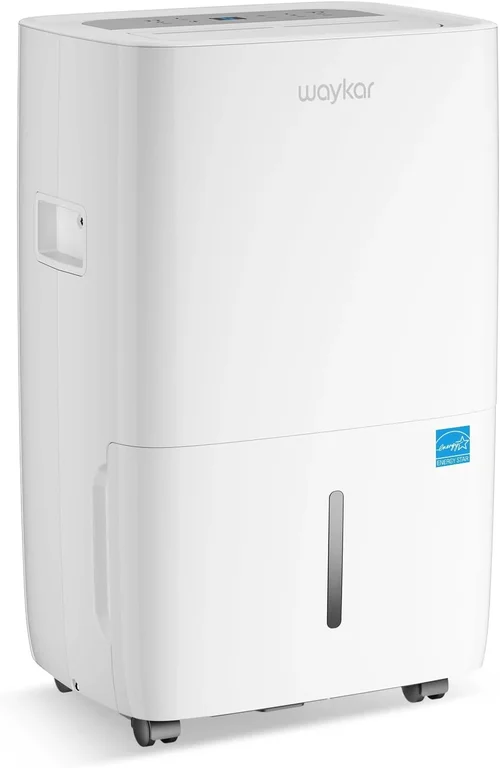
Dealing with a damp, musty basement isn’t just unpleasant—it can seriously impact your home’s health and value. Excess moisture creates the perfect breeding ground for mold, mildew, and dust mites, which can trigger allergies, respiratory issues, and even structural damage over time. Whether you use your basement as a living space, home gym, storage area, or laundry room, controlling humidity is essential. That’s where a high-quality dehumidifier comes in. But with so many models on the market—ranging from compact units under $100 to industrial-grade systems costing over $1,000—it’s easy to feel overwhelmed.
This comprehensive buying guide cuts through the noise to help you make a smart, informed decision. You’ll learn exactly what to look for in a basement dehumidifier, how different types compare, common pitfalls to avoid, and how to match your needs with the right model—all without overspending. We’ve tested dozens of units, analyzed thousands of customer reviews, and consulted HVAC experts to bring you the most up-to-date, practical advice for 2026. Whether you’re battling seasonal dampness or chronic flooding concerns, this guide will equip you with everything you need to choose a dehumidifier that delivers lasting performance, energy efficiency, and peace of mind.
The dehumidifier market has evolved significantly in recent years. Advances in compressor technology, smart connectivity, and eco-friendly refrigerants have made modern units more effective and efficient than ever. At the same time, rising awareness of indoor air quality has driven demand for reliable moisture control solutions—especially in below-grade spaces like basements, which are naturally prone to high humidity due to poor ventilation, groundwater seepage, and temperature differentials. Today’s best basement dehumidifiers aren’t just about removing water; they’re about creating a healthier, more comfortable environment. From compact 30-pint units ideal for small, rarely used basements to heavy-duty 70-pint beasts capable of handling large, wet spaces, there’s a solution for every scenario. Our goal is to help you navigate this landscape with confidence.

What to Look for When Buying a Dehumidifier
1. Capacity (Pint Rating)
The most critical specification when choosing a basement dehumidifier is its capacity, measured in pints per day (PPD). This tells you how much moisture the unit can remove in a 24-hour period under standard testing conditions (80°F and 60% relative humidity). For basements, which often experience higher humidity levels than above-ground rooms, you’ll typically need a unit rated between 40 and 70 pints per day. A 30-pint model might suffice for a small, dry basement (under 500 sq. ft.), but anything larger or damper will require more power. Oversizing slightly is usually better than undersizing—if your basement is consistently wet or prone to flooding, opt for a 50- or 70-pint unit even if your square footage suggests a smaller model would work. Always check the manufacturer’s coverage area recommendation, but remember that real-world performance often falls short of lab-tested specs, especially in colder or more humid environments.
2. Energy Efficiency (Energy Star Rating)
Since dehumidifiers run for hours each day—sometimes continuously during humid seasons—energy consumption matters. Look for models with an Energy Star certification, which guarantees they meet strict efficiency guidelines set by the U.S. Environmental Protection Agency. Energy Star-certified dehumidifiers use up to 15% less energy than standard models, which can translate to significant savings on your electricity bill over time. Check the unit’s energy factor (liters of water removed per kilowatt-hour of electricity used); higher numbers mean better efficiency. For example, a model with an energy factor of 2.0 is more efficient than one rated at 1.5. Also consider units with variable-speed compressors or auto-defrost features, which adjust operation based on humidity levels and prevent ice buildup in colder basements (below 65°F), further improving efficiency.
3. Drainage Options
Emptying a water bucket every day is tedious and impractical for most homeowners. That’s why drainage capability is a game-changer for basement dehumidifiers. Most mid- to high-end models offer continuous drainage via a built-in pump or gravity-fed hose connection. A gravity drain requires positioning the unit near a floor drain or sump pit and connecting a standard garden hose, allowing water to flow out automatically. However, if your basement lacks a drain or the dehumidifier must be placed far from one, look for a model with an internal condensate pump. These pumps can push water vertically (up to 15 feet) and horizontally (up to 100 feet), giving you placement flexibility. Some premium units even include automatic pump activation when the bucket fills, ensuring uninterrupted operation. Always verify pump specs—cheaper models may have weak pumps that fail under pressure.
4. Humidity Control & Sensors
Precise humidity control is essential for maintaining a healthy basement environment. Ideal indoor humidity levels range from 30% to 50%. Too low, and you risk dry air that irritates skin and respiratory passages; too high, and mold thrives. Look for dehumidifiers with digital hygrometers and adjustable humidity settings (usually in 5% increments). Better models feature automatic humidistats that continuously monitor ambient humidity and cycle the compressor on/off to maintain your target level. Avoid units with only “high/medium/low” fan speeds or basic timers—they offer little control and may over-dry or under-dry your space. Advanced units may include smart sensors that detect changes in temperature and humidity, adjusting performance accordingly. For basements that fluctuate between seasons, this feature ensures consistent comfort without manual adjustments.
5. Build Quality & Durability
Basements are harsh environments—dusty, damp, and often poorly ventilated. A dehumidifier that can’t withstand these conditions won’t last long. Prioritize models with robust construction: rust-resistant coatings on coils and cabinets, sealed electronic components, and sturdy casters for mobility. Check the warranty length—most reputable brands offer at least a 1-year limited warranty, while premium models may include 2–5 years of coverage. Pay attention to customer reviews mentioning longevity; units that fail within 18 months often suffer from compressor burnout or coil corrosion. Also consider noise levels (measured in decibels); while basements are typically isolated, excessively loud units (above 60 dB) can be disruptive if the space doubles as a playroom or home office. Look for insulated compressors and vibration-dampening mounts to reduce operational noise.
6. Smart Features & Connectivity
Modern dehumidifiers are increasingly incorporating smart technology, and for good reason. Wi-Fi-enabled models allow you to monitor and control humidity remotely via smartphone apps (iOS/Android), set schedules, receive alerts when the bucket is full or filters need cleaning, and integrate with smart home systems like Amazon Alexa or Google Assistant. Some units even sync with weather forecasts to preemptively adjust settings before a storm hits. While not essential, these features add convenience and peace of mind—especially if you travel frequently or manage multiple properties. Just ensure the app is reliable and the unit supports local control (not just cloud-based), so it still functions during internet outages. Also verify compatibility with your home network (2.4 GHz Wi-Fi is standard).
7. Filter Type & Maintenance
Air filters are crucial for capturing dust, mold spores, and other particulates before they circulate back into your basement. Most dehumidifiers include washable or reusable filters, but some premium models feature HEPA or activated carbon filters for superior air purification. Washable mesh filters are low-cost and easy to maintain—just rinse monthly with mild soap and water. HEPA filters trap 99.97% of particles as small as 0.3 microns but require replacement every 6–12 months (adding to long-term costs). Activated carbon filters help eliminate odors from mildew or pets but also need periodic replacement. Choose based on your air quality needs: basic filtration suffices for clean basements, while allergy sufferers or homes with pets benefit from advanced options. Always check filter accessibility—some units have front-loading trays, while others require removing side panels.
8. Portability & Placement Flexibility
Even in a basement, you may need to move your dehumidifier occasionally—for cleaning, repositioning near a drain, or targeting particularly damp zones. Look for models with integrated handles, smooth-rolling casters, and a compact footprint. Weight matters too; units under 40 pounds are manageable for most adults, while heavier models (50+ pounds) may require two people to lift. Consider cord length and plug type—a 6-foot cord with a grounded plug offers more placement options than a short, ungrounded one. If your basement has multiple rooms or uneven flooring, ensure the unit can navigate thresholds and carpet edges without tipping. Some manufacturers offer optional wall-mount kits or floor stands for elevated placement, improving airflow in cluttered spaces.
Different Types of Dehumidifiers
Common Buying Mistakes to Avoid
❌ Mistake: Choosing Based Solely on Price
Why it’s bad: The cheapest dehumidifier often lacks essential features like continuous drainage, accurate humidity control, or durable construction. It may also be inefficient, costing more in electricity over time and failing prematurely—requiring replacement within a year or two.
What to do instead: Treat your dehumidifier as a long-term investment. Allocate at least $250–$400 for a reliable mid-range model with Energy Star certification, pump drainage, and a solid warranty. Calculate total cost of ownership (purchase price + estimated annual energy use) rather than focusing only on upfront cost.
❌ Mistake: Ignoring Basement Temperature
Why it’s bad: Most refrigerant dehumidifiers lose efficiency below 65°F and can ice up in colder basements, shutting down completely. Using the wrong type in a chilly space leads to poor performance and potential damage.
What to do instead: If your basement averages below 65°F (common in winter or uninsulated spaces), choose a desiccant dehumidifier or a cold-climate refrigerant model with auto-defrost. Check the operating temperature range in the specs before buying.
❌ Mistake: Overlooking Drainage Needs
Why it’s bad: Relying on manual bucket emptying is inconvenient and risky—if you forget, the unit stops working, allowing humidity to spike and mold to grow. In busy households, this oversight is common.
What to do instead: Always prioritize continuous drainage. If a floor drain isn’t available, invest in a model with a built-in pump. Even if you plan to empty the bucket occasionally, having a drain option adds flexibility and future-proofs your purchase.
❌ Mistake: Buying the Wrong Size
Why it’s bad: An undersized unit will run constantly, overheat, and fail to lower humidity to safe levels. An oversized unit may short-cycle (turn on/off too frequently), reducing efficiency and lifespan while failing to properly dehumidify.
What to do instead: Use square footage and moisture level (dry, damp, wet, or flooded) to guide your choice. For a 1,000 sq. ft. wet basement, aim for a 50–70 pint model. Consult sizing charts from reputable brands like Frigidaire or hOmeLabs, and err slightly larger if unsure.
❌ Mistake: Neglecting Maintenance Requirements
Why it’s bad: Clogged filters reduce airflow and efficiency, while dirty coils can cause compressor failure. Many users don’t realize regular cleaning is necessary until performance declines.
What to do instead: Choose a model with easy-access filters and clear maintenance instructions. Set calendar reminders to clean the filter monthly and inspect coils quarterly. Keep spare filters on hand if using replaceable types.
❌ Mistake: Ignoring Noise Levels
Why it’s bad: A noisy dehumidifier (65+ dB) can be disruptive if your basement serves as a living area, home theater, or workspace. Constant humming or rattling becomes irritating over time.
What to do instead: Check decibel ratings in product specs or reviews. Look for units under 55 dB for quiet operation. Desiccant models are typically quieter than compressor-based ones.
❌ Mistake: Skipping Warranty Research
Why it’s bad: Dehumidifiers contain complex components (compressors, sensors, pumps) that can fail. Without adequate coverage, repairs or replacements become expensive out-of-pocket expenses.
What to do instead: Compare warranty terms across brands. Look for at least 1 year on parts/labor and 2+ years on the compressor. Register your product immediately after purchase to activate coverage.
Budget Guidelines: How Much Should You Spend?
– Entry-Level ($80–$180): These are basic 30–40 pint units suitable for small, dry basements under 500 sq. ft. Expect manual bucket emptying, limited humidity control, and shorter lifespans (2–3 years). Brands like Ivation and Eva-Dry offer budget options, but avoid ultra-cheap models with plastic components and no Energy Star rating.
– Mid-Range ($200–$450): This is the sweet spot for most homeowners. You’ll find 50–70 pint Energy Star-certified models with continuous drainage (gravity or pump), digital controls, auto-defrost, and decent warranties. Top performers like the Frigidaire FFAD7033R1 or hOmeLabs HME020034N deliver reliable performance for typical basement conditions.
– Premium ($450–$800): Designed for large, wet basements or whole-home use, these units boast advanced features: Wi-Fi connectivity, HEPA filters, dual pumps, and commercial-grade compressors. Models from AprilAire or Santa Fe offer superior build quality and longer service life (5–7 years).
– Luxury ($800+): Whole-house dehumidifiers that integrate with HVAC systems fall into this category. They provide centralized moisture control for entire homes, including basements, and often include professional installation. Ideal for new builds or major renovations where consistent indoor air quality is a priority.

Expert Tips for Getting the Best Deal
– Buy in Late Winter or Early Spring: Retailers often discount dehumidifiers before humid summer months. Look for Presidents’ Day or Memorial Day sales at Home Depot, Lowe’s, or Amazon. Avoid peak summer when demand—and prices—spike.
– Check Manufacturer Rebates: Some brands (like AprilAire) offer seasonal rebates of $50–$150 on qualifying models. Sign up for newsletters to get alerts.
– Compare Online vs. In-Store: Online retailers frequently have lower prices and better return policies, but in-store purchases let you inspect build quality and ask questions. Use price-matching policies at big-box stores if you find a better deal online.
– Read Verified Purchase Reviews: Focus on reviews from buyers who’ve used the unit in basements (not just bathrooms or closets). Look for mentions of real-world performance, noise, and durability over 6+ months.
– Test Return Policies: Ensure the retailer allows returns within 30–90 days, especially if you’re unsure about fit or performance. Some brands charge restocking fees, so read the fine print.
– Consider Refurbished Models: Certified refurbished dehumidifiers from reputable sellers (e.g., Amazon Renewed, manufacturer websites) often come with full warranties and cost 20–40% less than new units.
– Bundle with Other Purchases: Some HVAC contractors offer discounts when installing a dehumidifier alongside sump pumps or insulation upgrades. Ask about package deals.
– Monitor Energy Usage: Use a smart plug to track how much electricity your dehumidifier consumes. If it’s unusually high, the unit may be undersized or malfunctioning—contact support promptly.

Frequently Asked Questions
Q: How do I know if my basement needs a dehumidifier?
A: Signs include persistent musty odors, visible mold or mildew, condensation on walls or windows, warped wood, or a clammy feeling in the air. Use a hygrometer to measure humidity—if it consistently reads above 50%, a dehumidifier is recommended.
Q: Can I use a regular room dehumidifier in my basement?
A: Technically yes, but most room dehumidifiers lack the capacity, drainage options, and durability needed for basement conditions. Basement-specific models are built to handle higher moisture loads, colder temperatures, and longer run times.
Q: Should I run my dehumidifier year-round?
A: In most climates, yes—especially if your basement stays cool and damp in winter. Set it to maintain 40–50% humidity. In very dry regions, you may only need it during spring and summer.
Q: How often should I clean the filter?
A: Every 4–6 weeks during heavy use, or monthly as a general rule. Rinse with warm water and mild detergent, then let it dry completely before reinstalling.
Q: Will a dehumidifier help with radon or pests?
A: While it won’t eliminate radon, reducing moisture can discourage pests like silverfish and centipedes that thrive in damp environments. For radon, specialized mitigation systems are required.
Q: Can I place my dehumidifier anywhere in the basement?
A: Ideally, place it in the dampest area, away from walls (6+ inches) for proper airflow. Avoid corners or enclosed spaces. If using a pump, ensure it’s positioned for optimal drainage routing.
Q: Do dehumidifiers produce heat?
A: Yes—all dehumidifiers release some heat as a byproduct of operation. In basements, this is usually negligible and may even be beneficial in colder months.
Q: What’s the difference between pints per day and actual performance?
A: PPD ratings are measured under ideal lab conditions (80°F, 60% RH). In real basements—especially colder or wetter ones—performance drops. Always size up based on your specific conditions.
Q: Are smart dehumidifiers worth the extra cost?
A: If you value remote monitoring, alerts, and automation, yes. For occasional use or simple setups, basic models suffice. Ensure your Wi-Fi signal reaches the basement.
Q: How long do dehumidifiers typically last?
A: With proper maintenance, most last 5–7 years. Compressor failure is the most common end-of-life issue. Premium models with robust components may exceed 10 years.
Our Final Recommendations
– Best for Budget-Conscious Buyers: Ivation IVADM45 – A reliable 45-pint unit with gravity drain, auto-defrost, and Energy Star certification under $200. Great for small to mid-sized basements.
– Best Overall Value: Frigidaire FFAD7033R1 – 70-pint capacity, continuous drainage, precise humidity control, and quiet operation (51 dB). Consistently tops expert and user rankings.
– Best Premium Option: AprilAire E130 – Whole-home capable, 130-pint output, Wi-Fi enabled, and built for harsh conditions. Ideal for large, finished basements or whole-house integration.
– Best for Beginners: hOmeLabs HME020034N – User-friendly interface, easy setup, and excellent customer support. Includes pump and app control at a mid-range price.
– Best for Advanced Users: Santa Fe Compact 70 – Desiccant technology excels in cold basements, ultra-quiet (45 dB), and highly efficient. Perfect for off-grid or unheated spaces.
Conclusion: Making the Right Choice
Choosing the best dehumidifier for your basement isn’t just about picking the biggest or most expensive model—it’s about matching your specific needs with the right combination of capacity, features, efficiency, and durability. Start by assessing your basement’s size, moisture level, temperature, and drainage options. Then prioritize must-have features like continuous drainage and accurate humidity control. Remember, a well-chosen dehumidifier doesn’t just remove water; it protects your home’s structure, improves air quality, and creates a more comfortable living environment.
Don’t rush the decision. Use this guide to compare models, read real user experiences, and consider long-term costs—not just the sticker price. And if you’re still unsure, consult an HVAC professional who can evaluate your basement’s unique conditions. Investing in the right dehumidifier today means fewer headaches, lower energy bills, and a healthier home tomorrow. Take action now—your basement (and your lungs) will thank you.