
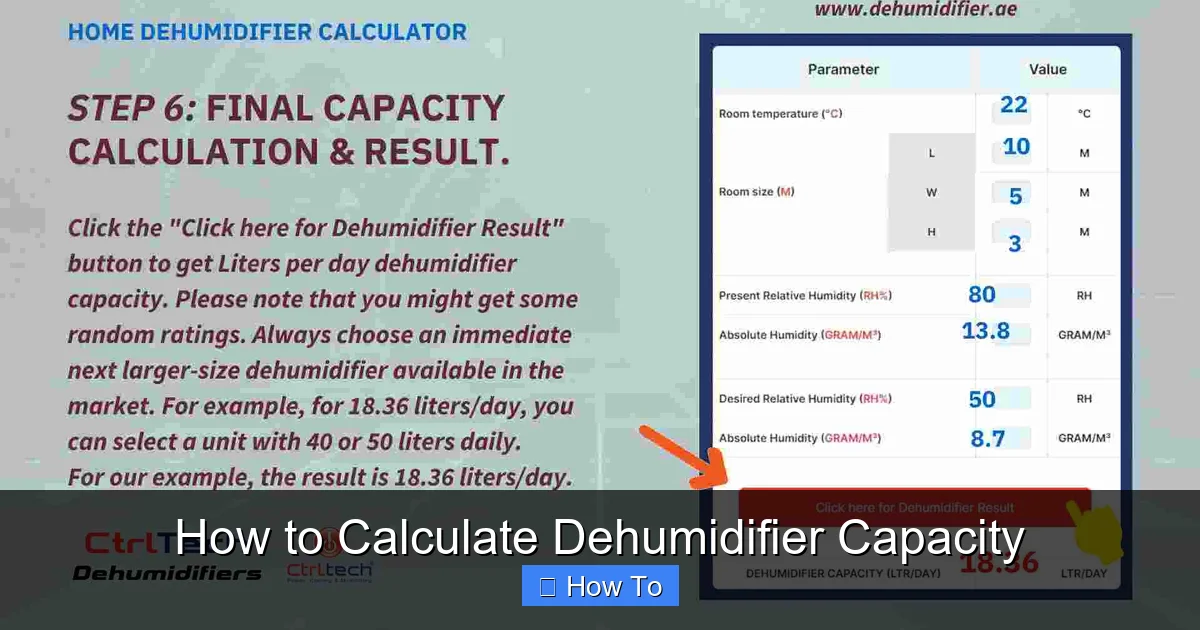
Choosing the right dehumidifier starts with calculating the correct capacity. This guide walks you through measuring your space, assessing humidity levels, and selecting a unit that matches your needs—ensuring efficiency, comfort, and energy savings.
Quick Answers to Common Questions
Tip/Question?
Should I buy a dehumidifier based on square footage alone?
No—always consider humidity level, room usage, and climate. A small, damp bathroom may need a stronger unit than a large, dry basement.
Tip/Question?
Can I use one dehumidifier for my whole house?
Only if your home has an open layout and central HVAC. Otherwise, use dedicated units in problem areas like basements or bathrooms.
Tip/Question?
How often should I empty the water bucket?
It depends on humidity and capacity. Check daily in high-moisture areas. Use a hose drain for continuous operation.
Tip/Question?
Is a higher pint rating always better?
Not necessarily. Too large a unit can short-cycle and waste energy. Match capacity to your actual needs.
Tip/Question?
Do dehumidifiers use a lot of electricity?
They use moderate energy. Look for ENERGY STAR models with high Energy Factor ratings to save on bills.
How to Calculate Dehumidifier Capacity: A Complete Step-by-Step Guide
Have you ever bought a dehumidifier only to find it’s either too weak to make a difference or so powerful it turns your basement into a desert? You’re not alone. One of the most common mistakes people make when buying a dehumidifier is choosing the wrong capacity. But don’t worry—this guide will show you exactly how to calculate dehumidifier capacity so you can pick the perfect unit for your space.
In this comprehensive how-to guide, you’ll learn how to measure your room, assess moisture levels, understand capacity ratings, and factor in real-world conditions like ventilation and usage. Whether you’re tackling a damp basement, a musty closet, or a humid bathroom, getting the capacity right ensures effective moisture control, better air quality, and lower energy bills. Let’s dive in.
Why Dehumidifier Capacity Matters
Dehumidifier capacity refers to how much moisture a unit can remove from the air in 24 hours, measured in pints per day (PPD). A 30-pint dehumidifier, for example, can extract up to 30 pints of water from the air daily. But why does this number matter so much?
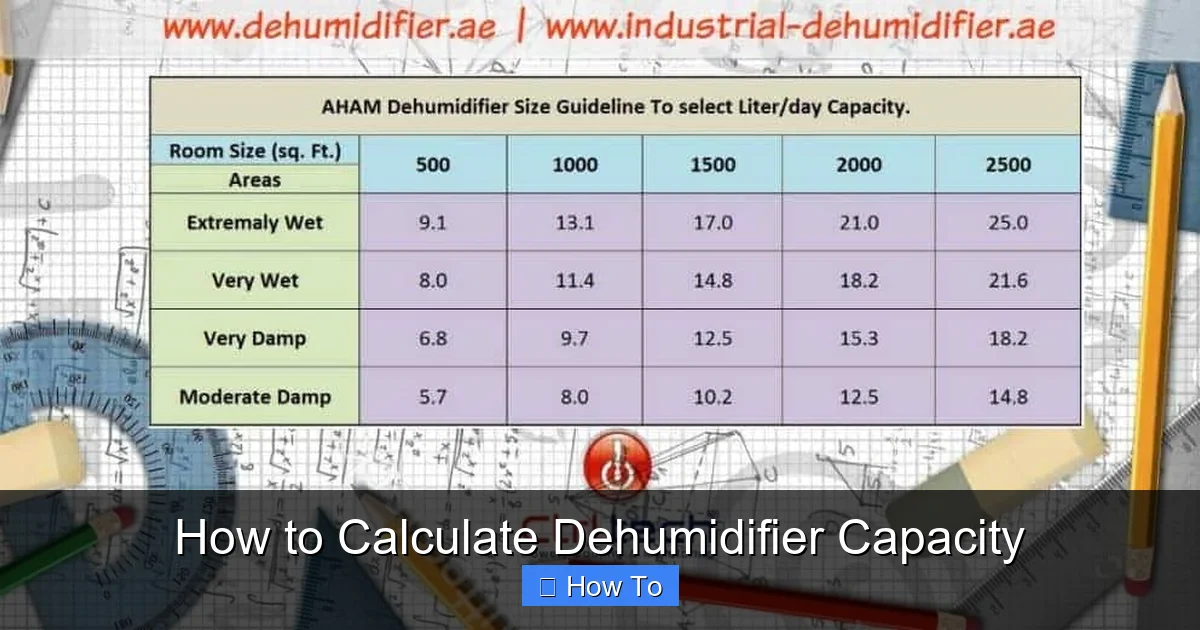
Visual guide about How to Calculate Dehumidifier Capacity
Image source: dehumidifiers-uae.ae
If your dehumidifier is too small, it will struggle to keep up with moisture buildup, leaving your space damp, promoting mold growth, and making the unit work overtime. On the other hand, a unit that’s too large may cycle on and off too quickly, failing to run long enough to properly dehumidify the air—and wasting energy in the process.
The goal is to find a dehumidifier with the right capacity for your specific space and humidity level. This balance ensures efficient operation, consistent comfort, and long-term savings. Let’s walk through the steps to get it right.
Step 1: Measure Your Room Size
The first step in calculating dehumidifier capacity is determining the size of the area you want to dehumidify. Most manufacturers base their recommendations on square footage, so start by measuring the length and width of the room.
Calculate Square Footage
Use a tape measure to find the length and width of the room in feet. Multiply these two numbers to get the square footage.
Example: A basement that is 20 feet long and 15 feet wide has an area of 300 square feet (20 × 15 = 300).
Consider Ceiling Height
While most guides focus on square footage, ceiling height also plays a role—especially in basements or large rooms. Higher ceilings mean more air volume, which can increase the moisture load.
If your ceiling is taller than the standard 8 feet, consider adjusting your capacity needs upward. For example, a room with 10-foot ceilings holds 25% more air than one with 8-foot ceilings. In such cases, you may need a slightly larger unit or one with higher airflow (measured in CFM—cubic feet per minute).
Account for Open Floor Plans
If your space is open-concept—like a living room that flows into a kitchen—measure the total combined area. Don’t just focus on one section. Dehumidifiers work best when treating the entire connected space.
Tip: Use a Laser Measurer
For accuracy, especially in large or irregularly shaped rooms, consider using a laser distance measurer. These tools reduce human error and make it easier to measure hard-to-reach areas.
Step 2: Assess the Humidity Level
Room size alone isn’t enough—you also need to know how damp the space actually is. A 300-square-foot bathroom with a leaking pipe needs a much stronger dehumidifier than the same-sized bedroom in a dry climate.
Use a Hygrometer
A hygrometer is a small, affordable device that measures relative humidity (RH) in the air. You can find digital hygrometers for under $20 at hardware stores or online. Place it in the room for 24 hours to get an accurate reading, avoiding direct sunlight or drafts.
Here’s how to interpret the results:
- Normal (30–50% RH): Comfortable, healthy indoor air. Minimal dehumidification needed.
- Mildly Damp (50–60% RH): Slight musty smell, occasional condensation. A small to medium dehumidifier may suffice.
- Moderately Damp (60–70% RH): Visible moisture, damp spots, frequent condensation. Requires a mid-to-high capacity unit.
- Severely Damp (70%+ RH): Standing water, mold growth, strong odor. Needs a high-capacity or commercial-grade dehumidifier.
Look for Visual and Sensory Clues
Even without a hygrometer, you can estimate humidity levels:
- Mildly damp: Occasional foggy windows, slight odor after showers.
- Moderately damp: Persistent dampness, peeling paint, warped wood.
- Severely damp: Puddles, visible mold, rust on metal surfaces.
Test at Different Times
Humidity can vary throughout the day. Test in the morning after a cool night and again in the evening after cooking or showering. Take the highest reading as your baseline.
Step 3: Match Capacity to Room Size and Humidity
Now that you know your room size and humidity level, it’s time to match them to the right dehumidifier capacity. Most manufacturers provide sizing charts, but here’s a general guideline based on industry standards:
General Capacity Guidelines (Pints per Day)
| Room Size (sq ft) | Mildly Damp | Moderately Damp | Severely Damp |
|---|---|---|---|
| 500 or less | 20–30 pints | 30–50 pints | 50+ pints |
| 500–1,000 | 30–50 pints | 50–70 pints | 70+ pints |
| 1,000–1,500 | 50–70 pints | 70–90 pints | 90+ pints |
| 1,500+ | 70+ pints | 90+ pints | Commercial unit |
Example: You have a 600-square-foot basement with moderate dampness (65% RH). According to the chart, you’ll need a 50–70 pint dehumidifier. A 60-pint model would be a solid choice.
Adjust for Extreme Conditions
If your space has any of the following, consider increasing capacity by one size:
- Frequent water intrusion (e.g., flooding, leaks)
- Poor ventilation or no windows
- High occupancy (more people = more moisture from breathing and showers)
- Located in a humid climate (e.g., Southeast U.S., coastal areas)
- Used for laundry drying or as a workshop
Step 4: Consider Additional Factors
Room size and humidity are the basics, but real-world conditions can affect performance. Here are other variables to consider when calculating dehumidifier capacity.
Climate and Season
If you live in a humid region like Florida or Louisiana, your dehumidifier will work harder year-round. In contrast, desert climates may only need dehumidification during rainy seasons. Choose a unit that can handle your worst-case scenario.
Room Usage
A basement used for laundry, a home gym, or a workshop generates more moisture than a storage room. Activities like washing clothes, exercising, or using power tools release water vapor into the air. If your space is actively used, opt for a higher capacity.
Ventilation and Airflow
Rooms with poor airflow (e.g., sealed basements) trap moisture. A dehumidifier with a built-in fan or higher CFM rating can help circulate air more effectively. Look for models with adjustable fan speeds.
Heat Sources
Water heaters, furnaces, or space heaters increase evaporation and humidity. If your dehumidifier is near such sources, it may need to work harder. Consider placement and capacity accordingly.
Insulation and Sealing
Well-insulated, tightly sealed homes retain moisture better but also reduce outdoor humidity infiltration. If your space is drafty, outdoor air may introduce more moisture, increasing the load.
Step 5: Understand Dehumidifier Specifications
Not all dehumidifiers are created equal. When comparing models, look beyond just the pint rating. Here’s what to check:
Actual vs. AHAM Ratings
Many manufacturers list capacity based on AHAM (Association of Home Appliance Manufacturers) standards: 65°F temperature and 60% relative humidity. But real-world conditions are often warmer and more humid. A 30-pint AHAM-rated unit may only remove 20 pints in a hot, damp basement.
Tip: Look for “real-world” performance data or choose a unit rated for higher temperatures (e.g., 80°F or 90°F) if your space is warm.
Energy Efficiency (Energy Factor)
The Energy Factor (EF) measures how efficiently a dehumidifier removes moisture per kilowatt-hour. Higher EF = lower operating cost. Look for units with an EF of 1.5 or higher.
Auto-Defrost and Low-Temp Operation
If your space drops below 65°F (like an unheated garage), choose a model with auto-defrost. Standard units can ice up and stop working in cold conditions.
Drainage Options
Most dehumidifiers have a bucket that needs emptying. For continuous operation, look for models with a built-in pump or hose drain. This is essential for basements or unattended spaces.
Step 6: Use Online Calculators and Manufacturer Tools
Many brands offer online dehumidifier sizing tools. These calculators ask for room size, humidity level, and usage to recommend a model. While helpful, treat them as starting points—not final answers.
For example, Frigidaire, Honeywell, and GE all have free calculators on their websites. Input your details and compare their suggestions with the guidelines above.
Pro Tip: Always round up. If a calculator suggests a 40-pint unit, consider a 50-pint model for better performance and longevity.
Troubleshooting Common Sizing Mistakes
Even with careful calculation, things can go wrong. Here’s how to fix common issues:
Problem: Dehumidifier Runs Constantly But Doesn’t Reduce Humidity
Cause: Unit is too small for the space or humidity level.
Solution: Upgrade to a higher-capacity model or add a second unit. Check for hidden water sources (e.g., leaks, poor drainage).
Problem: Room Feels Too Dry or Static
Cause: Unit is too large or running nonstop.
Solution: Use a humidistat to set a target humidity (ideally 40–50%). Turn off the unit periodically or switch to a smaller model.
Problem: Unit Freezes Up in Cold Spaces
Cause: Operating below recommended temperature.
Solution: Use a low-temperature or basement-specific dehumidifier with auto-defrost.
Problem: Musty Smell Persists
Cause: Inadequate capacity or poor air circulation.
Solution: Increase capacity, clean the filter regularly, and use a fan to improve airflow.
Final Tips for Choosing the Right Dehumidifier
Before you buy, keep these final tips in mind:
- Buy for the worst case: Size your dehumidifier for the most humid conditions you expect, not average ones.
- Check the warranty: A longer warranty often indicates better build quality.
- Read reviews: Look for real-user feedback on performance in similar conditions.
- Consider smart features: Wi-Fi-enabled models let you monitor and control humidity remotely.
- Maintain regularly: Clean filters and coils every few months to ensure peak performance.
Conclusion
Calculating dehumidifier capacity doesn’t have to be complicated. By measuring your space, assessing humidity, and factoring in real-world conditions, you can choose a unit that keeps your home comfortable, healthy, and energy-efficient. Remember: the right capacity is the key to effective moisture control.
Don’t guess—calculate. Use the steps in this guide to make an informed decision. Whether you’re fighting basement dampness or bathroom mold, the perfect dehumidifier is out there. With the right size, you’ll enjoy fresher air, fewer allergens, and peace of mind.