

Choosing the right dehumidifier starts with knowing your space and moisture levels. This guide walks you through measuring your area, assessing humidity, and selecting the perfect unit for comfort and efficiency.
Quick Answers to Common Questions
What’s the fastest way to check humidity levels?
Use a digital hygrometer—they’re affordable, accurate, and give instant readings. Place one in the room for 24 hours to get a reliable average.
Can I use one dehumidifier for multiple rooms?
Yes, if the rooms are connected and within the unit’s coverage area. For separate rooms, consider a portable model or multiple smaller units.
Should I run my dehumidifier all the time?
Only if humidity stays above 50%. Use a humidistat to automate it, or run it during peak humidity times (e.g., after showers or on rainy days).
Is a bigger dehumidifier always better?
Not necessarily. An oversized unit cycles too often, wasting energy. Choose based on your space and moisture level—slightly larger is okay, but avoid going too big.
Do dehumidifiers help with allergies?
Yes! By reducing humidity, they inhibit mold and dust mites—two common allergens. Pair with an air purifier for even better results.
How to Calculate Dehumidifier Needs: A Complete Step-by-Step Guide
If you’ve ever walked into a damp basement, felt sticky air in your bedroom, or noticed mold growing in the corners of your bathroom, you know how uncomfortable and unhealthy excess moisture can be. A dehumidifier can make a world of difference—but only if you choose the right one. Buying a unit that’s too small won’t solve the problem, and one that’s too large wastes energy and money. That’s why learning how to calculate dehumidifier needs is essential.
In this guide, we’ll walk you through every step to determine the perfect dehumidifier for your home. You’ll learn how to measure your space, assess humidity levels, understand capacity ratings, and make smart decisions about placement and features. Whether you’re dealing with a musty crawl space, a humid living room, or a damp garage, this guide will help you pick a dehumidifier that works efficiently and effectively.
By the end, you’ll have a clear plan to calculate your dehumidifier needs and enjoy cleaner, healthier, more comfortable air in your home.
Step 1: Measure the Area You Want to Dehumidify
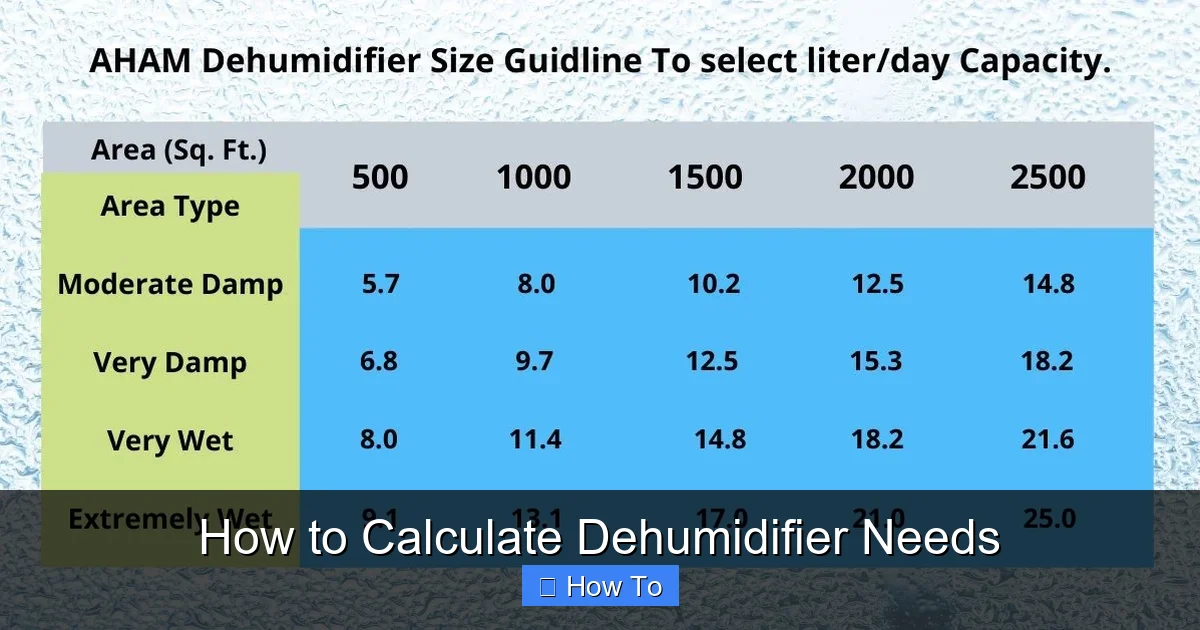
Visual guide about How to Calculate Dehumidifier Needs
Image source: 1.bp.blogspot.com
The first step in calculating your dehumidifier needs is figuring out the size of the space you want to treat. Most dehumidifiers are rated by the square footage they can effectively cover, so getting an accurate measurement is crucial.
Gather Your Tools
You’ll need:
– A measuring tape
– A notepad or smartphone to record measurements
– A calculator (or use your phone)
Calculate Square Footage
Start by measuring the length and width of the room in feet. Multiply these two numbers to get the square footage.
For example:
– A basement that’s 20 feet long and 30 feet wide = 600 square feet.
– A bedroom that’s 12 feet by 15 feet = 180 square feet.
If the room is irregularly shaped, divide it into rectangles, calculate each section, and add them together.
Consider Ceiling Height
Most standard rooms have 8-foot ceilings. If your ceiling is higher—say, 9 or 10 feet—the room holds more air, which means more moisture to remove. In such cases, you may need a more powerful unit or consider the room as slightly larger than its square footage suggests.
For example, a 600-square-foot room with a 10-foot ceiling has 6,000 cubic feet of air (600 × 10), compared to 4,800 cubic feet with an 8-foot ceiling. That’s 25% more air to dehumidify.
Tip: If your ceiling is over 8 feet, add 10–20% to your calculated square footage when choosing a dehumidifier.
Account for Open Floor Plans
If the room connects to another space—like a kitchen opening into a living room—include both areas in your measurement. Air and moisture flow freely between open spaces, so treating only part of the area may not be effective.
Step 2: Assess the Humidity Level
Size matters, but so does moisture. A 500-square-foot basement in Florida will need a much stronger dehumidifier than the same size room in Arizona. That’s why assessing humidity levels is a critical part of calculating your dehumidifier needs.
Use a Hygrometer
A hygrometer is a small, inexpensive device that measures relative humidity (RH) in the air. You can buy one for under $20 at most hardware or home improvement stores, or use a smart thermostat that includes humidity readings.
Place the hygrometer in the room for 24 hours, checking it at different times of day. Humidity can fluctuate based on weather, showers, cooking, or HVAC use.
Understand Ideal Humidity Levels
The ideal indoor relative humidity is between 30% and 50%. Here’s a quick guide:
– Below 30%: Air is too dry—can cause dry skin, irritated sinuses.
– 30–50%: Comfortable and healthy.
– 50–60%: Slightly humid—may feel sticky.
– Above 60%: High risk of mold, dust mites, and musty odors.
If your readings are consistently above 60%, you have a moisture problem that needs addressing.
Identify Problem Areas
Some rooms are naturally more humid than others. Check these common trouble spots:
– Basements: Often damp due to ground moisture and poor ventilation.
– Bathrooms: High humidity from showers and baths.
– Laundry rooms: Moisture from washing machines and dryers (especially if vented indoors).
– Kitchens: Steam from cooking and dishwashing.
– Crawl spaces: Prone to condensation and mold.
Even if the rest of your home is fine, one humid room can affect air quality and comfort.
Look for Signs of Excess Moisture
If you don’t have a hygrometer yet, watch for these clues:
– Condensation on windows
– Musty or mildew smells
– Peeling paint or wallpaper
– Warped wood or flooring
– Visible mold or mildew
These signs indicate high humidity and the need for a dehumidifier.
Step 3: Determine the Right Capacity (Pints per Day)
Dehumidifiers are rated by how many pints of moisture they can remove in 24 hours. This is called the pint-per-day (PPD) rating. Choosing the right capacity is the heart of calculating your dehumidifier needs.
Match Capacity to Room Size and Conditions
Most manufacturers provide guidelines based on square footage and humidity level. Here’s a general rule of thumb:
| Room Size (sq ft) | Slightly Damp | Moderately Damp | Very Damp/Wet |
|——————-|—————|—————–|—————-|
| Up to 500 | 10–14 PPD | 14–20 PPD | 20–30 PPD |
| 500–1,000 | 14–20 PPD | 20–30 PPD | 30–40 PPD |
| 1,000–1,500 | 20–30 PPD | 30–40 PPD | 40–50 PPD |
| 1,500–2,000 | 30–40 PPD | 40–50 PPD | 50+ PPD |
Slightly damp: Feels humid occasionally, no standing water, RH around 50–60%.
Moderately damp: Frequent humidity, occasional condensation, RH 60–70%.
Very damp/wet: Standing water, mold, strong odors, RH above 70%.
For example:
– A 700-square-foot basement with occasional dampness and RH around 65% would need a 20–30 PPD unit.
– A 1,200-square-foot crawl space with standing water and mold would need a 40–50 PPD model.
Adjust for Extreme Conditions
If your space has:
– Poor insulation
– Frequent flooding or leaks
– High outdoor humidity (e.g., coastal areas)
– Multiple moisture sources (e.g., indoor pool, greenhouse)
…you may need to go one size up in capacity.
Also, consider seasonal changes. Humidity is usually higher in summer, so if you’re buying in spring, plan for peak demand.
Don’t Overbuy (But Don’t Underbuy Either)
A dehumidifier that’s too small will run constantly, wear out faster, and fail to control humidity. One that’s too large will cycle on and off frequently, which can reduce efficiency and increase wear.
However, slightly oversized is better than undersized—especially in very damp areas.
Step 4: Consider Airflow and Ventilation
Even the best dehumidifier won’t work well if air can’t circulate properly. Airflow affects how quickly moisture is removed and how evenly humidity is controlled.
Check for Obstructions
Make sure furniture, boxes, or clutter aren’t blocking vents or airflow in the room. Dehumidifiers need space to pull in moist air and release dry air.
Evaluate Ventilation
Rooms with poor ventilation—like basements with no windows or sealed crawl spaces—trap moisture. If possible:
– Use exhaust fans in bathrooms and kitchens.
– Open windows on dry, low-humidity days.
– Install vents or fans in enclosed spaces.
If ventilation is limited, you may need a more powerful dehumidifier or consider adding mechanical ventilation.
Insulation and Sealing
Cold surfaces (like concrete basement walls) can cause condensation, increasing moisture levels. Proper insulation and sealing gaps around doors and windows can reduce the load on your dehumidifier.
For example, a basement with uninsulated walls may need a 30 PPD unit, but with insulation, a 20 PPD model might suffice.
Step 5: Factor in Climate and Season
Your local climate plays a big role in calculating dehumidifier needs. Humidity levels vary dramatically by region and season.
Regional Differences
– Humid climates (e.g., Southeast U.S., Gulf Coast): High year-round humidity—opt for higher-capacity units.
– Dry climates (e.g., Southwest, Mountain West): Lower humidity—smaller units may be sufficient.
– Temperate climates (e.g., Midwest, Northeast): Seasonal variation—consider a unit with adjustable settings.
Seasonal Use
In many areas, humidity peaks in summer. If you only need a dehumidifier part-time, you might choose a smaller, portable unit. For year-round use—especially in basements or crawl spaces—invest in a larger, more durable model.
Some dehumidifiers have built-in humidistats and auto-defrost features for cold weather use. These are ideal for unheated spaces like garages or winterized cabins.
Step 6: Choose the Right Type of Dehumidifier
Not all dehumidifiers are the same. The type you choose affects performance, convenience, and cost.
Refrigerant (Compressor) Dehumidifiers
Most common type. Work by cooling air to condense moisture. Best for:
– Warm, humid environments (above 65°F)
– Living spaces, basements, garages
Pros: Affordable, effective in typical home conditions.
Cons: Less efficient in cold temperatures; can freeze up below 60°F.
Desiccant Dehumidifiers
Use a moisture-absorbing material (like silica gel) to remove humidity. Best for:
– Cold spaces (below 60°F)
– Crawl spaces, cabins, RVs
Pros: Work well in low temperatures; quiet operation.
Cons: Higher energy use; less effective in very humid conditions.
Whole-House Dehumidifiers
Installed into your HVAC system. Ideal for:
– Large homes
– Consistent humidity problems throughout
Pros: Treats entire home; automatic operation.
Cons: Expensive; requires professional installation.
Portable vs. Permanent
– Portable: Easy to move, great for single rooms or seasonal use.
– Permanent: Hardwired or plumbed, better for basements or crawl spaces.
Choose based on your needs and how often you’ll use the unit.
Step 7: Consider Noise, Energy Use, and Features
Once you’ve calculated your dehumidifier needs, it’s time to think about comfort and efficiency.
Noise Level
Dehumidifiers can be noisy, especially older models. Look for units with a noise rating under 50 decibels (dB) if placing near bedrooms or living areas. Desiccant models are generally quieter than compressor types.
Energy Efficiency
Check the Energy Factor (liters of water removed per kilowatt-hour). Higher is better. Look for ENERGY STAR certified models—they use 10–20% less energy than standard units.
Example: A 30 PPD ENERGY STAR dehumidifier might use 400 watts, while a non-certified model uses 500 watts.
Useful Features
– Built-in humidistat: Automatically maintains your desired humidity level.
– Auto-defrost: Prevents freezing in cold temperatures.
– Continuous drainage: Hooks up to a hose so you don’t have to empty the tank.
– Timer and remote control: For convenience and scheduling.
– Air filter: Removes dust and allergens as it dehumidifies.
These features can improve performance and reduce maintenance.
Step 8: Proper Placement and Maintenance
Even the best dehumidifier won’t work well if it’s placed incorrectly or neglected.
Where to Place Your Dehumidifier
– Central location: Allows even air circulation.
– At least 6–12 inches from walls and furniture: Ensures proper airflow.
– Near moisture sources: Like washing machines or sump pumps.
– On a flat, stable surface: Prevents vibration and tipping.
Avoid placing it in corners or behind furniture.
Drainage Options
– Gravity drain: Use a hose to drain water into a floor drain or sump pump.
– Pump drain: For units that can’t gravity-drain (e.g., elevated areas).
– Manual emptying: Only for small tanks—requires frequent attention.
Continuous drainage is best for 24/7 operation.
Regular Maintenance
– Clean the air filter monthly.
– Empty the water tank regularly (if not using continuous drain).
– Wipe down the exterior and coils to prevent mold.
– Check for frost buildup in cold weather.
Proper care extends the life of your dehumidifier and keeps it running efficiently.
Troubleshooting Common Issues
Even with the right dehumidifier, problems can arise. Here’s how to fix common issues:
Dehumidifier Isn’t Removing Moisture
– Check if the room is too large or too humid for the unit.
– Ensure airflow isn’t blocked.
– Clean the filter and coils.
– Verify the humidistat is set correctly.
Unit Freezes Up
– Common in cold spaces with refrigerant models.
– Switch to a desiccant dehumidifier or one with auto-defrost.
– Move the unit to a warmer area if possible.
Water Tank Overflows
– Empty it more often.
– Switch to continuous drainage.
– Check for a clogged hose or pump.
Loud or Unusual Noises
– Ensure the unit is level and stable.
– Check for loose parts or debris in the fan.
– Contact the manufacturer if under warranty.
High Energy Bills
– Make sure the unit is the right size.
– Use a timer to run it only when needed.
– Upgrade to an ENERGY STAR model.
Conclusion
Calculating your dehumidifier needs doesn’t have to be complicated. By measuring your space, checking humidity levels, matching capacity to conditions, and considering airflow, climate, and features, you can choose a unit that keeps your home comfortable and healthy.
Remember: the goal isn’t just to remove moisture—it’s to create a balanced, breathable environment where mold, dust mites, and musty odors can’t thrive. With the right dehumidifier in the right place, you’ll enjoy better air quality, protect your home’s structure, and feel more comfortable year-round.
Take the time to assess your needs carefully. A little planning now saves money, energy, and frustration later. And once your dehumidifier is working efficiently, you can finally say goodbye to dampness and hello to fresh, dry air.