
Choosing the right dehumidifier size ensures optimal moisture control, energy efficiency, and long-term air quality. This guide walks you through calculating the correct capacity based on room size, humidity level, and environmental factors—so you can pick the perfect unit without guesswork.
Quick Answers to Common Questions
Tip/Question?
Can I use one dehumidifier for my entire house?
It depends on your home’s size and layout. Portable units work best for single rooms or basements. For whole-house dehumidification, consider a system integrated with your HVAC.
Tip/Question?
Should I buy a larger dehumidifier than recommended?
Not necessarily. An oversized unit may short-cycle, wasting energy and not removing moisture effectively. Size up only if you have high air exchange, extreme humidity, or plan to finish the space later.
Tip/Question?
How often should I empty the water tank?
It depends on the unit and humidity level. Most portable models need emptying every 12–24 hours. Use a built-in pump or hose for continuous drainage to avoid frequent maintenance.
Tip/Question?
Is a higher pint rating always better?
No. A higher rating means more moisture removal, but only if matched to your space. Too much capacity can lead to inefficient operation and higher energy bills.
Tip/Question?
Can I use a dehumidifier in winter?
Yes, but only if the temperature stays above 65°F. In colder spaces, choose a model with auto-defrost or rated for low-temperature operation.
How to Calculate Dehumidifier Size: A Complete Step-by-Step Guide
If you’ve ever walked into a damp basement and felt that musty smell hit you like a wall, you know how uncomfortable and unhealthy excess moisture can be. Mold, mildew, dust mites, and even structural damage can result from high humidity. A dehumidifier is your best defense—but only if it’s the right size.
Choosing a dehumidifier that’s too small means it will run constantly and still fail to control moisture. One that’s too large may cycle on and off too quickly, wasting energy and not running long enough to remove moisture effectively. That’s why learning how to calculate dehumidifier size is essential.
In this guide, you’ll learn exactly how to determine the correct dehumidifier size for your home, basement, crawl space, or any other area. We’ll walk you through measuring your space, assessing humidity levels, understanding pint capacity, and factoring in real-world conditions like insulation, climate, and usage patterns. By the end, you’ll be able to confidently select a dehumidifier that keeps your air fresh, dry, and healthy—without overspending or underperforming.
Step 1: Measure the Square Footage of the Area
The first step in calculating dehumidifier size is determining how much space you need to dehumidify. This means measuring the square footage of the room or area.
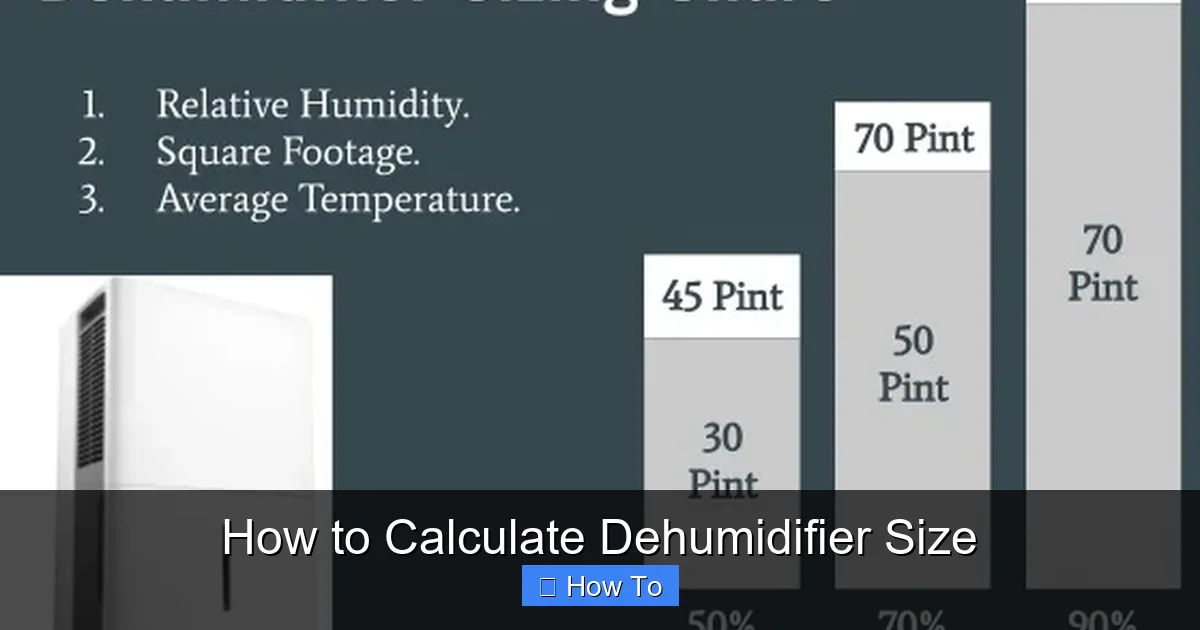
Visual guide about How to Calculate Dehumidifier Size
Image source: learnmetrics.com
How to Calculate Square Footage
To find the square footage, multiply the length of the room by its width. For example, a basement that’s 20 feet long and 25 feet wide equals 500 square feet (20 × 25 = 500).
If the space is irregularly shaped, divide it into rectangles, calculate each section separately, and then add them together. For instance, an L-shaped room might be split into two rectangles: one 15 ft × 10 ft (150 sq. ft.) and another 10 ft × 10 ft (100 sq. ft.), totaling 250 sq. ft.
Don’t Forget Ceiling Height (For Basements and Crawl Spaces)
While square footage is the standard measure, ceiling height matters in areas with high moisture, like basements or crawl spaces. A room with an 8-foot ceiling holds less air than one with a 10-foot ceiling, but if the higher room is poorly ventilated or prone to flooding, it may actually need more dehumidification power.
As a rule of thumb, if your ceiling is over 8 feet tall and the space is damp, consider sizing up slightly. For crawl spaces, measure the length and width, but also note whether it’s enclosed or partially open, as this affects airflow and moisture buildup.
Practical Example
Let’s say you’re dehumidifying a basement that’s 30 ft × 40 ft with a 9-foot ceiling. That’s 1,200 square feet. Because it’s a basement with high humidity potential, you’ll want to account for the extra air volume and moisture risk when selecting your unit.
Step 2: Determine the Humidity Level
Not all damp spaces are created equal. A slightly musty closet doesn’t need the same dehumidifier as a flood-prone basement. That’s why assessing the humidity level is a critical part of calculating dehumidifier size.
Use a Hygrometer to Measure Humidity
A hygrometer is a small, inexpensive device that measures relative humidity (RH) in the air. You can find digital hygrometers at most hardware stores or online for under $20. Place it in the area you want to dehumidify and let it sit for 24 hours to get an accurate reading.
Ideal indoor humidity levels range from 30% to 50%. Here’s how to interpret your readings:
- 30–50%: Normal. No dehumidifier needed unless you’re in a very humid climate or have specific health concerns.
- 50–60%: Moderately damp. You may notice occasional musty smells or condensation on windows. A small to mid-sized dehumidifier is recommended.
- 60–70%: Very damp. Visible moisture, damp spots, or mildew may be present. A larger unit is necessary.
- 70%+: Wet or flooded. This indicates severe moisture problems, possibly from leaks, poor drainage, or high groundwater. A high-capacity dehumidifier is essential, and you should also address the source of the water.
Visual and Sensory Clues
If you don’t have a hygrometer yet, you can estimate humidity levels using these signs:
- Mildly damp: Slight musty odor, occasional condensation on cold surfaces.
- Moderately damp: Persistent dampness, damp spots on walls or floors, peeling paint.
- Very damp: Visible mold, standing water after rain, warped wood.
- Wet: Flooding, soaked carpet, water stains, or a constant “wet” feeling in the air.
Example Scenario
Imagine your basement reads 65% humidity on the hygrometer, and you’ve noticed small patches of mold near the foundation wall. This falls into the “very damp” category, so you’ll need a dehumidifier with higher pint capacity than someone with a 55% reading and no visible moisture.
Step 3: Match Pint Capacity to Your Space and Conditions
Dehumidifiers are rated by “pint capacity,” which refers to how many pints of moisture they can remove from the air in 24 hours under standard conditions (80°F and 60% RH). This number helps you match the unit’s power to your needs.
Understanding Pint Ratings
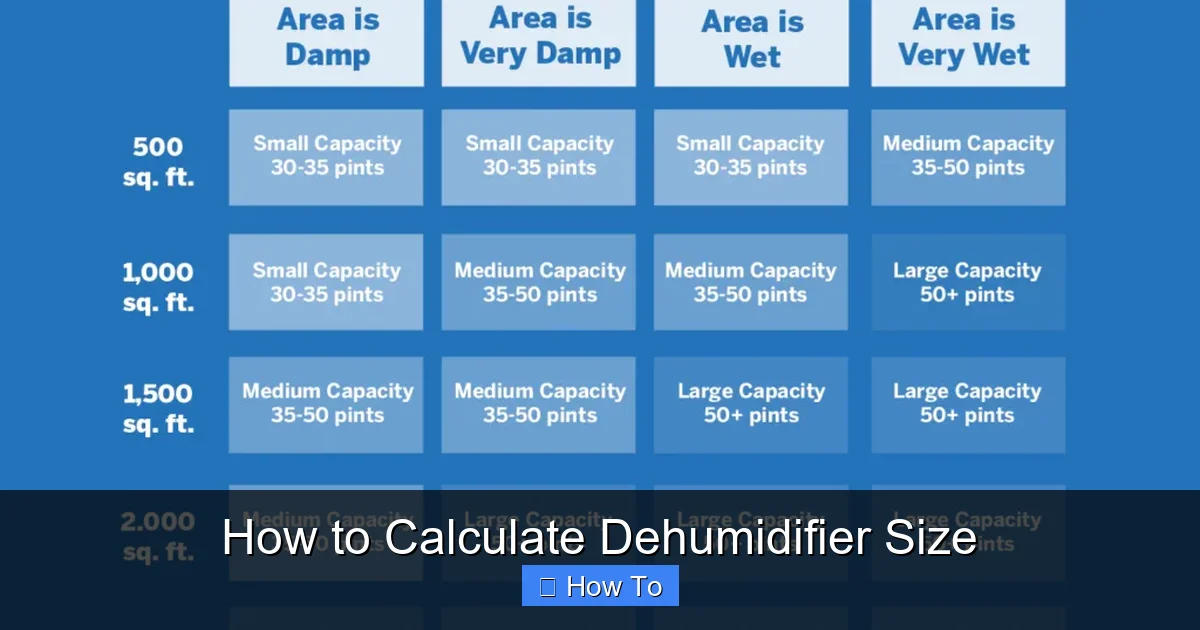
Don’t assume a higher pint rating always means better performance. The key is matching the capacity to your space size and humidity level. Here’s a general guideline based on the Association of Home Appliance Manufacturers (AHAM):
| Room Size (sq. ft.) | Humidity Level | Recommended Pint Capacity |
|---|---|---|
| 500 | Mildly damp | 20–30 pints |
| 500 | Moderately damp | 30–40 pints |
| 500 | Very damp | 40–50 pints |
| 1,000 | Mildly damp | 30–40 pints |
| 1,000 | Moderately damp | 40–50 pints |
| 1,000 | Very damp | 50–70 pints |
| 1,500+ | Very damp to wet | 70+ pints |
Note: These are AHAM standard ratings. Real-world performance may vary based on temperature, airflow, and unit efficiency.
Adjust for Real-World Conditions
The AHAM ratings assume ideal conditions, but your basement might be colder or more humid. Here’s how to adjust:
- Colder spaces (below 65°F): Most dehumidifiers lose efficiency in cold air. If your basement is chilly, consider a unit with a defrost function or choose a model rated for low temperatures (e.g., “cold climate” dehumidifiers).
- Poor insulation or frequent door openings: These increase moisture load. Size up by 10–20% to compensate.
- High occupancy or pets: More people and animals mean more moisture from breathing and evaporation. Add 5–10 pints to your estimate.
Practical Example
You have a 1,000 sq. ft. basement that’s moderately damp (60% humidity) and used as a laundry room. Based on the chart, a 40–50 pint unit is recommended. But because it’s a laundry room (high moisture from washing machines), you might opt for a 50-pint model to handle the extra load.
Step 4: Consider Air Exchange and Ventilation
How often air moves in and out of a space affects how hard your dehumidifier must work. A tightly sealed basement with minimal airflow will retain moisture longer, while a garage with an open door will constantly introduce humid outside air.
Evaluate Airflow and Sealing
Ask yourself:
- Are windows or doors frequently opened?
- Is the space well-insulated and sealed?
- Are there vents, fans, or HVAC ducts affecting airflow?
If the area is poorly sealed or has high air exchange (like a workshop with a rolling door), your dehumidifier will need to work harder. In these cases, choose a unit with a higher pint capacity or consider using a whole-house dehumidifier connected to your HVAC system.
Ventilation Matters
Good ventilation helps reduce the load on your dehumidifier. If possible, use exhaust fans in bathrooms and kitchens, and ensure crawl spaces have proper vents. However, in humid climates, venting can actually increase moisture, so a sealed, dehumidified space may be better.
Example
A 600 sq. ft. garage used for woodworking has a large roll-up door opened daily. Even though it’s not “damp” in the traditional sense, the constant influx of humid outdoor air means a 30-pint unit might struggle. A 40-pint model with a built-in pump for continuous drainage would be a smarter choice.
Step 5: Factor in Climate and Seasonal Changes
Your local climate plays a big role in how much moisture your dehumidifier must remove. Homes in the Southeast U.S., for example, face much higher humidity than those in the Southwest.
Regional Humidity Considerations
If you live in a humid climate (e.g., Florida, Louisiana, or the Gulf Coast), your dehumidifier will run more often and need greater capacity. In contrast, arid regions may only need dehumidification during rainy seasons or in specific areas like basements.
Seasonal Adjustments
Humidity levels fluctuate throughout the year. You might only need a dehumidifier in summer, or you may require one year-round in a basement. If you’re buying a unit for seasonal use, consider a portable model. For year-round needs, a larger, more efficient unit is better.
Example
A home in Seattle has a 800 sq. ft. basement that’s moderately damp in winter but dry in summer. A 30-pint unit used seasonally may suffice. But in Houston, the same basement would likely need a 50-pint unit running constantly from spring to fall.
Step 6: Choose the Right Features for Your Needs
Once you’ve calculated the right size, consider features that improve performance, convenience, and energy efficiency.
Key Features to Look For
- Built-in pump: Allows continuous drainage without needing a nearby floor drain. Great for basements.
- Humidistat: Lets you set a target humidity level. The unit turns on/off automatically to maintain it.
- Auto-defrost: Prevents ice buildup in cold environments.
- ENERGY STAR rating: Ensures energy efficiency. These models use 15–30% less energy than standard units.
- Washable filter: Reduces maintenance and improves air quality.
- Quiet operation: Look for models under 50 decibels if placing in living areas.
Portable vs. Whole-House Dehumidifiers
Portable units are ideal for single rooms or basements. Whole-house models integrate with your HVAC system and dehumidify your entire home. They’re more expensive but more efficient for large or multi-level homes.
Troubleshooting Common Sizing Mistakes
Even with careful calculations, mistakes happen. Here’s how to fix common issues:
Dehumidifier Runs Constantly But Doesn’t Dry the Air
This usually means the unit is too small for the space or humidity level. Check your square footage and humidity readings. If both are correct, ensure the unit is placed in a central location with good airflow. Also, clean the filter and coils regularly.
Unit Cycles On and Off Too Quickly
A dehumidifier that turns on for a few minutes and then off is likely oversized. It removes surface moisture quickly but doesn’t run long enough to pull moisture from walls or furniture. Consider downsizing or using a timer to run it in longer cycles.
Ice Builds Up on the Coils
This happens in cold environments when the unit isn’t designed for low temperatures. Switch to a cold-climate dehumidifier or move the unit to a warmer area.
Mold Still Growing After Installation
If mold persists, the dehumidifier may not be the only solution. Check for leaks, poor drainage, or inadequate ventilation. You may need to combine dehumidification with waterproofing or improved airflow.
Conclusion
Calculating dehumidifier size doesn’t have to be complicated. By measuring your space, assessing humidity, matching pint capacity to conditions, and considering real-world factors like climate and usage, you can choose a unit that keeps your home dry and healthy.
Remember: a properly sized dehumidifier saves energy, prevents mold, and improves indoor air quality. Don’t guess—calculate. Use this guide to make an informed decision, and enjoy the comfort of a moisture-free environment year-round.