
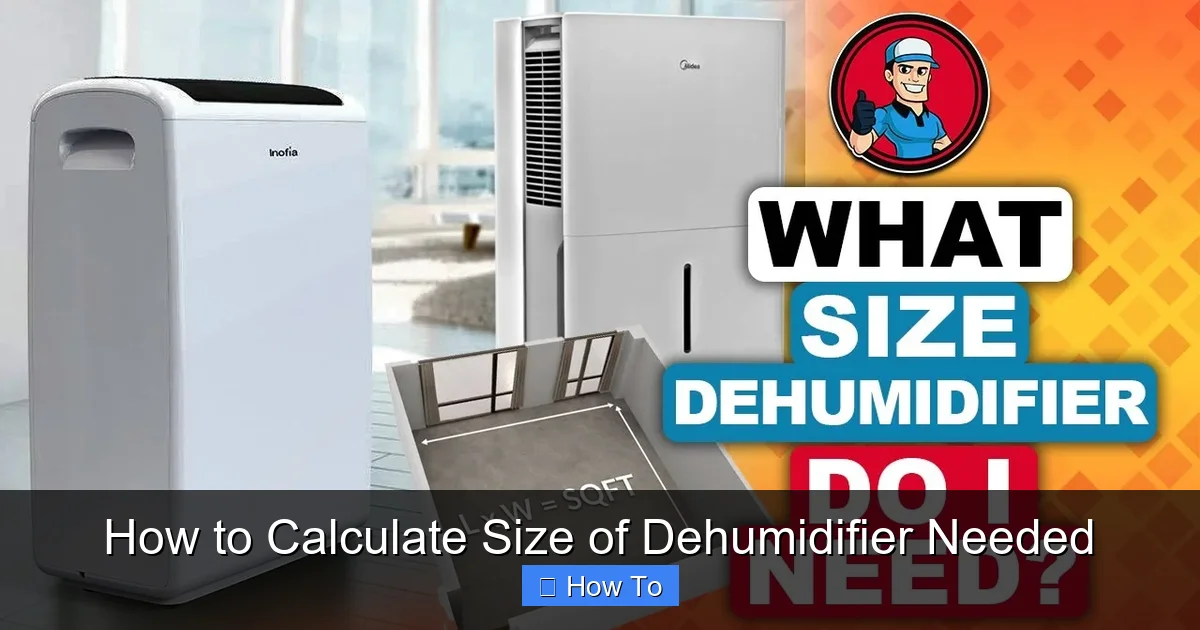
Choosing the right dehumidifier starts with knowing how to calculate the size of dehumidifier needed. This guide walks you through room size, humidity levels, and usage needs to help you pick the perfect unit for maximum comfort and efficiency.
Quick Answers to Common Questions
Tip/Question?
Can I use one dehumidifier for multiple rooms?
Yes, if the rooms are connected and open to each other. But for separate, enclosed spaces, you’ll need one unit per area or a portable model you can move around.
Tip/Question?
How often should I run my dehumidifier?
Run it continuously during humid seasons or when humidity is high. Use a humidistat to automate it and save energy.
Tip/Question?
Is a higher pint rating always better?
Not necessarily. Too high can cause short cycling. Match the rating to your room size and dampness level for best results.
Tip/Question?
Do dehumidifiers use a lot of electricity?
They use moderate energy. Energy Star models are more efficient. Look for units with high energy factor ratings to save on bills.
Tip/Question?
Can I install a dehumidifier myself?
Yes, most are plug-and-play. Just place them in the right spot, set the humidity level, and connect a drain hose if needed.
How to Calculate Size of Dehumidifier Needed
Have you ever walked into a room and felt that sticky, heavy air—like you’re breathing through a wet towel? Or maybe you’ve noticed mold creeping into corners, musty smells in the basement, or condensation fogging up your windows? These are all signs of excess humidity, and they’re not just uncomfortable—they can damage your home and even affect your health.
The good news? A dehumidifier can fix it. But here’s the catch: not all dehumidifiers are created equal. If you buy one that’s too small, it’ll struggle to keep up. If you buy one that’s too big, it’ll waste energy and cycle on and off too quickly, reducing its effectiveness. So how do you find the sweet spot?
In this complete guide, you’ll learn how to calculate the size of dehumidifier needed for any room in your home. We’ll walk you through measuring your space, evaluating humidity levels, understanding capacity ratings, and choosing the right features—all in simple, everyday language. By the end, you’ll know exactly what to look for when shopping, so you can breathe easier and protect your home.
Step 1: Measure the Room Size
The first step in calculating the size of dehumidifier you need is figuring out how much space you’re dealing with. Most dehumidifiers are rated by the square footage they can effectively cover. So, grab a tape measure and let’s get started.
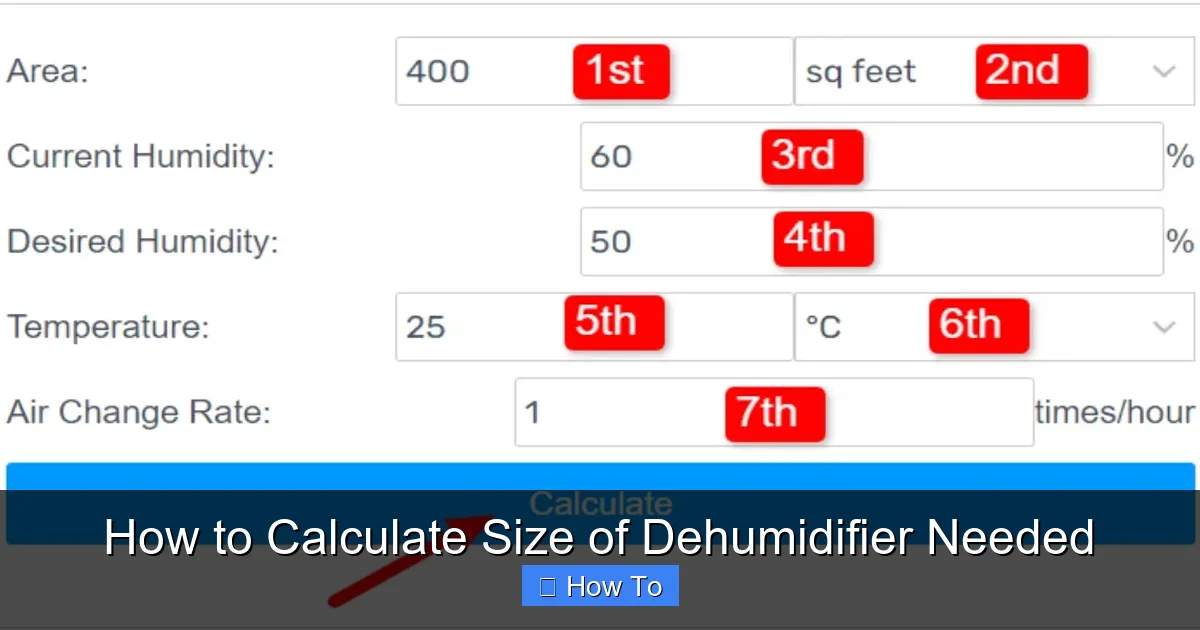
Visual guide about How to Calculate Size of Dehumidifier Needed
Image source: whatsizebro.com
Calculate Square Footage
To find the square footage of a room, multiply the length by the width. For example, if your basement is 20 feet long and 15 feet wide, the calculation is:
- 20 ft × 15 ft = 300 square feet
That’s your baseline. But don’t stop there—some rooms have odd shapes, alcoves, or multiple levels. In those cases, break the space into smaller rectangles, calculate each one, and add them together.
Account for Ceiling Height
Most standard rooms have 8-foot ceilings, and dehumidifier ratings are usually based on that. But if your ceilings are higher—say, 10 feet in a vaulted living room—you’ll have more air volume to dehumidify. In such cases, consider treating the room as slightly larger than its square footage suggests. For example, a 300 sq ft room with 10-foot ceilings might behave like a 350–400 sq ft room with standard ceilings.
Include Adjacent Spaces
If your basement opens into a laundry room or utility closet, include those areas in your total. Humidity doesn’t respect doorways—it spreads. So, if you’re dehumidifying an open-plan basement with a 50 sq ft laundry nook, treat it as a 350 sq ft space.
Pro Tip: Use a laser measuring tool or a smartphone app for quick, accurate readings. Many free apps use your phone’s camera to estimate room dimensions—just point and shoot.
Step 2: Assess the Humidity Level
Room size gives you a starting point, but the real deciding factor is how damp the space actually is. A 300 sq ft crawl space with standing water needs a much more powerful dehumidifier than a 300 sq ft bedroom with just a little condensation.
Use a Hygrometer to Measure Humidity
The best way to assess humidity is with a hygrometer—a small, inexpensive device that measures relative humidity (RH). You can find digital hygrometers for under $20 at hardware stores or online.
Place the hygrometer in the room for 24 hours, ideally in the spot where moisture is worst (like a basement corner or under a sink). Record the readings at different times of day. Here’s what the numbers mean:
- 30–50% RH: Ideal range. No dehumidifier needed unless you have specific health concerns.
- 50–60% RH: Mild dampness. You might notice slight mustiness or condensation. A small dehumidifier can help.
- 60–70% RH: Moderate humidity. Mold risk increases. You’ll likely need a mid-sized unit.
- 70%+ RH: Severe dampness. Visible mold, wet walls, or standing water. You’ll need a high-capacity dehumidifier, possibly with a pump.
Look for Visual and Sensory Clues
If you don’t have a hygrometer yet, use these signs to estimate humidity levels:
- Mild (50–60%): Occasional window fogging, slight musty smell after rain.
- Moderate (60–70%): Persistent dampness, peeling paint, or warped wood.
- Severe (70%+): Visible mold, wet spots on walls, rust on metal, or a constant “wet” feeling in the air.
Example: Sarah noticed her basement smelled musty every spring. She bought a hygrometer and found the RH was consistently at 68%. That told her she needed a dehumidifier rated for moderate to severe dampness—not just a small closet unit.
Step 3: Match Pints Per Day to Your Needs
Dehumidifiers are rated by how many pints of moisture they can remove in 24 hours. This is called the “pints per day” (PPD) rating. The higher the number, the more powerful the unit.
Understand the PPD Scale
Here’s a general guide to match pints per day with room size and humidity:
- 20–30 pints: Small spaces (up to 500 sq ft) with mild dampness. Ideal for bathrooms, closets, or small bedrooms.
- 30–50 pints: Medium spaces (500–1,500 sq ft) with moderate humidity. Good for average basements, garages, or large living rooms.
- 50–70 pints: Large spaces (1,500–2,500 sq ft) with high humidity. Best for damp basements, crawl spaces, or homes in humid climates.
- 70+ pints: Very large or extremely wet areas. Often used in commercial settings or flood-damaged homes.
Use the AHAM Room Size Chart
The Association of Home Appliance Manufacturers (AHAM) provides a standard chart to help match dehumidifier size to room conditions. Here’s a simplified version:
| Room Size (sq ft) | Condition | Recommended Pints/Day |
|---|---|---|
| Up to 500 | Dry / Normal | 10–20 |
| Up to 500 | Moderately Damp | 20–30 |
| Up to 500 | Very Damp / Wet | 30–50 |
| 500–1,000 | Moderately Damp | 30–50 |
| 500–1,000 | Very Damp / Wet | 50–70 |
| 1,000–1,500 | Very Damp / Wet | 50–70 |
| 1,500–2,500 | Severely Wet | 70+ |
Note: These are guidelines. Always check the manufacturer’s specifications, as performance can vary.
Adjust for Climate and Season
If you live in a humid climate—like Florida, Louisiana, or the Pacific Northwest—you may need a higher-capacity unit, even for moderate dampness. Similarly, basements in rainy seasons may require a boost in power. Consider buying a unit with adjustable settings so you can scale back in drier months.
Step 4: Consider Airflow and Insulation
Even the right-sized dehumidifier can underperform if the room has poor airflow or insulation. Think of it like trying to cool a room with all the windows open—it just won’t work.
Evaluate Ventilation
Rooms with good airflow (like open basements with windows or vents) allow the dehumidifier to circulate air more effectively. But in tight, enclosed spaces—like a sealed crawl space or a windowless bathroom—moisture gets trapped. In these cases, you may need a more powerful unit or one with a built-in fan.
Check for Drafts and Leaks
Drafty windows, cracked foundations, or gaps around doors let in humid outside air. If your space is poorly sealed, your dehumidifier will be fighting a losing battle. Before buying, consider sealing leaks and improving insulation. This not only helps the dehumidifier work better but also saves energy.
Think About Heat Sources
Dehumidifiers work best in temperatures above 65°F. In cold basements or garages, especially in winter, the air may be too chilly for standard units to operate efficiently. In such cases, look for a low-temperature dehumidifier designed to work in colder environments (down to 41°F or lower).
Example: Tom bought a 50-pint dehumidifier for his 800 sq ft basement, but it barely made a dent. After inspecting, he found a cracked foundation letting in groundwater. Once he sealed it, the same unit worked perfectly.
Step 5: Choose the Right Features
Size isn’t everything—features matter too. The right settings can make your dehumidifier more effective, convenient, and energy-efficient.
Auto-Humidistat
This feature lets you set your desired humidity level (e.g., 45%). The dehumidifier turns on and off automatically to maintain it. This prevents over-drying and saves energy.
Continuous Drainage Option
Most dehumidifiers have a bucket that needs emptying every 12–24 hours. But if you’re running it constantly, that’s a hassle. Look for a model with a continuous drain hose that you can route to a floor drain or sump pump. Some even include built-in pumps to push water upward.
Portability and Wheels
If you plan to move the dehumidifier between rooms (like from the basement to the laundry room), choose a model with sturdy wheels and a handle. A 50-pound unit without wheels is a pain to relocate.
Energy Efficiency
Look for the Energy Star label. These models use up to 15% less energy than standard units, saving you money on electricity. Check the “energy factor” (liters of water removed per kilowatt-hour)—higher is better.
Noise Level
Dehumidifiers can be noisy, especially in living areas. Check the decibel (dB) rating. Most range from 45–60 dB—about as loud as a quiet conversation or a refrigerator. For bedrooms or offices, aim for under 50 dB.
Step 6: Avoid Common Mistakes
Even with the right calculations, it’s easy to go wrong. Here are the most common pitfalls—and how to avoid them.
Buying Based on Price Alone
Cheaper isn’t always better. A $100 dehumidifier might seem like a deal, but if it’s underpowered, it’ll run nonstop, wear out faster, and cost more in electricity. Invest in a quality unit that matches your needs.
Ignoring Maintenance
A dirty filter or clogged coil reduces efficiency. Clean the filter monthly and check the coil every few months. Some models have washable filters—great for long-term savings.
Overlooking Placement
Don’t tuck your dehumidifier into a corner or behind furniture. It needs airflow on all sides—at least 6–12 inches of clearance. Place it in the center of the room or near the source of moisture.
Assuming Bigger Is Always Better
An oversized dehumidifier cycles on and off too quickly, which can lead to short cycling. This wastes energy, increases wear and tear, and may not remove moisture effectively. It’s better to have a unit that runs steadily for longer periods.
Troubleshooting Common Issues
Even with the right size, problems can happen. Here’s how to fix the most common ones.
Dehumidifier Isn’t Removing Enough Moisture
- Check the filter: A clogged filter restricts airflow. Clean or replace it.
- Verify the settings: Make sure the humidistat is set low enough (e.g., 50% or below).
- Inspect for leaks: Outside air entering the room can overwhelm the unit.
- Ensure proper sizing: Recalculate using this guide—you may need a larger unit.
Unit Freezes Up
- Temperature too low: Move the unit to a warmer area or use a low-temperature model.
- Dirty coils: Clean the evaporator and condenser coils with a soft brush.
- Overworking: If it runs constantly, it may be undersized or the room too damp.
Water Leaks from the Unit
- Bucket full: Empty it regularly or set up continuous drainage.
- Hose disconnected: Check that the drain hose is securely attached.
- Unit tilted: Make sure it’s level—tilting can cause spills.
Conclusion
Calculating the size of dehumidifier needed doesn’t have to be complicated. Start by measuring your space, then assess how damp it really is. Match that to the right pints-per-day rating, and don’t forget to consider airflow, insulation, and smart features. Avoid common mistakes like overbuying or poor placement, and maintain your unit regularly for long-term performance.
With this guide, you’re equipped to make an informed decision. Whether you’re tackling a damp basement, a musty closet, or a humid garage, the right dehumidifier will keep your home comfortable, healthy, and protected. So take the time to calculate, compare, and choose wisely—your air (and your walls) will thank you.