
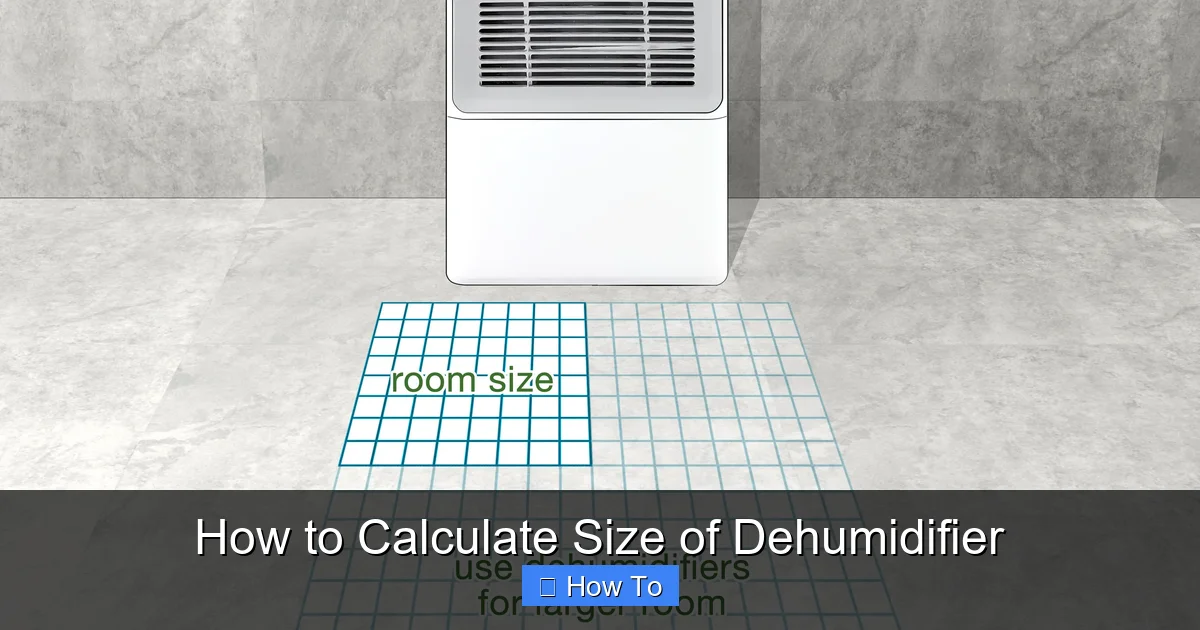
Choosing the right dehumidifier starts with accurately calculating the size you need based on room conditions, moisture levels, and square footage. This guide walks you through every step to ensure you pick a model that works efficiently and saves energy.
Quick Answers to Common Questions
Tip/Question?
How do I know if my dehumidifier is the right size?
Check if it reduces humidity to 30–50% within a few days. If it runs constantly without lowering humidity, it may be too small.
Tip/Question?
Can I use a dehumidifier in a cold basement?
Yes, but only if it’s a low-temperature model. Standard units may ice up and stop working below 65°F.
Tip/Question?
Should I get a dehumidifier with a built-in pump?
If you can’t empty the tank daily or need continuous drainage (e.g., in a basement), a pump is highly recommended.
Tip/Question?
Is a higher pint rating always better?
Not necessarily. An oversized unit may cycle too often and waste energy. Match the capacity to your room size and moisture level.
Tip/Question?
How often should I run my dehumidifier?
Run it continuously during humid months, or use a humidistat to maintain 45–50% humidity automatically.
How to Calculate Size of Dehumidifier: A Complete Step-by-Step Guide
Whether you’re dealing with a musty basement, a humid bathroom, or a damp crawl space, a dehumidifier can make a world of difference. But here’s the catch: not all dehumidifiers are created equal. Choosing the wrong size can lead to wasted energy, poor performance, and ongoing moisture problems. That’s why knowing how to calculate size of dehumidifier is essential before making a purchase.
In this comprehensive guide, you’ll learn exactly how to determine the right dehumidifier size for your home or workspace. We’ll walk you through measuring your space, assessing moisture levels, understanding capacity ratings, and factoring in environmental conditions. By the end, you’ll be equipped to make a smart, informed decision that keeps your air fresh, dry, and healthy.
Step 1: Measure the Square Footage of the Area
The first step in calculating the size of dehumidifier you need is determining the area it will serve. Most dehumidifiers are rated based on the square footage they can effectively cover. So, grab a tape measure and get started.
Visual guide about How to Calculate Size of Dehumidifier
Image source: s3-assets.sylvane.com
How to Calculate Square Footage
To find the square footage of a room, multiply the length by the width. For example:
- A basement that is 20 feet long and 30 feet wide = 600 square feet.
- A bathroom that is 8 feet by 10 feet = 80 square feet.
If your space is irregularly shaped, break it into smaller rectangles, calculate each area, and add them together. Don’t forget to include closets, alcoves, or storage areas that may trap moisture.
Why Square Footage Matters
Dehumidifiers are designed to handle specific room sizes. A unit rated for 500 square feet won’t perform well in a 1,000-square-foot basement. Oversized units may cycle on and off too frequently, while undersized ones will run constantly without drying the air effectively.
Pro Tip: Always round up slightly when measuring. It’s better to have a slightly larger capacity than one that’s just barely enough.
Step 2: Assess the Moisture Level in the Space
Not all damp spaces are the same. The amount of moisture in your room—whether it’s from high humidity, water leaks, or poor ventilation—directly affects the dehumidifier size you need. Manufacturers typically categorize moisture levels into three main types:
Slightly Damp
This includes spaces that feel humid but don’t have visible water or strong odors. Examples: a well-ventilated basement in a dry climate, or a laundry room with occasional steam. These areas usually require a smaller dehumidifier.
Very Damp
You’ll notice musty smells, condensation on windows, or damp spots on walls. This is common in basements, garages, or homes in humid regions. A mid-range dehumidifier is typically needed.
Wet or Flooded
Visible water, standing puddles, or recent flooding fall into this category. These spaces need a high-capacity dehumidifier, often used alongside fans and air movers for restoration.
How to Test Moisture Levels
You can use a hygrometer to measure relative humidity (RH). Ideal indoor humidity is between 30% and 50%. If your RH is above 60%, you likely need a dehumidifier. You can also perform a simple “plastic sheet test”: tape a clear plastic sheet to a wall and check for condensation after 24 hours.
Example: A 600-square-foot basement with 70% humidity and a musty smell is “very damp” and will need a larger unit than a 600-square-foot room at 55% humidity.
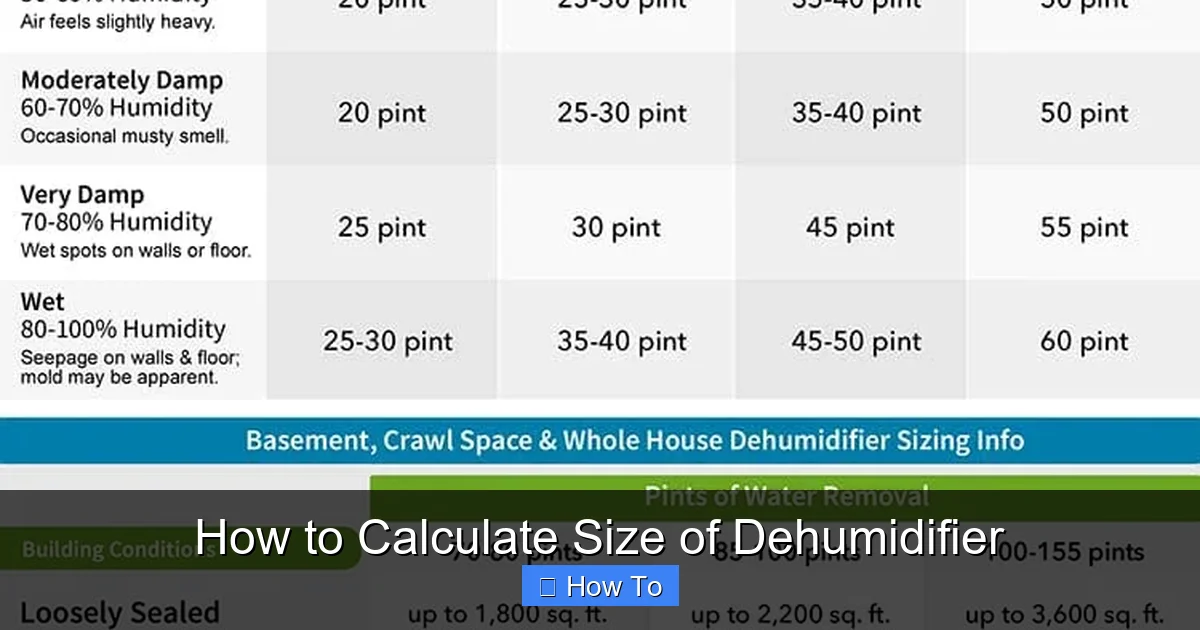
Step 3: Understand Dehumidifier Capacity (Pints per Day)
Dehumidifiers are rated by how many pints of moisture they can remove in 24 hours. This is known as the pint capacity. Common sizes range from 20 to 70+ pints per day. The right capacity depends on both square footage and moisture level.
Standard Capacity Guidelines
Here’s a general guide based on room size and moisture:
| Room Size (sq ft) | Moisture Level | Recommended Capacity (pints/day) |
|---|---|---|
| Up to 500 | Slightly Damp | 20–30 |
| Up to 500 | Very Damp | 30–40 |
| Up to 500 | Wet | 40–50+ |
| 500–1,000 | Slightly Damp | 30–40 |
| 500–1,000 | Very Damp | 40–50 |
| 500–1,000 | Wet | 50–70+ |
| 1,000–1,500 | Very Damp | 50–70 |
| 1,000–1,500 | Wet | 70+ |
Note: These are estimates. Always check manufacturer recommendations for specific models.
Why Pint Ratings Can Be Misleading
Some manufacturers test dehumidifiers under ideal lab conditions (80°F and 60% RH), which may not reflect real-world use. In colder or less humid environments, a unit may remove fewer pints than advertised. Look for units tested to AHAM (Association of Home Appliance Manufacturers) standards for more accurate ratings.
Step 4: Consider Air Exchange and Ventilation
Even with the right capacity, a dehumidifier can’t work effectively if air isn’t circulating. Poor ventilation increases the workload on the unit and reduces efficiency.
High Air Exchange Areas
Spaces like crawl spaces, garages, or rooms with frequent door openings allow moist outdoor air to enter constantly. These areas may need a larger dehumidifier or one with a built-in pump to remove water continuously.
Low Air Exchange Areas
Sealed basements or interior bathrooms with little airflow may require less capacity, but still need proper dehumidification to prevent mold growth.
Improving Airflow
Use fans to circulate air, especially in corners or behind furniture. Ensure vents aren’t blocked and consider installing exhaust fans in bathrooms and kitchens. Better airflow helps the dehumidifier work more efficiently.
Step 5: Factor in Temperature
Temperature plays a crucial role in dehumidifier performance. Most standard units work best between 65°F and 80°F. In colder environments, their efficiency drops significantly.
Low-Temperature Dehumidifiers
If your space is below 65°F—like an unheated basement in winter—you’ll need a low-temperature dehumidifier (also called a desiccant dehumidifier). These models use different technology to remove moisture in cold conditions and often have built-in heaters.
Why Standard Units Fail in Cold Spaces
At low temperatures, moisture condenses and freezes on the dehumidifier’s coils, causing the unit to ice up and stop working. Low-temperature models prevent this with automatic defrost or alternative drying mechanisms.
Example: A 40-pint standard dehumidifier may only remove 10 pints per day in a 50°F basement. A 30-pint low-temperature model could outperform it in the same conditions.
Step 6: Evaluate Energy Efficiency
Running a dehumidifier 24/7 can increase your electricity bill. Choosing an energy-efficient model helps save money and reduces environmental impact.
Look for ENERGY STAR® Certification
ENERGY STAR® dehumidifiers use 15–30% less energy than standard models. They also meet strict performance and efficiency guidelines. Check the yellow EnergyGuide label for estimated annual operating costs.
Calculate Operating Costs
To estimate how much your dehumidifier will cost to run:
- Find the wattage (usually listed on the label or manual).
- Multiply by hours used per day.
- Multiply by your electricity rate (in dollars per kWh).
- Divide by 1,000 to convert watts to kilowatts.
Example: A 500-watt dehumidifier running 10 hours a day at $0.12/kWh costs about $0.60 per day, or $18 per month.
Additional Efficiency Features
- Humidistat: Automatically turns the unit on/off based on humidity levels.
- Auto-defrost: Prevents ice buildup in cold environments.
- Timer: Lets you schedule operation during off-peak hours.
- Continuous drainage: Eliminates the need to empty the tank manually.
Step 7: Use Online Calculators (But Verify Manually)
Many retailers and manufacturers offer online dehumidifier size calculators. These tools ask for room size, moisture level, and sometimes temperature to recommend a model.
Pros of Online Calculators
- Quick and easy to use.
- Helpful for beginners.
- Often include product recommendations.
Cons of Online Calculators
- May not account for unique factors (e.g., poor insulation, high air exchange).
- Can be influenced by marketing (e.g., pushing higher-priced models).
- Less accurate than manual calculations.
Best Practice: Use online calculators as a starting point, but always double-check with the steps in this guide. Your specific conditions may require adjustments.
Step 8: Choose the Right Features for Your Needs
Beyond size and capacity, consider features that improve convenience and performance.
Built-in Pump
Allows continuous drainage by pumping water upward (e.g., from a basement to a sink). Ideal for unattended operation.
Portable vs. Whole-House Units
Portable dehumidifiers are great for single rooms. Whole-house models connect to your HVAC system and treat the entire home. Choose based on your needs and budget.
Noise Level
Check the decibel (dB) rating. Units under 50 dB are quiet enough for bedrooms or living areas. Look for “quiet mode” or “sleep mode” features.
Filter Type
Washable filters are eco-friendly and cost-effective. HEPA filters capture allergens but may require more maintenance.
Troubleshooting Common Sizing Mistakes
Even with careful planning, you might encounter issues. Here’s how to fix common problems:
Problem: Dehumidifier Runs Constantly But Doesn’t Dry the Air
Possible Causes:
- Unit is too small for the space or moisture level.
- Airflow is blocked (e.g., furniture too close to walls).
- Filter is clogged.
- Temperature is too low for a standard unit.
Solution: Recalculate your needs, improve ventilation, clean the filter, or upgrade to a larger or low-temperature model.
Problem: Unit Cycles On and Off Too Frequently
Possible Causes:
- Dehumidifier is oversized.
- Humidistat is set too low.
- Room is already dry.
Solution: Adjust the humidistat to 45–50%, or consider a smaller unit if the space is consistently dry.
Problem: Water Tank Fills Too Quickly
Possible Causes:
- Moisture level is higher than expected.
- No continuous drainage option.
- Unit is undersized.
Solution: Use a hose for continuous drainage or upgrade to a higher-capacity model with a built-in pump.
Final Tips for Choosing the Right Dehumidifier
Before you buy, keep these final tips in mind:
- Read reviews: Look for feedback on real-world performance, not just specs.
- Check warranty: A longer warranty often indicates better build quality.
- Consider placement: Leave at least 6–12 inches of clearance around the unit for airflow.
- Maintain regularly: Clean filters and coils every few months to ensure efficiency.
- Monitor humidity: Use a hygrometer to track changes and adjust settings as needed.
Conclusion
Calculating the size of dehumidifier doesn’t have to be complicated. By following these steps—measuring your space, assessing moisture, understanding capacity, and considering environmental factors—you can confidently choose a unit that keeps your home dry and comfortable. Remember, the right dehumidifier isn’t just about power; it’s about matching the right tool to your specific needs. With this guide, you’re now equipped to make a smart, energy-efficient choice that protects your home and improves your indoor air quality for years to come.