
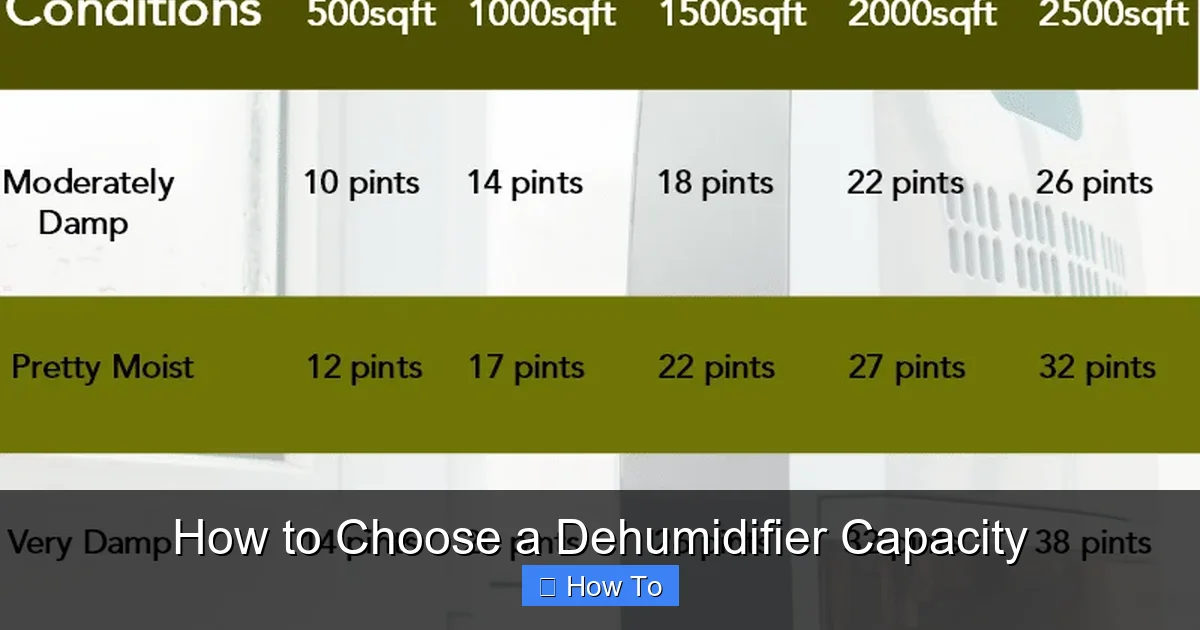
Choosing the right dehumidifier capacity ensures effective moisture control, energy efficiency, and long-term performance. This guide walks you through calculating room size, assessing humidity levels, and matching them to the correct pint capacity. With practical tips and real-world examples, you’ll pick a unit that fits your needs perfectly.
Quick Answers to Common Questions
Tip/Question?
Should I buy a dehumidifier based only on square footage?
No—always consider humidity level too. A 500-square-foot wet basement needs a much larger capacity than a 500-square-foot slightly damp closet.
Tip/Question?
Can I use one dehumidifier for my whole house?
Generally, no. Most residential dehumidifiers are designed for single rooms or basements. For whole-house coverage, consider a whole-house dehumidifier integrated with your HVAC system.
Tip/Question?
How often should I run my dehumidifier?
Run it continuously in very damp or wet areas. In slightly damp spaces, 8–12 hours a day may be enough. Use a humidistat to automate the process.
Tip/Question?
Is a higher pint capacity always better?
Not necessarily. An oversized unit may short-cycle, reducing efficiency. Choose the smallest capacity that meets your needs.
Tip/Question?
Do dehumidifiers use a lot of electricity?
They can, but ENERGY STAR® models are much more efficient. Look for units with high Energy Factor (EF) ratings to save on energy costs.
How to Choose a Dehumidifier Capacity: A Complete Guide
So, you’ve noticed the sticky air, the musty smell, or maybe even some mold creeping along the corners of your basement. You know you need a dehumidifier—but how do you pick the right one? More importantly, how do you choose the right capacity? It’s not just about size; it’s about matching the unit’s power to your space and moisture levels. Get it wrong, and you could end up with a machine that’s too weak to make a dent—or one so strong it cycles on and off constantly, wasting energy and money.
In this guide, we’ll walk you through everything you need to know to choose the perfect dehumidifier capacity. From measuring your room to understanding humidity levels and matching them to the right pint rating, we’ve got you covered. By the end, you’ll feel confident picking a dehumidifier that keeps your home dry, comfortable, and energy-efficient.
Step 1: Understand What “Capacity” Means
Before diving into calculations, let’s clarify what “capacity” actually refers to. In dehumidifiers, capacity is measured in pints per day (pints/day)—the amount of moisture the unit can remove from the air in a 24-hour period under standard conditions (usually 80°F and 60% relative humidity).
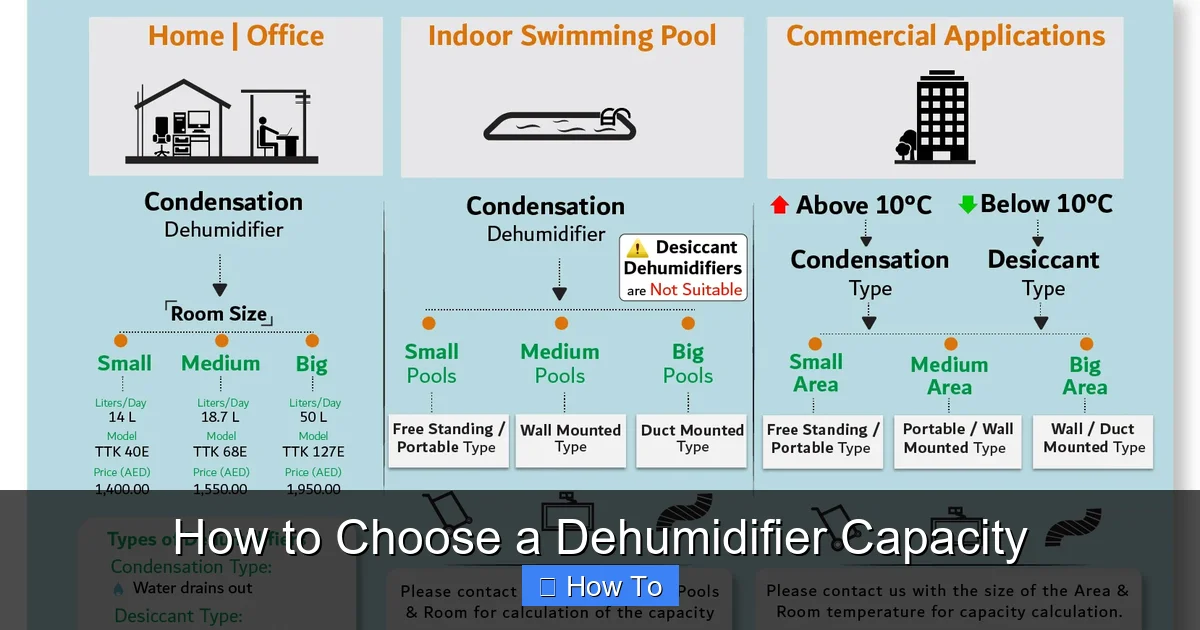
Visual guide about How to Choose a Dehumidifier Capacity
Image source: vackergroup.ae
For example, a 30-pint dehumidifier can remove up to 30 pints of water from the air each day. But here’s the catch: that number is based on ideal lab conditions. Real-world performance depends on your home’s actual temperature, humidity, and air circulation.
So while capacity is a helpful starting point, it’s not the only factor. You also need to consider:
- The size of the space (square footage)
- How damp or wet the area is
- How often the space is used
- Your local climate
Think of capacity like the engine size in a car. A small engine might work for city driving, but if you’re hauling heavy loads up hills, you’ll need something more powerful. The same logic applies to dehumidifiers.
Step 2: Measure Your Room Size
The first step in choosing the right capacity is knowing how much space you’re dealing with. Most dehumidifier recommendations are based on square footage, so accurate measurements are crucial.
Calculate Square Footage
To find the square footage of your room, multiply the length by the width. For example:
- A basement that’s 20 feet long and 30 feet wide = 600 square feet
- A bathroom that’s 8 feet by 10 feet = 80 square feet
If your space is irregularly shaped, break it into rectangles, calculate each area, and add them together. Don’t forget closets, alcoves, or crawl spaces if they’re part of the humid zone.
Consider Ceiling Height
Most guidelines assume an 8-foot ceiling. But if your ceilings are higher—say, 9 or 10 feet—you’re dealing with more air volume. That means you may need a slightly larger capacity.
For example, a 500-square-foot room with 10-foot ceilings holds 5,000 cubic feet of air (500 × 10), compared to 4,000 cubic feet with 8-foot ceilings. That extra 1,000 cubic feet can hold more moisture, so a higher-capacity unit may be necessary.
Account for Open Floor Plans
If your living room flows into the kitchen or dining area, treat it as one large space. Moisture doesn’t respect walls—it spreads. So even if you’re placing the dehumidifier in one room, it may need to handle the combined area.
Pro tip: Use a laser measuring tool or a tape measure app on your phone for quick, accurate readings. And always round up—better to have a little extra capacity than not enough.
Step 3: Assess the Humidity Level
Room size tells you how much air to dehumidify, but humidity level tells you how hard the dehumidifier has to work. This is where many people go wrong—they buy a unit based only on square footage and wonder why it’s not working.
Humidity levels are generally categorized as:
- Slightly damp: Feels a little sticky, occasional musty odor, no visible moisture.
- Very damp: Noticeable dampness, frequent musty smell, possible condensation on windows.
- Wet: Standing water, mold growth, wet walls or floors, strong odor.
Use a Hygrometer to Measure Relative Humidity
The best way to assess humidity is with a hygrometer—a small, inexpensive device that measures relative humidity (RH). You can find digital hygrometers for under $20 at hardware stores or online.
Place the hygrometer in the center of the room, away from windows, vents, or direct sunlight. Let it sit for at least an hour to get an accurate reading.
Here’s what the numbers mean:
- 30–50% RH: Ideal range for comfort and health.
- 50–60% RH: Slightly high; may feel sticky.
- 60–70% RH: Very damp; mold risk increases.
- 70%+ RH: Wet conditions; urgent dehumidification needed.
Observe Visual and Sensory Clues
If you don’t have a hygrometer yet, use your senses:
- Do windows fog up in the morning?
- Do clothes take forever to dry indoors?
- Is there a persistent musty smell?
- Can you see water stains or peeling paint?
These are all signs of high humidity. The worse the symptoms, the higher the capacity you’ll need.
Step 4: Match Capacity to Room Size and Humidity
Now that you know your room size and humidity level, it’s time to match them to the right dehumidifier capacity. Most manufacturers and retailers provide sizing charts based on these two factors.
Here’s a general guide:
| Room Size (sq ft) | Slightly Damp | Very Damp | Wet |
|---|---|---|---|
| Up to 500 | 10–20 pints | 20–30 pints | 30–50 pints |
| 500–1,000 | 20–30 pints | 30–50 pints | 50–70 pints |
| 1,000–1,500 | 30–50 pints | 50–70 pints | 70+ pints |
| 1,500–2,000 | 50–70 pints | 70–90 pints | 90+ pints |
Let’s walk through an example:
Scenario: You have a 700-square-foot basement that feels very damp. There’s a musty smell, and you’ve seen condensation on the walls after heavy rain.
Step 1: Room size = 700 sq ft → falls in the 500–1,000 range.
Step 2: Humidity level = very damp.
Step 3: Recommended capacity = 30–50 pints.
So, a 40-pint or 50-pint dehumidifier would be a good fit. If the basement is also used as a laundry room or home gym (activities that add moisture), lean toward the higher end—50 pints.
When to Go Bigger
It’s usually better to choose a dehumidifier with slightly higher capacity than you think you need. Here’s why:
- It can handle humidity spikes (like after a storm).
- It works more efficiently by running shorter cycles.
- It lasts longer because it’s not constantly overworked.
But don’t go overboard. An oversized unit may short-cycle (turn on and off too quickly), which reduces efficiency and can lead to premature wear.
Step 5: Consider Usage and Lifestyle Factors
Your daily habits and how you use the space also affect dehumidifier needs. A basement used only for storage won’t need the same capacity as one turned into a home theater or gym.
High-Moisture Activities
Certain activities add significant moisture to the air:
- Laundry drying indoors
- Hot showers in an unfinished basement bathroom
- Cooking without proper ventilation
- Indoor pools or hot tubs
If any of these apply, increase your capacity by 10–20 pints. For example, a 500-square-foot laundry room that’s very damp might need a 40-pint unit instead of 30.
Continuous Drainage vs. Manual Emptying
Most dehumidifiers have a built-in bucket that needs to be emptied when full. But in high-humidity areas, the bucket can fill up in just a few hours.
If you’re dealing with very damp or wet conditions, look for a model with continuous drainage. This feature lets you attach a hose so water drains directly into a floor drain or sump pump—no more midnight bucket dumps.
Some units even have built-in pumps to push water upward, which is great for basements without floor drains.
Portability and Placement
Will you move the dehumidifier between rooms? If so, choose a model with wheels and a handle. Also, consider where you’ll place it:
- Avoid corners—airflow is restricted.
- Keep it at least 6–12 inches away from walls.
- Place it near the source of moisture (e.g., near a washing machine or exterior wall).
Step 6: Factor in Climate and Seasonal Changes
Your local climate plays a big role in dehumidifier performance. Homes in humid regions like Florida, Louisiana, or the Pacific Northwest naturally face higher moisture levels than those in dry areas like Arizona or Nevada.
Humid Climates
In hot, humid climates, you may need a larger capacity—even for smaller spaces. The air holds more moisture, and dehumidifiers work harder. Also, consider running the unit year-round to prevent mold and dust mites.
Dry Climates
In arid regions, you might get away with a smaller unit or only run it seasonally (e.g., during monsoon season). But don’t assume you don’t need one—crawl spaces and basements can still be damp due to groundwater.
Seasonal Adjustments
Humidity levels fluctuate with the seasons. You might only need a dehumidifier in summer, or you might need to adjust settings monthly. Some smart models can auto-adjust based on humidity readings.
Step 7: Check Energy Efficiency and Features
A high-capacity dehumidifier is great—but only if it’s energy-efficient. Running a large unit 24/7 can spike your electricity bill.
Look for ENERGY STAR® Certification
ENERGY STAR® certified dehumidifiers use 15–30% less energy than standard models. They’re tested for efficiency and performance, so you know you’re getting a quality product.
Check the Energy Factor (EF)—measured in liters of water removed per kilowatt-hour (L/kWh). Higher EF = more efficient. Aim for at least 1.5 L/kWh, but 2.0+ is even better.
Smart Features to Consider
Modern dehumidifiers come with helpful features:
- Humidistat: Lets you set a target humidity level (e.g., 45%). The unit turns on/off automatically.
- Auto-defrost: Prevents ice buildup in cold temperatures (great for garages or unheated basements).
- Timer: Schedule operation during off-peak hours to save energy.
- Air filter: Removes dust and allergens—look for washable filters to save money.
- Quiet operation: Important for bedrooms or living areas—aim for under 50 decibels.
Troubleshooting Common Capacity Issues
Even with the right capacity, problems can arise. Here’s how to fix them:
The Dehumidifier Isn’t Removing Enough Moisture
- Check the filter: A clogged filter restricts airflow. Clean or replace it monthly.
- Ensure proper placement: Move the unit away from walls and furniture.
- Verify settings: Make sure the humidistat is set low enough (e.g., 45–50%).
- Consider the temperature: Most dehumidifiers work best above 65°F. In colder spaces, use a low-temperature model.
The Unit Cycles On and Off Too Often
- It might be oversized: Short cycling wastes energy and reduces lifespan.
- Check for drafts: Cold air from windows or doors can trick the sensor.
- Clean the coils: Dust buildup affects performance.
The Bucket Fills Too Fast
- Install a drain hose: Use continuous drainage if available.
- Empty it more often: Set a daily reminder.
- Consider a larger-capacity model: If the space is extremely wet.
Conclusion
Choosing the right dehumidifier capacity isn’t just about picking the biggest number on the box. It’s about understanding your space, your humidity levels, and your lifestyle. By measuring your room, assessing moisture, and matching it to the correct pint rating, you’ll get a unit that works efficiently and effectively.
Remember: a properly sized dehumidifier improves air quality, prevents mold, protects your home, and saves energy. Take the time to do it right—your future self (and your walls) will thank you.
Now that you know how to choose the perfect capacity, you’re ready to shop with confidence. Look for ENERGY STAR® models, check the features, and don’t forget to measure twice!