
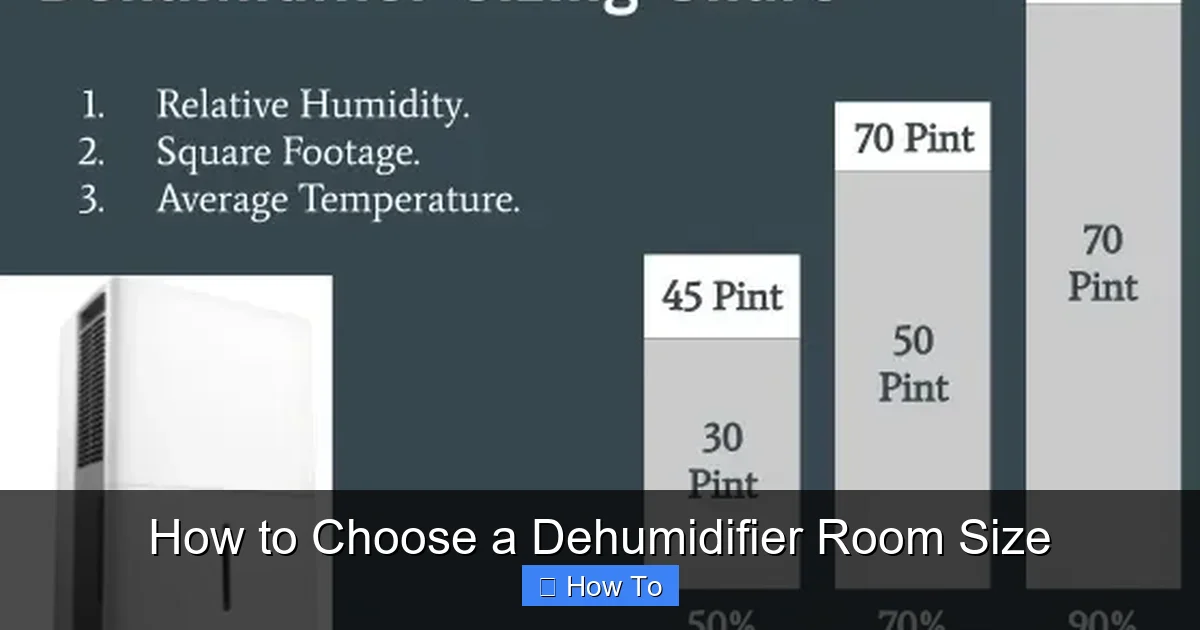
Choosing the correct dehumidifier room size ensures efficient moisture control, better air quality, and energy savings. This guide walks you through measuring space, understanding capacity, and matching the right unit to your needs.
Quick Answers to Common Questions
What’s the ideal humidity level for indoor air?
The ideal indoor humidity level is between 30% and 50%. This range prevents mold growth, reduces allergens, and keeps your home comfortable.
Can I use one dehumidifier for multiple rooms?
Yes, if the rooms are connected and the total square footage is within the unit’s capacity. Use fans to help circulate air between spaces.
Should I run my dehumidifier all the time?
Not necessarily. Use a humidistat to set your desired level. The unit will cycle on and off as needed, saving energy and maintaining balance.
Is a larger dehumidifier always better?
No. An oversized unit may short-cycle, reducing efficiency. Choose one that matches your room size and humidity level for optimal performance.
How often should I clean my dehumidifier?
Clean the air filter every 2–4 weeks and empty the water tank regularly. Deep clean the unit every 3–6 months for best results.
How to Choose a Dehumidifier Room Size
High humidity can turn your home into a breeding ground for mold, mildew, and dust mites. It can also make your space feel sticky, uncomfortable, and even damage furniture or walls. A dehumidifier helps by pulling excess moisture from the air, improving indoor air quality and comfort. But here’s the catch: not all dehumidifiers are created equal. Choosing the right one starts with understanding how to match the dehumidifier room size to your specific needs.
In this guide, you’ll learn exactly how to choose a dehumidifier that fits your space—whether it’s a small bathroom, a large basement, or an open-concept living area. We’ll cover everything from measuring your room and understanding capacity ratings to considering humidity levels and energy efficiency. By the end, you’ll know how to pick a dehumidifier that works efficiently, saves energy, and keeps your home dry and healthy.
Step 1: Measure Your Room’s Square Footage
The first step in choosing the right dehumidifier is knowing the size of the space you want to treat. Most dehumidifiers are rated based on the square footage they can effectively cover. If you pick one that’s too small, it won’t remove enough moisture. If it’s too big, you’ll waste money and energy.
Visual guide about How to Choose a Dehumidifier Room Size
Image source: cdn.shopify.com
How to Calculate Square Footage
To find the square footage of your room, multiply the length by the width. For example, a room that’s 12 feet long and 10 feet wide equals 120 square feet. Use a tape measure or laser measurer for accuracy. If your room is irregularly shaped, divide it into rectangles, calculate each section, and add them together.
Pro Tip: Don’t forget to measure closets, nooks, or alcoves if they’re part of the humid area. These spaces can trap moisture and affect overall humidity levels.
Consider Ceiling Height
Most standard rooms have 8-foot ceilings, but if yours are higher—say, 9 or 10 feet—you may need a more powerful unit. Higher ceilings mean more air volume, which requires greater dehumidifying capacity. Some manufacturers provide coverage guidelines for different ceiling heights, so check the product specs.
For example, a dehumidifier rated for 1,000 square feet at 8 feet may only cover 800 square feet at 10 feet. When in doubt, round up or choose a model with adjustable settings.
Step 2: Assess the Humidity Level in Your Space
Not all rooms are equally humid. A damp basement after a rainstorm needs a different dehumidifier than a slightly musty closet. Dehumidifiers are rated not just by room size, but by how much moisture they can remove per day—measured in pints.
Identify the Humidity Condition
Use a hygrometer (a small, inexpensive device that measures humidity) to check the relative humidity (RH) in your room. Ideal indoor humidity is between 30% and 50%. Here’s how to categorize your space:
- Dry or Normal (30–50% RH): Minimal moisture. A small dehumidifier may not be needed unless you’re targeting a specific issue like allergies.
- Moderately Humid (50–60% RH): You might notice occasional dampness or a slight musty smell. A standard dehumidifier with 20–30 pint capacity works well.
- Very Humid (60–70% RH): Common in basements, laundry rooms, or after flooding. Look for a 30–50 pint unit.
- Wet or Flooded (70%+ RH): Visible water, condensation, or mold. You’ll need a heavy-duty dehumidifier (50+ pints) and possibly professional help.
Observe Visual and Sensory Clues
If you don’t have a hygrometer, look for signs of high humidity:
- Condensation on windows or walls
- Musty odors
- Peeling paint or wallpaper
- Mold or mildew spots
- Warped wood or damp carpet
These clues help you estimate the severity of the problem and choose a dehumidifier with the right capacity.
Step 3: Match Dehumidifier Capacity to Room Size and Conditions
Dehumidifier capacity is measured in pints per day (PPD)—the amount of moisture the unit can remove in 24 hours. This number should align with both your room size and humidity level.
General Capacity Guidelines
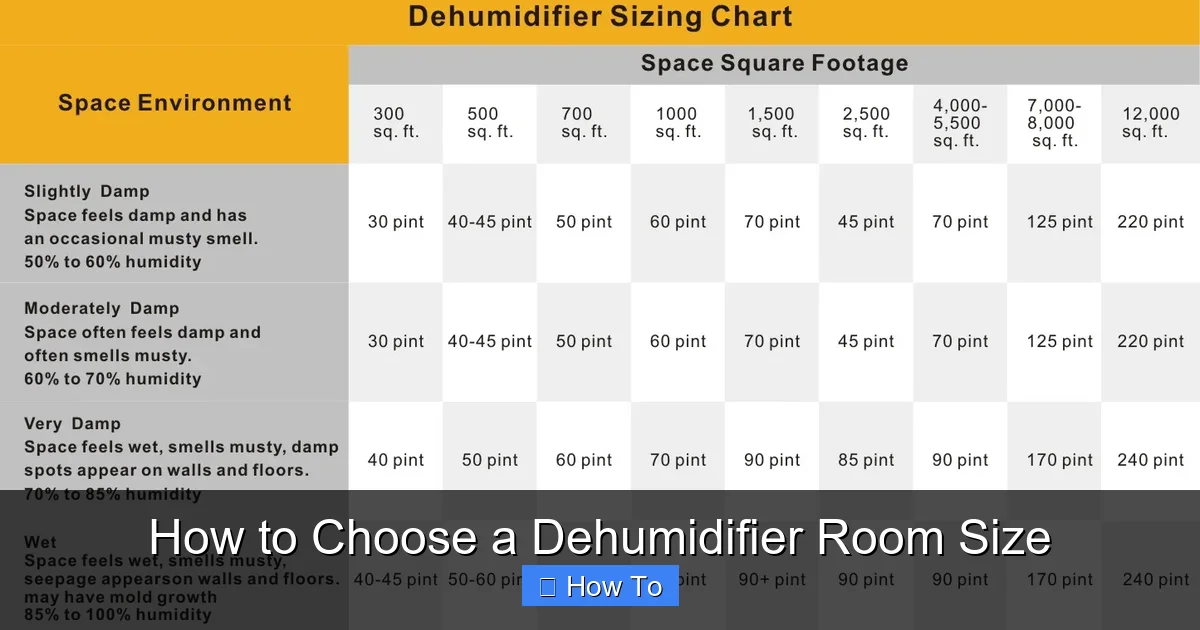
Here’s a quick reference chart to help you match capacity to room size and conditions:
| Room Size (sq ft) | Moderate Humidity | High Humidity | Wet Conditions |
|---|---|---|---|
| Up to 500 | 10–20 pints | 20–30 pints | 30–50 pints |
| 500–1,000 | 20–30 pints | 30–50 pints | 50–70 pints |
| 1,000–1,500 | 30–50 pints | 50–70 pints | 70+ pints |
| 1,500+ | 50+ pints | 70+ pints | 70+ pints or commercial-grade |
For example, a 12′ x 12′ basement (144 sq ft) with high humidity might need a 30-pint dehumidifier. But if it’s frequently wet due to poor drainage, go for a 50-pint model.
Don’t Overbuy—But Don’t Underbuy Either
It’s tempting to buy the biggest dehumidifier available, but oversized units can cycle on and off too quickly, reducing efficiency and failing to remove enough moisture. Conversely, an undersized unit will run constantly, wear out faster, and increase your energy bill.
Example: A 20-pint dehumidifier in a 1,200 sq ft wet basement will struggle. It may run 24/7 and still leave the air feeling damp. A 50-pint unit, however, will cycle properly and maintain ideal humidity.
Step 4: Consider Room Usage and Airflow
How you use the room affects your dehumidifier choice. A laundry room generates more moisture than a guest bedroom. Similarly, airflow impacts performance.
High-Moisture Areas Need Stronger Units
Certain rooms naturally produce more humidity:
- Basements: Often cool and damp. Choose a unit with a pump for continuous drainage and cold-weather operation (down to 41°F).
- Laundry Rooms: Humid from washing machines and dryers. Look for a dehumidifier with a hose connection for direct drainage.
- Bathrooms: Small but steamy. A compact 10–20 pint unit works well, especially if vented.
- Garages: Poor insulation and ventilation. Choose a rugged, high-capacity model.
Ensure Proper Air Circulation
Dehumidifiers work best when air can flow freely around them. Avoid placing the unit in a corner or behind furniture. Leave at least 6–12 inches of space on all sides. Use fans to help circulate air, especially in large or poorly ventilated rooms.
Tip: If your room has multiple doors or open archways, consider a whole-house dehumidifier or a portable unit you can move between spaces.
Step 5: Check Energy Efficiency and Operating Costs
Dehumidifiers can consume a lot of electricity, especially if they run frequently. Choosing an energy-efficient model saves money and reduces environmental impact.
Look for ENERGY STAR Certification
ENERGY STAR certified dehumidifiers use 15–30% less energy than standard models. They meet strict efficiency guidelines set by the U.S. Environmental Protection Agency. Look for the blue ENERGY STAR label when shopping.
Understand the Energy Factor (L/kWh)
The energy factor tells you how many liters of water the unit removes per kilowatt-hour of electricity. A higher number means better efficiency. For example:
- Energy Factor of 1.5 = 1.5 liters removed per kWh
- Energy Factor of 2.0 = 2.0 liters removed per kWh (more efficient)
Check the yellow EnergyGuide label on the product for this information.
Estimate Monthly Operating Costs
To calculate how much your dehumidifier will cost to run:
- Find the wattage (usually listed on the label or manual).
- Multiply watts by hours used per day, then divide by 1,000 to get kilowatt-hours (kWh).
- Multiply kWh by your local electricity rate (check your bill).
Example: A 300-watt dehumidifier running 8 hours a day:
- 300 watts × 8 hours = 2,400 watt-hours = 2.4 kWh
- 2.4 kWh × $0.12/kWh = $0.29 per day
- $0.29 × 30 = $8.70 per month
Energy-efficient models may cost more upfront but save money over time.
Step 6: Evaluate Noise Level and Portability
Dehumidifiers use fans and compressors, which can be noisy. If you’re placing one in a bedroom, home office, or living room, noise matters.
Check the Decibel (dB) Rating
Noise levels are measured in decibels (dB). Here’s a rough guide:
- 35–45 dB: Quiet (like a whisper or library)
- 45–55 dB: Moderate (like a refrigerator)
- 55+ dB: Noticeable (like a conversation)
Look for models labeled “quiet” or “low noise.” Some have sleep modes that reduce fan speed at night.
Choose a Portable Design
If you plan to move the dehumidifier between rooms, look for:
- Built-in handles
- Wheels or casters
- Lightweight construction (under 40 lbs for easy lifting)
Some units come with cord wraps and tank carry handles for added convenience.
Step 7: Look for Smart Features and Controls
Modern dehumidifiers offer features that make them easier to use and more effective.
Built-In Humidistat
A humidistat lets you set your desired humidity level (e.g., 45%). The dehumidifier automatically turns on and off to maintain it. This prevents over-drying and saves energy.
Auto-Defrost and Low-Temp Operation
If you’re using the dehumidifier in a cold basement or garage, choose a model with auto-defrost. It prevents the coils from freezing and keeps the unit running efficiently in temperatures as low as 41°F.
Continuous Drainage Option
Instead of emptying a water tank every few hours, connect a hose for continuous drainage. This is ideal for basements or areas where you can’t check the unit often.
Timer and Remote Control
Set the dehumidifier to run during off-peak hours or turn it off after a few hours. Some models even connect to Wi-Fi and can be controlled via smartphone apps.
Step 8: Plan for Maintenance and Longevity
A dehumidifier is an investment. Proper maintenance ensures it lasts longer and performs well.
Clean the Air Filter Regularly
Most dehumidifiers have a washable filter that traps dust and allergens. Clean it every 2–4 weeks, especially during humid seasons. A clogged filter reduces airflow and efficiency.
Empty and Clean the Water Tank
If your model doesn’t have continuous drainage, empty the tank when full. Wash it with mild soap and water to prevent mold and bacteria growth.
Inspect Coils and Vents
Dust and debris can build up on the coils and vents. Use a soft brush or vacuum attachment to clean them every few months.
Store Properly Off-Season
If you only use the dehumidifier in summer, clean it thoroughly and store it in a dry place. Cover it to prevent dust accumulation.
Troubleshooting Common Issues
Even the best dehumidifier can run into problems. Here’s how to fix common issues:
Dehumidifier Isn’t Removing Moisture
- Check if the room is too large or too humid for the unit’s capacity.
- Ensure the air filter is clean.
- Verify that doors and windows are closed.
- Make sure the unit isn’t blocked by furniture.
Unit Runs Constantly
- The humidity setting may be too low.
- The room may be too damp or poorly insulated.
- The coils may be frozen (check for auto-defrost feature).
Water Tank Overflows
- Empty the tank more frequently.
- Use a continuous drain hose.
- Check if the float switch is stuck.
Unusual Noise or Vibration
- Ensure the unit is level and on a stable surface.
- Check for loose parts or debris in the fan.
- Contact the manufacturer if the problem persists.
Conclusion
Choosing the right dehumidifier room size isn’t just about square footage—it’s about understanding your space, humidity levels, and lifestyle needs. By measuring your room, assessing moisture conditions, and matching capacity to usage, you can find a unit that keeps your home dry, comfortable, and healthy.
Remember to prioritize energy efficiency, noise level, and smart features like humidistats and auto-drain. And don’t forget regular maintenance to keep your dehumidifier running smoothly for years.
With the right dehumidifier, you’ll breathe easier, protect your belongings, and enjoy a fresher, more pleasant living environment. Take the time to choose wisely—your home will thank you.