
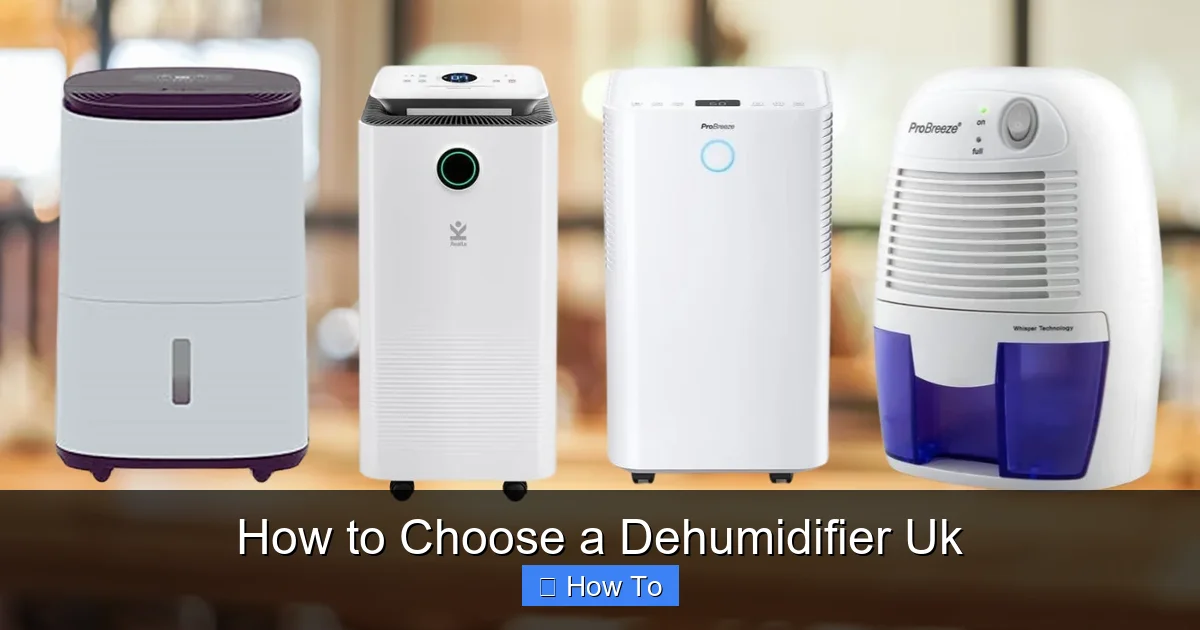
Choosing the right dehumidifier in the UK can be tricky, but this guide makes it simple. We’ll walk you through everything you need to know—from room size and humidity levels to energy efficiency and smart features—so you can pick the perfect model for your home.
Quick Answers to Common Questions
Tip/Question?
What size dehumidifier do I need for a 20m² bedroom?
Tip/Question?
A 12–15L model is ideal for a 20m² room with mild to moderate damp. Choose a quiet desiccant model if using at night.
Tip/Question?
Can I use a dehumidifier in winter?
Tip/Question?
Yes, but compressor models work best above 15°C. For cold rooms, choose a desiccant dehumidifier or one with auto-defrost.
Tip/Question?
How often should I empty the water tank?
Tip/Question?
Empty it daily if the tank is full. Use continuous drainage for 24/7 operation in basements or utility rooms.
Tip/Question?
Are dehumidifiers expensive to run?
Tip/Question?
It depends on the model and usage. An energy-efficient A++ unit costs around £10–£20/month if run 8 hours daily.
How to Choose a Dehumidifier UK: A Complete Step-by-Step Guide
If you’ve ever woken up to condensation on your windows, spotted black mould in the corners of your bathroom, or noticed that damp smell in your wardrobe, you’re not alone. The UK’s cool, damp climate makes homes especially prone to excess moisture. That’s where a dehumidifier comes in.
But with so many models on the market—ranging from compact desk units to powerful whole-home systems—how do you choose the right one? This guide will walk you through every step of selecting the perfect dehumidifier for your UK home. Whether you’re tackling a small bathroom or a large basement, we’ll help you find a model that’s efficient, quiet, and built to last.
By the end of this guide, you’ll know exactly what to look for—capacity, type, energy use, noise, and smart features—so you can make a confident, informed decision.
Step 1: Understand Why You Need a Dehumidifier
Visual guide about How to Choose a Dehumidifier Uk
Image source: ukcareguide.co.uk
Before you start shopping, it’s important to understand what a dehumidifier does and why it might be essential for your home.
Dehumidifiers remove excess moisture from the air. This helps prevent mould, mildew, and dust mites—common triggers for asthma and allergies. They also protect your furniture, walls, and electronics from damage caused by dampness.
In the UK, many homes suffer from condensation, especially during autumn and winter. Poor ventilation, drying clothes indoors, and heating systems can all increase indoor humidity. A dehumidifier helps maintain a healthy humidity level—ideally between 40% and 60%.
Ask yourself:
– Do you see condensation on windows?
– Is there a musty smell in certain rooms?
– Have you noticed peeling wallpaper or warped wood?
– Do you or your family suffer from allergies or respiratory issues?
If you answered yes to any of these, a dehumidifier is likely a smart investment.
Step 2: Measure Your Room Size and Humidity Level
The first step in choosing the right dehumidifier is understanding the space you want to treat.
Calculate the Room Size
Measure the length and width of the room in metres, then multiply them to get the square footage. For example, a 4m x 5m room is 20 square metres.
Keep in mind that open-plan areas or rooms with high ceilings may require a more powerful unit.
Assess the Dampness Level
Not all damp problems are the same. Consider how severe the moisture issue is:
– Mild damp: Occasional condensation, slight musty smell (e.g., a bedroom or living room).
– Moderate damp: Regular condensation, visible mould in corners, damp patches (e.g., bathroom or kitchen).
– Severe damp: Persistent mould, water stains, peeling paint, or rising damp (e.g., basement or poorly ventilated utility room).
The more severe the damp, the higher the dehumidifier’s capacity should be.
Match Capacity to Your Needs
Dehumidifiers are rated by how many litres of water they can remove in 24 hours. Here’s a general guide for UK homes:
- 10–12 litres/day: Small rooms (up to 15m²), mild damp (e.g., bedroom, small bathroom).
- 15–20 litres/day: Medium rooms (15–25m²), moderate damp (e.g., living room, kitchen).
- 20+ litres/day: Large rooms or whole-house use (25m²+), severe damp (e.g., basement, utility room).
For example, a 12L model like the MeacoDry Arete One 12L is great for a small flat, while a 25L model like the EcoAir DC18 is better for a large home with damp issues.
Step 3: Choose the Right Type of Dehumidifier
There are two main types of dehumidifiers available in the UK: compressor and desiccant. Each has pros and cons depending on your needs.
Compressor Dehumidifiers
These are the most common type in the UK. They use a refrigeration system to cool air, causing moisture to condense and collect in a tank.
Pros:
– Highly effective in warm to moderate temperatures (15°C–30°C).
– More energy-efficient for continuous use.
– Better for larger spaces and higher humidity levels.
Cons:
– Can be noisy (45–55 dB).
– Less effective in cold rooms (below 15°C).
– May produce a small amount of heat.
Best for: Living rooms, bedrooms, and basements in typical UK homes.
Desiccant Dehumidifiers
These use a moisture-absorbing material (like silica gel) to trap water vapour. They don’t rely on cooling, so they work well in colder temperatures.
Pros:
– Quiet operation (often under 40 dB).
– Effective in cold rooms (down to 5°C).
– Lightweight and compact.
Cons:
– Less energy-efficient for long-term use.
– Slower at removing large amounts of moisture.
– May release warm air during regeneration.
Best for: Bedrooms, nurseries, garages, or cold utility rooms.
Which Type Should You Choose?
For most UK homes, a compressor dehumidifier is the best all-rounder. But if you need a quiet unit for a bedroom or a model that works in a cold space, go for a desiccant.
Some models, like the Meaco DD8L Zambezi, combine both technologies for better performance across temperatures.
Step 4: Check Energy Efficiency and Running Costs
Dehumidifiers can use a lot of electricity, especially if run daily. Choosing an energy-efficient model can save you money in the long run.
Look for the Energy Label
In the UK, dehumidifiers must display an EU Energy Label (A+++ to D). Aim for A+ or higher.
For example, the EcoAir DC20 has an A++ rating and uses around 250 watts, while older models may use 400+ watts.
Calculate Running Costs
To estimate your monthly cost:
1. Find the wattage (W) on the product label.
2. Divide by 1,000 to get kilowatts (kW).
3. Multiply by your electricity rate (e.g., £0.28 per kWh).
4. Multiply by hours used per day and days per month.
Example:
A 300W dehumidifier used 8 hours/day:
300W ÷ 1,000 = 0.3 kW
0.3 kW × £0.28 = £0.084 per hour
£0.084 × 8 hours × 30 days = £20.16/month
An A++ model using 200W would cost around £13.44/month—saving you over £80 a year.
Choose Eco-Friendly Features
Some models have eco modes that adjust fan speed based on humidity, reducing energy use. Others use R290 refrigerant, which is more environmentally friendly than older gases.
Step 5: Consider Noise Levels
If you plan to use your dehumidifier in a bedroom, living room, or home office, noise matters.
Check the Decibel (dB) Rating
Look for models under 45 dB for quiet operation. For comparison:
– 30 dB: Whisper
– 40 dB: Quiet library
– 50 dB: Normal conversation
– 60 dB: Vacuum cleaner
Desiccant models are usually quieter. For example, the EcoAir DD122 Simple MK4 runs at just 38 dB—ideal for bedrooms.
Test in Person if Possible
If you can, visit a store to hear the unit in action. Some models have a “night mode” that reduces fan speed and dims lights.
Step 6: Look for Smart and Convenient Features
Modern dehumidifiers come with features that make them easier to use and more effective.
Auto-Humidistat
This sensor measures room humidity and turns the unit on/off to maintain your desired level (e.g., 50%). No more guessing or constant adjustments.
Timer Function
Set the dehumidifier to run for 1, 2, 4, or 8 hours, then turn off automatically. Great for saving energy.
Continuous Drainage
Instead of emptying a tank, connect a hose to drain water directly into a sink or floor drain. Essential for 24/7 use in basements or utility rooms.
Washable Filter
A reusable air filter traps dust and allergens. Look for models with easy-to-clean filters—just rinse monthly.
Auto Defrost
Prevents ice buildup on compressor coils in cold rooms. Important if using in a garage or unheated space.
Portability and Design
Choose a model with wheels and a handle for easy movement. A sleek, compact design fits better in living spaces.
Step 7: Set a Budget and Compare Models
Dehumidifiers in the UK range from £50 to £400+. Here’s what you get at different price points:
- £50–£100: Basic 10–12L models, limited features, higher noise. Good for occasional use.
- £100–£200: Mid-range 15–20L models with humidistat, timer, and better efficiency. Best value for most homes.
- £200+: High-capacity, energy-efficient models with smart features, quiet operation, and advanced controls.
Don’t just go for the cheapest option. A £150 model that lasts 5 years is better value than a £80 model that breaks in 2.
Top UK Brands to Consider
– Meaco: Reliable, energy-efficient, excellent customer support.
– EcoAir: Quiet, affordable, great for bedrooms.
– Delonghi: Stylish, high-performance, popular in Europe.
– ProBreeze: Budget-friendly, good for small spaces.
Step 8: Read Reviews and Buy from Trusted Retailers
Before you buy, check independent reviews on sites like Trustpilot, Amazon, or Which?. Look for feedback on:
– Performance in real UK homes
– Noise levels
– Ease of use and maintenance
– Customer service and warranty
Where to Buy in the UK
Buy from reputable retailers like:
– Amazon UK
– Argos
– Currys
– John Lewis
– Screwfix
These offer delivery, returns, and warranty support. Avoid unknown online sellers with no customer service.
Check the Warranty
Most quality dehumidifiers come with a 2-year warranty. Some brands, like Meaco, offer extended warranties if you register your product.
Step 9: Install and Use Your Dehumidifier Correctly
Even the best dehumidifier won’t work well if used incorrectly.
Placement Tips
– Place in the centre of the room, away from walls.
– Keep doors and windows closed while running.
– Avoid placing near heat sources like radiators.
– Ensure good airflow around the unit.
Maintenance Tips
– Empty the water tank daily (unless using continuous drainage).
– Clean the filter monthly with warm water.
– Wipe the exterior with a damp cloth.
– Store in a dry place when not in use.
Troubleshooting Common Issues
- Not collecting water: Check if the room is too dry (below 40% humidity) or too cold (below 15°C for compressor models).
- Too noisy: Ensure the unit is on a flat surface and not vibrating against furniture.
- Leaking water: Check the tank is properly seated and the drain hose isn’t blocked.
- Smells bad: Clean the tank and filter. Add a few drops of vinegar to the tank to prevent odours.
Conclusion
Choosing the right dehumidifier in the UK doesn’t have to be overwhelming. By following these steps—assessing your needs, matching capacity to room size, choosing the right type, and prioritising energy efficiency and smart features—you can find a model that keeps your home dry, healthy, and comfortable.
Remember, a good dehumidifier is an investment in your home and your well-being. It reduces mould, protects your belongings, and improves air quality—especially important in the UK’s damp climate.
Take your time, compare models, and don’t rush the decision. With the right dehumidifier, you’ll enjoy fresher air, fewer allergies, and a more pleasant living environment all year round.