
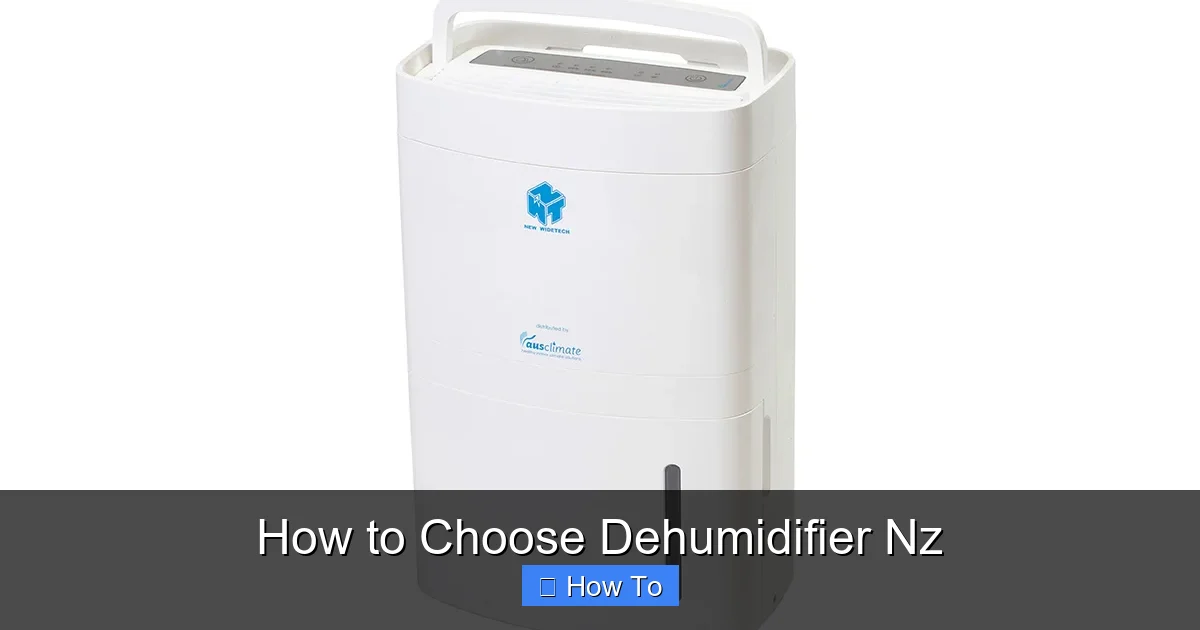
Choosing the right dehumidifier in NZ depends on your home’s size, humidity levels, and climate. This guide walks you through key factors like capacity, energy efficiency, and placement to help you pick the best model for lasting comfort and air quality.
Quick Answers to Common Questions
What size dehumidifier do I need for a 30m² room?
For a 30m² room with moderate humidity, choose a 15–20L/day model. If the room is very damp or poorly ventilated, go for 20L/day or higher.
Can I run a dehumidifier all the time?
Yes, but use auto mode or a timer to avoid over-drying. Most units are designed for continuous use, but check the manual for recommendations.
Do dehumidifiers use a lot of electricity?
It depends on the model and usage. A 250W unit running 8 hours uses about $0.60/day. Look for energy-efficient models to save money.
Can I put a dehumidifier in my bedroom?
Yes, especially if it’s quiet (under 50 dB). Desiccant models are ideal for bedrooms due to low noise levels.
Should I buy a dehumidifier with a hose for drainage?
If you don’t want to empty the tank daily, yes. Continuous drainage is great for basements, laundries, or high-humidity areas.
How to Choose Dehumidifier NZ: A Complete Step-by-Step Guide
If you’ve noticed damp walls, musty smells, or condensation on windows, your home might be too humid. In New Zealand’s temperate, often damp climate—especially in regions like Wellington, Christchurch, or the West Coast—excess moisture is a common issue. A dehumidifier can make a big difference, improving air quality, preventing mould, and protecting your furniture and health.
But with so many models on the market, how do you choose the right one? This guide will walk you through everything you need to know to pick the best dehumidifier for your NZ home. We’ll cover size, type, features, energy use, and where to buy—so you can make a confident, informed decision.
Step 1: Understand Why You Need a Dehumidifier
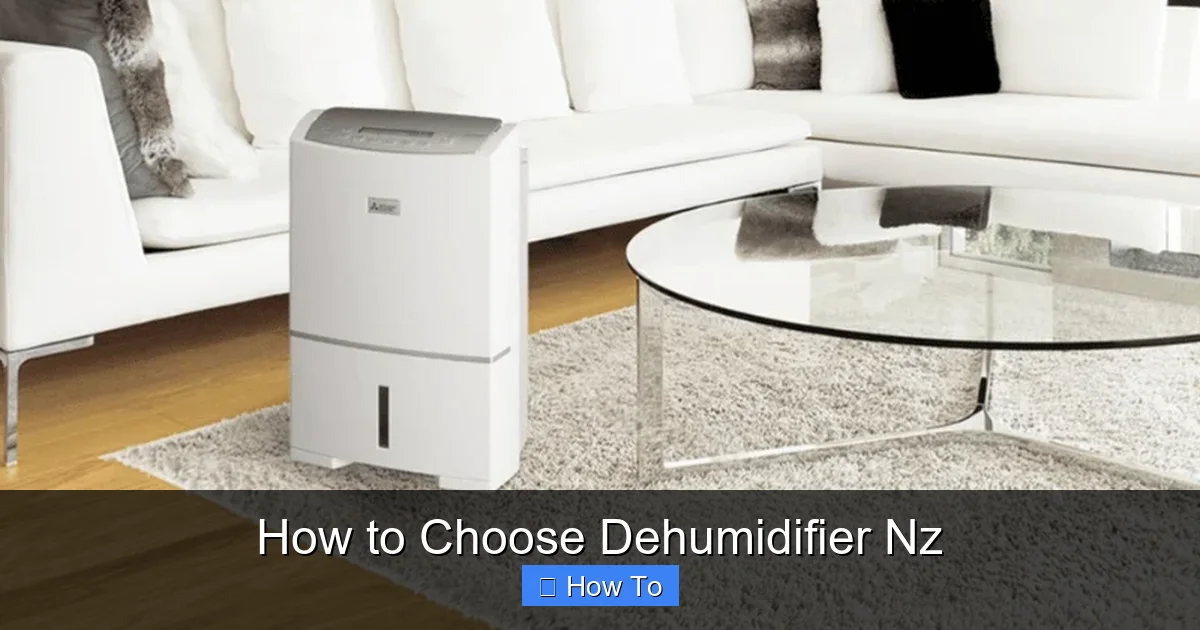
Visual guide about How to Choose Dehumidifier Nz
Image source: experteasy.com.au
Before buying, it’s important to know what problem you’re solving. High humidity isn’t just uncomfortable—it can lead to real issues:
- Mould and mildew growth: These thrive in damp environments and can damage walls, clothes, and books.
- Allergies and respiratory issues: Dust mites and mould spores worsen asthma and allergies.
- Condensation: Common in bathrooms, kitchens, and poorly insulated homes, especially in winter.
- Odours: Musty smells often come from trapped moisture in carpets, curtains, or wardrobes.
- Damage to belongings: Wooden furniture, electronics, and musical instruments can warp or rust in humid conditions.
In NZ, many homes—especially older ones—lack proper ventilation or insulation, making dehumidifiers a smart investment. Coastal areas and regions with high rainfall are particularly prone to dampness.
Step 2: Measure Your Space and Humidity Level
The first step in choosing a dehumidifier is understanding your environment. Two key factors matter: room size and humidity level.
Measure the Room Size
Dehumidifiers are rated by how much moisture they can remove in 24 hours, measured in litres (L). But this capacity must match your room size.
- Small rooms (up to 20m²): Look for 10–15L/day models. Ideal for bedrooms, bathrooms, or small apartments.
- Medium rooms (20–40m²): Choose 15–20L/day units. Suitable for living rooms or open-plan areas.
- Large spaces (40m²+): Go for 20L/day or higher. Best for whole-house use, especially in damp basements or large homes.
Tip: If your home is open-plan, calculate the total square metreage of the connected areas. For example, a 30m² living room connected to a 15m² dining area = 45m² total.
Check the Humidity Level
Ideal indoor humidity is between 40% and 60%. Anything above 60% is considered high and may require a dehumidifier.
You can check humidity with a hygrometer (a small, inexpensive device available at hardware stores or online). Place it in the room for 24 hours to get an average reading.
- 50–60%: Mild dampness. A small dehumidifier may help.
- 60–70%: Moderate humidity. A medium-capacity unit is recommended.
- 70%+: High humidity. You’ll need a powerful dehumidifier, possibly with continuous drainage.
In NZ, winter months often bring higher indoor humidity due to heating and reduced ventilation. If your home feels clammy or you see condensation on windows, it’s a sign you need action.
Step 3: Choose the Right Type of Dehumidifier
There are two main types of dehumidifiers: compressor and desiccant. Each works differently and suits different climates and needs.
Compressor Dehumidifiers
These are the most common type in NZ. They use a refrigeration system to cool air, causing moisture to condense and collect in a tank.
- Best for: Warm to moderate climates (like most of NZ).
- Pros: Highly efficient at removing large amounts of moisture; cost-effective; widely available.
- Cons: Can be noisy; less effective in cold temperatures (below 15°C); may blow warm air into the room.
If you live in Auckland, Hamilton, or Tauranga—where winters are mild—a compressor model is usually the best choice.
Desiccant Dehumidifiers
These use a moisture-absorbing material (like silica gel) to trap water vapour. They don’t rely on cooling, so they work well in cold environments.
- Best for: Cooler areas (like Dunedin, Invercargill, or mountain regions); bedrooms; quiet operation needed.
- Pros: Quiet; effective in low temperatures; lightweight and compact.
- Cons: Less efficient in high humidity; higher running costs; smaller water tanks.
Desiccant models are ideal if you need a dehumidifier for a bedroom or nursery, or if your home gets very cold in winter.
Hybrid Models
Some newer dehumidifiers combine both technologies. These are more expensive but offer flexibility across seasons and room types.
Step 4: Consider Capacity and Tank Size
Capacity (litres per day) and tank size (litres) are often confused—but both matter.
Capacity (L/day)
This tells you how much moisture the unit can remove in 24 hours. Match this to your room size and humidity level.
- 10–12L/day: Small rooms, low humidity.
- 15–20L/day: Medium rooms, moderate humidity.
- 20L+/day: Large spaces, high humidity or whole-house use.
Example: A 20m² bedroom with 65% humidity will do well with a 15L/day model. But a 50m² damp basement may need 25L/day or more.
Tank Size (Litres)
This is how much water the internal tank can hold before it needs emptying.
- 1–2L: Small tanks, need emptying daily or more.
- 2–4L: Medium tanks, suitable for most homes.
- 4L+: Large tanks, ideal for high humidity or unattended use.
If you don’t want to empty the tank daily, look for a model with a larger tank or a continuous drainage option (see Step 6).
Tip: A 20L/day dehumidifier may only have a 3L tank—so it will fill up quickly in damp conditions. Always check both specs.
Step 5: Check Energy Efficiency and Running Costs
Dehumidifiers run for hours each day, so energy use matters. A more efficient model can save you hundreds over its lifetime.
Look for Energy Star or High Efficiency Ratings
In NZ, some models carry the Energy Star label or have energy efficiency ratings. These units use less power for the same output.
- Low wattage: Aim for under 300W for a 15–20L model. Lower = cheaper to run.
- Energy factor: Measured in litres per kilowatt-hour (L/kWh). Higher is better. Look for 1.5 L/kWh or above.
Example: A 250W dehumidifier running 8 hours a day uses 2kWh. At NZ’s average electricity rate (~$0.30/kWh), that’s $0.60 per day or ~$18/month.
Use a Timer or Auto Mode
Many modern dehumidifiers have timers or auto-humidistats that turn the unit on/off based on humidity levels. This prevents over-drying and saves energy.
Consider Seasonal Use
In NZ, you may only need a dehumidifier in winter. If so, a smaller, energy-efficient model used part-time is better than a large unit running year-round.
Step 6: Evaluate Key Features and Smart Functions
Modern dehumidifiers come with helpful features that improve convenience and performance.
Auto-Humidistat
This sensor measures room humidity and adjusts the fan speed or turns the unit on/off to maintain your desired level (e.g., 50%). Prevents over-drying and saves energy.
Continuous Drainage
Instead of emptying a tank, you can attach a hose to drain water directly into a sink or floor drain. Ideal for basements, laundries, or high-humidity areas.
Tip: Make sure the hose outlet is lower than the dehumidifier to allow gravity drainage.
Washable or Reusable Filters
Air filters trap dust and allergens. Washable filters save money and reduce waste. Check if the filter is easy to remove and clean.
Timer and Sleep Mode
A timer lets you set the dehumidifier to run for a few hours or turn off automatically. Sleep mode reduces noise and dims lights—great for bedrooms.
Quiet Operation (Under 50 dB)
Noise is measured in decibels (dB). For quiet rooms:
- Under 45 dB: Very quiet (like a whisper).
- 45–50 dB: Quiet (like a fridge).
- Over 50 dB: Noticeable (like a conversation).
Desiccant models are usually quieter than compressor types.
Portability and Wheels
If you plan to move the unit between rooms, look for a lightweight model with carry handles and wheels.
Step 7: Choose the Right Placement and Installation
Where you place your dehumidifier affects its performance.
Best Locations
- Living room or open-plan area: Central location helps circulate dry air.
- Basement or laundry: High-humidity zones benefit most.
- Near damp sources: Bathrooms, kitchens, or external walls.
Avoid placing it in corners or behind furniture—airflow is essential.
Ventilation Tips
- Keep at least 15–20cm of space around the unit for airflow.
- Close doors and windows while running to trap dry air.
- Use fans to help circulate air in large rooms.
Whole-House vs. Portable Units
Most dehumidifiers are portable. For whole-house coverage, consider:
- A large-capacity unit (25L+/day) placed centrally.
- A ducted system (more expensive, requires professional installation).
- Multiple smaller units in key areas.
In NZ, portable units are the most practical and affordable option for most homes.
Step 8: Buy from a Trusted NZ Retailer
When buying a dehumidifier in NZ, choose a reputable seller for peace of mind.
Look for Local Support
- Warranty: At least 2 years is standard. Check if repairs are available locally.
- Customer service: Can you get help if the unit fails?
- Voltage compatibility: All NZ dehumidifiers should be 230V. Don’t import 110V models.
Top NZ Retailers
- Noel Leeming: Wide range, in-store support, frequent sales.
- Harvey Norman: Good selection, extended warranties available.
- PB Tech: Tech-focused, often has energy-efficient models.
- Bricks & Mortar (online): Specialises in home appliances, fast delivery.
- Trade Me: Compare prices, but check seller ratings and return policies.
Avoid cheap, no-name brands from overseas marketplaces—they often lack support and may not meet NZ safety standards.
Step 9: Maintain Your Dehumidifier for Long-Term Use
A well-maintained dehumidifier lasts longer and works better.
Weekly Maintenance
- Empty the water tank.
- Wash the air filter with warm soapy water.
- Wipe the exterior with a damp cloth.
Monthly Checks
- Inspect the drainage hose for clogs.
- Check for frost buildup (on compressor models in cold rooms).
- Ensure vents are not blocked.
Seasonal Care
- Deep clean the tank and filter before winter use.
- Store in a dry place during summer if not needed.
- Run the unit for 10 minutes monthly to keep parts moving.
Troubleshooting Common Issues
Even the best dehumidifiers can have problems. Here’s how to fix common issues:
Unit Not Removing Moisture
- Check if the room is too cold (below 15°C)—compressor models struggle in cold.
- Ensure doors/windows are closed.
- Clean or replace the filter.
- Verify the humidistat is set correctly.
Tank Fills Too Quickly
- Room may be very damp—consider a higher-capacity model.
- Use continuous drainage if available.
- Run the unit more frequently or in shorter bursts.
Unit is Too Noisy
- Place on a flat, stable surface.
- Check for loose parts or vibrations.
- Switch to low fan speed or sleep mode.
Ice Builds Up on Coils
- Common in cold rooms with compressor models.
- Turn off and let it defrost.
- Move to a warmer location or switch to a desiccant model.
Conclusion
Choosing the right dehumidifier in NZ doesn’t have to be overwhelming. By assessing your space, understanding humidity levels, and comparing types and features, you can find a model that keeps your home dry, healthy, and comfortable.
Remember: Match capacity to room size, prioritise energy efficiency, and look for smart features like auto-humidistats and continuous drainage. Buy from a trusted NZ retailer with good support, and maintain your unit regularly for best results.
Whether you’re fighting winter damp in Christchurch or musty air in a Wellington basement, the right dehumidifier makes a real difference. Take the time to choose wisely—your home (and your health) will thank you.