
Choosing the right dehumidifier can improve air quality, reduce mold, and protect your home. This guide walks you through everything you need to know—from room size and moisture levels to energy efficiency and smart features—so you can pick the best model for your needs.
Quick Answers to Common Questions
What’s the ideal indoor humidity level?
The ideal indoor humidity is between 30% and 50%. Use a hygrometer to monitor levels and adjust your dehumidifier accordingly.
Can I use a dehumidifier in winter?
Yes, but compressor models work best above 65°F. For colder spaces, choose a desiccant dehumidifier or one with auto-defrost.
How often should I empty the water tank?
Most tanks need emptying every 12–24 hours. Use continuous drainage for unattended operation.
Do dehumidifiers use a lot of electricity?
They use moderate energy. ENERGY STAR models are more efficient and can save $20–$50 per year compared to standard units.
Can a dehumidifier help with allergies?
Yes! By reducing mold and dust mites, dehumidifiers can ease allergy and asthma symptoms.
How to Choose Dehumidifier Guide: A Complete Step-by-Step Plan
High humidity in your home isn’t just uncomfortable—it can lead to mold, musty odors, allergies, and even structural damage. A dehumidifier helps control moisture levels, making your indoor air healthier and more pleasant. But with so many models on the market, how do you choose the right dehumidifier? This guide will walk you through every step, from assessing your needs to comparing features and making a smart purchase. By the end, you’ll know exactly what to look for—and avoid common mistakes.
Whether you’re dealing with a damp basement, a humid bathroom, or a stuffy bedroom, the right dehumidifier can make a big difference. We’ll cover everything: size, capacity, energy use, noise, smart features, and more. No technical jargon—just clear, practical advice to help you pick the best unit for your home.
Step 1: Assess Your Space and Humidity Level
Before you even look at dehumidifiers, you need to understand your home’s moisture situation. This step ensures you don’t buy a unit that’s too weak or unnecessarily powerful.
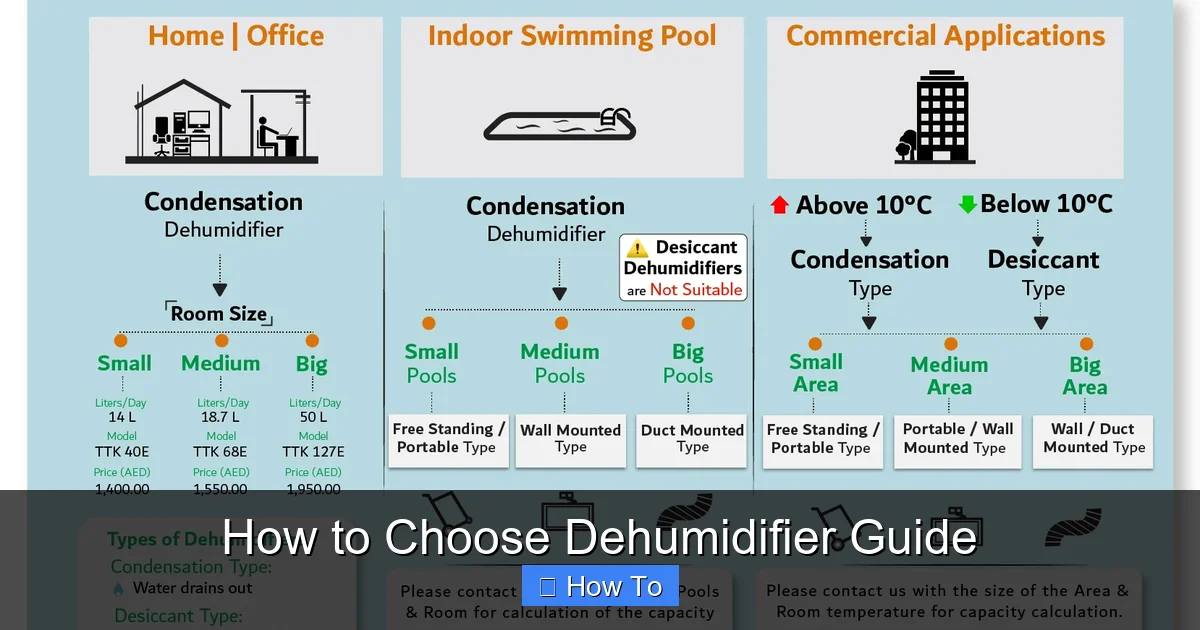
Visual guide about How to Choose Dehumidifier Guide
Image source: vackergroup.ae
Measure the Room Size
Start by measuring the square footage of the area where you plan to use the dehumidifier. For example:
- A small bathroom might be 50 sq. ft.
- A standard bedroom is around 150–200 sq. ft.
- A basement can range from 500 to 1,500 sq. ft. or more.
Use a tape measure or a smartphone app to get accurate dimensions. Multiply length by width to get square footage. This number is crucial for choosing the right capacity.
Test the Humidity Level
Next, check how humid your space really is. You can buy a hygrometer (a small digital device) for under $20. Place it in the room for 24 hours, avoiding direct sunlight or drafts.
Here’s what the readings mean:
- Below 30%: Too dry—no dehumidifier needed.
- 30%–50%: Ideal range. Your home is in good shape.
- 50%–60%: Moderately humid. Consider a small dehumidifier.
- Above 60%: High humidity. You need a dehumidifier, and possibly a larger one.
If you notice condensation on windows, peeling paint, or a musty smell, your humidity is likely above 60%—even if the hygrometer says otherwise. Trust your senses too.
Identify the Source of Moisture
Understanding where the moisture comes from helps you choose the right type of dehumidifier. Common sources include:
- Basements: Often damp due to poor ventilation and groundwater seepage.
- Bathrooms: Steam from showers increases humidity quickly.
- Laundry rooms: Wet clothes and dryers release moisture.
- Entire homes: In humid climates, whole-house systems may be needed.
If the problem is seasonal (like summer humidity), a portable unit may suffice. For year-round dampness, especially in basements, a more powerful or permanently installed model might be better.
Step 2: Understand Dehumidifier Capacity and Size
Dehumidifiers are rated by how many pints of moisture they can remove in 24 hours. This is called “pint capacity.” But bigger isn’t always better—you need the right size for your space.
Match Pint Capacity to Room Size and Conditions
Use this general guide to match capacity to your needs:
- Small rooms (up to 500 sq. ft.), slightly damp: 20–30 pint capacity
- Medium rooms (500–1,500 sq. ft.), moderately damp: 30–50 pint capacity
- Large rooms (1,500+ sq. ft.), very damp or wet: 50–70+ pint capacity
For example, a 30-pint dehumidifier works well in a 1,000 sq. ft. basement with moderate humidity. But if your basement floods occasionally, go for a 50-pint or higher model.
Don’t Overbuy
A dehumidifier that’s too large will cycle on and off too quickly, wasting energy and not removing moisture effectively. It may also cool the room too much. On the other hand, a unit that’s too small will run constantly, wear out faster, and never catch up.
Consider the “AHAM Rating”
Look for the AHAM (Association of Home Appliance Manufacturers) rating on the label. This standard test measures performance in a controlled 60% humidity environment at 80°F. It helps you compare models fairly. A 30-pint AHAM-rated unit removes 30 pints under these conditions—real-world results may vary slightly.
Step 3: Choose the Right Type of Dehumidifier
Not all dehumidifiers are the same. The two main types are compressor-based (refrigerant) and desiccant. Each has pros and cons.
Compressor (Refrigerant) Dehumidifiers
These are the most common and affordable. They use a cold coil to condense moisture from the air. Best for:
- Temperatures above 65°F
- Moderate to high humidity
- Basements, garages, and living areas
Pros: Energy-efficient, effective in warm, humid climates, widely available.
Cons: Less effective in cold spaces (below 60°F), can be noisy, may freeze up in winter.
Desiccant Dehumidifiers
These use a moisture-absorbing material (like silica gel) to pull water from the air. They work well in cold environments.
Pros: Quiet, effective in low temperatures (down to 40°F), lightweight.
Cons: Less energy-efficient, higher running costs, smaller capacity.
Desiccant models are ideal for RVs, cabins, or unheated spaces like garages in winter.
Whole-House vs. Portable Units
If you need dehumidification throughout your home, consider a whole-house dehumidifier. These are installed in your HVAC system and work with your furnace or air conditioner. They’re more expensive ($1,000–$3,000) but offer consistent, whole-home control.
For most people, a portable dehumidifier is the best choice. They’re affordable, easy to move, and perfect for single rooms or basements.
Step 4: Look for Key Features and Smart Functions
Modern dehumidifiers come with features that improve convenience, efficiency, and performance. Here’s what to look for.
Auto-Humidistat
This built-in sensor monitors humidity and turns the unit on or off to maintain your desired level (e.g., 45%). No more guessing or constant adjustments. It saves energy and keeps your home comfortable.
Continuous Drainage Option
Most dehumidifiers have a water tank that needs emptying every 12–24 hours. But if you’re using it in a basement or unattended space, look for a model with a continuous drainage hose connection. Just attach a garden hose and let the water flow directly into a floor drain or sump pump.
Washable Air Filter
A clean filter improves air quality and efficiency. Choose a model with a washable or reusable filter. Rinse it monthly to prevent dust and mold buildup.
Quiet Operation
Noise matters, especially in bedrooms or home offices. Look for units rated under 50 decibels (dB). For reference, a quiet library is about 40 dB. Many manufacturers list noise levels in the specs.
Auto-Defrost
If you plan to use the dehumidifier in a cold basement (below 65°F), choose a model with auto-defrost. This prevents the coils from freezing, which can damage the unit or stop it from working.
Timer and Auto-Restart
A 24-hour timer lets you set the dehumidifier to run only when needed. Auto-restart resumes operation after a power outage—great for vacation homes or areas with frequent blackouts.
Smart Features (Optional but Handy)
Some high-end models connect to Wi-Fi and work with apps or voice assistants like Alexa. You can monitor humidity, adjust settings, or receive alerts from your phone. Useful for remote monitoring, but not essential.
Step 5: Check Energy Efficiency and Operating Costs
A dehumidifier can run for hours each day, so energy use adds up. Choosing an efficient model saves money and reduces environmental impact.
Look for ENERGY STAR Certification
ENERGY STAR® certified dehumidifiers use 15–30% less energy than standard models. They meet strict efficiency guidelines set by the EPA. Look for the blue label.
For example, a 50-pint ENERGY STAR unit might use 500 watts, while a non-certified one uses 650 watts. Over a summer, that difference can save $20–$50 on your electric bill.
Calculate Running Costs
To estimate monthly cost:
- Find the wattage (usually on the label or manual).
- Multiply by hours used per day.
- Multiply by your electricity rate (check your bill, usually $0.10–$0.20 per kWh).
- Divide by 1,000 to convert watts to kilowatts.
Example: A 500-watt unit running 10 hours/day at $0.15/kWh costs about $2.25 per month.
Consider the Energy Factor (L/kWh)
This measures how many liters of water the unit removes per kilowatt-hour of electricity. Higher is better. Look for at least 1.5 L/kWh. ENERGY STAR models often exceed 2.0.
Step 6: Think About Placement, Portability, and Maintenance
Where you place your dehumidifier affects its performance. And ease of use matters for long-term satisfaction.
Choose the Right Location
Place the unit in the center of the room or near the source of moisture. Keep it at least 6–12 inches away from walls and furniture for proper airflow. Avoid blocking the intake or exhaust vents.
In basements, near a drain is ideal for continuous drainage. In living areas, choose a spot that’s out of the way but still effective.
Look for Portability Features
If you plan to move the dehumidifier between rooms, choose one with:
- Built-in handles for easy lifting
- Wheels or casters for smooth rolling
- Compact design that fits through doors
Heavy units (over 40 lbs) can be hard to move without wheels.
Plan for Regular Maintenance
To keep your dehumidifier running well:
- Empty the water tank regularly (unless using continuous drain)
- Clean the filter monthly with soap and water
- Wipe the exterior and coils with a damp cloth
- Check the hose for clogs if using drainage
Neglecting maintenance can reduce efficiency and lead to mold growth inside the unit.
Step 7: Set a Budget and Compare Models
Dehumidifiers range from $100 to $500+ for portable units. Whole-house systems cost much more. Set a budget based on your needs.
Price Ranges
- Budget ($100–$200): Basic 20–30 pint models. Good for small rooms or occasional use. May lack advanced features.
- Mid-Range ($200–$350): 30–50 pint units with humidistat, auto-defrost, and better efficiency. Best value for most homes.
- High-End ($350–$500+): 50+ pint models with smart features, quiet operation, and superior build quality. Ideal for large basements or humid climates.
Don’t just go for the cheapest option. A $50 savings upfront could cost you $100 in higher energy bills or repairs over time.
Read Reviews and Compare Brands
Check customer reviews on Amazon, Home Depot, or Consumer Reports. Look for comments on:
- Reliability and durability
- Noise level
- Ease of use and maintenance
- Customer service and warranty
Top brands include Frigidaire, hOmeLabs, GE, Honeywell, and AprilAire. Avoid unknown brands with no reviews or warranties.
Check the Warranty
A good warranty shows the manufacturer stands behind their product. Look for at least a 1-year warranty. Some offer 2–5 years on compressors or key parts.
Troubleshooting Common Issues
Even the best dehumidifier can have problems. Here’s how to fix common issues.
Unit Won’t Turn On
- Check the power cord and outlet.
- Make sure the water tank isn’t full (most units have a safety switch).
- Reset the circuit breaker if needed.
Not Removing Enough Moisture
- Clean the air filter—clogged filters reduce airflow.
- Ensure the room is sealed (close windows and doors).
- Check if the unit is too small for the space.
- Verify the temperature is above 65°F (for compressor models).
Freezing Up (Coils Covered in Ice)
- Turn off the unit and let it thaw.
- Move it to a warmer location.
- Ensure auto-defrost is enabled (if available).
- Clean the coils and filter.
Loud or Unusual Noises
- Check for loose parts or debris in the fan.
- Make sure the unit is level and not vibrating against a wall.
- Contact customer service if the compressor is making grinding sounds.
Water Leaking
- Ensure the tank is properly seated.
- Check the drainage hose for kinks or clogs.
- Inspect the unit for cracks or damaged seals.
Conclusion
Choosing the right dehumidifier doesn’t have to be overwhelming. By following this guide, you’ve learned how to assess your space, match capacity to needs, compare features, and pick an energy-efficient model that fits your budget. Remember: the best dehumidifier is the one that works quietly, efficiently, and reliably in your specific environment.
Start by measuring your room and checking humidity levels. Then, choose a unit with the right pint capacity, key features like auto-humidistat and continuous drainage, and ENERGY STAR certification. Don’t forget portability, noise, and maintenance. With the right choice, you’ll enjoy fresher air, fewer allergens, and a healthier home.
Now that you know how to choose dehumidifier, take action. Buy with confidence—and breathe easier.