
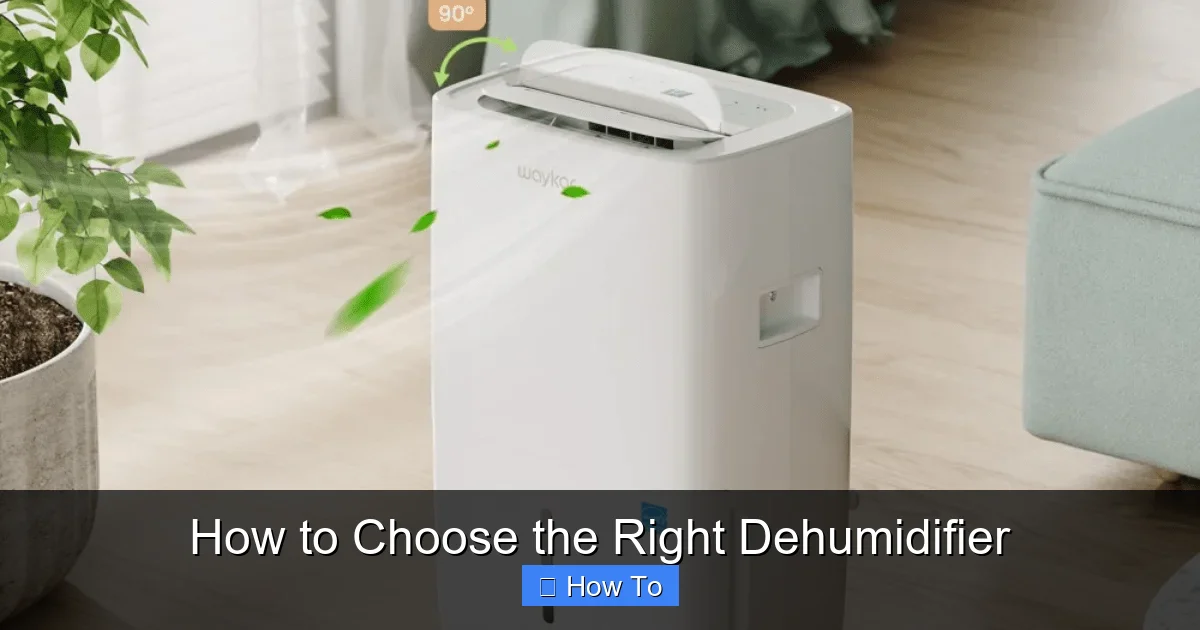
Choosing the right dehumidifier can improve air quality, prevent mold, and protect your home. This guide walks you through every step—from assessing humidity levels to comparing models—so you can make a smart, informed decision.
Quick Answers to Common Questions
Tip/Question?
How often should I empty the dehumidifier tank?
Answer: It depends on the humidity level and tank size. In high humidity, you may need to empty it daily. Models with continuous drainage eliminate this task.
Tip/Question?
Can I use a dehumidifier in winter?
Answer: Yes, but compressor models may struggle below 65°F. Use a desiccant dehumidifier or one with auto-defrost for cold spaces.
Tip/Question?
Do dehumidifiers use a lot of electricity?
Answer: They can, but ENERGY STAR models are more efficient. Look for units with low wattage and auto-shutoff features.
Tip/Question?
Should I run my dehumidifier all the time?
Answer: No. Use the auto-humidistat to maintain 30–50% humidity. Running it constantly wastes energy and can over-dry the air.
Tip/Question?
Can a dehumidifier help with allergies?
Answer: Yes! By reducing mold and dust mites, dehumidifiers can improve indoor air quality and ease allergy symptoms.
How to Choose the Right Dehumidifier
If you’ve ever noticed a musty smell in your basement, peeling paint on your walls, or condensation on your windows, you might have a humidity problem. High indoor humidity doesn’t just feel uncomfortable—it can lead to mold growth, dust mites, and even structural damage over time. The good news? A dehumidifier can help. But with so many models on the market, how do you choose the right one?
This complete guide will walk you through everything you need to know to pick the perfect dehumidifier for your home. Whether you’re dealing with a damp crawl space, a humid bathroom, or a full basement, we’ll help you assess your needs, understand key features, and avoid common mistakes. By the end, you’ll feel confident selecting a dehumidifier that keeps your air fresh, your home healthy, and your energy bills low.
Step 1: Understand Why You Need a Dehumidifier
Before you start shopping, it’s important to understand what a dehumidifier does and why you might need one. A dehumidifier removes excess moisture from the air, helping to maintain a healthy indoor environment. It works by pulling in humid air, cooling it to condense the moisture, and then releasing drier air back into the room.
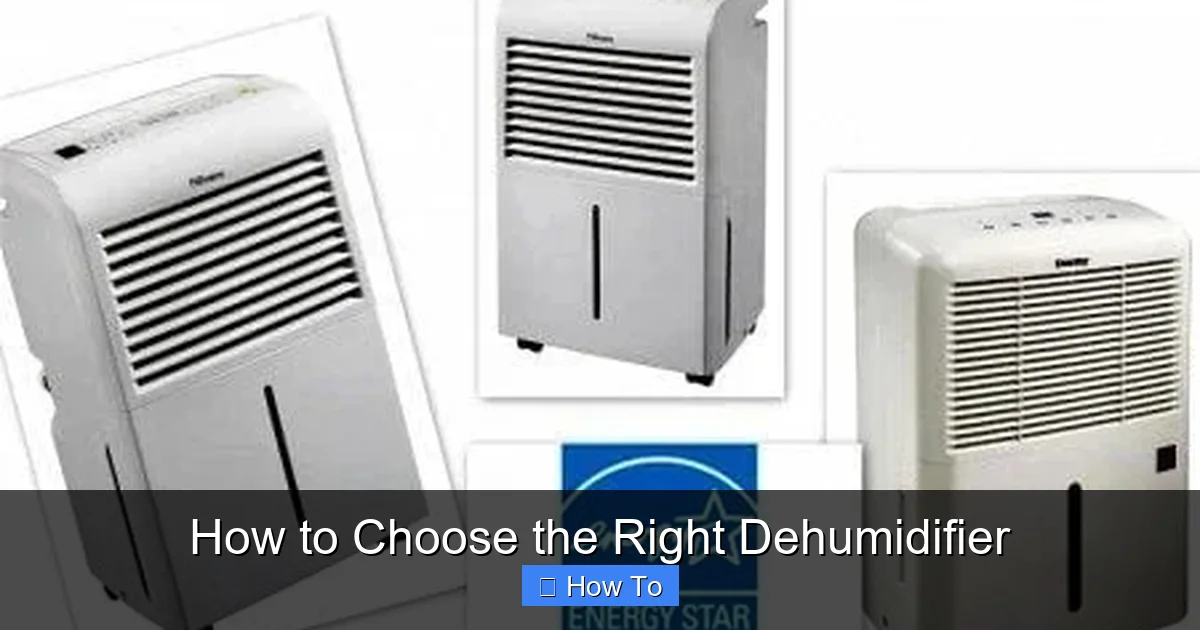
Visual guide about How to Choose the Right Dehumidifier
Image source: howtobuildahouseblog.com
Common signs you need a dehumidifier include:
- Persistent musty odors
- Visible mold or mildew
- Condensation on windows, walls, or pipes
- Allergies or respiratory issues that worsen indoors
- Warped wood, peeling wallpaper, or rust on metal fixtures
If you’ve noticed any of these issues, a dehumidifier could be a game-changer. But not all dehumidifiers are created equal. The right one for your neighbor’s basement might not be the best fit for your laundry room. That’s why it’s essential to evaluate your specific situation before making a purchase.
Step 2: Measure Your Space and Assess Humidity Levels
The first step in choosing the right dehumidifier is understanding your space. You’ll need to know two key things: the square footage of the area and the current humidity level.
Calculate the Square Footage
Grab a tape measure and calculate the length and width of the room. Multiply these numbers to get the square footage. For example, a basement that’s 20 feet by 30 feet is 600 square feet. This measurement helps you determine the appropriate size and capacity of the dehumidifier.
Check the Humidity Level
Use a hygrometer—a small, inexpensive device that measures humidity—to check the moisture level in your space. You can find digital hygrometers at most hardware stores or online for under $20. Place it in the room for 24 hours to get an accurate reading.
Ideal indoor humidity levels are between 30% and 50%. If your reading is consistently above 60%, you have a humidity problem that needs addressing. The higher the humidity, the more powerful the dehumidifier you’ll need.
Also, consider the room’s condition. Is it damp, very damp, or wet? A damp basement with occasional moisture might need a 30-pint unit, while a flooded crawl space could require a 70-pint model. Manufacturers often provide guidelines based on room size and moisture level, so use these as a starting point.
Step 3: Choose the Right Capacity (Pint Rating)
Dehumidifiers are rated by how many pints of moisture they can remove in 24 hours. This is known as the pint capacity. Choosing the right capacity is crucial—too small, and it won’t keep up; too large, and you’ll waste energy and money.
Here’s a general guide based on room size and moisture level:
- 10–25 pints: Small spaces (under 500 sq. ft.), low humidity, or occasional use (e.g., bathrooms, closets)
- 30–50 pints: Medium spaces (500–1,500 sq. ft.), moderate humidity (e.g., average basements, laundry rooms)
- 50–70 pints: Large spaces (1,500+ sq. ft.), high humidity, or very damp conditions (e.g., flooded basements, humid climates)
For example, a 700-square-foot basement with a musty smell and occasional puddles after rain would likely need a 50-pint dehumidifier. But if it’s just slightly damp, a 30-pint model might suffice.
Keep in mind that these are estimates. Factors like ventilation, insulation, and local climate can affect performance. If you live in a humid region like Florida or Louisiana, you may need a higher-capacity unit than someone in a drier climate like Arizona.
Step 4: Decide Between Dehumidifier Types
There are two main types of dehumidifiers: compressor (refrigerant) and desiccant. Each works differently and is suited to different environments.
Compressor (Refrigerant) Dehumidifiers
These are the most common type and work like a refrigerator. They use a compressor to cool coils, causing moisture in the air to condense and collect in a tank. They’re highly effective in warm, humid conditions—typically above 65°F (18°C).
Best for: Basements, living rooms, and other warm, damp spaces.
Pros: High moisture removal, energy-efficient in warm climates, widely available.
Cons: Less effective in cold temperatures, can be noisy, coils may freeze in unheated areas.
Desiccant Dehumidifiers
These use a moisture-absorbing material (like silica gel) to pull water from the air. They don’t rely on cooling coils, so they work well in cold environments—down to 40°F (4°C) or lower.
Best for: Garages, crawl spaces, RVs, and unheated areas.
Pros: Effective in cold temperatures, quieter operation, lightweight.
Cons: Less efficient in high humidity, higher energy use, smaller capacity.
If your space is consistently warm and humid, go with a compressor model. For cold or fluctuating temperatures, a desiccant dehumidifier is the better choice.
Step 5: Look for Key Features
Modern dehumidifiers come with a range of features that can make them more convenient, efficient, and effective. Here are the most important ones to consider:
Auto-Humidistat
This feature allows the dehumidifier to monitor and maintain a set humidity level. You choose your target (e.g., 45%), and the unit turns on and off automatically to keep the air in that range. This prevents over-drying and saves energy.
Continuous Drainage Option
Most dehumidifiers collect water in a built-in tank that needs to be emptied regularly. But if you don’t want to deal with frequent emptying, look for a model with a continuous drainage hose. You can attach a garden hose and route it to a floor drain, sink, or sump pump.
Washable or Reusable Filters
Air filters trap dust and allergens, improving air quality. Washable filters can be cleaned and reused, saving you money and reducing waste. Check the filter regularly and clean it every few weeks.
Quiet Operation
If you’re placing the dehumidifier in a bedroom, living room, or office, noise matters. Look for models with low decibel (dB) ratings—ideally under 50 dB. Some units have a “quiet mode” or insulated cabinets to reduce sound.
Auto Defrost
This feature prevents the coils from freezing in cold environments. It’s essential if you’re using a compressor dehumidifier in an unheated basement or garage during winter.
Energy Efficiency
Dehumidifiers can use a lot of electricity, so energy efficiency is important. Look for the ENERGY STAR label, which means the unit meets strict efficiency guidelines set by the U.S. Environmental Protection Agency. ENERGY STAR models use about 15% less energy than standard models.
Portability and Design
Consider the size, weight, and mobility of the unit. Look for built-in handles and caster wheels for easy movement. Some models are compact and stylish, making them suitable for living spaces.
Step 6: Consider Installation and Placement
Where you place your dehumidifier affects its performance. Follow these tips for optimal results:
- Central location: Place the unit in the center of the room or near the source of moisture (e.g., near a washing machine or water heater).
- Allow airflow: Keep at least 6–12 inches of space around the unit for proper air circulation.
- Avoid obstructions: Don’t place it behind furniture or in tight corners.
- Elevate if needed: Use a stand or platform if the floor is prone to flooding.
If you’re using a hose for continuous drainage, make sure the outlet is accessible and the hose can reach without kinking.
Step 7: Compare Brands and Read Reviews
Once you know what you need, it’s time to shop. Compare models from reputable brands like Frigidaire, hOmeLabs, GE, Honeywell, and Tosot. Look for:
- Customer reviews on Amazon, Home Depot, or Lowe’s
- Warranty length (most offer 1–2 years)
- Availability of replacement parts and filters
- Customer service reputation
Pay attention to real-world feedback. A model with a high pint rating might sound great on paper, but if users report frequent breakdowns or poor customer support, it’s not worth it.
Step 8: Set a Budget
Dehumidifiers range from $100 to $500+, depending on size, features, and brand. Here’s a rough breakdown:
- Budget ($100–$200): Basic 30-pint models, limited features, suitable for small spaces.
- Mid-range ($200–$350): 50-pint units with auto-humidistat, continuous drainage, and energy efficiency.
- High-end ($350+): 70-pint models, smart controls, Wi-Fi connectivity, and advanced filtration.
Don’t just go for the cheapest option. A slightly more expensive model with better efficiency and durability can save you money in the long run.
Step 9: Maintain Your Dehumidifier
Once you’ve chosen and installed your dehumidifier, regular maintenance is key to keeping it running smoothly.
- Clean the filter: Every 2–4 weeks, remove and wash the filter with warm, soapy water. Let it dry completely before reinstalling.
- Empty the tank: If not using continuous drainage, check the tank daily and empty it when full.
- Inspect the coils: Dust and debris can build up on the coils, reducing efficiency. Wipe them gently with a soft brush or cloth.
- Check the hose: If using a drain hose, make sure it’s not clogged or leaking.
- Store properly: If you only use the dehumidifier seasonally, clean it thoroughly and store it in a dry place.
Regular maintenance extends the life of your unit and ensures it works when you need it most.
Troubleshooting Common Issues
Even the best dehumidifiers can run into problems. Here’s how to fix common issues:
- Unit won’t turn on: Check the power cord, outlet, and circuit breaker. Make sure the tank isn’t full (some models have a safety shutoff).
- Not removing moisture: Clean the filter and coils. Ensure the room isn’t too cold (for compressor models) or too dry.
- Leaking water: Check the tank seal and drain hose for cracks or loose connections.
- Too noisy: Make sure the unit is on a level surface and not vibrating against a wall. Clean the fan blades.
- Freezing coils: Enable auto-defrost or move the unit to a warmer area.
If problems persist, consult the user manual or contact the manufacturer.
Conclusion
Choosing the right dehumidifier doesn’t have to be overwhelming. By assessing your space, understanding humidity levels, and comparing features, you can find a model that fits your needs and budget. Remember: the best dehumidifier is the one that effectively controls moisture, runs efficiently, and fits seamlessly into your home.
Take your time, do your research, and don’t skip maintenance. With the right dehumidifier, you’ll enjoy fresher air, fewer allergens, and a healthier home for years to come.