
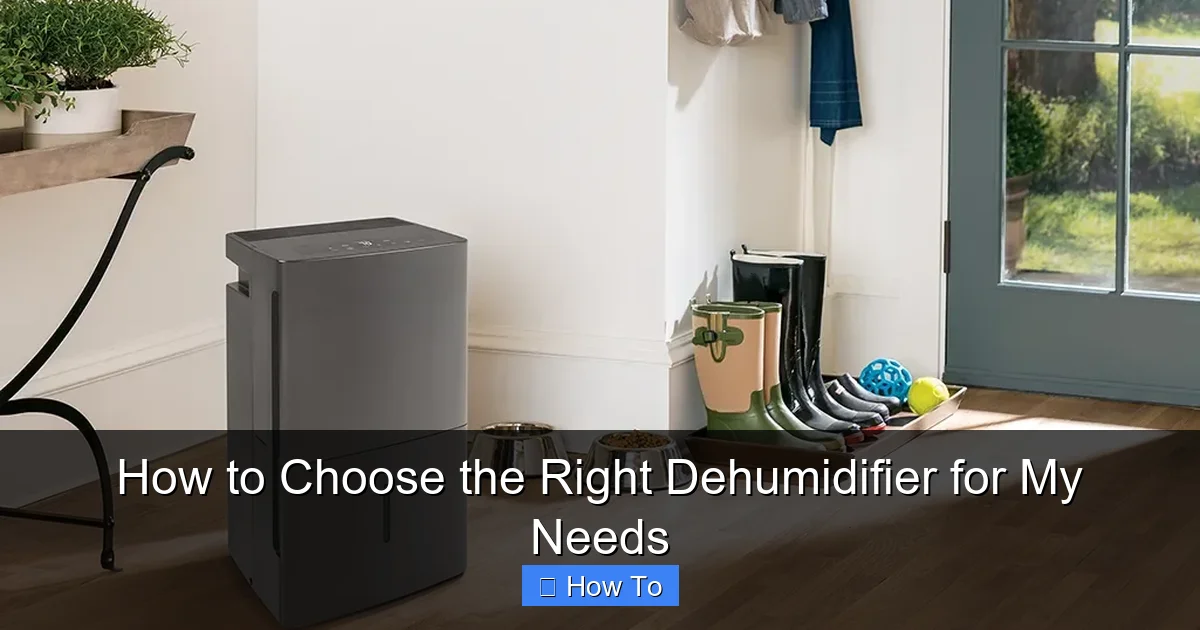
Choosing the right dehumidifier can improve air quality, reduce mold, and protect your home. This guide walks you through key factors like room size, humidity levels, and features to help you pick the perfect model for your needs.
Quick Answers to Common Questions
What size dehumidifier do I need for a 1,000 sq ft basement?
For a 1,000 sq ft basement, choose a 30–50 pint dehumidifier. If the space is very damp or has water issues, go for 50–70 pints.
Can I run a dehumidifier in winter?
Yes, but only if the temperature stays above 60°F. Below that, refrigerant models may freeze. Use a desiccant or low-temp model instead.
How often should I empty the water bucket?
It depends on humidity and capacity. In high humidity, you may need to empty it daily. Use continuous drainage to avoid this.
Is a dehumidifier the same as an air purifier?
No. A dehumidifier removes moisture; an air purifier removes particles like dust and pollen. Some units combine both functions.
Can a dehumidifier help with allergies?
Yes. By reducing humidity, it discourages mold and dust mites—common allergy triggers—improving indoor air quality.
How to Choose the Right Dehumidifier for My Needs
If you’ve noticed musty smells, peeling paint, or condensation on your windows, your home might have a humidity problem. Too much moisture in the air can lead to mold, mildew, dust mites, and even structural damage over time. A dehumidifier is a simple, effective solution—but with so many models on the market, how do you choose the right one?
This step-by-step guide will help you pick the perfect dehumidifier for your home. Whether you’re dealing with a damp basement, a humid bathroom, or just want better air quality, we’ll walk you through everything you need to know. By the end, you’ll understand how to match the right capacity, features, and size to your specific needs—so you can breathe easier and protect your home.
Step 1: Understand Why You Need a Dehumidifier
Before shopping, it’s important to know why you need a dehumidifier. This will help you focus on the right features and avoid overspending on a model that’s too powerful—or underbuying one that’s too weak.
Visual guide about How to Choose the Right Dehumidifier for My Needs
Image source: dehumidifierhireauckland.co.nz
Common Reasons to Use a Dehumidifier
- High humidity: If your indoor air feels sticky or clammy, especially in summer, a dehumidifier can restore comfort.
- Mold or mildew growth: Visible mold in corners, behind furniture, or in bathrooms signals excess moisture.
- Musty odors: These often come from damp areas like basements or crawl spaces.
- Allergies or asthma: Dust mites and mold thrive in humid environments and can worsen respiratory issues.
- Protecting belongings: Books, electronics, and wooden furniture can warp or degrade in high humidity.
Once you’ve identified your main concern, you can choose a dehumidifier that targets that issue effectively.
Step 2: Measure the Size of the Space
The size of the room or area you want to dehumidify is one of the most important factors. A unit that’s too small won’t keep up with moisture, while one that’s too large may cycle on and off too frequently, wasting energy.
How to Calculate Square Footage
Use a tape measure to find the length and width of the room. Multiply them to get the square footage. For example, a 12 ft x 15 ft room is 180 square feet.
Most dehumidifiers are rated by the amount of moisture they can remove in a 24-hour period, measured in pints. Here’s a general guide:
- Small spaces (up to 500 sq ft): 20–30 pints per day
- Medium spaces (500–1,500 sq ft): 30–50 pints per day
- Large spaces (1,500–2,500 sq ft): 50–70 pints per day
- Very large or extremely damp areas: 70+ pints per day
Pro Tip: If your space is unusually damp—like a flooded basement or a poorly ventilated crawl space—you may need a higher-capacity unit, even if the square footage is modest.
Step 3: Assess the Humidity Level
Not all damp spaces are the same. A damp basement in Minnesota will have different needs than a humid bathroom in Florida. To choose the right dehumidifier, you need to know how humid your space actually is.
Use a Hygrometer
A hygrometer is a small, inexpensive device that measures relative humidity (RH). You can find digital hygrometers at hardware stores or online for under $20. Place it in the room for 24 hours to get an accurate reading.
Here’s what the numbers mean:
- Below 30%: Too dry—may cause dry skin or static electricity.
- 30%–50%: Ideal range for comfort and health.
- 50%–60%: Slightly high—may encourage dust mites.
- Above 60%: High risk for mold and mildew.
Match Humidity to Dehumidifier Capacity
Dehumidifiers are often labeled for different conditions:
- Moderately damp: Spaces with occasional dampness (e.g., laundry room). Choose a 30–50 pint unit.
- Very damp: Spaces with constant moisture (e.g., basement with water stains). Go for 50–70 pints.
- Wet or flooded: Areas with standing water or frequent leaks. Look for 70+ pint models with pump drainage.
Example: A 1,200 sq ft basement with 65% humidity and minor seepage would need a 50–70 pint dehumidifier rated for “very damp” conditions.
Step 4: Choose the Right Type of Dehumidifier
There are three main types of dehumidifiers: refrigerant (compressor), desiccant, and whole-house models. Each works differently and suits different environments.
Refrigerant (Compressor) Dehumidifiers
These are the most common and affordable. They use a cold coil to condense moisture from the air, similar to an air conditioner. Best for:
- Indoor use in temperatures above 65°F
- Basements, garages, and living rooms
- Spaces with moderate to high humidity
Pros: Energy-efficient, widely available, good for large spaces.
Cons: Less effective in cold temperatures; coils can freeze below 60°F.
Desiccant Dehumidifiers
These use a moisture-absorbing material (like silica gel) to pull water from the air. They work well in cold environments.
- Ideal for crawl spaces, RVs, or unheated garages
- Effective in temperatures as low as 40°F
- Quieter than compressor models
Pros: Works in cold climates, quiet operation.
Cons: Less energy-efficient, smaller capacity, higher upfront cost.
Whole-House Dehumidifiers
These are built into your HVAC system and dehumidify your entire home. They’re ideal for large homes or areas with chronic humidity issues.
- Best for homes over 2,500 sq ft
- Requires professional installation
- Often paired with air conditioning systems
Pros: Consistent humidity control, low maintenance.
Cons: Expensive ($1,000–$3,000+), needs ductwork access.
Quick Tip: For most homeowners, a refrigerant dehumidifier is the best balance of performance, cost, and efficiency.
Step 5: Look for Key Features
Modern dehumidifiers come with a range of features that can make them easier to use and more effective. Here’s what to look for:
Auto-Humidistat
This sensor monitors humidity and automatically turns the unit on or off to maintain your desired level (e.g., 45%). No more guessing or constant adjustments.
Continuous Drainage Option
Instead of emptying a bucket every day, you can attach a hose to drain water directly into a floor drain or sump pump. Essential for basements or unattended areas.
Built-in Pump
Some models include a pump that can push water upward—perfect if your drain is higher than the dehumidifier. Great for crawl spaces or homes without floor drains.
Washable Air Filter
A reusable filter traps dust and allergens. Look for one that’s easy to remove and clean—this improves airflow and efficiency.
Timer and Auto-Restart
A timer lets you set operating hours (e.g., run only at night). Auto-restart resumes operation after a power outage—handy during storms.
Low-Temperature Operation
If you’re using the dehumidifier in a cold basement or garage, choose a model rated for low temperatures (down to 41°F or lower).
Noise Level
Check the decibel (dB) rating. Most units range from 40–60 dB. For bedrooms or living areas, aim for under 50 dB.
Portability Features
Wheels, handles, and a compact design make it easy to move the unit from room to room.
Step 6: Consider Energy Efficiency
Dehumidifiers run for hours each day, so energy use adds up. An efficient model can save you money and reduce environmental impact.
Look for ENERGY STAR Certification
ENERGY STAR-rated dehumidifiers use 15–30% less energy than standard models. They also meet strict performance guidelines.
Check the Energy Factor (EF)
This measures how many liters of water the unit removes per kilowatt-hour of electricity. Higher EF = more efficient. Aim for EF of 1.5 or higher.
Estimate Operating Costs
To calculate daily cost:
- Find the wattage (usually on the label or manual).
- Divide by 1,000 to get kilowatts.
- Multiply by hours used per day.
- Multiply by your electricity rate (e.g., $0.12/kWh).
Example: A 300-watt dehumidifier running 10 hours a day:
300W ÷ 1,000 = 0.3 kW
0.3 kW × 10 hrs = 3 kWh
3 kWh × $0.12 = $0.36 per day ($10.80/month)
Pro Tip: A more efficient model might cost $50 more upfront but save $30–$50 per year in electricity.
Step 7: Set a Budget
Dehumidifiers range from $100 to $1,000+. Here’s what you can expect at different price points:
- Budget ($100–$200): Basic 20–30 pint units for small spaces. Fewer features, shorter lifespan.
- Mid-Range ($200–$400): 30–50 pint models with humidistat, timer, and drainage. Best value for most homes.
- High-End ($400–$700): 50–70 pint units with pumps, smart controls, and low-noise operation. Ideal for large or very damp areas.
- Whole-House ($1,000+): Integrated systems for full-home humidity control.
Remember: The cheapest option isn’t always the best. A durable, efficient model may cost more upfront but last longer and save on energy bills.
Step 8: Read Reviews and Compare Brands
Before buying, research models and brands. Look for:
- Customer reviews on Amazon, Home Depot, or Lowe’s
- Reliability and warranty (aim for at least 2 years)
- Availability of replacement parts and filters
- Responsive customer service
Top brands include Frigidaire, hOmeLabs, GE, Honeywell, and AprilAire. Avoid unknown brands with no reviews or support.
Step 9: Install and Maintain Your Dehumidifier
Even the best dehumidifier won’t work well if it’s not set up or maintained properly.
Placement Tips
- Keep it at least 6–12 inches away from walls and furniture for proper airflow.
- Place it in the center of the room or near the source of moisture.
- Avoid blocking the air intake or exhaust vents.
Maintenance Routine
- Empty the water bucket regularly (or use continuous drainage).
- Clean the filter every 2–4 weeks.
- Wipe down the exterior and coils with a damp cloth.
- Check for frost buildup in cold environments (defrost if needed).
Troubleshooting Common Issues
- Unit won’t turn on: Check power cord, outlet, and settings.
- Not removing moisture: Clean filter, check for blocked vents, ensure room is sealed.
- Freezing coils: Move to a warmer area or use a low-temp model.
- Loud noise: Make sure the unit is level and not vibrating against a surface.
Conclusion
Choosing the right dehumidifier doesn’t have to be overwhelming. Start by assessing your space, measuring humidity, and identifying your main concerns. Match the capacity and type to your environment, prioritize energy efficiency, and look for smart features that make maintenance easier.
Whether you’re tackling a damp basement, reducing allergens, or protecting your home from moisture damage, the right dehumidifier can make a big difference. Take your time, compare models, and invest in a unit that fits your needs—not just your budget. With the right choice, you’ll enjoy cleaner air, fewer odors, and a healthier home for years to come.