

No, a standard dehumidifier cannot function as a humidifier. While both devices manage indoor humidity, they do so in opposite ways—dehumidifiers remove moisture, while humidifiers add it. However, some advanced HVAC systems and combo units offer both functions, but standalone appliances are not interchangeable.
Key Takeaways
- Dehumidifiers and humidifiers serve opposite purposes: One removes moisture from the air, the other adds moisture—they are not functionally interchangeable.
- Standard units cannot reverse their operation: A typical dehumidifier lacks the components needed to produce and disperse water vapor like a humidifier.
- Combo systems exist but are rare and costly: Some whole-home HVAC systems integrate both dehumidifying and humidifying functions, but these are not common in portable units.
- Misusing a dehumidifier as a humidifier is ineffective and risky: Attempting to modify or reverse a dehumidifier can damage the unit and pose safety hazards.
- Proper humidity control requires the right tool: For dry air, use a humidifier; for dampness, use a dehumidifier—using the correct device ensures comfort and health.
- Smart sensors help maintain ideal humidity: Modern units with hygrometers automatically adjust output to keep indoor humidity between 30% and 50%, the recommended range.
- Maintenance matters for both devices: Regular cleaning and filter changes prevent mold, bacteria, and mineral buildup, ensuring safe and efficient operation.
Quick Answers to Common Questions
Can a dehumidifier add moisture to the air?
No, a dehumidifier only removes moisture. It cannot add water vapor like a humidifier.
Is there a machine that both humidifies and dehumidifies?
Some whole-home HVAC systems offer both functions, but portable combo units are rare and often less effective than dedicated devices.
What happens if I run a dehumidifier in dry air?
It will make the air even drier, potentially causing discomfort, dry skin, and respiratory issues.
Can I modify a dehumidifier to work as a humidifier?
No, modifying a dehumidifier is unsafe and can cause electrical hazards or damage the unit.
How do I know if I need a humidifier or dehumidifier?
Use a hygrometer to measure indoor humidity. Below 30%? Use a humidifier. Above 50%? Use a dehumidifier.
📑 Table of Contents
Understanding Humidity: Why It Matters Indoors
Imagine walking into a room that feels sticky and heavy, like you’re breathing through a wet towel. Or picture a space so dry that your skin cracks, your lips chap, and static shocks you every time you touch a doorknob. These extremes aren’t just uncomfortable—they can affect your health, your home, and even your furniture.
Indoor humidity plays a surprisingly big role in daily comfort and well-being. The ideal relative humidity level for most homes is between 30% and 50%. When humidity drops below 30%, the air becomes too dry, leading to irritated sinuses, dry skin, and increased susceptibility to respiratory infections. On the other hand, when humidity climbs above 50%, it creates a breeding ground for mold, dust mites, and mildew—all of which can trigger allergies and asthma.
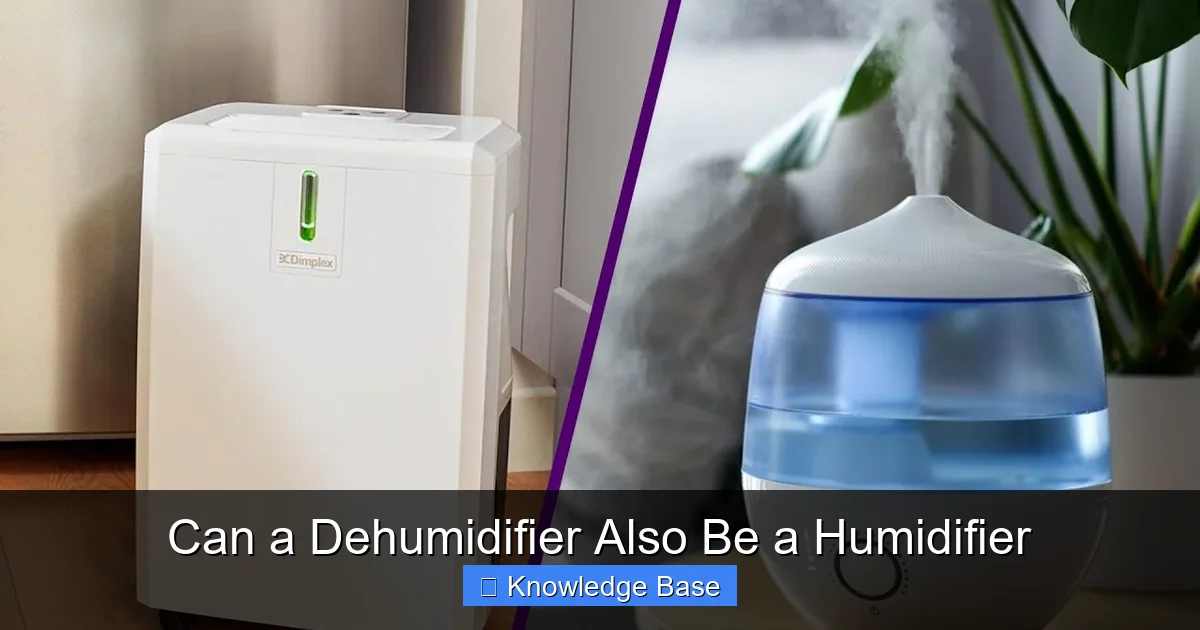
This is where humidifiers and dehumidifiers come in. These appliances are designed to regulate moisture levels in your home, but they do so in completely different ways. A humidifier adds moisture to dry air, while a dehumidifier removes excess moisture from humid air. Because they perform opposite functions, it’s a common question: Can a dehumidifier also be a humidifier?
The short answer is no—at least not in the way most people hope. But understanding why requires a closer look at how each device works, what they’re built for, and whether any hybrid solutions exist.
How a Dehumidifier Works
Visual guide about Can a Dehumidifier Also Be a Humidifier
Image source: i.ytimg.com
To understand why a dehumidifier can’t double as a humidifier, it helps to know exactly how it operates. At its core, a dehumidifier is essentially a refrigerator with a fan. It pulls in warm, moist air from the room and passes it over cold coils. As the air cools, the moisture condenses into water droplets, which collect in a built-in tank or drain hose. The now-drier air is then reheated slightly and blown back into the room.
There are two main types of dehumidifiers: refrigerant (compressor-based) and desiccant. Refrigerant models are the most common and work best in warm, humid environments—like basements or laundry rooms. Desiccant dehumidifiers use a moisture-absorbing material (like silica gel) and are better suited for colder climates or smaller spaces.
Both types are designed with one goal in mind: reduce humidity. They don’t have water reservoirs for adding moisture, nor do they have mist nozzles or ultrasonic plates to disperse water vapor. Their internal components—compressors, coils, fans, and collection tanks—are optimized for extraction, not emission.
Common Uses for Dehumidifiers
Dehumidifiers are essential in areas prone to dampness. Basements, crawl spaces, and bathrooms often suffer from high humidity due to poor ventilation, groundwater seepage, or frequent water use. Without intervention, this moisture can warp wood, damage drywall, and encourage mold growth.
For example, a homeowner in Florida might use a dehumidifier in their basement to prevent musty odors and protect stored items from mildew. Similarly, someone living in a coastal region might run a dehumidifier in their closet to keep clothes fresh and prevent rust on metal hangers.
Dehumidifiers are also popular in homes with central air conditioning, especially during humid summer months. While AC units do remove some moisture, they’re not as effective as dedicated dehumidifiers. Running both can improve indoor air quality and reduce the load on your HVAC system.
Limitations of Dehumidifiers
Despite their effectiveness, dehumidifiers have clear limitations. They can’t add moisture—only remove it. In dry climates or during winter, when indoor heating systems pull moisture from the air, a dehumidifier would only make the air drier, worsening discomfort.
Additionally, dehumidifiers consume electricity and require regular maintenance. The water tank must be emptied frequently (unless connected to a drain), and filters should be cleaned monthly to prevent mold and bacteria buildup. Running a dehumidifier in an already dry environment is not only unnecessary but potentially harmful to your health and home.
How a Humidifier Works

Visual guide about Can a Dehumidifier Also Be a Humidifier
Image source: respiratorytherapyzone.com
If a dehumidifier is like a sponge soaking up excess water, a humidifier is like a kettle gently steaming water into the air. Its job is to increase indoor humidity by releasing moisture in the form of mist or vapor.
There are several types of humidifiers, each using a different method to add moisture:
– **Ultrasonic humidifiers** use high-frequency vibrations to create a fine mist. They’re quiet and energy-efficient, making them popular for bedrooms and nurseries.
– **Evaporative humidifiers** use a fan to blow air through a wet wick or filter, causing water to evaporate naturally. These models are self-regulating—they release more moisture when the air is dry and less when it’s humid.
– **Steam vaporizers** (or warm mist humidifiers) boil water to produce steam, which cools slightly before exiting the unit. They’re effective but use more energy and can pose a burn risk if not handled carefully.
– **Impeller humidifiers** use a rotating disk to fling water at a diffuser, breaking it into tiny droplets. These are often used in children’s rooms due to their cool mist output.
All humidifiers require a water reservoir, which must be filled regularly. Some models include built-in hygrometers to monitor humidity levels, while others rely on manual adjustment.
When to Use a Humidifier
Humidifiers are ideal in dry environments or during winter months when indoor heating systems reduce humidity. Symptoms of dry air include dry throat, nosebleeds, static electricity, and worsening allergy or asthma symptoms.
For instance, a person living in Arizona might use a humidifier in their bedroom to ease breathing at night. Parents often use cool-mist humidifiers in nurseries to help babies with colds or congestion. Artists and musicians may use them to protect wooden instruments like guitars or violins from cracking due to dryness.
However, overuse can be problematic. Adding too much moisture can lead to condensation on windows, peeling paint, or mold growth. That’s why it’s crucial to monitor humidity levels and clean the unit regularly to prevent bacteria and mineral buildup.
Humidifier Maintenance Tips
To keep a humidifier working safely and efficiently:
– Use distilled or demineralized water to reduce white dust (mineral deposits) and bacterial growth.
– Clean the tank and components every 3 days with vinegar or a mild disinfectant.
– Replace filters as recommended by the manufacturer.
– Empty and dry the tank when not in use to prevent mold.
Neglecting maintenance can turn a humidifier into a source of indoor air pollution, releasing bacteria or mold spores into the air.
Can One Device Do Both Jobs?
Now for the big question: Can a dehumidifier also be a humidifier? The straightforward answer is no—not in the traditional sense. A standard dehumidifier cannot reverse its function to add moisture. It lacks the necessary components: no water tank for output, no misting mechanism, and no way to generate vapor.
However, the idea isn’t entirely far-fetched. In industrial or commercial settings, some advanced HVAC systems are designed to both humidify and dehumidify. These systems use complex controls and multiple components to adjust humidity based on sensor readings. They might include steam injectors for humidification and cooling coils for dehumidification, all managed by a central thermostat or smart controller.
But these are large, expensive, and typically installed in hospitals, museums, or data centers—not in average homes.
Are There Combo Units for Home Use?
A few manufacturers have attempted to create hybrid units that combine dehumidifying and humidifying functions. These are rare and often come with significant trade-offs.
For example, some “smart” air purifiers or climate control devices claim to offer both features. However, they usually include separate modules—one for dehumidification and another for humidification—rather than a single mechanism that does both. This means you’re essentially buying two devices in one box, which increases cost, size, and energy use.
Moreover, these combo units are often less effective than dedicated appliances. A dehumidifier optimized for moisture removal may not perform as well when paired with a humidifier, and vice versa. The result can be compromised performance, higher maintenance, and reduced lifespan.
Why It’s Not Practical to Modify a Dehumidifier
Some DIY enthusiasts might wonder if they can modify a dehumidifier to work as a humidifier—perhaps by adding a water tank and mist nozzle. While technically possible in theory, it’s not safe or practical.
Dehumidifiers are built with electrical components that aren’t designed to handle water output. Adding moisture near motors, compressors, or circuit boards could cause short circuits, fires, or electrocution. Additionally, the internal airflow is designed for intake and condensation, not for dispersing mist. Attempting such a modification voids warranties and poses serious safety risks.
In short: don’t try it. The cost and danger far outweigh any potential benefit.
The Importance of Proper Humidity Control
Whether you need a humidifier or a dehumidifier depends on your local climate, home structure, and seasonal changes. In many regions, both devices are necessary at different times of the year.
For example, a home in Minnesota might use a humidifier in winter to combat dry indoor air from heating systems, then switch to a dehumidifier in summer to handle high humidity and prevent mold. Conversely, a home in Louisiana might run a dehumidifier year-round but add a humidifier only during rare dry spells.
How to Measure Indoor Humidity
The best way to determine whether you need a humidifier or dehumidifier is to measure your indoor humidity. A hygrometer—a small, inexpensive device—can be purchased at most hardware stores or online. Place it in a central location, away from direct sunlight or drafts, and check the reading regularly.
Ideal indoor humidity is between 30% and 50%. If it’s consistently below 30%, consider a humidifier. If it’s above 50%, a dehumidifier is likely needed.
Some modern thermostats and smart home systems include built-in hygrometers and can automatically control connected humidifiers or dehumidifiers. These systems offer convenience and precision, adjusting output based on real-time conditions.
Signs You Need a Humidifier
– Dry, itchy skin or chapped lips
– Frequent nosebleeds
– Static electricity shocks
– Cracked wood furniture or flooring
– Worsening respiratory symptoms
Signs You Need a Dehumidifier
– Condensation on windows or walls
– Musty odors
– Mold or mildew spots
– Dampness in basements or crawl spaces
– Allergy or asthma flare-ups
Choosing the Right Device for Your Home
When deciding between a humidifier and a dehumidifier, consider your specific needs:
– **Room size:** Choose a unit rated for the square footage of the space. An undersized dehumidifier won’t keep up with moisture, while an oversized humidifier can over-humidify.
– **Climate:** Humid climates favor dehumidifiers; dry climates favor humidifiers.
– **Seasonality:** Some homes benefit from both devices, used at different times of year.
– **Health concerns:** People with asthma, allergies, or respiratory conditions may need precise humidity control.
– **Maintenance:** Consider how often you’re willing to clean and refill the unit.
Energy Efficiency and Operating Costs
Both devices consume electricity, but dehumidifiers typically use more power due to their compressor and fan. Look for ENERGY STAR-certified models, which are more efficient and can save on utility bills.
Humidifiers are generally cheaper to run, especially ultrasonic and evaporative models. However, steam vaporizers use more energy due to the boiling process.
Smart Features to Look For
Modern units often include helpful features:
– **Built-in hygrometers** for automatic humidity control
– **Programmable timers** to run only when needed
– **Filter change indicators** to remind you of maintenance
– **Remote control or app connectivity** for convenience
These features improve usability and help maintain optimal indoor air quality without constant monitoring.
Conclusion: Use the Right Tool for the Job
So, can a dehumidifier also be a humidifier? The answer remains no—at least not in any practical or safe way. These devices are designed for opposite purposes, with different mechanisms, components, and maintenance needs. Trying to use one as the other is like using a vacuum cleaner to blow air—it just doesn’t work.
Instead, focus on understanding your home’s humidity needs and choosing the right appliance. In many cases, you may need both—just not at the same time. By using a humidifier when the air is dry and a dehumidifier when it’s damp, you can maintain a comfortable, healthy indoor environment year-round.
Investing in quality units, monitoring humidity levels, and performing regular maintenance will go a long way in protecting your health, your home, and your peace of mind. And remember: when it comes to humidity control, the right tool makes all the difference.
Frequently Asked Questions
Can a dehumidifier also be a humidifier?
No, a standard dehumidifier cannot function as a humidifier. They perform opposite tasks—one removes moisture, the other adds it.
Are there any appliances that do both?
Some advanced HVAC systems can both humidify and dehumidify, but these are not common in portable home units.
Why can’t a dehumidifier add moisture?
Dehumidifiers lack the components needed to produce and disperse water vapor, such as mist nozzles or ultrasonic plates.
Is it safe to use a dehumidifier in winter?
Only if indoor humidity is high. In dry winter air, a dehumidifier can worsen dryness and discomfort.
Can overusing a humidifier cause problems?
Yes, too much moisture can lead to mold, condensation, and dust mites. Keep humidity between 30% and 50%.
Do I need both a humidifier and a dehumidifier?
It depends on your climate and home. Some households use both seasonally—humidifier in winter, dehumidifier in summer.