
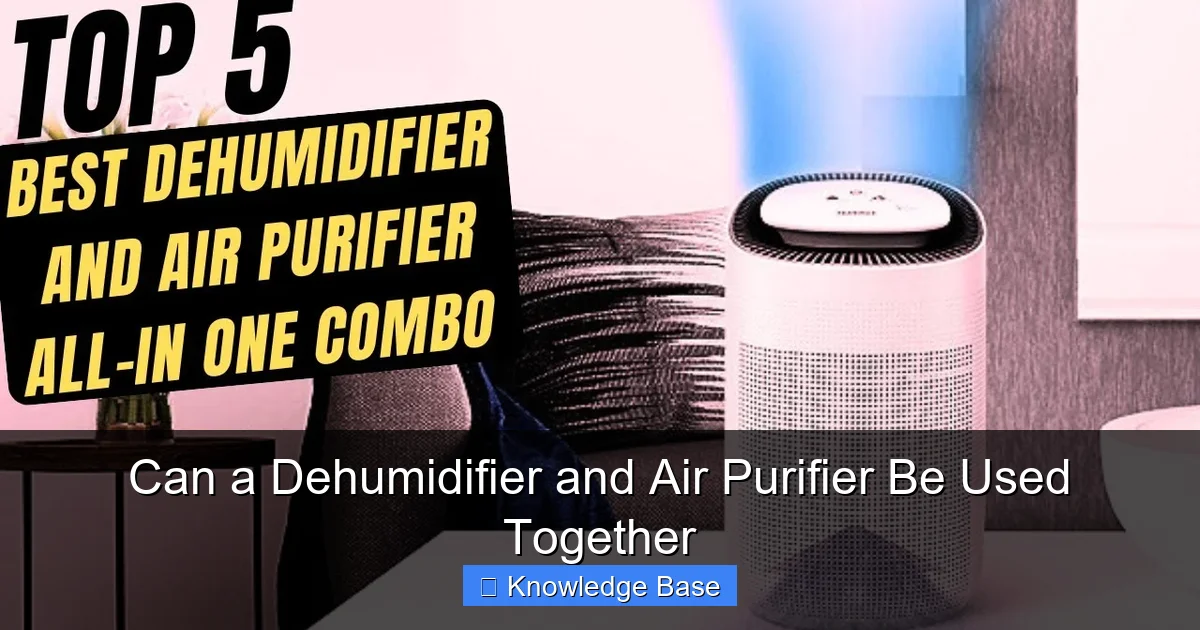
Yes, a dehumidifier and air purifier can—and should—be used together. While a dehumidifier reduces excess moisture to prevent mold and dust mites, an air purifier captures airborne pollutants like pollen, pet dander, and smoke. Together, they create a cleaner, healthier indoor environment.
Key Takeaways
- They serve different but complementary purposes: A dehumidifier controls humidity, while an air purifier removes airborne contaminants.
- Using both improves overall air quality: Lower humidity reduces allergen growth, and air purification removes particles that thrive in damp environments.
- Ideal for allergy and asthma sufferers: Combined use minimizes triggers like mold spores, dust mites, and pet dander.
- Placement matters: Position devices in high-moisture areas like basements or bedrooms for maximum effectiveness.
- Maintenance is essential: Regular filter changes and cleaning ensure both units work efficiently.
- Energy use is manageable: Modern units are energy-efficient, and running both is cost-effective for long-term health benefits.
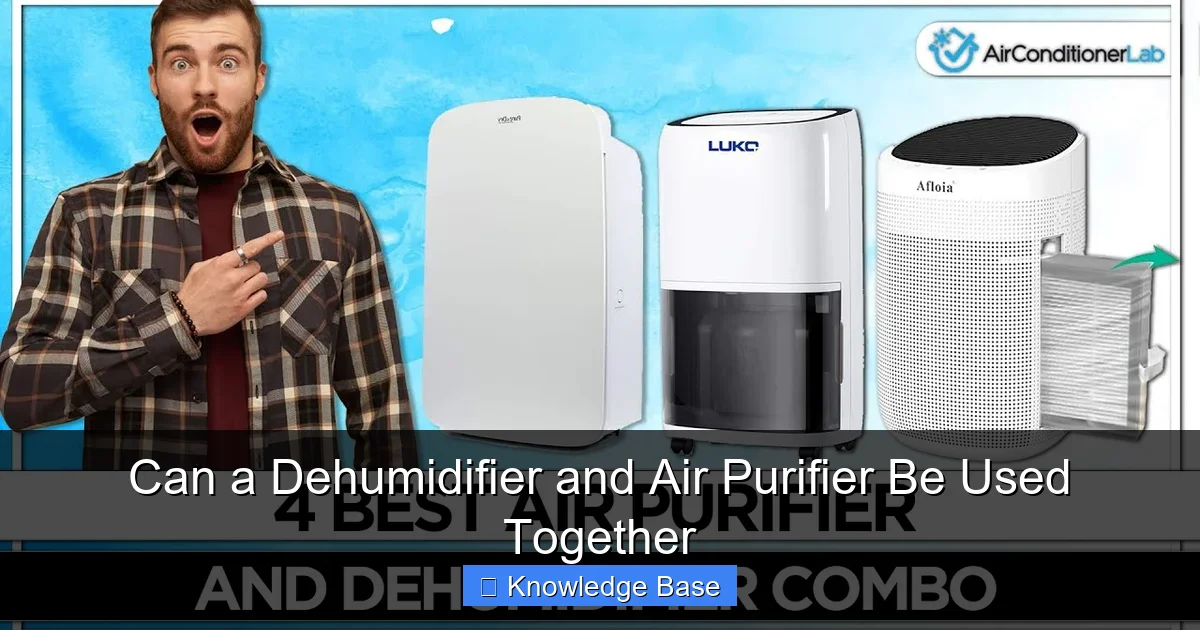
- Some combo units exist: All-in-one dehumidifier and air purifier models offer convenience but may have trade-offs in performance.
Quick Answers to Common Questions
Can a dehumidifier and air purifier be used together?
Yes, they can and should be used together. They address different aspects of indoor air quality—humidity and airborne particles—making them highly complementary.
Will using both increase my electricity bill?
Running both devices may increase energy use slightly, but modern units are energy-efficient. The combined monthly cost is typically under $25.
Where should I place my dehumidifier and air purifier?
Place the dehumidifier in damp areas like basements, and the air purifier in frequently used rooms like bedrooms or living rooms.
Do I need to maintain both devices?
Yes. Empty the dehumidifier’s water tank regularly and replace air purifier filters as recommended to ensure optimal performance.
Are combo units as effective as separate devices?
Combo units are convenient but often less powerful. For best results, especially in large or humid spaces, separate units are recommended.
📑 Table of Contents
Can a Dehumidifier and Air Purifier Be Used Together?
If you’re serious about improving the air quality in your home, you’ve probably considered both a dehumidifier and an air purifier. But here’s a common question: Can a dehumidifier and air purifier be used together? The short answer is yes—and in most cases, they should be.
Many people think these two devices do the same thing, but they actually tackle different problems. A dehumidifier focuses on moisture, pulling excess water vapor from the air to prevent mold, mildew, and dust mites. An air purifier, on the other hand, filters out airborne particles like pollen, pet dander, smoke, and bacteria. When used side by side, they create a powerful defense system for your indoor environment.
Imagine your home as a fortress. The dehumidifier acts like a moisture barrier, stopping the conditions that allow allergens and mold to grow. The air purifier is like a sentry at the gate, capturing invaders before they can enter your lungs. Together, they don’t just clean the air—they make it healthier to breathe.
This combination is especially beneficial for people with allergies, asthma, or respiratory sensitivities. High humidity can worsen symptoms by encouraging mold growth and dust mite populations. At the same time, airborne pollutants can trigger sneezing, coughing, and difficulty breathing. By using both devices, you address the root causes of poor air quality from multiple angles.
In this article, we’ll explore how dehumidifiers and air purifiers work, why they complement each other, and how to use them effectively in your home. Whether you live in a damp basement apartment or a humid coastal region, this guide will help you breathe easier.
How Dehumidifiers and Air Purifiers Work

Visual guide about Can a Dehumidifier and Air Purifier Be Used Together
Image source: i.ytimg.com
To understand why these two devices work well together, it helps to know what each one does—and how they operate differently.
What Does a Dehumidifier Do?
A dehumidifier removes excess moisture from the air. It works by drawing in humid air, cooling it to condense the water vapor, and then reheating the air before releasing it back into the room. The collected water is stored in a tank or drained through a hose.
Most homes function best with indoor humidity levels between 30% and 50%. Anything above 60% creates a breeding ground for mold, mildew, and dust mites. These allergens thrive in damp environments and can quickly spread through your home’s ventilation system.
Dehumidifiers are especially useful in basements, bathrooms, laundry rooms, and other areas prone to high humidity. They help prevent musty odors, warped wood, and peeling paint. More importantly, they reduce the conditions that allow allergens to flourish.
What Does an Air Purifier Do?
An air purifier cleans the air by trapping airborne particles. Most models use a fan to pull air through a series of filters. The most common type is a HEPA (High-Efficiency Particulate Air) filter, which can capture 99.97% of particles as small as 0.3 microns—including pollen, pet dander, mold spores, and even some bacteria.
Some air purifiers also include activated carbon filters to absorb odors and volatile organic compounds (VOCs) from cleaning products, cooking, or paint. Others use UV-C light to kill germs or ionizers to charge particles so they stick to surfaces.
Unlike dehumidifiers, air purifiers don’t change the humidity level. They focus solely on cleaning the air you breathe. This makes them ideal for reducing allergy symptoms, eliminating smoke or cooking smells, and improving overall respiratory health.
Key Differences at a Glance
| Feature | Dehumidifier | Air Purifier |
|———————–|———————————-|———————————-|
| Main Function | Reduces humidity | Removes airborne particles |
| Targets | Mold, mildew, dust mites | Pollen, dander, smoke, bacteria |
| Airflow | Circulates and dries air | Filters and cleans air |
| Best For | Damp areas, basements | Bedrooms, living rooms |
| Maintenance | Empty water tank, clean coils | Replace filters regularly |
Understanding these differences shows why using both devices isn’t redundant—it’s strategic. One tackles moisture, the other tackles pollutants. Together, they cover all the bases.
Why Use a Dehumidifier and Air Purifier Together?
Visual guide about Can a Dehumidifier and Air Purifier Be Used Together
Image source: i.ytimg.com
Now that you know how each device works, let’s explore why combining them is a smart move for your home and health.
They Address Different Air Quality Issues
Indoor air pollution comes from many sources. Some problems are related to moisture, while others stem from particles floating in the air. A dehumidifier and air purifier target these issues separately but effectively.
For example, high humidity can lead to mold growth on walls or in carpets. Mold releases spores into the air, which an air purifier can capture. But without reducing the humidity, new mold will keep forming. The dehumidifier stops the cycle at the source, while the air purifier cleans up the fallout.
Similarly, dust mites—microscopic creatures that feed on dead skin cells—thrive in humid environments. They’re a major trigger for allergies and asthma. A dehumidifier makes your home less hospitable to them, and an air purifier traps their waste particles and body fragments, which are the real culprits behind allergic reactions.
Improved Health Outcomes
Using both devices can lead to noticeable improvements in your well-being. Studies show that controlling indoor humidity reduces asthma symptoms and respiratory infections. Meanwhile, air purifiers have been shown to decrease airborne allergens and improve sleep quality.
Consider this real-world scenario: Sarah, a mother of two in Florida, noticed her son’s asthma worsened during the rainy season. Her home felt damp, and she saw mold spots in the bathroom. She bought a dehumidifier for the basement and an air purifier for his bedroom. Within weeks, her son’s nighttime coughing decreased, and he needed his inhaler less often.
This isn’t just anecdotal. Research from the Environmental Protection Agency (EPA) confirms that managing indoor humidity and filtering airborne particles can significantly reduce health risks, especially for children and the elderly.
Enhanced Comfort and Home Protection
Beyond health, using both devices improves your home’s comfort and longevity. High humidity makes rooms feel sticky and uncomfortable, even if the temperature is cool. It can also damage furniture, electronics, and musical instruments.
By keeping humidity in check, a dehumidifier helps your HVAC system work more efficiently. Dry air feels cooler, so you might not need to run the air conditioner as much. Meanwhile, an air purifier keeps your living spaces smelling fresh and reduces the need for constant dusting.
Over time, this combination can save you money on energy bills, cleaning supplies, and home repairs. It also extends the life of your appliances and furnishings.
Synergy in Allergy and Asthma Management
If you or a family member suffers from allergies or asthma, using both devices is one of the best things you can do. Allergens like mold, dust mites, and pet dander are often interconnected. For instance, pet dander sticks to damp surfaces and becomes airborne when disturbed. A dehumidifier reduces the moisture that helps dander cling to fabrics, while an air purifier captures it before it reaches your nose.
Many allergists recommend this dual approach. Dr. Lisa Chen, a board-certified allergist, says, “I often advise patients to use a dehumidifier in damp areas and an air purifier in bedrooms. It’s a one-two punch against indoor allergens.”
Best Practices for Using Both Devices
Using a dehumidifier and air purifier together is effective, but only if you do it right. Here are some practical tips to get the most out of both.
Placement Matters
Where you put each device can make a big difference. For the dehumidifier, focus on high-moisture areas like basements, crawl spaces, or laundry rooms. If your whole house is humid, consider a whole-house dehumidifier connected to your HVAC system.
For the air purifier, place it in rooms where you spend the most time—bedrooms, living rooms, or home offices. Avoid putting it behind furniture or in corners where airflow is restricted. Ideally, position it at least a few feet away from walls to allow air to circulate freely.
Run Them Consistently
Both devices work best when used regularly. Don’t just turn them on during allergy season or when you notice a smell. Run the dehumidifier daily, especially during humid months. Set it to maintain a humidity level between 30% and 50%.
Air purifiers should also run continuously, particularly in bedrooms. Many models have auto modes that adjust fan speed based on air quality. Use this feature to save energy while maintaining clean air.
Maintain Both Units
Neglecting maintenance reduces efficiency and can even make air quality worse. For dehumidifiers, empty the water tank regularly to prevent overflow and mold growth inside the unit. Clean the air filter and coils every few months to ensure proper airflow.
Air purifiers need filter replacements according to the manufacturer’s schedule—usually every 6 to 12 months. Some models have indicator lights to remind you. Never skip this step; a clogged filter can’t capture pollutants effectively.
Monitor Humidity and Air Quality
Use a hygrometer to check humidity levels in different rooms. This small, inexpensive device helps you adjust your dehumidifier settings. Some smart dehumidifiers even connect to apps for remote monitoring.
For air quality, consider an air quality monitor that detects PM2.5 (fine particles), VOCs, and humidity. These devices give real-time feedback so you can see how well your purifier is working.
Combine with Other Healthy Habits
Devices alone aren’t enough. Keep your home clean by vacuuming with a HEPA-filter vacuum, washing bedding weekly in hot water, and avoiding smoking indoors. Fix leaks promptly and use exhaust fans in bathrooms and kitchens.
These habits, combined with a dehumidifier and air purifier, create a comprehensive approach to indoor air quality.
Energy Use and Cost Considerations
One concern people have is whether running both devices will spike their electricity bill. The good news is that modern units are designed to be energy-efficient.
Energy Efficiency of Dehumidifiers
Look for dehumidifiers with an Energy Star rating. These models use up to 30% less energy than standard units. The size of the unit also matters—choose one rated for your room’s square footage. A unit that’s too large will cycle on and off frequently, wasting energy.
On average, a 30-pint dehumidifier uses about 300–500 watts. Running it 8 hours a day might cost $10–$15 per month, depending on your electricity rate.
Energy Use of Air Purifiers
Air purifiers are generally low-energy devices. Most use between 50 and 200 watts, depending on the fan speed. A typical bedroom purifier might use 50 watts on low and 150 watts on high.
Running an air purifier 24/7 could cost $5–$10 per month. Many models have sleep or eco modes that reduce power use when air quality is good.
Total Cost and Long-Term Value
Combined, the monthly cost of running both devices is usually under $25. Given the health benefits—fewer doctor visits, better sleep, reduced medication use—this is a worthwhile investment.
Also, consider the upfront cost. A good dehumidifier ranges from $150 to $400, while air purifiers cost $100 to $600 depending on size and features. Look for sales, rebates, or bundle deals to save money.
All-in-One Units: Do They Work?
You might have seen combo units that claim to dehumidify and purify air in one machine. These can be convenient, but they often come with trade-offs.
Pros of Combo Units
– Save space and reduce clutter
– Easier to maintain one device instead of two
– Often include smart features like app control
Cons of Combo Units
– May not perform as well as dedicated units
– Filters and water tanks require more frequent attention
– Limited capacity—may not handle large rooms or high humidity
If you live in a small apartment with moderate humidity, a combo unit could work. But for larger homes or severe moisture problems, separate devices are usually more effective.
Conclusion
So, can a dehumidifier and air purifier be used together? Absolutely—and they should be. These two devices work in harmony to create a healthier, more comfortable home. The dehumidifier tackles moisture and prevents mold and dust mites, while the air purifier removes airborne allergens and pollutants.
Together, they offer a complete solution for indoor air quality. Whether you’re dealing with allergies, asthma, or just want to breathe cleaner air, this combination is a smart, science-backed choice.
By following best practices—proper placement, regular maintenance, and consistent use—you’ll maximize their benefits. And while there’s a cost involved, the long-term savings in health and home protection make it a worthwhile investment.
Don’t choose between them. Use both, and give your family the gift of cleaner, fresher air.
Frequently Asked Questions
Can a dehumidifier help with allergies?
Yes, a dehumidifier can reduce allergy symptoms by lowering humidity, which inhibits the growth of mold and dust mites—common allergens.
Do air purifiers remove mold spores?
Yes, air purifiers with HEPA filters can capture mold spores from the air, helping to reduce exposure and prevent respiratory issues.
How often should I run my dehumidifier?
Run your dehumidifier daily, especially during humid seasons, to maintain indoor humidity between 30% and 50%.
Can I use an air purifier in a basement?
Yes, but it’s best to use it alongside a dehumidifier. Basements often have high humidity, which can reduce the purifier’s effectiveness.
Do I need both devices if I have central air?
Yes. Central air doesn’t remove humidity or filter out all airborne particles, so both devices add valuable protection.
Will using both devices eliminate all indoor pollutants?
While they significantly improve air quality, no system removes 100% of pollutants. Regular cleaning and ventilation are also important.