
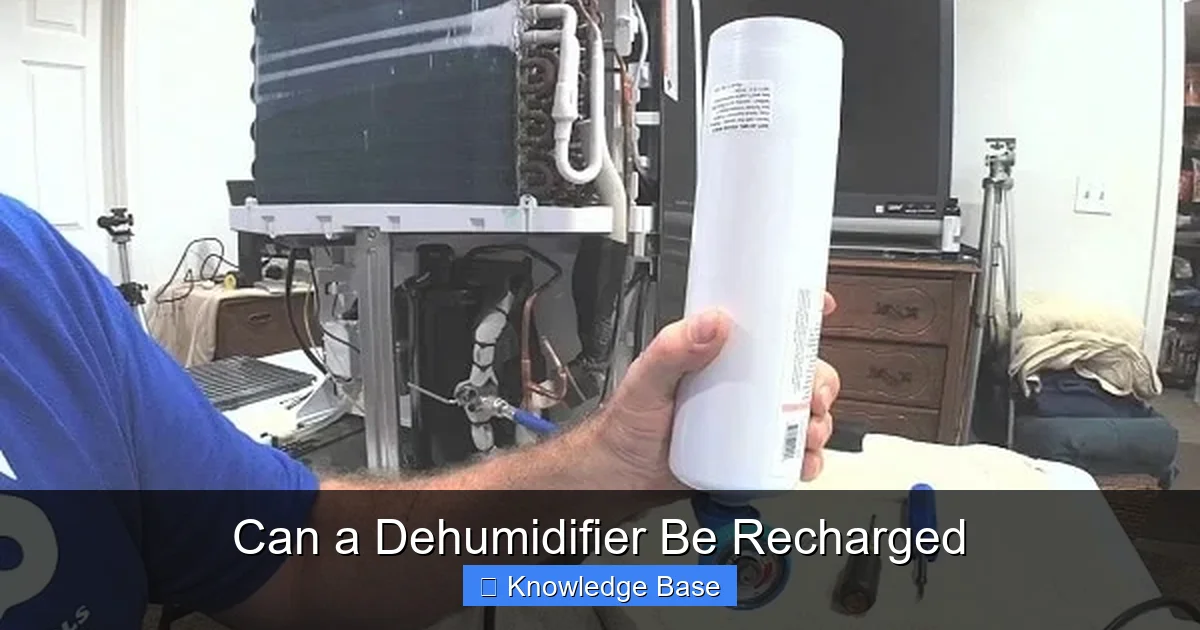
Most home dehumidifiers cannot be safely or legally recharged by users due to sealed refrigerant systems and environmental regulations. However, understanding how they work, signs of low refrigerant, and proper maintenance can extend their life and efficiency.
Have you ever noticed your dehumidifier running constantly but not pulling as much moisture from the air as it used to? Or maybe the coils feel warm instead of cold, and the unit just doesn’t seem to be working like it did when it was new? You might be wondering: *Can a dehumidifier be recharged?* It’s a fair question—after all, many appliances need occasional refills or tune-ups. But when it comes to dehumidifiers, the answer isn’t as simple as topping off a tank.
The short version? Most home dehumidifiers **cannot be recharged** by the average user. Unlike a car’s air conditioning system, which sometimes allows DIY refrigerant top-offs (though still not recommended), residential dehumidifiers are typically sealed systems. That means the refrigerant—usually a type of Freon or similar compound—is enclosed in a closed loop and not meant to be opened or refilled. Attempting to do so can be dangerous, illegal, and may permanently damage your unit.
But that doesn’t mean all hope is lost if your dehumidifier is underperforming. Understanding how these machines work, what “recharging” really means, and how to maintain your unit properly can help you get the most out of it—and know when it’s time to call a pro or consider a replacement.
In this guide, we’ll break down everything you need to know about dehumidifier recharging: what it involves, why it’s rarely an option for homeowners, how to spot refrigerant issues, and what you can do instead to keep your unit running efficiently. Whether you’re dealing with a damp basement, a musty closet, or just want to breathe easier at home, this article will help you make smart decisions about your dehumidifier.
Key Takeaways
- Most residential dehumidifiers are sealed units: They are not designed for user recharging and require professional HVAC technicians if refrigerant issues arise.
- Recharging involves refrigerant, not water: The term “recharge” refers to refilling the refrigerant gas, not the water tank—this is a common misunderstanding.
- Low refrigerant usually means a leak: If your unit isn’t cooling the coils properly, it’s likely due to a refrigerant leak, not just low levels.
- DIY recharging is risky and often illegal: Handling refrigerants without certification violates EPA regulations in the U.S. and can damage your unit.
- Regular maintenance prevents performance issues: Cleaning filters, coils, and ensuring proper airflow helps maintain efficiency without needing a recharge.
- Replacement may be more cost-effective: Older units with refrigerant problems are often better replaced than repaired due to labor and part costs.
- Desiccant dehumidifiers don’t use refrigerant: These models don’t require recharging at all—they regenerate moisture-absorbing materials using heat.
Quick Answers to Common Questions
Can I add refrigerant to my dehumidifier myself?
No, you should not. Most home dehumidifiers are sealed systems, and handling refrigerants without EPA certification is illegal and dangerous.
How do I know if my dehumidifier needs a recharge?
Signs include reduced moisture removal, warm coils, or ice buildup—but these can also stem from dirty filters or airflow issues. Always check maintenance first.
Are all dehumidifiers sealed systems?
Most residential units are sealed, but some commercial or industrial models may have serviceable refrigerant systems for professional use.
Can a desiccant dehumidifier be recharged?
No—desiccant models don’t use refrigerant. They regenerate moisture-absorbing materials with heat, so recharging isn’t applicable.
Is it worth repairing a dehumidifier with a refrigerant leak?
It depends on the unit’s age and repair cost. Older models or those using phased-out refrigerants like R-22 are often better replaced.
📑 Table of Contents
- How Dehumidifiers Work: The Basics
- What Does “Recharging” a Dehumidifier Mean?
- Can You Recharge a Dehumidifier Yourself?
- Signs Your Dehumidifier Might Have a Refrigerant Problem
- What to Do Instead of Recharging
- When to Call a Professional
- Environmental and Safety Considerations
- Final Thoughts: Can a Dehumidifier Be Recharged?
How Dehumidifiers Work: The Basics
Before we dive into whether a dehumidifier can be recharged, it helps to understand how these appliances actually remove moisture from the air. At their core, most residential dehumidifiers use a refrigeration cycle—similar to how your refrigerator or air conditioner works—to pull water vapor from the air and collect it in a tank or drain hose.
Here’s a simplified breakdown of the process:
1. **Air Intake:** A fan pulls humid air from the room into the dehumidifier.
2. **Cooling the Air:** The air passes over cold evaporator coils, which are cooled by a refrigerant circulating inside them. As the air cools, its ability to hold moisture decreases, causing water vapor to condense into liquid droplets.
3. **Water Collection:** The condensed water drips into a collection bucket or is directed out through a continuous drain hose.
4. **Reheating the Air:** The now-dry air passes over warm condenser coils (which are heated by the same refrigerant system) and is released back into the room at a slightly higher temperature but much lower humidity.
5. **Cycle Repeats:** The refrigerant is compressed, cooled, and recirculated to keep the coils cold and the process going.
This cycle relies heavily on the refrigerant—a special chemical that can easily change between liquid and gas states as it absorbs and releases heat. Common refrigerants used in dehumidifiers include R-134a, R-410A, and older models may use R-22 (which is being phased out due to environmental concerns).
Because the refrigerant is essential to cooling the coils, any issue with its level or circulation can drastically reduce the unit’s ability to remove moisture. That’s where the idea of “recharging” comes in—but as we’ll see, it’s not as straightforward as adding more gas.
What Does “Recharging” a Dehumidifier Mean?
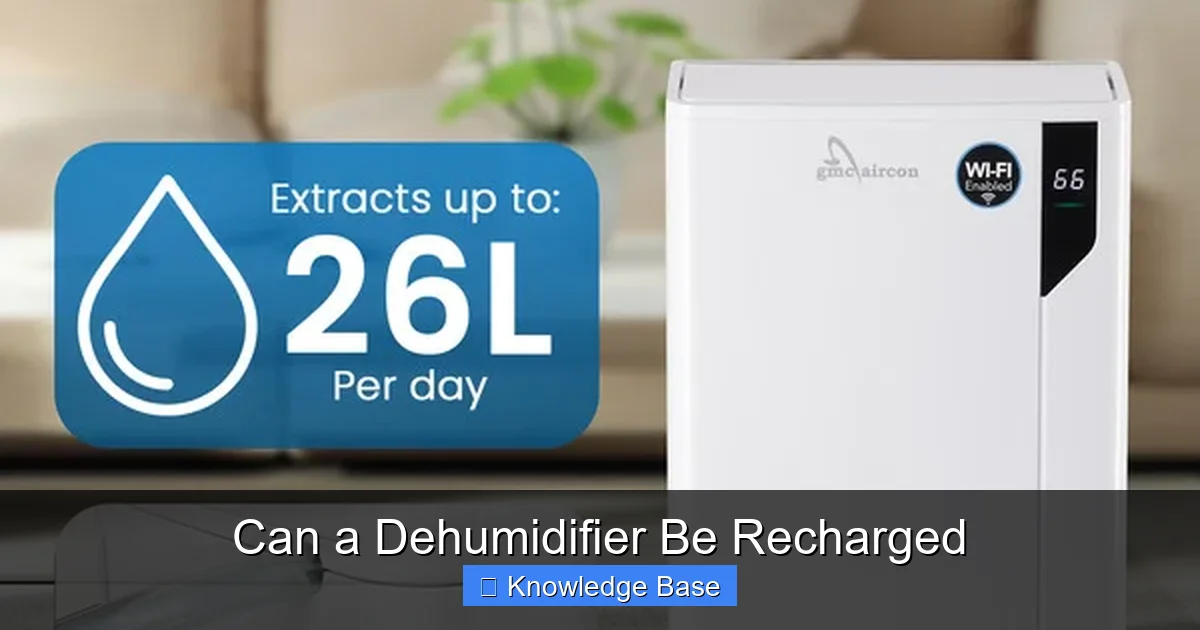
Visual guide about Can a Dehumidifier Be Recharged
Image source: gmcaircon.co.za
When people ask, “Can a dehumidifier be recharged?” they’re usually referring to adding more refrigerant to the system. But it’s important to clarify: **recharging a dehumidifier means refilling the refrigerant gas**, not refilling the water tank (which you do regularly anyway). This is a common point of confusion.
Refrigerant isn’t like gasoline or water—it doesn’t get “used up” in the normal sense. In a properly functioning sealed system, the same refrigerant circulates over and over. So if your dehumidifier is low on refrigerant, it’s almost always because of a **leak**, not because the gas has been consumed.
That’s a critical distinction. Unlike a car’s AC system, where slow leaks can sometimes allow for a top-off (though still not ideal), dehumidifiers are designed to be maintenance-free in terms of refrigerant. If refrigerant is escaping, it means there’s a breach in the sealed tubing—often due to corrosion, vibration damage, or manufacturing defects.
Attempting to “recharge” a dehumidifier by simply adding more refrigerant without fixing the leak is like trying to fill a bucket with a hole in the bottom. You’ll just lose the new refrigerant over time, waste money, and potentially harm the environment.
Moreover, refrigerants are regulated substances. In the United States, the Environmental Protection Agency (EPA) requires certification (like EPA Section 608) to handle or purchase refrigerants. Selling or using refrigerant without proper licensing is illegal. This means even if you wanted to recharge your dehumidifier yourself, you likely couldn’t legally buy the refrigerant—and if you did, you’d be breaking the law.
Can You Recharge a Dehumidifier Yourself?

Visual guide about Can a Dehumidifier Be Recharged
Image source: i5.walmartimages.com
The short answer is: **No, you should not attempt to recharge a dehumidifier yourself.** Here’s why.
First, most home dehumidifiers are **sealed systems**. That means the compressor, coils, and refrigerant lines are welded or crimped shut during manufacturing. There’s no service valve or access port for adding refrigerant—unlike larger HVAC systems. Opening the unit to access the refrigerant circuit requires specialized tools and knowledge.
Second, even if you could access the system, **recharging without fixing the leak is pointless**. As mentioned earlier, low refrigerant almost always indicates a leak. Without locating and repairing that leak—often requiring brazing, soldering, or replacing tubing—any added refrigerant will simply escape again.
Third, **handling refrigerants is dangerous and illegal without certification**. Refrigerants can be toxic, flammable, or harmful to the ozone layer if released into the atmosphere. The EPA strictly regulates their use, and improper handling can result in fines or environmental damage.
Finally, **DIY recharging can void your warranty**. Most manufacturers will not honor warranties if the unit has been tampered with or opened by an unqualified person. So even if you manage to add refrigerant, you might lose your coverage for future repairs.
That said, there are rare exceptions. Some commercial or industrial dehumidifiers—especially larger units used in construction or flood restoration—may have serviceable refrigerant systems. These are designed for professional maintenance and may include access ports for recharging. But these are not the typical 30- or 50-pint units you’d find in a home basement.
For the average homeowner, the safest and most practical approach is to **consult a licensed HVAC technician** if you suspect a refrigerant issue. They have the tools, training, and legal authority to diagnose leaks, repair them, and recharge the system properly—if recharging is even possible.
Signs Your Dehumidifier Might Have a Refrigerant Problem
So how do you know if your dehumidifier has a refrigerant issue—and whether recharging might be necessary? While most performance problems are due to other causes (like dirty filters or blocked airflow), here are some signs that could point to a refrigerant leak or low charge:
Reduced Moisture Removal
If your dehumidifier is running constantly but the water tank isn’t filling up as quickly as before, it could indicate the coils aren’t getting cold enough to condense moisture. This is a classic sign of low refrigerant.
Warm or Room-Temperature Coils
Place your hand near the intake or exhaust vents. The intake side should feel cool, and the exhaust should feel warm. If both sides feel similar in temperature, the refrigerant cycle may not be working properly.
Ice Buildup on Coils
In some cases, low refrigerant can cause the evaporator coils to become excessively cold, leading to frost or ice buildup. This blocks airflow and reduces efficiency. While ice can also result from dirty coils or low ambient temperatures, persistent icing may signal a refrigerant issue.
Unusual Noises or Compressor Issues
If the compressor (the loudest part of the unit) is struggling to start, making clicking sounds, or shutting off prematurely, it could be due to low refrigerant pressure. The compressor relies on proper refrigerant levels to function safely.
Hissing or Bubbling Sounds
A faint hissing or bubbling noise from inside the unit may indicate a refrigerant leak. This is less common but should be taken seriously.
Older Unit (10+ Years)
Dehumidifiers typically last 5 to 10 years. If yours is on the older side and showing performance issues, a refrigerant leak becomes more likely due to wear and corrosion.
It’s important to note that **many of these symptoms can also be caused by non-refrigerant issues**. For example:
– A clogged air filter restricts airflow, reducing efficiency.
– Dirty evaporator or condenser coils insulate the metal, preventing proper heat transfer.
– A faulty humidistat may cause the unit to run nonstop without actually removing moisture.
– A malfunctioning fan motor can reduce air circulation.
That’s why proper troubleshooting is essential before assuming a refrigerant problem. Always start with basic maintenance steps (see below) before considering professional repair.
What to Do Instead of Recharging
Since recharging a dehumidifier is rarely an option for homeowners, what can you do to restore performance and extend the life of your unit? The good news is that **most dehumidifier issues can be resolved with simple maintenance and troubleshooting**.
Clean or Replace the Air Filter
The air filter captures dust, pet dander, and other particles before they enter the unit. Over time, it becomes clogged, reducing airflow and forcing the compressor to work harder. Check your filter monthly and clean or replace it as needed. Most filters are washable—just rinse with water and let dry completely before reinstalling.
Clean the Coils
Dust and debris can accumulate on the evaporator and condenser coils, acting as insulation and reducing heat transfer. Use a soft brush or coil cleaner (available at hardware stores) to gently remove buildup. Be careful not to bend the delicate fins.
Ensure Proper Airflow
Keep the dehumidifier at least 6–12 inches away from walls, furniture, or curtains. Blocked intake or exhaust vents restrict airflow and reduce efficiency. Also, avoid running the unit in extremely cold environments (below 65°F), as this can cause ice buildup.
Empty the Water Tank Regularly
If the tank fills up and the unit shuts off, it can’t remove moisture. Empty it daily or use a continuous drain hose to bypass the tank entirely.
Check the Humidistat
The humidistat measures indoor humidity and tells the unit when to turn on or off. If it’s set too high (e.g., 60% instead of 45–50%), the dehumidifier may not run enough. Adjust the setting and monitor performance.
Inspect for Physical Damage
Look for dents, cracks, or loose components. Vibration over time can loosen connections or damage tubing. If you notice anything unusual, turn off the unit and consult a technician.
Consider the Age of the Unit
If your dehumidifier is over 8–10 years old and requires major repairs, it may be more cost-effective to replace it. Newer models are more energy-efficient, quieter, and often come with smart features like Wi-Fi controls and auto-defrost.
Upgrade to a Desiccant Dehumidifier
If you’re in a cold climate or need quiet operation, consider a desiccant dehumidifier. These models use a moisture-absorbing material (like silica gel) that is regenerated with heat. They don’t use refrigerant, so there’s no risk of leaks or recharging issues. While they may use more energy, they perform better in low temperatures and are often quieter.
When to Call a Professional
There are times when professional help is the best—and only—option. If you’ve tried all the maintenance steps above and your dehumidifier still isn’t working properly, it’s time to call a licensed HVAC technician. They can:
– Perform a pressure test to check for refrigerant leaks.
– Use electronic leak detectors or UV dye to locate the source of a leak.
– Repair or replace damaged tubing or components.
– Safely recover and recharge refrigerant if needed.
Keep in mind that **recharging is only possible if the system can be repaired**. If the leak is in a welded joint or the compressor is damaged, the unit may be beyond repair. In such cases, replacement is often the smarter choice.
Also, if your dehumidifier uses R-22 refrigerant (common in older models), recharging may be extremely expensive or impossible due to the phaseout of this ozone-depleting substance. The cost of R-22 has skyrocketed in recent years, making repairs uneconomical.
Environmental and Safety Considerations
Refrigerants are not just technical components—they have real environmental and safety implications. Many older refrigerants, like R-22, contribute to ozone depletion and global warming. Even newer alternatives, while safer for the ozone layer, can still be potent greenhouse gases if released.
That’s why the EPA and other regulatory bodies require proper handling, recovery, and recycling of refrigerants. Releasing refrigerant into the atmosphere is illegal and harmful. Technicians must use certified recovery machines to capture refrigerant before opening a system.
Additionally, refrigerants can be hazardous if inhaled or exposed to skin. Some are flammable (like R-32), and all require careful handling. DIY attempts to recharge a dehumidifier can lead to exposure, fire risks, or equipment damage.
By leaving refrigerant work to professionals, you’re not only protecting your unit and your home—you’re also doing your part to protect the environment.
Final Thoughts: Can a Dehumidifier Be Recharged?
So, can a dehumidifier be recharged? The answer is: **only under very specific circumstances, and almost never by a homeowner**. Most residential units are sealed systems not designed for user maintenance. Recharging requires professional tools, certification, and leak repair—none of which are practical or legal for the average person.
Instead of focusing on recharging, prioritize **preventive maintenance** to keep your dehumidifier running efficiently. Clean the filter, clear the coils, ensure proper airflow, and monitor performance. These simple steps can prevent many common issues and extend the life of your unit.
If you suspect a refrigerant problem, consult a licensed technician. They can diagnose the issue accurately and determine whether repair or replacement is the best option. And if your unit is old or inefficient, upgrading to a newer model may save you money on energy bills and provide better moisture control.
Remember: a dehumidifier is an investment in your home’s comfort and health. By understanding how it works and how to care for it, you can enjoy drier air, fewer allergens, and a more comfortable living space—without needing to recharge a thing.
Frequently Asked Questions
Can a dehumidifier be recharged by a homeowner?
No, homeowners should not attempt to recharge a dehumidifier. Most units are sealed systems, and handling refrigerants requires EPA certification and specialized tools.
What causes low refrigerant in a dehumidifier?
Low refrigerant is almost always due to a leak in the sealed system, often caused by corrosion, vibration, or manufacturing defects.
How long do dehumidifiers typically last?
Most dehumidifiers last 5 to 10 years with proper maintenance. Performance may decline over time due to wear or refrigerant issues.
Can I use a car AC recharge kit on a dehumidifier?
No. Dehumidifiers use different refrigerants and sealed systems. Car AC kits are not compatible and can damage the unit or pose safety risks.
Do dehumidifiers use the same refrigerant as air conditioners?
Some do, like R-410A or R-134a, but the systems are not interchangeable. Always refer to the manufacturer’s specifications.
What should I do if my dehumidifier is icing up?
Turn it off and let the ice melt. Check for dirty coils, low airflow, or cold room temperatures. Persistent icing may indicate a refrigerant issue.