
Running a dehumidifier during a radon test can affect humidity levels, which may indirectly influence radon readings—but it’s not always prohibited. Understanding the relationship between moisture, air pressure, and radon gas movement is key to accurate testing. With proper guidelines, you can maintain indoor comfort without compromising test results.
Key Takeaways
- Dehumidifiers can influence indoor humidity, which may affect radon test accuracy. Lower humidity can increase radon entry into homes due to changes in air pressure and soil gas flow.
- Short-term radon tests are more sensitive to environmental changes than long-term tests. Running a dehumidifier during a 2–7 day test may skew results more than during a 90-day test.
- EPA and radon testing professionals recommend minimizing changes in home conditions during testing. This includes avoiding major HVAC adjustments, sealing cracks, or using dehumidifiers unless necessary.
- Maintaining normal living conditions is important, but extreme humidity control should be avoided. If your home is excessively damp, consult a radon professional before running a dehumidifier.
- Long-term tests provide more reliable data and are less affected by temporary dehumidifier use. Consider a long-term test if you’re concerned about daily appliance use.
- Sealing foundation cracks and improving ventilation can reduce radon without relying solely on dehumidifiers. These methods address the root cause rather than masking symptoms.
- Always follow the specific instructions provided with your radon test kit. Some kits may explicitly prohibit dehumidifier use, while others allow it under certain conditions.
Quick Answers to Common Questions
Can I run a dehumidifier during a short-term radon test?
Yes, but avoid extreme settings. Running it at your normal humidity level (e.g., 45–50%) is usually acceptable and reflects typical living conditions.
Will a dehumidifier lower my radon test results?
Not necessarily. While lower humidity can increase radon entry in some cases, the effect varies by home. The impact is usually small unless humidity is drastically reduced.
Is it better to use a long-term test if I run a dehumidifier?
Yes. Long-term tests average radon levels over months, making them less sensitive to daily changes caused by appliances like dehumidifiers.
Should I turn off my dehumidifier for a radon test?
Only if it’s not part of your normal routine. Turning it off completely may create an unnatural environment and skew results.
Can high humidity hide high radon levels?
Possibly. Moist soil can slow radon movement, potentially leading to lower readings. Addressing moisture issues may reveal higher radon levels.
📑 Table of Contents
- Can a Dehumidifier Be Run During a Radon Test?
- Understanding Radon and How It Enters Your Home
- How Dehumidifiers Work and Their Impact on Indoor Air
- Types of Radon Tests and Sensitivity to Environmental Changes
- Expert Guidelines: What the EPA and Professionals Say
- Practical Tips for Running a Dehumidifier During a Radon Test
- Real-World Example: A Homeowner’s Experience
- When to Avoid Using a Dehumidifier During Testing
- Conclusion: Balancing Comfort and Accuracy
Can a Dehumidifier Be Run During a Radon Test?
If you’re preparing to test your home for radon, you’re probably already thinking about closing windows, avoiding fans, and keeping your HVAC system in its usual mode. But what about your dehumidifier? It’s a common household appliance, especially in basements or humid climates, and you might be wondering: can a dehumidifier be run during a radon test?
The short answer is: it depends. While dehumidifiers aren’t outright banned during radon testing, their use can influence the environment in ways that may affect test results. Radon testing relies on capturing a snapshot—or a long-term average—of radon gas levels in your home. Since radon enters through the soil beneath your foundation and is influenced by air pressure, temperature, and humidity, any change in indoor conditions can potentially alter how much radon seeps in.
So, before you flip that switch, it’s important to understand how dehumidifiers work, how radon behaves, and what the experts recommend. In this guide, we’ll walk you through the science, the guidelines, and practical tips to help you get the most accurate radon test possible—without sacrificing indoor comfort.
Understanding Radon and How It Enters Your Home
Visual guide about Can a Dehumidifier Be Run During a Radon Test
Image source: health.state.mn.us
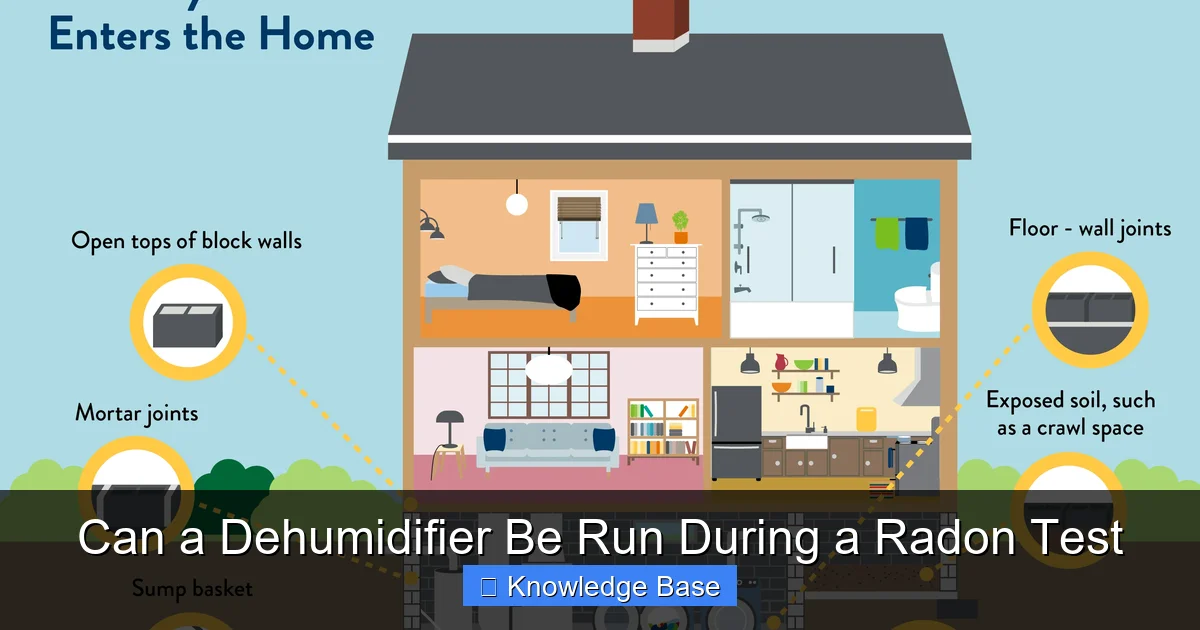
Radon is a naturally occurring radioactive gas that forms from the breakdown of uranium in soil, rock, and water. It’s invisible, odorless, and tasteless, which makes it especially dangerous. When radon is released into the open air, it dilutes quickly and isn’t a major concern. But when it seeps into enclosed spaces like homes, it can accumulate to dangerous levels.
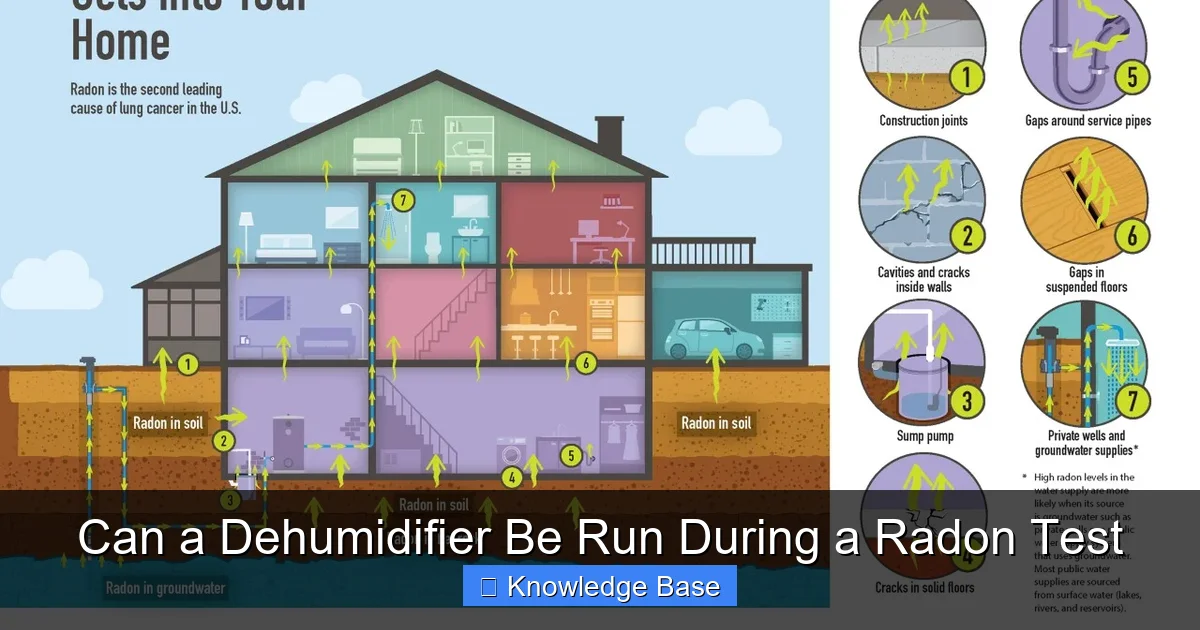
Radon typically enters a home through cracks in the foundation, gaps around pipes, sump pumps, and crawl spaces. It’s drawn in by a phenomenon known as the “stack effect”—warm air rising inside the home creates a slight negative pressure at the lower levels, pulling soil gases, including radon, upward into the living space.
Humidity plays a subtle but important role in this process. High indoor humidity can increase the moisture content in the soil beneath your home, which may slow the movement of radon gas. Conversely, drier soil allows radon to move more freely. This means that lowering indoor humidity with a dehumidifier could, in theory, increase radon entry.
But it’s not just about soil moisture. Dehumidifiers also affect air pressure and ventilation patterns inside your home. By removing moisture, they can slightly alter the balance of air flow between the inside and outside, potentially increasing the rate at which radon is pulled in from the ground.
How Dehumidifiers Work and Their Impact on Indoor Air
Visual guide about Can a Dehumidifier Be Run During a Radon Test
Image source: ewscripps.brightspotcdn.com
To understand whether a dehumidifier can be run during a radon test, it helps to know how these devices function. Most residential dehumidifiers work by drawing in moist air, passing it over cold coils to condense the water, and then releasing drier air back into the room. This process reduces relative humidity, making the space feel more comfortable and inhibiting mold growth.
While dehumidifiers don’t directly produce or remove radon gas, they do change the indoor environment in ways that can indirectly influence radon levels. Here’s how:
Humidity and Soil Gas Movement
Moist soil tends to be less permeable to gas flow. When the ground beneath your home is saturated, radon has a harder time moving through it. But when the soil dries out—due to low indoor humidity or seasonal changes—it becomes more porous, allowing radon to travel more easily into your home. Running a dehumidifier can contribute to this drying effect, especially in basements and crawl spaces.
Air Pressure Changes
Dehumidifiers, especially whole-house models, can affect indoor air pressure. By removing moisture and exhausting air (in some models), they may create slight negative pressure in certain areas. This can enhance the stack effect, pulling more soil gases—including radon—into the home.
Ventilation and Air Mixing
Some dehumidifiers, particularly portable units, can create localized air movement. While this isn’t as disruptive as running a fan or opening windows, it can still mix air layers and potentially affect where radon accumulates. Radon tends to settle in lower areas, and stirring the air might temporarily redistribute it.
Types of Radon Tests and Sensitivity to Environmental Changes
Not all radon tests are created equal. The type of test you use will determine how much your dehumidifier use might impact the results.
Short-Term Radon Tests (2–7 Days)
These are the most common types of radon tests and are often used for initial screening. They include charcoal canisters, alpha track detectors, and continuous radon monitors. Because they only measure radon over a few days, they are highly sensitive to changes in weather, ventilation, and indoor conditions.
If you run a dehumidifier during a short-term test, especially in a basement or crawl space, you could be altering the very conditions the test is trying to measure. For example, a sudden drop in humidity might increase radon entry just as the test begins, leading to a falsely high reading. Conversely, if the dehumidifier reduces air pressure fluctuations, it might lower the reading.
For this reason, the Environmental Protection Agency (EPA) and radon testing professionals recommend minimizing changes in home operations during short-term tests. This includes avoiding major cleaning, running exhaust fans, or using dehumidifiers unless absolutely necessary.
Long-Term Radon Tests (90 Days or More)
Long-term tests, such as alpha track detectors, measure radon levels over several months. Because they average readings over time, they are much less affected by daily fluctuations caused by appliances like dehumidifiers.
If you’re concerned about using your dehumidifier, a long-term test is a great option. It gives a more accurate picture of your home’s typical radon levels, accounting for seasonal changes, weather patterns, and normal household activities.
Expert Guidelines: What the EPA and Professionals Say
The EPA provides detailed guidance on how to conduct a reliable radon test. Their recommendations emphasize maintaining “closed-house conditions” during short-term testing. This means:
– Keeping windows and doors closed (except for normal entry and exit)
– Not using exhaust fans, whole-house fans, or attic fans
– Operating the HVAC system normally
– Avoiding major cleaning or renovations
But what about dehumidifiers? The EPA doesn’t explicitly ban them, but they do caution against making significant changes to indoor conditions. The key phrase is “normal living conditions.” If you typically run a dehumidifier, especially in a damp basement, turning it off completely might create an unnatural environment that doesn’t reflect your usual exposure.
However, if your dehumidifier runs continuously or is set to a very low humidity level (below 40%), it could be altering the home’s pressure and moisture balance in a way that affects radon entry. In such cases, experts recommend either:
1. Using the dehumidifier at its normal setting (if it’s part of your routine), or
2. Consulting a certified radon measurement professional for advice.
Many radon professionals suggest that if your home is excessively damp—leading to mold, musty odors, or standing water—it’s better to address the moisture issue first. High humidity can damage your home and create health risks, and in some cases, it may even mask high radon levels by slowing gas entry. In these situations, using a dehumidifier might actually help create a more representative test environment.
Practical Tips for Running a Dehumidifier During a Radon Test
So, can you run a dehumidifier during a radon test? The answer isn’t a simple yes or no—it depends on your home, your habits, and the type of test you’re using. Here are some practical tips to help you make the right decision:
1. Assess Your Normal Usage
Ask yourself: Do you normally run a dehumidifier? If it’s part of your daily routine, turning it off completely might create an artificial environment. In this case, it’s better to keep it running at its usual setting.
2. Avoid Extreme Settings
Don’t set your dehumidifier to its lowest humidity level (e.g., 30%) during the test. This could dry out the soil too much and increase radon entry. Stick to a moderate setting, such as 45–50%, which is healthy and comfortable.
3. Choose a Long-Term Test When Possible
If you’re concerned about appliance use, opt for a long-term radon test. These are less sensitive to daily changes and provide a more accurate average.
4. Test in the Right Season
Radon levels are typically highest in winter, when homes are sealed tightly and heating systems create strong stack effects. Testing during this time gives the most conservative reading. If you run a dehumidifier year-round, winter testing will reflect your normal conditions.
5. Seal Cracks and Improve Ventilation
Instead of relying solely on a dehumidifier to manage moisture, address the root cause. Seal foundation cracks, install a vapor barrier in crawl spaces, and ensure proper drainage around your home. These steps reduce both moisture and radon entry.
6. Consult a Professional
If you’re unsure, hire a certified radon measurement professional. They can conduct the test using calibrated equipment and advise you on whether your dehumidifier use is likely to affect results.
Real-World Example: A Homeowner’s Experience
Let’s look at a real-life scenario. Sarah lives in Minnesota, where basements are common and humidity levels can soar in summer. She recently bought a new home and decided to test for radon. Her basement has a sump pump and occasional dampness, so she runs a dehumidifier set to 50% humidity.
She purchased a short-term charcoal canister test and placed it in the basement, following the instructions to keep windows closed and avoid fans. But she wasn’t sure about the dehumidifier. After some research, she decided to keep it running at its normal setting, reasoning that this reflected her typical living conditions.
The test came back at 3.8 pCi/L—just below the EPA action level of 4.0 pCi/L. Relieved but cautious, she followed up with a long-term test three months later. This time, the result was 3.2 pCi/L. Both readings were in the safe range, and she felt confident that her dehumidifier use hadn’t skewed the results.
Sarah’s experience shows that using a dehumidifier during a radon test isn’t necessarily a problem—especially when it’s part of your normal routine. The key is consistency and understanding how your home behaves.
When to Avoid Using a Dehumidifier During Testing
While moderate use is usually fine, there are situations where you should avoid running a dehumidifier during a radon test:
– If you’re conducting a short-term test and the dehumidifier is set to an unusually low humidity level (below 40%).
– If the dehumidifier is new or has been off for a long time, and you’re turning it on just for the test.
– If your home has a known radon problem and you’re trying to assess the effectiveness of a mitigation system.
– If the test instructions specifically prohibit dehumidifier use (some professional kits do).
In these cases, it’s best to either delay the test until conditions stabilize or consult a radon professional.
Conclusion: Balancing Comfort and Accuracy
So, can a dehumidifier be run during a radon test? The answer is: yes, but with caution. Dehumidifiers can influence humidity, air pressure, and soil gas movement—all of which play a role in radon entry. However, if the dehumidifier is part of your normal household routine and used at a moderate setting, it’s unlikely to significantly distort your test results.
The most important thing is to maintain consistency. Don’t make drastic changes to your home’s environment just for the test. Instead, aim to replicate your typical living conditions as closely as possible. If you’re still unsure, opt for a long-term test or seek guidance from a certified radon professional.
Remember, the goal of radon testing isn’t to get a perfect reading under artificial conditions—it’s to understand your real-world exposure. By balancing indoor comfort with testing integrity, you can protect your health without sacrificing peace of mind.
Frequently Asked Questions
Does running a dehumidifier increase radon levels?
It can, indirectly. Lower humidity may dry out soil beneath your home, making it easier for radon gas to enter. However, the effect is usually minor unless humidity is drastically reduced.
Can I use a dehumidifier in the basement during a radon test?
Yes, especially if it’s part of your normal routine. Just avoid setting it to very low humidity levels, as this could alter soil gas flow and affect test accuracy.
What should I do if my home is very damp during a radon test?
It’s okay to use a dehumidifier to manage excessive moisture. In fact, addressing dampness may lead to a more accurate test by reflecting real-world conditions.
Are there radon test kits that allow dehumidifier use?
Most consumer kits don’t explicitly prohibit dehumidifiers, but always check the instructions. Professional tests may have stricter guidelines.
How long should I wait after using a dehumidifier before testing for radon?
If you’ve made major changes (like turning on a new dehumidifier), wait a few days for conditions to stabilize. For normal use, no waiting is needed.
Can I reduce radon by using a dehumidifier?
Not directly. Dehumidifiers control moisture but don’t remove radon. For radon reduction, use mitigation systems like sub-slab depressurization.