
While a dehumidifier alone cannot prevent or cure COVID-19, it can play a supportive role in reducing virus survival indoors by maintaining optimal humidity levels. Proper humidity control, combined with ventilation, masks, and hygiene, creates a healthier environment that may lower transmission risks.
Key Takeaways
- Dehumidifiers don’t kill the virus: They don’t eliminate SARS-CoV-2 directly but can reduce conditions that help it survive longer in the air and on surfaces.
- Optimal humidity matters: Maintaining indoor relative humidity between 40% and 60% may reduce viral stability and improve respiratory defenses.
- High humidity can increase risk: Very moist air may allow virus-laden droplets to linger longer, while overly dry air can weaken mucous membranes.
- Air quality is key: Dehumidifiers with HEPA filters or used alongside air purifiers can improve overall indoor air quality.
- Not a standalone solution: Dehumidifiers should complement—not replace—proven measures like vaccination, masking, and ventilation.
- Best for damp spaces: Homes in humid climates or with poor ventilation benefit most from dehumidifiers during cold and flu season.
- Maintenance is crucial: Dirty dehumidifiers can breed mold and bacteria, worsening air quality if not cleaned regularly.
Quick Answers to Common Questions
Can a dehumidifier kill the COVID-19 virus?
No, a dehumidifier does not kill the virus. It only reduces humidity, which may make the environment less favorable for the virus to survive.
What humidity level is best to reduce COVID risk?
Maintaining indoor relative humidity between 40% and 60% is ideal, as it may reduce virus stability and support respiratory health.
Should I use a dehumidifier in winter?
Yes, especially if your home feels damp or has condensation. Winter heating can create uneven humidity, and a dehumidifier helps balance it.
Can a dirty dehumidifier make air quality worse?
Yes. If not cleaned regularly, dehumidifiers can grow mold and bacteria, which are then blown back into your home.
Do I need both a dehumidifier and an air purifier?
For best results, yes. A dehumidifier controls moisture, while an air purifier removes particles like viruses and allergens.
📑 Table of Contents
- Can a Dehumidifier Help with Covid? Understanding the Science Behind Humidity and Viruses
- How Humidity Affects Virus Survival and Transmission
- How Dehumidifiers Work and Their Role in Indoor Air Quality
- Real-World Scenarios: When a Dehumidifier Might Help Most
- Practical Tips for Using a Dehumidifier to Support Health
- Misconceptions and Limitations: What Dehumidifiers Can’t Do
- Conclusion: A Supportive Tool, Not a Cure-All
Can a Dehumidifier Help with Covid? Understanding the Science Behind Humidity and Viruses
When the pandemic first hit, people scrambled for ways to protect themselves at home. Hand sanitizer, masks, and disinfectants flew off the shelves. But what about your HVAC system—or even your dehumidifier? Could something as simple as controlling indoor humidity actually help reduce your risk of catching or spreading COVID-19?
It’s a fair question. After all, we spend up to 90% of our time indoors, and the air we breathe at home can have a big impact on our health. While no single device can stop a virus in its tracks, research suggests that environmental factors—like humidity—play a surprising role in how long viruses survive and how easily they spread.
So, can a dehumidifier help with COVID? The short answer is: not directly. A dehumidifier won’t zap the SARS-CoV-2 virus out of the air like a superhero. But it can help create an indoor environment that’s less friendly to the virus—and more supportive of your body’s natural defenses.
In this article, we’ll break down the science behind humidity and viral transmission, explore how dehumidifiers work, and explain when—and how—they might be a useful tool in your pandemic preparedness toolkit. We’ll also cover practical tips for using dehumidifiers safely and effectively, so you can breathe easier—literally and figuratively.
How Humidity Affects Virus Survival and Transmission
Visual guide about Can a Dehumidifier Help with Covid
Image source: crdms.images.consumerreports.org
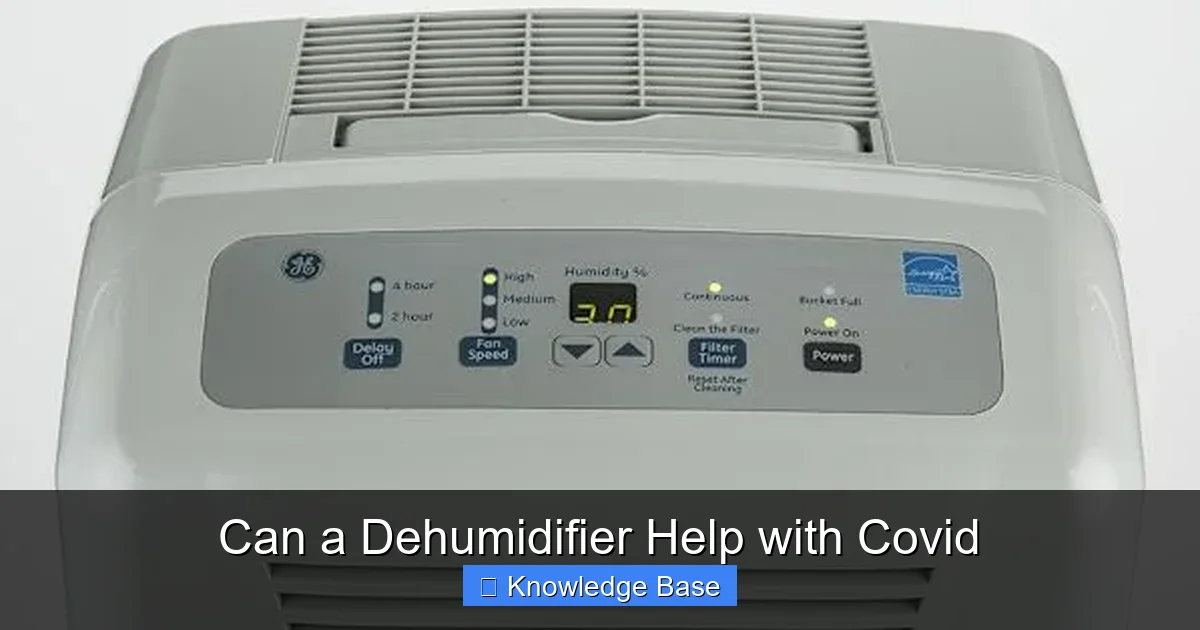
To understand whether a dehumidifier can help with COVID, we first need to understand how humidity influences virus behavior. Humidity refers to the amount of water vapor in the air. It’s usually expressed as “relative humidity” (RH), which is the percentage of moisture in the air compared to the maximum it can hold at a given temperature.
Scientists have studied how different humidity levels affect respiratory viruses for decades—long before COVID-19. And the findings are consistent: both very low and very high humidity can create conditions that help viruses survive and spread.
The Goldilocks Zone: 40% to 60% Relative Humidity
Research shows that many respiratory viruses, including influenza and coronaviruses, are most stable and transmissible when indoor humidity is either too low (below 40%) or too high (above 60%). The “sweet spot”—often called the Goldilocks zone—is between 40% and 60% relative humidity.
At this range, several beneficial things happen:
– Virus particles in the air tend to fall out of circulation faster.
– Respiratory droplets evaporate more quickly, reducing the distance they can travel.
– Your body’s natural defenses—like mucus and cilia in your airways—work more effectively.
A 2020 study published in *Aerosol Science and Technology* found that SARS-CoV-2 remained viable longer in environments with very low humidity (around 20%) and in very high humidity (above 80%). In contrast, mid-range humidity levels reduced the virus’s ability to survive on surfaces and in the air.
Why Low Humidity Is Risky
Cold, dry winter air is a major culprit when it comes to increased virus transmission. When indoor air is too dry—common in heated homes during winter—several things go wrong:
– Respiratory droplets don’t evaporate as quickly, so they stay airborne longer.
– The mucous membranes in your nose and throat dry out, making it harder for your body to trap and expel pathogens.
– Viruses can remain infectious for longer periods on dry surfaces.
This is why flu season peaks in winter, even in mild climates. And while COVID-19 doesn’t follow the exact same seasonal pattern, the same principles apply: dry air = better conditions for virus survival.
The Problem with High Humidity
On the flip side, extremely humid environments aren’t safe either. When humidity climbs above 60%, especially in poorly ventilated spaces, you risk:
– Slower evaporation of respiratory droplets, allowing them to linger in the air.
– Increased growth of mold, dust mites, and bacteria—all of which can worsen respiratory health.
– A more stable environment for some viruses to remain infectious.
In short, both ends of the humidity spectrum can be problematic. That’s why maintaining a balanced indoor environment is key.
How Dehumidifiers Work and Their Role in Indoor Air Quality
Visual guide about Can a Dehumidifier Help with Covid
Image source: mydecorative.com
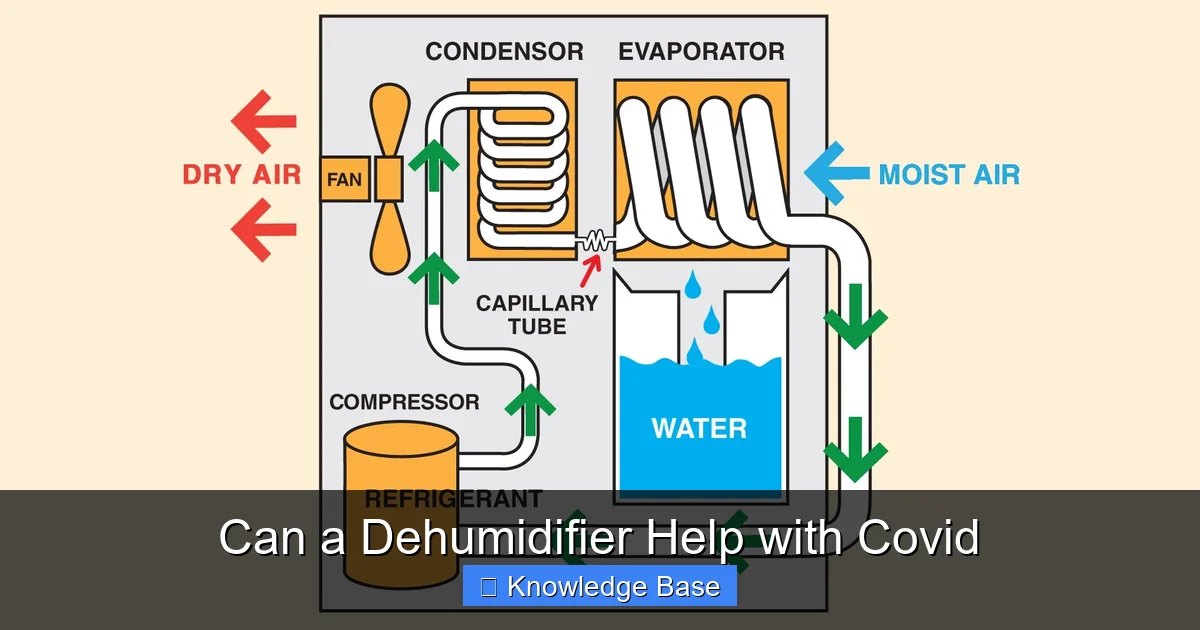
Now that we know humidity matters, let’s talk about how dehumidifiers fit into the picture. A dehumidifier is an appliance designed to reduce moisture in the air. It works by drawing in humid air, cooling it to condense the moisture, and then reheating the air before releasing it back into the room.
There are two main types:
– **Compressor (refrigerant) dehumidifiers:** Most common in homes. They use a cold coil to condense water vapor. Best for warm, humid environments.
– **Desiccant dehumidifiers:** Use a moisture-absorbing material (like silica gel) to pull water from the air. Better for cooler climates or basements.
Both types lower relative humidity, but they don’t filter viruses or bacteria directly. So how can they help with COVID?
Indirect Benefits for Virus Control
While dehumidifiers don’t kill the virus, they can help reduce the conditions that allow it to thrive:
– **Reducing airborne droplet persistence:** In high humidity, respiratory droplets can stay suspended longer. By lowering humidity to the 40–60% range, droplets evaporate faster and fall to the ground more quickly, reducing the chance of inhalation.
– **Improving surface hygiene:** Viruses can survive on surfaces like doorknobs, countertops, and phones. Studies show that mid-range humidity reduces the survival time of coronaviruses on surfaces. A dehumidifier helps maintain that ideal range.
– **Supporting immune function:** Dry air dries out your nasal passages, making it easier for viruses to enter your body. Proper humidity keeps mucous membranes moist and functional, acting as a natural barrier.
Dehumidifiers vs. Air Purifiers: What’s the Difference?
It’s easy to confuse dehumidifiers with air purifiers, but they serve different purposes:
– **Air purifiers** use filters (like HEPA) to trap particles, including viruses, bacteria, and allergens. Some even use UV light to kill pathogens.
– **Dehumidifiers** remove moisture from the air but don’t filter particles unless they have an added filter.
That said, some modern dehumidifiers come with built-in air filters or can be used alongside air purifiers for a dual approach. For example, a dehumidifier with a HEPA filter can both control humidity and capture airborne contaminants.
If you’re serious about improving indoor air quality, consider using both devices together—especially in high-risk areas like bedrooms, living rooms, or home offices.
Real-World Scenarios: When a Dehumidifier Might Help Most
Not every home needs a dehumidifier for COVID protection. But in certain situations, it can make a meaningful difference.
Homes in Humid Climates
If you live in a place like Florida, Louisiana, or the Pacific Northwest, high humidity is a year-round challenge. Basements, bathrooms, and laundry rooms often feel damp, and mold growth is common. In these environments, a dehumidifier can help maintain the 40–60% humidity range, reducing virus stability and improving comfort.
For example, a family in Miami might use a whole-house dehumidifier to keep their home’s humidity at 50%. This not only reduces the risk of mold but also creates an environment less favorable to virus survival.
Winter Months in Cold Climates
Wait—doesn’t winter mean dry air? Yes, but paradoxically, indoor humidity can still be too high in some cases. When cold outdoor air enters a warm home, it heats up and its relative humidity drops. But if your home is poorly ventilated and has sources of moisture (like showers, cooking, or wet clothes), the actual humidity can spike.
In such cases, a dehumidifier can help balance things out. For instance, a basement apartment in Chicago might use a dehumidifier during winter to prevent condensation on windows and walls—conditions that could otherwise support virus persistence.
Homes with Poor Ventilation
If your home doesn’t have good airflow—no windows that open, no exhaust fans, or an outdated HVAC system—moisture can build up quickly. This is especially true in modern, energy-efficient homes that are tightly sealed.
In these spaces, a dehumidifier can act as a stopgap, helping to control humidity until ventilation improvements are made. Pair it with opening windows when weather permits, or using fans to circulate air.
High-Occupancy or Multi-Generational Homes
Homes with multiple people—especially if someone is sick—are higher-risk environments. If a family member has COVID-19, using a dehumidifier in common areas can help reduce the concentration of virus-laden droplets in the air.
While it won’t replace isolation or masking, it can be part of a layered defense strategy. For example, running a dehumidifier in the living room during family gatherings may help lower transmission risk, especially if combined with air purifiers and open windows.
Practical Tips for Using a Dehumidifier to Support Health
If you’re considering a dehumidifier to help with indoor air quality and virus control, here’s how to use it effectively and safely.
Choose the Right Size and Type
Dehumidifiers come in different capacities, measured in pints per day (the amount of moisture they can remove in 24 hours). A small 30-pint unit might be fine for a bathroom or closet, but a 50–70-pint model is better for a basement or large living area.
Consider your climate and space:
– **Basements:** Often damp and cool. A desiccant or high-capacity compressor model works well.
– **Living areas:** Choose a quiet, energy-efficient model with a built-in humidistat (to automatically maintain desired humidity).
– **Whole-house systems:** If you have central HVAC, a whole-house dehumidifier integrated with your system offers the most consistent control.
Set the Right Humidity Level
Aim for 40–60% relative humidity. Most dehumidifiers have a built-in humidistat, so you can set your target and let the unit do the work.
Avoid going too low—below 30% can dry out your skin, eyes, and respiratory tract. And don’t go too high—above 60% encourages mold and dust mites.
Use a standalone hygrometer (a humidity monitor) to double-check readings, as built-in sensors aren’t always accurate.
Clean and Maintain Regularly
A dirty dehumidifier can do more harm than good. Standing water in the tank can breed bacteria and mold, which the unit then blows back into your home.
Follow these maintenance tips:
– Empty the water tank daily or use a hose for continuous drainage.
– Clean the tank weekly with a mild bleach solution (1 tablespoon bleach per gallon of water).
– Wash or replace air filters every 1–3 months.
– Wipe down coils and vents to prevent dust buildup.
Use Alongside Other Measures
A dehumidifier is not a magic bullet. To truly reduce COVID risk, combine it with:
– **Ventilation:** Open windows, use exhaust fans, or install an energy recovery ventilator (ERV).
– **Air purification:** Use a HEPA air purifier in high-traffic rooms.
– **Masking and distancing:** Especially in crowded or poorly ventilated spaces.
– **Hand hygiene:** Wash hands frequently and avoid touching your face.
– **Vaccination and testing:** Stay up to date on boosters and test if exposed or symptomatic.
Monitor for Mold and Allergens
While dehumidifiers help prevent mold, they don’t eliminate existing problems. If you see mold growth, address the source—leaky pipes, poor drainage, or condensation—before relying on a dehumidifier.
Also, if you or a family member has asthma or allergies, monitor symptoms. Sometimes, overly dry air can trigger irritation, so adjust settings as needed.
Misconceptions and Limitations: What Dehumidifiers Can’t Do
It’s important to have realistic expectations. A dehumidifier is a helpful tool, but it has limits.
It Doesn’t Kill the Virus
No amount of humidity control will destroy SARS-CoV-2 particles. The virus is only inactivated by heat, UV light, or chemical disinfectants. A dehumidifier merely changes the environment in which the virus exists.
It Won’t Stop Airborne Transmission Alone
COVID-19 spreads mainly through aerosols—tiny particles that can linger in the air for hours. A dehumidifier doesn’t remove these particles. That’s what air purifiers and ventilation are for.
Overuse Can Cause Problems
Running a dehumidifier nonstop in a dry climate can over-dry the air, leading to cracked skin, nosebleeds, or respiratory irritation. Always monitor humidity levels and adjust accordingly.
Not a Substitute for Medical Care
If you’re exposed to COVID-19 or develop symptoms, a dehumidifier won’t help you recover faster. Seek medical advice, get tested, and follow public health guidelines.
Conclusion: A Supportive Tool, Not a Cure-All
So, can a dehumidifier help with COVID? The answer is nuanced. While it won’t prevent infection on its own, it can contribute to a healthier indoor environment by maintaining optimal humidity levels—something that research shows may reduce virus stability and support your body’s defenses.
Think of a dehumidifier as one piece of a larger puzzle. When used alongside ventilation, air purification, hygiene, and vaccination, it becomes part of a smart, layered strategy to protect your home and family.
If you live in a humid area, have a damp basement, or struggle with seasonal allergies, a dehumidifier is a worthwhile investment—not just for pandemic preparedness, but for year-round comfort and health.
Just remember: keep it clean, set it right, and don’t rely on it alone. Breathing easier starts with better air—and that’s something we can all get behind.
Frequently Asked Questions
Can a dehumidifier prevent me from getting COVID-19?
No, a dehumidifier cannot prevent COVID-19 on its own. It may help reduce virus survival in the air and on surfaces by maintaining optimal humidity, but it should be used alongside other protective measures.
Is it safe to run a dehumidifier all the time?
It’s safe as long as you monitor humidity levels and clean the unit regularly. Running it continuously in a dry climate may over-dry the air, so adjust settings based on your hygrometer readings.
Do dehumidifiers help with allergies and asthma?
Yes, by reducing mold, dust mites, and excess moisture, dehumidifiers can improve indoor air quality and ease symptoms for people with allergies or asthma.
Can I use a dehumidifier in a bedroom?
Yes, especially if the room feels damp or you notice condensation on windows. Choose a quiet, energy-efficient model with a built-in humidistat for comfort.
How often should I clean my dehumidifier?
Clean the water tank weekly with a mild bleach solution, and wash or replace the air filter every 1–3 months. Regular maintenance prevents mold and bacteria growth.
Are whole-house dehumidifiers better than portable ones?
Whole-house systems offer more consistent humidity control and are ideal for large or multi-story homes. Portable units are better for targeted use in basements, bathrooms, or single rooms.