
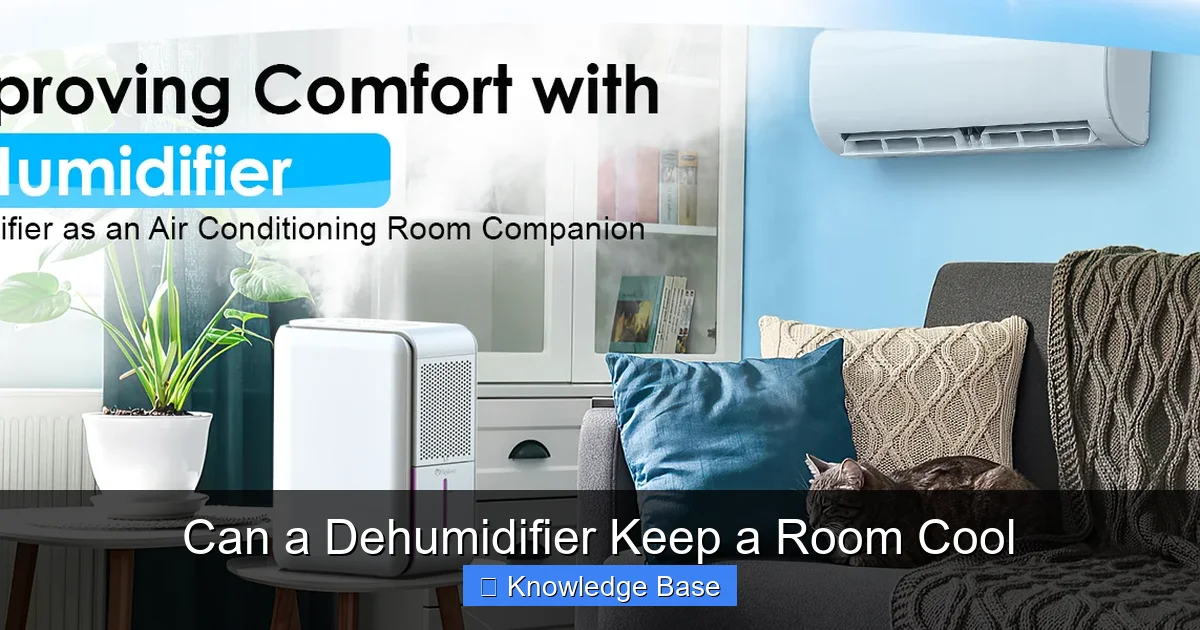
While a dehumidifier doesn’t actually lower air temperature, it can make a room feel significantly cooler by reducing humidity. By removing excess moisture, it enhances your body’s natural cooling process, improving comfort during hot, sticky weather—especially when used alongside fans or air conditioning.
Key Takeaways
- Dehumidifiers reduce humidity, not temperature: They remove moisture from the air, which can make a room feel cooler even if the thermostat reading stays the same.
- Improved comfort in humid climates: High humidity makes heat feel more intense; lowering humidity levels can make 80°F feel like 75°F.
- Supports air conditioning efficiency: Using a dehumidifier with an AC unit can reduce the workload on your AC, potentially lowering energy bills.
- Not a replacement for air conditioning: Dehumidifiers don’t cool air like AC units—they improve comfort by managing moisture.
- Best for enclosed, damp spaces: Ideal for basements, laundry rooms, and bathrooms where humidity is high and airflow is limited.
- Can slightly increase room temperature: The heat from the dehumidifier’s compressor may raise air temperature by 1–3°F, offsetting some cooling benefits.
- Choose the right size and type: Select a unit based on room size and humidity level for optimal performance and energy efficiency.
Quick Answers to Common Questions
Can a dehumidifier cool a room like an air conditioner?
No, a dehumidifier does not cool the air like an air conditioner. It removes moisture, which can make the room feel cooler, but it doesn’t lower the actual temperature.
Will a dehumidifier make my room feel cooler?
Yes, by reducing humidity, a dehumidifier allows sweat to evaporate more easily, making you feel cooler even if the temperature stays the same.
Can I use a dehumidifier instead of an air conditioner?
Not if your main goal is to lower temperature. A dehumidifier improves comfort in humid conditions but doesn’t replace the cooling power of an AC.
Does a dehumidifier use a lot of electricity?
Most dehumidifiers use 300–800 watts, which is less than an air conditioner. Using one can actually reduce AC energy use by improving efficiency.
Where should I place a dehumidifier for best results?
Place it in the center of the room or near the moisture source, with at least 6–12 inches of clearance for proper airflow.
📑 Table of Contents
- Can a Dehumidifier Keep a Room Cool? The Truth About Comfort and Climate Control
- How Dehumidifiers Work: The Science Behind Moisture Removal
- Dehumidifier vs. Air Conditioner: What’s the Difference?
- The Role of Humidity in Perceived Temperature
- Best Uses for a Dehumidifier: When and Where to Use It
- Tips for Using a Dehumidifier Effectively
- Limitations and Considerations
- Conclusion: Can a Dehumidifier Keep a Room Cool?
Can a Dehumidifier Keep a Room Cool? The Truth About Comfort and Climate Control
When summer hits and the air feels thick and sticky, many people wonder: Can a dehumidifier keep a room cool? It’s a common question, especially for those living in humid regions like the southeastern United States, the Gulf Coast, or tropical climates. You might have noticed that even when your air conditioner is running, the room still feels clammy or uncomfortable. That’s often because of high humidity—not necessarily high temperature.
At first glance, a dehumidifier doesn’t seem like a cooling device. It doesn’t blow cold air like an air conditioner or a fan. Instead, it quietly pulls moisture from the air, collecting it in a tank or draining it away. But here’s the surprising part: even though it doesn’t lower the actual temperature, it can make a room feel noticeably cooler and more comfortable. This effect is due to how our bodies perceive heat and how moisture affects our ability to cool down naturally.
Understanding this distinction—between actual temperature and perceived comfort—is key to knowing when and how to use a dehumidifier effectively. In this article, we’ll explore how dehumidifiers work, whether they can truly “cool” a room, and how they compare to other climate control devices like air conditioners and fans. We’ll also look at practical tips for using a dehumidifier to improve indoor comfort, especially during hot, humid months.
How Dehumidifiers Work: The Science Behind Moisture Removal
To understand whether a dehumidifier can keep a room cool, it helps to know exactly how these devices function. Unlike air conditioners, which cool air by removing heat, dehumidifiers focus solely on reducing moisture levels in the air. They do this through a process that involves refrigeration technology, but with a different goal in mind.
The Basic Mechanics of a Dehumidifier
Most residential dehumidifiers are refrigerant-based, meaning they use a compressor, condenser, and evaporator coil—similar to an air conditioner. Here’s a simplified breakdown of how it works:
1. **Air Intake:** A fan draws warm, humid air from the room into the dehumidifier.
2. **Cooling the Air:** The air passes over cold evaporator coils. As the air cools, its ability to hold moisture decreases, causing water vapor to condense into liquid droplets.
3. **Water Collection:** The condensed water drips into a collection tank or is drained directly through a hose.
4. **Reheating the Air:** The now-dry air passes over warm condenser coils, where it is reheated to near its original temperature.
5. **Air Output:** The dry, slightly warmed air is blown back into the room.
This cycle repeats continuously until the desired humidity level is reached. Most dehumidifiers allow you to set a target humidity level, typically between 30% and 50%, which is considered ideal for comfort and health.
Why the Air Feels Cooler
Even though the dehumidifier reheats the air before releasing it, the room can still feel cooler. This is because high humidity interferes with your body’s natural cooling mechanism: sweating. When the air is full of moisture, sweat doesn’t evaporate easily from your skin. Since evaporation is what cools you down, high humidity makes you feel hotter than the actual temperature suggests.
By lowering the humidity, a dehumidifier allows sweat to evaporate more efficiently. This makes you feel cooler, even if the room temperature hasn’t changed. It’s similar to how a breeze makes a hot day feel more comfortable—not because the air is cooler, but because it helps your body cool itself.
Energy Use and Heat Output
One important thing to note is that dehumidifiers do generate some heat. The compressor and fan produce heat as they operate, and the reheating process adds a small amount of warmth to the air. In most cases, this increases the room temperature by 1 to 3 degrees Fahrenheit. So while the air feels cooler due to lower humidity, the actual temperature might be slightly higher.
This heat output means that using a dehumidifier in an already hot room without ventilation or air circulation could make things feel warmer. That’s why it’s often recommended to use a dehumidifier in conjunction with a fan or air conditioner, especially in tightly sealed spaces.
Dehumidifier vs. Air Conditioner: What’s the Difference?
Many people confuse dehumidifiers with air conditioners because both devices deal with indoor air quality and comfort. However, they serve different primary functions and operate in distinct ways. Understanding the difference is crucial for choosing the right tool for your needs.
Primary Function: Cooling vs. Drying
An air conditioner’s main job is to cool the air by removing heat. It does this by circulating refrigerant through a closed system, absorbing heat from indoor air and releasing it outside. As a bonus, air conditioners also remove some moisture from the air during the cooling process, which is why you might see water dripping from your AC unit on a hot day.
A dehumidifier, on the other hand, is designed specifically to remove moisture. It doesn’t focus on lowering temperature—its goal is to reduce humidity levels. While it may incidentally cool the air slightly during the condensation process, it reheats the air before releasing it, so there’s no net cooling effect.
Energy Efficiency and Cost
Air conditioners typically use more energy than dehumidifiers because they are working harder to remove heat. A central AC unit can consume 3,000 to 5,000 watts, while a standard dehumidifier uses between 300 and 800 watts, depending on size and settings.
However, using a dehumidifier can actually improve the efficiency of your air conditioner. When humidity is high, your AC has to work harder to cool the air because it’s also trying to remove moisture. By reducing humidity first, the dehumidifier lightens the load on your AC, allowing it to cool more effectively and potentially reducing energy consumption.
When to Use Each Device
– **Use an air conditioner** when you need to lower the temperature of a room quickly, especially during heatwaves or in hot, dry climates.
– **Use a dehumidifier** when the air feels sticky or clammy, even if the temperature isn’t extremely high. This is common in basements, bathrooms, or during rainy seasons.
– **Use both together** in humid climates for maximum comfort. The dehumidifier reduces moisture, making the air feel cooler, while the AC maintains a comfortable temperature.
For example, imagine you live in Florida during the summer. The temperature might be 82°F, but the humidity is 80%. Your AC might struggle to keep up, and the air still feels oppressive. Running a dehumidifier in the same room can reduce the humidity to 50%, making the 82°F feel more like 77°F. Your AC will also run less frequently, saving energy.
The Role of Humidity in Perceived Temperature
To fully grasp how a dehumidifier can make a room feel cooler, it’s important to understand the concept of “feels like” temperature. This is the temperature that the human body actually experiences, factoring in humidity, wind, and other environmental conditions.
Heat Index: Why Humidity Matters
The heat index is a measure that combines air temperature and relative humidity to determine how hot it feels to the human body. For example, if the air temperature is 85°F and the relative humidity is 70%, the heat index is 94°F. That means it feels nearly 10 degrees hotter than the actual temperature.
High humidity reduces the rate of evaporation from your skin, making it harder for your body to cool itself. This is why a dry 90°F day in Arizona can feel more comfortable than an 85°F day in Georgia—the humidity levels are drastically different.
How Lower Humidity Improves Comfort
When a dehumidifier reduces indoor humidity, it effectively lowers the “feels like” temperature. Even if your thermostat still reads 78°F, the room may feel like 74°F or 75°F because your sweat can evaporate more easily. This improved comfort can reduce the need to lower the thermostat, which in turn saves energy.
For instance, if you normally set your AC to 72°F to feel comfortable on a humid day, you might find that setting it to 75°F feels just as good after running a dehumidifier for a few hours. That 3-degree difference can lead to significant energy savings over time.
Practical Example: Basement Comfort
Basements are notorious for being damp and cool, but not always comfortable. Even if the temperature is a mild 68°F, high humidity can make the space feel clammy and chilly. Running a dehumidifier in the basement can reduce moisture levels, making the air feel drier and more pleasant. This can transform a rarely used basement into a functional living space—whether for a home gym, office, or guest room.
Best Uses for a Dehumidifier: When and Where to Use It
Dehumidifiers are most effective in specific environments and situations. Knowing where and when to use one can maximize its benefits and improve your overall indoor comfort.
High-Humidity Areas
Dehumidifiers shine in spaces that are prone to excess moisture. These include:
– **Basements:** Often damp due to poor ventilation and contact with the ground.
– **Bathrooms:** Steam from showers increases humidity quickly.
– **Laundry Rooms:** Wet clothes and dryers release moisture into the air.
– **Closets:** Poor airflow can lead to musty smells and mold growth.
– **Garages:** Especially in humid climates, garages can become damp and uncomfortable.
In these areas, a dehumidifier can prevent mold, mildew, and musty odors while making the space feel more comfortable.
Seasonal Use
Dehumidifiers are particularly useful during certain times of the year:
– **Summer:** High humidity makes heat feel more intense. A dehumidifier can improve comfort without overworking your AC.
– **Rainy Seasons:** Increased outdoor moisture can seep indoors, raising humidity levels.
– **Spring and Fall:** Transitional weather can bring fluctuating humidity, especially in basements and crawl spaces.
Even in winter, some homes may benefit from a dehumidifier, especially if indoor humidity rises due to activities like cooking, showering, or using humidifiers for dry air.
Health and Allergy Benefits
Beyond comfort, dehumidifiers offer health advantages. High humidity encourages the growth of dust mites, mold, and mildew—common allergens and asthma triggers. By keeping humidity below 50%, a dehumidifier can reduce these irritants, leading to better indoor air quality and fewer respiratory issues.
For example, someone with asthma might find that their symptoms improve during humid months when they use a dehumidifier in their bedroom. The drier air is easier to breathe and less likely to trigger coughing or wheezing.
Tips for Using a Dehumidifier Effectively
To get the most out of your dehumidifier and enhance its cooling effect, follow these practical tips:
Choose the Right Size
Dehumidifiers are rated by the amount of moisture they can remove in 24 hours, measured in pints. A small 30-pint unit is suitable for a 500-square-foot basement, while a 70-pint model may be needed for a large, very damp space.
Check the manufacturer’s recommendations and consider factors like room size, humidity level, and how often the door is opened. An undersized unit will struggle to keep up, while an oversized one may cycle on and off too frequently, reducing efficiency.
Place It Strategically
Position the dehumidifier in the center of the room or near the source of moisture. Avoid placing it against walls or furniture, as this can block airflow. Ensure there’s at least 6–12 inches of clearance around the unit for optimal performance.
In multi-level homes, consider using a dehumidifier on the lowest level, as moisture tends to rise. If you have a central HVAC system, a whole-house dehumidifier installed in your ductwork can provide whole-home comfort.
Use It with a Fan
Since a dehumidifier doesn’t circulate air like a fan, pairing it with one can improve comfort. A ceiling fan or box fan helps distribute the drier air throughout the room, enhancing the cooling sensation. This combination can make a room feel significantly more comfortable without lowering the thermostat.
Empty the Tank Regularly
Most portable dehumidifiers have a water tank that needs to be emptied when full. Some models have an automatic shut-off feature when the tank is full, but it’s still important to check it regularly. For continuous operation, consider a model with a built-in pump or a hose for direct drainage.
Maintain the Unit
Clean the air filter every few weeks to ensure proper airflow. A dirty filter reduces efficiency and can cause the unit to work harder, increasing energy use. Also, inspect the coils and drainage system periodically to prevent mold or blockages.
Monitor Humidity Levels
Use a hygrometer to measure indoor humidity. Aim to keep levels between 30% and 50%. If humidity is too low, it can cause dry skin and respiratory irritation. If it’s too high, you’re not getting the full benefit of the dehumidifier.
Limitations and Considerations
While dehumidifiers offer many benefits, they’re not a cure-all for indoor comfort. It’s important to understand their limitations to set realistic expectations.
No Actual Cooling
Let’s be clear: a dehumidifier does not cool the air. It removes moisture, which can make the room feel cooler, but it doesn’t lower the temperature. If your primary goal is to reduce heat, you’ll still need an air conditioner or fan.
Heat Output
As mentioned earlier, dehumidifiers generate heat during operation. In small, poorly ventilated rooms, this can slightly increase the air temperature. This effect is usually minimal, but it’s something to consider if you’re trying to keep a room as cool as possible.
Energy Use
While dehumidifiers are generally energy-efficient, they still consume electricity. Running one continuously in a large space can add to your energy bill. Use timers or humidistats to automate operation and avoid unnecessary use.
Not Ideal for Dry Climates
In arid regions like the Southwest, indoor humidity is often already low. Using a dehumidifier in such areas can make the air too dry, leading to discomfort, dry skin, and static electricity. In these cases, a humidifier may be more appropriate.
Conclusion: Can a Dehumidifier Keep a Room Cool?
So, can a dehumidifier keep a room cool? The short answer is no—it doesn’t lower the temperature. But the longer, more accurate answer is yes—it can make a room feel cooler and significantly more comfortable, especially in humid conditions.
By reducing moisture in the air, a dehumidifier enhances your body’s ability to cool itself through sweat evaporation. This improves perceived comfort, allowing you to feel cooler at the same temperature. When used alongside an air conditioner or fan, a dehumidifier can improve efficiency, reduce energy costs, and create a healthier indoor environment.
For best results, choose the right size unit for your space, place it strategically, and maintain it regularly. Use it in high-humidity areas like basements, bathrooms, and laundry rooms, and consider seasonal needs. While it’s not a replacement for air conditioning, a dehumidifier is a powerful tool for managing indoor comfort—particularly when the air feels heavy and sticky.
In the end, comfort is about more than just temperature. It’s about how the air feels on your skin, how easy it is to breathe, and whether your home feels inviting. A dehumidifier may not blow cold air, but it can make your space feel refreshingly cool—just when you need it most.
Frequently Asked Questions
Does a dehumidifier lower room temperature?
No, a dehumidifier does not lower the actual air temperature. It removes moisture, which can make the room feel cooler, but the thermostat reading will remain the same or slightly increase due to heat from the unit.
Can a dehumidifier help with allergies?
Yes, by reducing humidity below 50%, a dehumidifier can inhibit the growth of mold, dust mites, and mildew—common allergens that thrive in damp environments.
How often should I empty the dehumidifier tank?
It depends on the humidity level and tank size, but most people need to empty it daily or every other day. Some models have continuous drainage options to avoid frequent emptying.
Is it safe to run a dehumidifier all the time?
Yes, as long as the humidity level is maintained between 30% and 50%. Use a built-in humidistat or timer to prevent over-drying the air, which can cause discomfort.
Can a dehumidifier damage furniture or walls?
No, in fact, it can protect them. High humidity can cause wood to warp, paint to peel, and mold to grow. A dehumidifier helps preserve your home’s structure and furnishings.
Do dehumidifiers work in winter?
Yes, especially in homes with high indoor humidity from activities like cooking or showering. However, in very cold climates, some refrigerant dehumidifiers may not work efficiently below 65°F.