

Yes, a dehumidifier can effectively keep humidity out of an insulated garage—but it depends on the unit’s capacity, garage size, and environmental conditions. While insulation helps slow moisture infiltration, it doesn’t eliminate humidity, making a dehumidifier a smart, proactive solution for protecting tools, vehicles, and stored items from mold, rust, and musty odors.
Key Takeaways
- Dehumidifiers work well in insulated garages: Insulation reduces heat transfer but doesn’t stop moisture; a dehumidifier actively removes excess humidity from the air.
- Choose the right size and type: For garages, opt for a high-capacity, low-temperature dehumidifier (ideally 50–70 pints per day) that functions in cooler environments.
- Garage insulation helps but isn’t enough: Insulation minimizes condensation and temperature swings, but without active moisture control, humidity can still build up.
- Placement and maintenance matter: Position the dehumidifier centrally, clean filters monthly, and empty the water tank or use a drain hose for continuous operation.
- Combine with ventilation and sealing: Use exhaust fans, weatherstripping, and door sweeps to reduce moisture entry and improve dehumidifier efficiency.
- Prevents damage to stored items: Controlling humidity protects tools, electronics, paint, and vehicles from rust, mold, and deterioration.
- Energy use is manageable: Modern dehumidifiers are energy-efficient, especially when used with a hygrometer to maintain 30–50% relative humidity.
Quick Answers to Common Questions
Can a dehumidifier work in a cold insulated garage?
Yes, but only if it’s rated for low-temperature operation. Look for models that function down to 40°F (4°C) or lower with automatic defrost features.
How often should I run my garage dehumidifier?
Run it continuously during humid months or set it to maintain 30–50% humidity using a built-in humidistat. In dry seasons, you can reduce usage.
Will a dehumidifier prevent rust on tools?
Yes, by keeping humidity low, a dehumidifier significantly reduces the risk of rust and corrosion on metal tools and equipment.
Can I use a regular home dehumidifier in my garage?
It’s not recommended. Standard units may freeze or fail in cold, dusty garage environments. Choose a model specifically designed for garage use.
Do I need to insulate my garage if I have a dehumidifier?
Yes. Insulation and dehumidification serve different purposes—insulation controls temperature, while a dehumidifier controls moisture. Both are important for a dry, efficient garage.
📑 Table of Contents
- Understanding Humidity in Insulated Garages
- How Dehumidifiers Work in Enclosed Spaces
- The Role of Garage Insulation in Moisture Control
- Choosing the Right Dehumidifier for Your Insulated Garage
- Installation, Placement, and Maintenance Tips
- Combining Dehumidification with Other Moisture Control Strategies
- Common Misconceptions and Real-World Results
- Conclusion
Understanding Humidity in Insulated Garages
If you’ve ever opened your garage door on a humid summer morning and noticed a musty smell or seen condensation on metal tools, you’re not alone. Even in an insulated garage, humidity can be a persistent problem. Many homeowners assume that because their garage is insulated, it’s protected from moisture—but that’s only half the story.
Insulation helps regulate temperature by slowing heat transfer between the inside and outside of your garage. It keeps the space cooler in summer and warmer in winter, which is great for comfort and energy efficiency. However, insulation does not block moisture. In fact, without proper moisture control, insulated garages can become breeding grounds for mold, mildew, and rust. That’s because warm, moist air from outside can seep in through cracks, door gaps, or even the garage door itself. When that air hits cooler surfaces inside—like metal shelves, tools, or the garage door—it condenses, creating the perfect environment for moisture damage.
This is where a dehumidifier comes in. Unlike insulation, which is passive, a dehumidifier actively removes moisture from the air. It pulls in humid air, cools it to condense the water vapor, collects the water, and then releases drier, warmer air back into the space. This process helps maintain a stable, low-humidity environment—even in a well-insulated garage.
So, can a dehumidifier keep humidity out of an insulated garage? The short answer is yes—but with some important caveats. The effectiveness depends on several factors, including the size of your garage, the type and capacity of the dehumidifier, how well your garage is sealed, and the local climate. In this guide, we’ll walk you through everything you need to know to make an informed decision and get the best results.
How Dehumidifiers Work in Enclosed Spaces
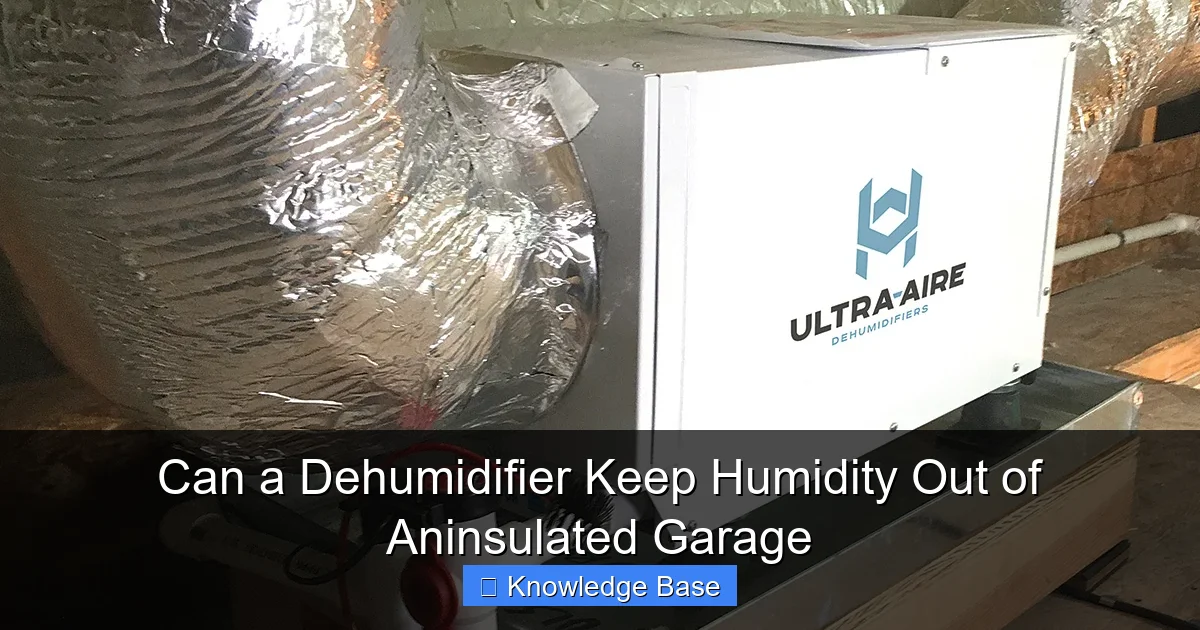
Visual guide about Can a Dehumidifier Keep Humidity Out of Aninsulated Garage
Image source: s3.amazonaws.com
To understand why a dehumidifier can be so effective in an insulated garage, it helps to know how these devices actually work. Most residential dehumidifiers use a refrigeration-based system, similar to an air conditioner. Here’s a simple breakdown of the process:
First, a fan draws humid air from the garage into the unit. This air passes over a cold coil (the evaporator), where the moisture in the air condenses into water droplets. These droplets collect in a built-in tank or are drained away through a hose. Then, the now-dry air passes over a warm coil (the condenser), which reheats it slightly before blowing it back into the room. The result? Lower humidity levels and a more comfortable, protected environment.
This cycle works best in enclosed spaces where air circulation is limited—exactly like a garage. Because garages are typically not part of the home’s HVAC system, they don’t benefit from central air conditioning or heating, which can help control humidity. That makes a standalone dehumidifier one of the most effective tools for managing moisture.
But not all dehumidifiers are created equal. For garage use, you’ll want a model designed to handle larger spaces and operate efficiently in cooler temperatures. Many standard dehumidifiers are built for indoor living areas and may shut down or freeze up when the temperature drops below 60°F (15°C)—a common scenario in unheated garages during fall and winter.
That’s why it’s crucial to choose a dehumidifier rated for low-temperature operation. Look for models labeled as “garage dehumidifiers” or “low-temperature dehumidifiers.” These units use special compressors and defrost systems to keep working even when it’s chilly. They’re more durable, often built with rust-resistant components, and designed to handle the dust and debris common in garage environments.
Another key feature is capacity. Dehumidifiers are rated by how many pints of moisture they can remove in 24 hours. For a typical two-car insulated garage (about 400–600 square feet), a 50- to 70-pint unit is usually sufficient. Larger garages or those in very humid climates may need even more capacity. Always check the manufacturer’s recommendations for room size and humidity levels.
The Role of Garage Insulation in Moisture Control
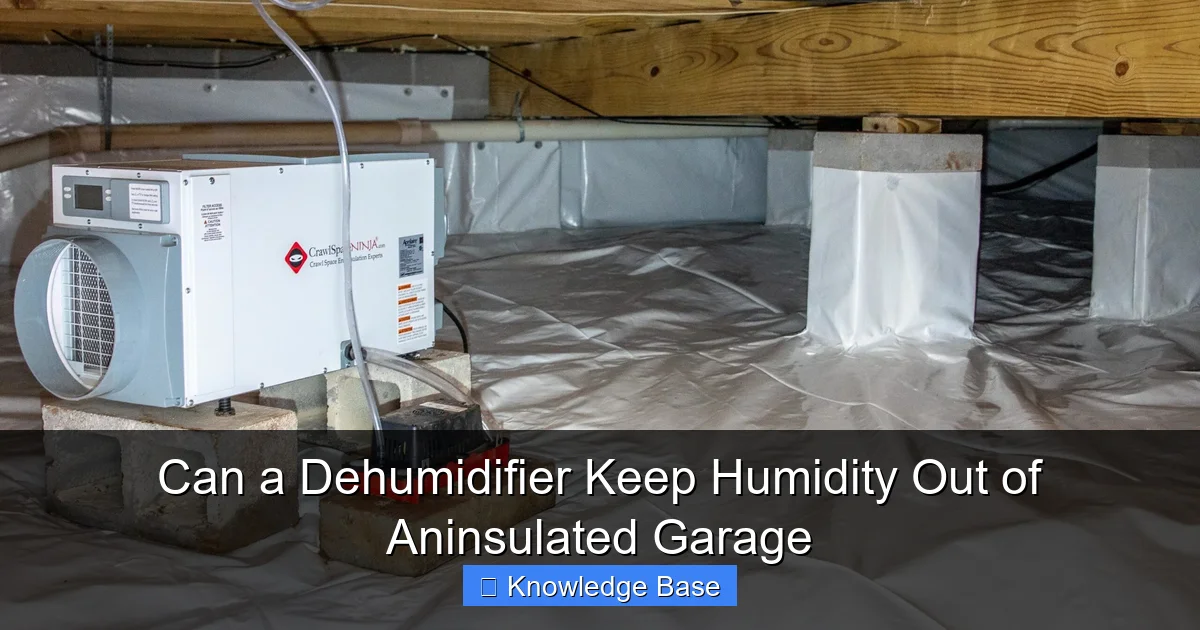
Visual guide about Can a Dehumidifier Keep Humidity Out of Aninsulated Garage
Image source: crawlspaceninja.com
Now, let’s talk about insulation. Why does it matter when we’re discussing dehumidifiers? Because insulation and dehumidification work together—but they serve different purposes.
Insulation in a garage typically comes in the form of fiberglass batts, spray foam, or rigid foam boards installed in the walls and ceiling. Its main job is to reduce heat transfer, keeping the garage cooler in summer and warmer in winter. This is especially important if you use your garage as a workshop, gym, or storage area for temperature-sensitive items like paint, chemicals, or electronics.
But here’s the catch: insulation doesn’t stop moisture. In fact, without proper vapor barriers and ventilation, insulation can sometimes trap moisture inside the walls, leading to mold growth and structural damage over time. That’s why it’s essential to install insulation correctly, with a vapor barrier on the warm side (usually the interior in cold climates) to prevent warm, moist air from entering the wall cavity.
Even with perfect insulation, humidity can still enter your garage through:
– Gaps around the garage door
– Poorly sealed windows or vents
– Air leaks from the house (if the garage is attached)
– Ground moisture rising from the concrete floor
Once inside, that moisture can condense on cold surfaces—especially metal ones—leading to rust on tools, warped wood, or mold on stored items. This is why insulation alone isn’t enough to control humidity. It slows the process, but it doesn’t eliminate the need for active moisture removal.
Think of it like wearing a raincoat. The insulation is like the waterproof outer layer—it keeps you dry from the outside. But if you’re already wet, or if sweat builds up inside, you’ll still feel damp. That’s where the dehumidifier comes in—it’s like a built-in towel that wicks away the internal moisture, keeping you (and your garage) truly dry.
In short, insulation and dehumidification are complementary. Insulation helps maintain a stable temperature, which reduces the likelihood of condensation. A dehumidifier actively removes moisture from the air, preventing it from settling on surfaces. Together, they create a much more effective defense against humidity.
Choosing the Right Dehumidifier for Your Insulated Garage
Not all dehumidifiers are suitable for garage use. To get the best results, you need to choose a unit that’s specifically designed for the unique conditions of a garage environment. Here’s what to look for:
Capacity and Size
The first thing to consider is the size of your garage and the level of humidity you’re dealing with. Dehumidifiers are rated by how many pints of water they can remove in 24 hours. For a standard two-car insulated garage (around 400–600 square feet), a 50- to 70-pint model is usually ideal. If your garage is larger, or if you live in a very humid climate (like the Southeast U.S.), you may need an 80-pint or higher unit.
Don’t underestimate the importance of capacity. A dehumidifier that’s too small will run constantly and still fail to keep up with moisture levels. One that’s too large may cycle on and off too frequently, reducing efficiency and potentially over-drying the space.
Low-Temperature Operation
Garages are often unheated, especially in colder months. Temperatures can drop well below 60°F (15°C), which is the lower limit for many standard dehumidifiers. When the coils get too cold, they can freeze, causing the unit to shut down or malfunction.
Look for a dehumidifier with a low-temperature rating—ideally one that works down to 40°F (4°C) or lower. These models often feature automatic defrost systems that melt ice buildup and keep the unit running smoothly. Some even have built-in heaters or are designed with cold-climate compressors.
Durability and Build Quality
Garages are dusty, dirty places. Tools, vehicles, and storage items can kick up debris that clogs filters and damages internal components. Choose a dehumidifier with a sturdy, rust-resistant exterior and easy-to-clean filters. Metal housings are better than plastic in high-dust environments.
Also, consider units with washable or reusable filters. These save money over time and reduce maintenance hassle. Some models even have filter-cleaning reminders or indicator lights.
Drainage Options
Most dehumidifiers come with a built-in water tank that needs to be emptied regularly. For a garage, this can be inconvenient—especially if the unit runs frequently. To avoid constant trips to empty the tank, look for a model with a continuous drainage option.
Many dehumidifiers have a built-in pump or a hose connection that lets you route water directly to a floor drain, utility sink, or even outside through a window. This is a game-changer for busy homeowners or those with high humidity levels.
Energy Efficiency
Dehumidifiers can use a lot of electricity, especially if they run for long periods. Look for an ENERGY STAR-certified model, which uses up to 15% less energy than standard units. These models are more expensive upfront but save money on utility bills over time.
Also, consider units with built-in hygrometers and humidistats. These sensors measure the current humidity level and automatically adjust the fan speed or turn the unit on/off to maintain your desired setting (usually 30–50% relative humidity). This prevents over-drying and saves energy.
Noise Level
If you use your garage as a workshop or home gym, noise might be a concern. Most dehumidifiers produce a low hum, but some are quieter than others. Check the decibel (dB) rating—ideally under 60 dB for comfortable use.
Installation, Placement, and Maintenance Tips
Even the best dehumidifier won’t work well if it’s not installed or maintained properly. Here are some practical tips to get the most out of your unit in an insulated garage:
Optimal Placement
Place the dehumidifier in a central location, away from walls and large objects that could block airflow. Avoid putting it directly on the concrete floor, as moisture rising from the ground can reduce efficiency. Instead, use a small stand or platform to elevate it slightly.
Keep the unit at least 6–12 inches away from walls and furniture to allow proper air circulation. This ensures that humid air can be drawn in evenly from all directions.
Seal Air Leaks
Before running your dehumidifier, take steps to reduce moisture entry. Check the garage door for gaps and install weatherstripping or a door sweep if needed. Seal any cracks around windows, vents, or where the garage connects to the house.
Even small gaps can let in significant amounts of humid air, especially during rainy or muggy weather. A well-sealed garage makes the dehumidifier’s job much easier.
Use a Hygrometer
A hygrometer is a small, inexpensive device that measures humidity levels. Place one near your dehumidifier to monitor the actual conditions in your garage. Aim to keep relative humidity between 30% and 50%. Levels above 60% encourage mold and mildew growth; below 30% can dry out wood and cause static electricity.
Many modern dehumidifiers have built-in hygrometers, but an external one gives you a second opinion and helps verify accuracy.
Regular Maintenance
To keep your dehumidifier running efficiently:
– Clean the air filter every 4–6 weeks (or monthly in dusty environments).
– Empty the water tank regularly if not using a drain hose.
– Wipe down the exterior and coils with a damp cloth to remove dust.
– Check the drain hose for clogs if using continuous drainage.
Neglecting maintenance can reduce performance, increase energy use, and shorten the unit’s lifespan.
Seasonal Considerations
In summer, your dehumidifier will likely run more often due to high outdoor humidity. In winter, it may run less—especially if the garage is cold and dry. Some homeowners choose to unplug the unit during dry winter months to save energy, but if you store sensitive items year-round, it’s worth keeping it on a low setting.
If you live in a region with freezing winters, consider storing the dehumidifier indoors during the coldest months to prevent damage.
Combining Dehumidification with Other Moisture Control Strategies
While a dehumidifier is a powerful tool, it works best as part of a comprehensive moisture control plan. Here are a few additional strategies to enhance its effectiveness:
Improve Ventilation
Even in an insulated garage, some airflow is beneficial. Consider installing an exhaust fan that activates when humidity levels rise. These fans can be wired to a humidistat or controlled manually. They help expel moist air and bring in drier outside air when conditions allow.
Alternatively, open the garage door for short periods on dry, breezy days to allow natural ventilation. Just be mindful of security and pests.
Use a Vapor Barrier on the Floor
Concrete floors can wick moisture from the ground, especially in humid climates. Installing a vapor barrier—such as a thick plastic sheet—under the concrete or on top of it can significantly reduce ground moisture. Epoxy floor coatings also help seal the surface and prevent moisture rise.
Store Items Properly
Keep tools, paint, and other items off the floor using shelves or cabinets. Use sealed plastic bins for long-term storage to protect contents from dust and moisture. Avoid storing cardboard boxes directly on concrete, as they can absorb moisture and become moldy.
Monitor for Condensation
Regularly check metal surfaces, windows, and the garage door for signs of condensation. If you see water droplets forming, it’s a sign that humidity levels are too high and your dehumidifier may need adjustment or upgrading.
Common Misconceptions and Real-World Results
There are a few myths about dehumidifiers and garage humidity that are worth clearing up:
Myth 1: “Insulation stops all moisture.”
No—insulation controls temperature, not humidity. Moisture can still enter through air leaks, ground seepage, or daily activities (like parking a wet car).
Myth 2: “Dehumidifiers are too expensive to run.”
Modern units are surprisingly efficient. A 50-pint ENERGY STAR model might cost $10–$15 per month to run, depending on usage and local electricity rates. That’s a small price to pay to protect thousands of dollars in tools and equipment.
Myth 3: “I only need a dehumidifier in summer.”
While summer is peak humidity season, moisture can be a problem year-round—especially in spring and fall when temperature swings cause condensation.
Real-world results show that homeowners who use dehumidifiers in insulated garages report:
– Fewer rust spots on tools and vehicles
– No more musty smells
– Longer-lasting paint and finishes
– Reduced mold growth on stored items
One user in Florida shared that after installing a 70-pint dehumidifier in his insulated garage, his motorcycle stayed rust-free for the first time in years—even during the rainy season.
Conclusion
So, can a dehumidifier keep humidity out of an insulated garage? Absolutely—when chosen, installed, and maintained correctly. While insulation helps regulate temperature and reduce condensation, it doesn’t eliminate the need for active moisture control. A high-quality, garage-rated dehumidifier removes excess humidity from the air, protecting your tools, vehicles, and stored items from rust, mold, and deterioration.
By selecting the right size and type, placing it properly, and combining it with good sealing and ventilation practices, you can maintain a dry, comfortable garage year-round. It’s a smart investment that pays off in preserved belongings, lower maintenance costs, and peace of mind.
Whether you’re a DIY enthusiast, a car lover, or just someone who values a clean, dry space, a dehumidifier is a simple yet powerful solution to one of the most common garage problems: unwanted humidity.
Frequently Asked Questions
How do I know if my garage has a humidity problem?
Signs include condensation on windows or metal surfaces, musty odors, rust on tools, or mold growth on stored items. A hygrometer can measure humidity levels accurately.
Can a dehumidifier damage my garage insulation?
No, a dehumidifier won’t damage insulation. In fact, it helps prevent moisture buildup that can degrade insulation over time by reducing mold and condensation.
Should I leave my garage dehumidifier on all the time?
It depends on the humidity level. Use a humidistat to automate operation, or run it continuously during humid seasons and reduce use in dry months.
What’s the ideal humidity level for a garage?
Aim for 30–50% relative humidity. This range prevents mold and rust without over-drying the space or wasting energy.
Can I drain my dehumidifier directly outside?
Yes, many models support continuous drainage via a hose. Route the hose through a window or to a floor drain to avoid manual emptying.
Will a dehumidifier help with garage odors?
Yes, by reducing moisture, it inhibits mold and mildew growth—the primary causes of musty smells in garages.