
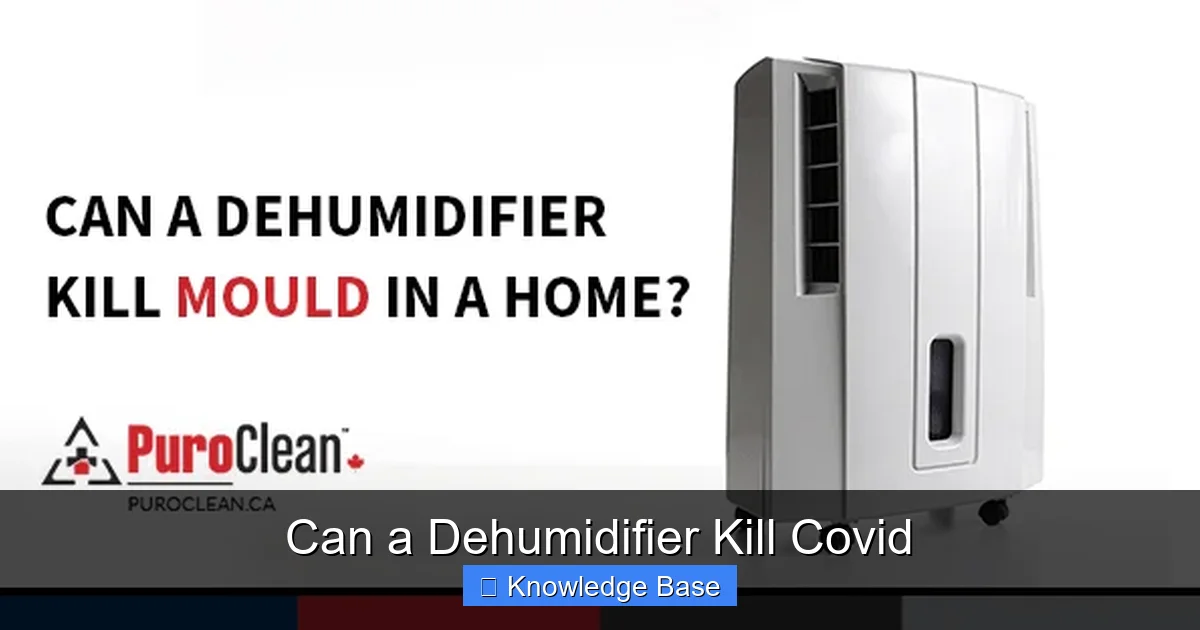
While a dehumidifier cannot directly kill the Covid-19 virus, maintaining optimal indoor humidity levels (40–60%) may reduce its survival time in the air and on surfaces. Proper humidity control supports overall indoor air quality and can complement other safety measures like ventilation and filtration.
Key Takeaways
- Dehumidifiers don’t kill viruses: They remove moisture from the air but do not inactivate SARS-CoV-2 directly.
- Humidity affects virus stability: Studies show that moderate humidity (40–60%) may reduce the survival of respiratory viruses, including Covid-19.
- Low humidity can increase transmission risk: Dry air dries out mucous membranes and allows virus-laden droplets to stay airborne longer.
- High humidity isn’t better: Excess moisture can promote mold growth and may help some viruses persist longer.
- Combine with other strategies: Use dehumidifiers alongside HEPA filters, ventilation, and UV-C light for better protection.
- Monitor humidity levels: Use a hygrometer to maintain ideal indoor humidity for health and comfort.
- Focus on source control: Masking, hand hygiene, and vaccination remain the most effective ways to prevent Covid-19 spread.
Quick Answers to Common Questions
Can a dehumidifier kill the Covid virus?
No, a dehumidifier cannot kill the Covid virus. It only removes moisture from the air and does not inactivate pathogens.
What humidity level is best for reducing Covid risk?
The ideal indoor humidity level is between 40% and 60%. This range may help reduce virus survival and support respiratory health.
Can low humidity increase the risk of Covid transmission?
Yes, very low humidity can dry out mucous membranes and allow virus-laden droplets to stay airborne longer, potentially increasing transmission risk.
Should I use a dehumidifier in winter?
It depends on your indoor humidity. In winter, indoor air can become very dry due to heating. Use a hygrometer to check levels and consider a humidifier if below 40%.
Do I still need an air purifier if I have a dehumidifier?
Yes. Air purifiers with HEPA filters can capture virus particles, while dehumidifiers only control moisture. They serve different purposes.
📑 Table of Contents
- Can a Dehumidifier Kill Covid? The Truth About Humidity and Virus Survival
- How Do Dehumidifiers Work?
- The Science Behind Humidity and Virus Survival
- Can a Dehumidifier Help Reduce Covid Risk?
- Best Practices for Using a Dehumidifier During Covid
- Common Misconceptions About Dehumidifiers and Covid
- Conclusion: The Role of Dehumidifiers in a Comprehensive Safety Plan
Can a Dehumidifier Kill Covid? The Truth About Humidity and Virus Survival
You’ve probably heard a lot about air purifiers, UV lights, and HEPA filters when it comes to fighting Covid-19 indoors. But what about dehumidifiers? With so many people investing in home climate control devices during the pandemic, it’s natural to wonder: can a dehumidifier kill Covid?
The short answer? No—dehumidifiers don’t kill the virus. But that doesn’t mean they’re useless. In fact, managing indoor humidity might play a surprising role in reducing your risk of infection. Let’s dive into the science, separate fact from fiction, and explore how humidity affects the spread of respiratory viruses like SARS-CoV-2.
Understanding how environmental factors influence virus behavior is key to creating safer indoor spaces. While no single device can eliminate all risk, combining smart strategies—like humidity control—can make a meaningful difference. So, let’s unpack what dehumidifiers actually do, how humidity impacts virus survival, and what you can do to protect yourself and your loved ones.
How Do Dehumidifiers Work?
Visual guide about Can a Dehumidifier Kill Covid
Image source: m.media-amazon.com
Before we get into whether dehumidifiers can help with Covid, it helps to understand what they do. A dehumidifier is an appliance designed to reduce and maintain the level of humidity in the air. It works much like an air conditioner—pulling in moist air, cooling it to condense the water vapor, and then reheating the air before releasing it back into the room.
There are two main types of dehumidifiers:
- Compressor (refrigerant) dehumidifiers: These are the most common. They use a cold coil to condense moisture from the air. Best for warm, humid environments.
- Desiccant dehumidifiers: These use a moisture-absorbing material (like silica gel) to pull water from the air. They work well in cooler temperatures and are often quieter.
Both types lower relative humidity (RH), which is the amount of moisture in the air compared to what the air can hold at that temperature. The ideal indoor humidity range for human health and comfort is generally between 40% and 60%.
But here’s the key point: dehumidifiers don’t filter or destroy viruses. They don’t produce UV light, ionize particles, or trap pathogens like an air purifier might. Their job is purely to remove moisture. So while they can make your home feel more comfortable and prevent mold growth, they aren’t antiviral devices.
The Science Behind Humidity and Virus Survival
Visual guide about Can a Dehumidifier Kill Covid
Image source: ichef.bbci.co.uk
Now, let’s talk about why humidity matters when it comes to viruses like Covid-19. Scientists have long studied how environmental conditions affect the survival and transmission of respiratory viruses. And humidity is one of the most important factors.
Why Humidity Affects Virus Transmission
When someone with Covid-19 coughs, sneezes, or even talks, they release tiny respiratory droplets into the air. These droplets can carry the virus and remain suspended for minutes or even hours, especially in poorly ventilated spaces. The size and behavior of these droplets—and how long the virus stays active inside them—are heavily influenced by humidity.
In low-humidity environments (below 40%), the water in these droplets evaporates quickly. This causes the droplets to shrink into smaller particles called aerosols, which can float in the air longer and travel farther. Dry air also dries out the mucous membranes in your nose and throat, which are your body’s first line of defense against invaders. When these membranes are dry and cracked, they’re less effective at trapping and clearing viruses.
On the other hand, very high humidity (above 60%) can also be problematic. While it may cause droplets to fall to the ground faster due to increased weight, it can also create conditions where viruses survive longer on surfaces. Plus, high humidity promotes mold, dust mites, and other allergens that can weaken your immune system and worsen respiratory conditions.
What Research Says About Covid-19 and Humidity
Several studies have looked at how humidity affects the stability of SARS-CoV-2. While research is still evolving, the general consensus is that moderate humidity levels—around 40% to 60%—may help reduce the virus’s ability to survive and spread.
A 2020 study published in Physics of Fluids found that at 50% relative humidity, respiratory droplets evaporated more slowly and settled faster, reducing the time the virus could remain airborne. Another study from the U.S. National Institutes of Health suggested that the virus may be more stable in low-humidity environments, similar to other coronaviruses.
Laboratory experiments have also shown that SARS-CoV-2 survives longer on surfaces in dry conditions. For example, a study in The Lancet Microbe found that the virus remained detectable on plastic and stainless steel for up to 72 hours at 21°C and 40% humidity—but degraded faster at higher humidity levels.
However, it’s important to note that these are controlled lab conditions. Real-world transmission involves many variables, including temperature, airflow, UV exposure, and human behavior. So while humidity plays a role, it’s just one piece of the puzzle.
Can a Dehumidifier Help Reduce Covid Risk?
So, back to the original question: can a dehumidifier kill Covid? The answer is still no—but it can help create an environment that’s less favorable for the virus to survive and spread.
Indirect Benefits of Using a Dehumidifier
While dehumidifiers don’t kill the virus, they can support your overall indoor air quality strategy in several ways:
- Reducing airborne transmission: By maintaining humidity between 40% and 60%, you may help respiratory droplets settle faster, reducing the time the virus can linger in the air.
- Protecting your respiratory defenses: Proper humidity keeps your nasal passages and throat moist, helping your body’s natural defenses work better.
- Preventing mold and allergens: High humidity encourages mold growth, which can trigger asthma and allergies—conditions that may increase susceptibility to respiratory infections.
- Improving comfort and sleep: A comfortable indoor environment supports better sleep and immune function, which are crucial for fighting off infections.
Think of a dehumidifier as part of a broader defense system. It won’t stop the virus on its own, but it can make your home a less hospitable place for it to thrive.
When a Dehumidifier Might Not Help
It’s also important to know the limits. If your home is already at a healthy humidity level (40–60%), running a dehumidifier won’t provide additional protection against Covid. In fact, over-drying the air can backfire.
Very low humidity (below 30%) can irritate your eyes, nose, and throat, and may actually increase your risk of infection. Some studies suggest that extremely dry air can impair the function of cilia—tiny hair-like structures in your airways that help sweep out pathogens.
So, the goal isn’t to make your home as dry as possible. It’s to maintain a balanced, comfortable humidity level that supports health without creating new problems.
Best Practices for Using a Dehumidifier During Covid
If you’re considering using a dehumidifier to help reduce Covid risk, here’s how to do it effectively and safely.
Choose the Right Size and Type
Not all dehumidifiers are created equal. To get the best results, choose a unit that’s appropriate for the size of your space. Most manufacturers provide a pint-per-day rating (e.g., 30-pint, 50-pint) based on square footage and humidity level.
For example:
- A 30-pint dehumidifier is good for small basements or bedrooms (up to 1,500 sq ft).
- A 50-pint model is better for larger areas or very damp spaces.
If you live in a cooler climate or have a basement that stays chilly, a desiccant dehumidifier may be more efficient than a compressor model.
Monitor Humidity Levels
Don’t guess—measure. Use a hygrometer (a small, inexpensive device that measures humidity) to check the relative humidity in your home. Place it in the room where you spend the most time, like the living room or bedroom.
Aim to keep readings between 40% and 60%. If it’s consistently above 60%, run the dehumidifier. If it drops below 40%, consider reducing usage or using a humidifier instead.
Maintain Your Dehumidifier
A dirty dehumidifier can do more harm than good. Mold and bacteria can grow in the water tank or on the coils, and the unit may blow contaminated air back into your home.
Follow these maintenance tips:
- Empty the water tank regularly (daily if needed).
- Clean the tank with soap and water weekly.
- Wipe down the air filter monthly or as recommended.
- Check for mold or mildew around the unit and ducts.
Some models have washable filters or auto-defrost features—look for these if you want lower maintenance.
Combine with Other Air Quality Measures
For the best protection, don’t rely on a dehumidifier alone. Pair it with other proven strategies:
- Ventilation: Open windows when weather permits, or use exhaust fans to bring in fresh air.
- Air purifiers: Use a HEPA air purifier to capture virus particles and other pollutants.
- UV-C light: Some advanced systems use ultraviolet light to inactivate viruses in the air or on surfaces.
- Regular cleaning: Disinfect high-touch surfaces like doorknobs, light switches, and countertops.
Remember, no single device can eliminate all risk. But layering multiple strategies creates a much stronger defense.
Common Misconceptions About Dehumidifiers and Covid
With so much information (and misinformation) floating around, it’s easy to get confused. Let’s clear up some common myths.
Myth 1: “Dehumidifiers kill viruses like UV lights do.”
False. UV-C light can damage the genetic material of viruses, rendering them inactive. Dehumidifiers don’t have this capability. They only remove moisture.
Myth 2: “The drier the air, the safer I am from Covid.”
Not necessarily. While very dry air can help droplets evaporate faster, it also dries out your respiratory tract and may increase susceptibility. Moderate humidity is best.
Myth 3: “If I use a dehumidifier, I don’t need to wear a mask or ventilate.”
Absolutely not. Humidity control is just one layer of protection. Masks, ventilation, handwashing, and vaccination are still essential.
Myth 4: “All dehumidifiers improve air quality.”
Only if they’re properly sized, maintained, and used correctly. A poorly maintained unit can circulate mold spores or bacteria, making air quality worse.
Conclusion: The Role of Dehumidifiers in a Comprehensive Safety Plan
So, can a dehumidifier kill Covid? No—it cannot directly inactivate the SARS-CoV-2 virus. But that doesn’t mean it’s irrelevant. By helping maintain optimal indoor humidity levels, a dehumidifier can create an environment that’s less conducive to virus survival and transmission.
Think of it this way: a dehumidifier is like a supporting player on a team. It won’t score the winning goal, but it helps the team perform better. When combined with ventilation, air filtration, cleaning, and personal hygiene, humidity control becomes a valuable part of your overall strategy.
The key is balance. Don’t over-dry your home, and don’t expect miracles from any single device. Focus on creating a healthy, comfortable indoor environment that supports your immune system and reduces risk.
In the end, the best defense against Covid-19 remains the same: get vaccinated, wear masks in high-risk settings, wash your hands, and stay home when you’re sick. But if you’re looking for ways to improve your indoor air quality, a well-maintained dehumidifier—used wisely—can be a smart addition to your toolkit.
Frequently Asked Questions
Can a dehumidifier prevent Covid-19?
A dehumidifier cannot prevent Covid-19 on its own, but maintaining proper humidity levels may reduce the virus’s survival time in the air and on surfaces. It should be used alongside other safety measures.
What is the best humidity level to stop viruses?
Research suggests that keeping indoor humidity between 40% and 60% may help reduce the stability of respiratory viruses, including SARS-CoV-2, and support your body’s natural defenses.
Can high humidity make Covid worse?
Very high humidity (above 60%) can promote mold growth and may allow some viruses to persist longer on surfaces. It’s best to maintain moderate humidity levels for optimal air quality.
Do dehumidifiers clean the air?
Dehumidifiers do not clean the air of viruses or pollutants. They only remove moisture. For air cleaning, use a HEPA air purifier or improve ventilation.
How often should I clean my dehumidifier?
Clean the water tank weekly and check the air filter monthly. Regular maintenance prevents mold and bacteria buildup, ensuring the unit works safely and efficiently.
Can I use a dehumidifier in a bedroom?
Yes, you can use a dehumidifier in a bedroom, especially if the room feels damp or has high humidity. Choose a quiet model and monitor humidity levels to avoid over-drying the air.