
A dehumidifier doesn’t directly kill mold, but it plays a crucial role in preventing its growth by lowering indoor humidity levels. By maintaining humidity below 50%, dehumidifiers create an environment where mold spores cannot thrive, helping protect your home and health.
Key Takeaways
- Dehumidifiers don’t kill mold but prevent its growth: They reduce moisture, making it harder for mold to develop.
- Ideal humidity level is 30–50%: Keeping indoor humidity in this range inhibits mold and dust mites.
- Use dehumidifiers in damp areas: Basements, bathrooms, and laundry rooms benefit most from consistent dehumidification.
- Combine with cleaning for best results: Remove existing mold with proper cleaners and use a dehumidifier to stop it from returning.
- Choose the right size and type: Match the dehumidifier’s capacity to your room size and climate for maximum efficiency.
- Regular maintenance is essential: Clean filters and empty tanks to ensure optimal performance and air quality.
- Dehumidifiers improve overall air quality: They reduce musty odors, allergens, and respiratory irritants linked to excess moisture.
Quick Answers to Common Questions
Can a dehumidifier kill mold?
No, a dehumidifier doesn’t kill mold, but it prevents mold growth by reducing indoor humidity levels below 50%, making it harder for mold to survive.
What humidity level prevents mold?
Keeping indoor humidity between 30% and 50% is ideal for preventing mold growth and maintaining a healthy home environment.
Where should I place a dehumidifier to stop mold?
Place dehumidifiers in damp areas like basements, bathrooms, laundry rooms, and crawl spaces where moisture tends to accumulate.
Do I need to clean my dehumidifier?
Yes, clean the filter monthly, empty the water tank regularly, and inspect for mold to ensure optimal performance and air quality.
Can a dehumidifier help with allergies?
Yes, by reducing mold, dust mites, and other allergens that thrive in humid environments, dehumidifiers can improve indoor air quality and ease allergy symptoms.
📑 Table of Contents
- Can a Dehumidifier Kill Mold? The Truth About Moisture and Mold Control
- How Mold Grows and Why Moisture Matters
- How Dehumidifiers Work to Prevent Mold
- Dehumidifiers vs. Mold: Prevention, Not Elimination
- Choosing the Right Dehumidifier for Mold Control
- Maintaining Your Dehumidifier for Long-Term Mold Prevention
- Other Ways to Prevent Mold Alongside a Dehumidifier
- Conclusion: A Dehumidifier Is Your Best Defense Against Mold
Can a Dehumidifier Kill Mold? The Truth About Moisture and Mold Control
If you’ve ever noticed a musty smell in your basement or seen black spots creeping along your bathroom walls, you’ve probably asked yourself: *Can a dehumidifier kill mold?* It’s a common question—and a smart one. Mold is more than just an eyesore; it can trigger allergies, worsen asthma, and even damage your home’s structure over time. So, it’s natural to want a simple, effective solution.
The short answer? A dehumidifier doesn’t actually kill mold. But it’s one of the most powerful tools you can use to stop it from growing in the first place. Think of it like this: mold is like a seed. It needs the right conditions—especially moisture—to sprout and spread. A dehumidifier works by removing excess moisture from the air, essentially taking away the water that mold needs to survive. Without that moisture, mold spores can’t grow, no matter how many are floating around.
This doesn’t mean you should ignore visible mold. If you already have mold patches, you’ll need to clean them properly using mold-killing solutions like vinegar, hydrogen peroxide, or commercial cleaners. But once that’s done, a dehumidifier becomes your best defense against future outbreaks. It’s not a cure, but it’s a powerful preventive measure—like wearing a seatbelt instead of relying on airbags after a crash.
How Mold Grows and Why Moisture Matters

Visual guide about Can a Dehumidifier Kill Mold
Image source: purehomeus.com
To understand how a dehumidifier helps with mold, it helps to know how mold actually grows. Mold is a type of fungus that reproduces through tiny spores that are always present in the air—both indoors and outdoors. These spores are harmless on their own. But when they land on a damp surface, they can start to grow and multiply rapidly.
Mold loves moisture. It thrives in areas with high humidity, poor ventilation, or water damage. Common problem spots include basements, bathrooms, kitchens, crawl spaces, and areas near leaky pipes or windows. Even something as simple as drying clothes indoors or taking long, steamy showers can raise indoor humidity enough to encourage mold growth.
The key factor isn’t just standing water—it’s the humidity level in the air. When indoor humidity rises above 60%, mold has the perfect environment to grow. That’s why controlling moisture is the most effective way to prevent mold. And that’s exactly where a dehumidifier comes in.
What Is Relative Humidity?
Relative humidity (RH) is the amount of moisture in the air compared to the maximum amount the air can hold at a given temperature. For example, if the air is at 50% relative humidity, it’s holding half the moisture it could potentially hold. Warm air can hold more moisture than cold air, which is why humidity feels heavier in summer.
For mold prevention, experts recommend keeping indoor relative humidity between 30% and 50%. This range is low enough to discourage mold growth but high enough to keep your home comfortable and prevent issues like dry skin or static electricity.
A dehumidifier helps maintain this ideal range by pulling moist air into the unit, cooling it to condense the water vapor, and then releasing dry air back into the room. The collected water is stored in a tank or drained directly through a hose.
Common Signs of High Humidity and Mold Risk
Before mold becomes visible, there are often subtle signs that your home is too humid. Watch for:
- Condensation on windows, walls, or pipes
- A persistent musty or earthy smell
- Peeling paint or wallpaper
- Warped wood or swollen doors and floors
- Increased allergy symptoms like sneezing, coughing, or itchy eyes
If you notice any of these, it’s a good idea to check your humidity levels with a hygrometer—a simple, inexpensive device that measures moisture in the air. If the reading is above 50%, it’s time to take action.
How Dehumidifiers Work to Prevent Mold
Visual guide about Can a Dehumidifier Kill Mold
Image source: goodairgeeks.com
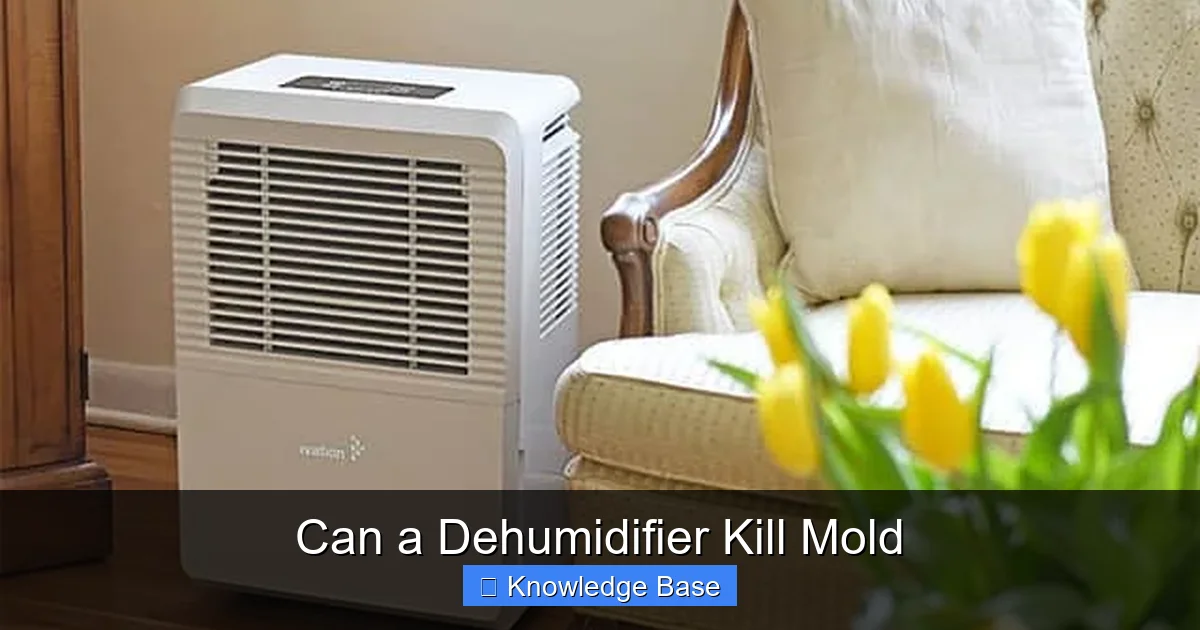
Now that we know mold needs moisture to grow, let’s look at how a dehumidifier tackles that problem head-on. Dehumidifiers are appliances designed to reduce and maintain the level of humidity in the air. They do this through a process that’s similar to how an air conditioner works, but with a focus on moisture removal rather than cooling.
Most residential dehumidifiers are refrigerant-based. Here’s how they operate:
- Air intake: A fan pulls humid air from the room into the dehumidifier.
- Cooling coils: The air passes over cold coils, causing the moisture in the air to condense into water droplets.
- Water collection: The collected water drips into a built-in tank or is drained through a hose.
- Reheating: The now-dry air passes over warm coils to bring it back to room temperature.
- Air output: The dry air is released back into the room, reducing overall humidity.
This cycle repeats continuously until the desired humidity level is reached. Many modern dehumidifiers come with built-in humidistats that automatically turn the unit on and off to maintain a set humidity level—usually between 30% and 50%.
Types of Dehumidifiers
Not all dehumidifiers are the same. The right type depends on your climate, room size, and specific needs. The three main types are:
- Refrigerant (compressor) dehumidifiers: Most common and effective in warm, humid environments. They work best when room temperatures are above 65°F (18°C).
- Desiccant dehumidifiers: Use a moisture-absorbing material (like silica gel) to pull water from the air. They perform better in cooler temperatures and are often quieter.
- Whole-house dehumidifiers: Integrated into your HVAC system, these units dehumidify your entire home and are ideal for large spaces or high-humidity climates.
For most homeowners, a refrigerant dehumidifier in the basement or main living area is sufficient. But if you live in a cold climate or have a large home, a desiccant or whole-house model might be a better fit.
Where to Use a Dehumidifier for Mold Prevention
Dehumidifiers are most effective when placed in areas prone to moisture buildup. Here are the top spots to consider:
- Basements: Often the dampest part of the house due to poor ventilation and contact with the ground.
- Bathrooms: Steam from showers and baths can quickly raise humidity levels.
- Laundry rooms: Wet clothes and dryer vents add significant moisture to the air.
- Kitchens: Cooking, dishwashing, and sinks contribute to indoor humidity.
- Crawl spaces and attics: These areas are often overlooked but can harbor hidden mold due to poor airflow.
For best results, run the dehumidifier continuously during humid months or whenever you notice signs of excess moisture. Some models even have timers or smart features that let you control them remotely.
Dehumidifiers vs. Mold: Prevention, Not Elimination
It’s important to set realistic expectations. A dehumidifier won’t kill existing mold—it prevents new mold from forming. If you already have mold growth, you’ll need to clean it thoroughly before using a dehumidifier to stop it from coming back.
How to Clean Existing Mold
If you spot mold, act quickly. Small patches (less than 10 square feet) can usually be handled with DIY methods:
- Protect yourself: Wear gloves, goggles, and a mask to avoid inhaling spores.
- Use a mold-killing solution: Mix 1 part white vinegar to 1 part water, or use hydrogen peroxide (3%). Spray on the mold, let it sit for 10–15 minutes, then scrub with a brush.
- Rinse and dry: Wipe the area with clean water and dry it completely. Never let the surface stay wet.
- Dispose of materials: If mold has damaged porous materials like drywall or carpet, you may need to remove and replace them.
For larger infestations or mold in HVAC systems, it’s best to call a professional mold remediation service.
Why Prevention Is Better Than Cure
Cleaning mold is messy, time-consuming, and sometimes costly. More importantly, mold can return if the underlying moisture problem isn’t fixed. That’s why prevention is key.
A dehumidifier helps by addressing the root cause—excess moisture. By keeping humidity levels in check, you create an environment where mold simply can’t survive. This not only protects your home but also improves your health. Studies show that high indoor humidity is linked to increased respiratory issues, especially in children and people with asthma.
Think of a dehumidifier as part of a broader mold prevention strategy. Combine it with good ventilation, prompt leak repairs, and regular cleaning for the best results.
Choosing the Right Dehumidifier for Mold Control
Not all dehumidifiers are created equal. To effectively prevent mold, you need the right size and features for your space.
What Size Dehumidifier Do You Need?
Dehumidifiers are rated by how many pints of moisture they can remove in 24 hours. The right size depends on:
- Room size: Measure the square footage of the area you want to dehumidify.
- Humidity level: Is the space slightly damp, very damp, or wet?
- Temperature: Colder spaces may require a desiccant model.
Here’s a general guide:
- Small (25–30 pints): Up to 1,000 sq. ft., slightly damp areas
- Medium (30–50 pints): 1,000–2,000 sq. ft., moderately damp basements
- Large (50+ pints): Over 2,000 sq. ft., very damp or wet spaces
When in doubt, go slightly larger. A dehumidifier that’s too small will run constantly and may not keep up with moisture levels.
Key Features to Look For
When shopping for a dehumidifier, consider these features:
- Built-in humidistat: Lets you set and maintain your desired humidity level.
- Automatic shutoff: Turns off when the water tank is full to prevent overflow.
- Continuous drainage: Allows you to connect a hose for hands-free operation.
- Washable filter: Easy to clean and maintain.
- Energy efficiency: Look for ENERGY STAR certified models to save on electricity.
- Quiet operation: Important if the unit will be in a living area or bedroom.
Some advanced models even connect to smart home systems, allowing you to monitor and control humidity from your phone.
Maintaining Your Dehumidifier for Long-Term Mold Prevention
A dehumidifier is only effective if it’s well-maintained. Neglecting routine care can reduce performance, increase energy use, and even lead to mold growth inside the unit itself.
Essential Maintenance Tips
Follow these steps to keep your dehumidifier running smoothly:
- Empty the water tank regularly: Most units have a float switch that shuts off the machine when the tank is full, but it’s best to check it daily during humid weather.
- Clean the filter monthly: Remove the air filter and wash it with warm, soapy water. Let it dry completely before reinstalling.
- Wipe down the coils: Dust and debris can build up on the evaporator and condenser coils, reducing efficiency. Use a soft brush or vacuum attachment to clean them.
- Inspect for mold: Check the water tank and interior for any signs of mold or mildew. Clean with a vinegar solution if needed.
- Store properly in winter: If you don’t use the dehumidifier year-round, clean it thoroughly, remove the tank, and store it in a dry place.
Regular maintenance not only extends the life of your dehumidifier but also ensures it’s working at peak efficiency to prevent mold.
Energy Efficiency and Cost
Dehumidifiers use electricity, so it’s natural to wonder about the cost. On average, a dehumidifier uses between 300 and 800 watts, depending on size and settings. Running a 50-pint unit for 12 hours a day might cost $15–$25 per month, depending on your electricity rate.
To save energy:
- Use a timer to run the unit only when needed.
- Set the humidity level to 45–50% instead of lower.
- Keep doors and windows closed while the dehumidifier is running.
- Choose an ENERGY STAR model for better efficiency.
The long-term benefits—healthier air, fewer repairs, and a mold-free home—often outweigh the energy cost.
Other Ways to Prevent Mold Alongside a Dehumidifier
While a dehumidifier is a powerful tool, it works best as part of a comprehensive moisture control plan. Here are additional steps you can take:
- Improve ventilation: Use exhaust fans in bathrooms and kitchens. Open windows when weather permits.
- Fix leaks promptly: Repair dripping faucets, leaking roofs, and plumbing issues as soon as they’re discovered.
- Use moisture absorbers: In small, enclosed spaces like closets or cabinets, consider using silica gel packs or moisture-absorbing crystals.
- Insulate cold surfaces: Prevent condensation by insulating pipes, windows, and exterior walls.
- Monitor humidity levels: Use a hygrometer to keep track of indoor humidity and adjust your dehumidifier as needed.
Combining these strategies with a dehumidifier gives you the best chance of keeping mold at bay for good.
Conclusion: A Dehumidifier Is Your Best Defense Against Mold
So, can a dehumidifier kill mold? Not directly—but it’s one of the most effective ways to stop mold from growing in the first place. By reducing indoor humidity to a safe level, a dehumidifier creates an environment where mold spores can’t thrive. It’s a proactive, long-term solution that protects your home, your belongings, and your health.
Remember, if you already have mold, clean it thoroughly before relying on a dehumidifier. And choose the right size and type for your space, maintain it regularly, and pair it with other moisture-control habits for the best results.
Investing in a quality dehumidifier isn’t just about comfort—it’s about creating a healthier, safer living environment. With the right approach, you can keep mold out of your home for good.
Frequently Asked Questions
Will a dehumidifier remove existing mold?
No, a dehumidifier won’t remove mold that’s already growing. You’ll need to clean the mold with appropriate cleaners first, then use the dehumidifier to prevent it from returning.
How long should I run a dehumidifier each day?
Run the dehumidifier continuously during humid weather or whenever humidity levels rise above 50%. Many models have auto-settings to maintain ideal levels.
Can I use a dehumidifier in winter?
Yes, but refrigerant models work best above 65°F. In colder areas, consider a desiccant dehumidifier, which performs better in low temperatures.
Is it safe to leave a dehumidifier on all night?
Yes, most modern dehumidifiers are safe to run overnight. Look for models with automatic shutoff and tip-over protection for added safety.
Can a dehumidifier cause dry air?
If set too low, a dehumidifier can make the air too dry. Aim for 40–50% humidity to balance comfort and mold prevention.
Do dehumidifiers use a lot of electricity?
Dehumidifiers use moderate energy. ENERGY STAR models are more efficient and can help reduce electricity costs while maintaining performance.