

A dehumidifier is designed to reduce moisture and prevent mold, but if used incorrectly, it can actually make mold problems worse. Poor maintenance, improper settings, or placing it in the wrong area may spread mold spores or create hidden damp zones. Understanding how to use your dehumidifier properly is key to keeping your home mold-free.
Key Takeaways
- Dehumidifiers reduce humidity, which helps prevent mold growth: Mold thrives in moist environments, so lowering indoor humidity is one of the most effective ways to stop it.
- Improper use can spread mold spores: If a dehumidifier pulls air through a moldy area without filtering it properly, it can circulate spores throughout your home.
- Dirty filters and tanks promote mold: Neglecting maintenance allows mold to grow inside the machine, turning it into a source of contamination.
- Incorrect placement reduces effectiveness: Putting a dehumidifier in a dry area or far from the moisture source won’t solve the real problem and may leave damp spots untouched.
- Over-drying can damage materials and encourage hidden mold: Running a dehumidifier too aggressively can dry out wood and drywall, causing cracks that trap moisture and create ideal mold habitats.
- Dehumidifiers don’t kill existing mold: They only control moisture—existing mold must be cleaned safely before using a dehumidifier to prevent regrowth.
- Regular maintenance is essential: Cleaning filters, emptying tanks, and inspecting for mold inside the unit ensures it works safely and effectively.
Quick Answers to Common Questions
Can a dehumidifier spread mold spores?
Yes, if the unit doesn’t have a proper filter or is placed near moldy areas, it can pull in spores and blow them into other parts of your home.
Should I run a dehumidifier if I already have mold?
Only after cleaning the mold. Running a dehumidifier on existing mold won’t remove it and may spread spores.
How often should I clean my dehumidifier?
Empty the tank daily, clean it weekly, and wash or replace the filter every 2–4 weeks.
What humidity level prevents mold?
Keep indoor humidity between 30% and 50%. Aim for around 45% for optimal mold prevention.
Can a dehumidifier damage my home?
Yes, if set too low, it can over-dry materials, causing cracks that trap moisture and promote hidden mold growth.
📑 Table of Contents
Can a Dehumidifier Make Mold Worse?
You’ve probably heard that dehumidifiers are a must-have for fighting mold. And it’s true—they’re one of the best tools for keeping your home dry and healthy. But here’s a surprising truth: a dehumidifier can actually make mold worse if you’re not using it correctly.
At first glance, that sounds counterintuitive. After all, dehumidifiers remove moisture from the air, and mold needs moisture to grow. So how could something that dries the air possibly make mold problems bigger? The answer lies in how you use the machine, where you place it, and how well you maintain it. Just like any tool, a dehumidifier is only as good as the person operating it.
In this guide, we’ll explore the real relationship between dehumidifiers and mold. We’ll break down when a dehumidifier helps, when it might hurt, and how to use it safely and effectively. Whether you’re dealing with a musty basement, a damp bathroom, or just trying to improve indoor air quality, this information will help you make smart decisions. Let’s dive in.
How Dehumidifiers Work and Why They Help Prevent Mold

Visual guide about Can a Dehumidifier Make Mold Worse
Image source: homezephyr.com
Before we get into the risks, let’s make sure we understand how dehumidifiers actually work. Most home dehumidifiers use a refrigeration-based system. Here’s the simple version: a fan pulls humid air into the unit. That air passes over cold coils, which cause moisture to condense into water droplets. The water drips into a collection tank or drains out through a hose. The now-drier air is warmed slightly and blown back into the room.
This process lowers the relative humidity in your home. And that’s a big deal for mold prevention. Mold spores are everywhere—floating in the air, sitting on surfaces, waiting for the right conditions to grow. But they need moisture to thrive. Most molds start growing when humidity levels stay above 60% for extended periods. By keeping indoor humidity between 30% and 50%, a dehumidifier creates an environment where mold struggles to survive.
For example, imagine a basement that feels clammy and smells musty. You run a dehumidifier and within a few days, the air feels lighter, the smell fades, and you notice less condensation on windows. That’s the dehumidifier doing its job. It’s not killing mold—it’s just making the environment less inviting for it to grow.
But here’s the catch: a dehumidifier only controls moisture in the air. It doesn’t clean surfaces, repair leaks, or remove existing mold. If you have visible mold on walls, ceilings, or furniture, the dehumidifier won’t fix that. In fact, if you ignore the mold and just run the dehumidifier, you might be setting yourself up for bigger problems down the road.
The Science Behind Mold and Moisture
Mold is a type of fungus that reproduces through tiny spores. These spores are lightweight and can travel through the air easily. They land on surfaces and, if conditions are right—warmth, darkness, and moisture—they begin to grow. Within 24 to 48 hours of exposure to water or high humidity, mold can start colonizing.
Different types of mold have different moisture needs, but most common household molds (like Aspergillus, Cladosporium, and Stachybotrys, also known as “black mold”) thrive in environments with relative humidity above 60%. That’s why controlling indoor humidity is one of the most effective mold prevention strategies.
A dehumidifier helps by reducing the amount of water vapor in the air. This not only makes the air feel more comfortable but also slows down or stops mold growth on surfaces like wood, drywall, carpet, and fabric. It also helps prevent wood rot, peeling paint, and warped furniture—all signs of excess moisture.
But again, this only works if the dehumidifier is used properly. If the machine is dirty, poorly placed, or set incorrectly, it might not lower humidity evenly or effectively. And in some cases, it could even make things worse.
When a Dehumidifier Can Make Mold Worse
Visual guide about Can a Dehumidifier Make Mold Worse
Image source: restorationmasterfinder.com
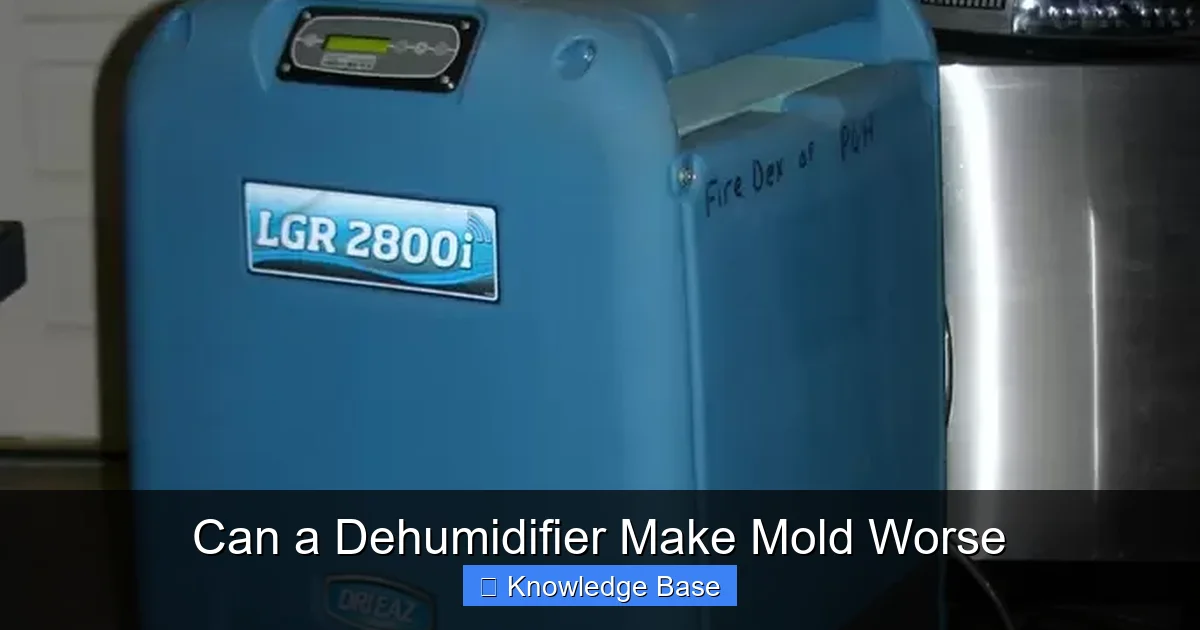
Now for the part that might surprise you: a dehumidifier can actually contribute to mold growth if it’s not used correctly. This usually happens in one of several ways—through poor maintenance, improper placement, or misunderstanding what the machine can and can’t do.
Let’s look at the most common scenarios where a dehumidifier might backfire.
1. Spreading Mold Spores Through the Air
One of the biggest risks is that a dehumidifier can act like a fan, pulling air from a moldy area and blowing it—along with mold spores—into other parts of your home. If you have visible mold in a corner of your basement and you place a dehumidifier nearby, the unit’s fan can disturb the mold and send spores airborne. These spores can then settle on clean surfaces, potentially starting new colonies.
This is especially dangerous if the dehumidifier doesn’t have a good air filter. Many basic models come with simple mesh filters that catch dust but not mold spores. Without a high-efficiency filter (like a HEPA filter), the machine can become a mold distribution system.
For example, imagine you have a patch of mold behind a washing machine in your laundry room. You set up a dehumidifier to dry the area, but the unit doesn’t have a proper filter. As it runs, it pulls in air from behind the machine, picks up mold spores, and blows them into the rest of the room. Now you’ve got mold spores floating around your clean laundry and possibly into your HVAC system.
2. Creating Hidden Moisture Traps
Another way a dehumidifier can make mold worse is by drying some areas too much while leaving others damp. This often happens when the unit is placed in the wrong spot or when it’s too small for the space.
Say you have a large, damp basement, but you put a small dehumidifier in one corner. It might dry the air near the machine, but the far end of the basement stays humid. Over time, moisture can get trapped behind walls, under flooring, or in insulation. These hidden pockets of dampness become perfect breeding grounds for mold—especially because they’re out of sight and hard to monitor.
Worse, if the dehumidifier dries out the surface of a material but leaves moisture underneath, it can create a “skin effect.” For example, drywall might feel dry on the outside but still be wet inside. This trapped moisture can lead to hidden mold growth that you won’t notice until it’s a serious problem.
3. Over-Drying and Damaging Building Materials
Running a dehumidifier too aggressively can also cause problems. If you set it to a very low humidity level—say, 25%—you might dry out wood, plaster, and other materials too much. This can cause them to crack, shrink, or warp.
Cracks in drywall or wood create tiny gaps where moisture can seep in and get trapped. These gaps are dark, enclosed, and hard to dry, making them ideal spots for mold to grow. In extreme cases, over-drying can damage the structural integrity of your home.
For instance, in older homes with plaster walls, excessive dehumidification can cause the plaster to crack. Once that happens, moisture from the ground or outside can enter through the cracks, and mold can grow behind the walls. You might not see it, but you could start noticing a musty smell or worsening allergy symptoms.
4. Dirty Filters and Tanks Promote Mold Growth
Perhaps the most overlooked issue is poor maintenance. A dehumidifier that isn’t cleaned regularly can become a mold factory.
The water tank collects moisture from the air, and if it’s not emptied and cleaned often, that standing water can become a breeding ground for bacteria and mold. The same goes for the air filter. If it gets clogged with dust and debris, it can trap moisture and organic matter, creating a perfect environment for mold to grow.
Over time, mold can grow inside the unit—on the coils, in the tank, or on the filter. When the dehumidifier runs, it can blow moldy air back into your home. This not only spreads mold but can also worsen indoor air quality and trigger allergies or respiratory issues.
We’ve seen cases where people complained of a strong musty smell even though they were running a dehumidifier. When we inspected the unit, we found black mold growing inside the tank and on the filter. The machine was actually making the problem worse.
How to Use a Dehumidifier Safely and Effectively
The good news is that most of these problems are completely avoidable. With the right setup and regular care, a dehumidifier can be one of your best allies in the fight against mold.
Here’s how to use it safely and effectively.
1. Clean and Maintain Your Dehumidifier Regularly
Maintenance is the single most important step. Here’s what you should do:
– Empty the water tank daily if it fills up quickly, or set up a continuous drain hose if possible.
– Clean the tank weekly with a mild bleach solution (1 tablespoon of bleach per gallon of water) to kill any mold or bacteria. Rinse thoroughly and let it dry before reinserting.
– Wash or replace the air filter every 2–4 weeks, depending on usage and air quality. Use a vacuum to remove loose dust first, then wash with warm, soapy water. Let it dry completely.
– Inspect the coils and interior every few months. If you see mold, clean it with a soft brush and a disinfectant. Be careful not to damage the coils.
Regular cleaning prevents mold from growing inside the unit and ensures it runs efficiently.
2. Choose the Right Size and Placement
Not all dehumidifiers are created equal. Make sure you get one that’s the right size for your space. A unit that’s too small won’t remove enough moisture, while one that’s too large might cycle on and off too quickly, reducing efficiency.
Check the pint rating—this tells you how much water the unit can remove in 24 hours. For a moderately damp basement (500–1,000 sq. ft.), a 30–50 pint unit is usually sufficient. For very wet areas or larger spaces, you may need a 70-pint model or larger.
Placement matters too. Put the dehumidifier in the area with the highest humidity—usually the basement, crawl space, or laundry room. Make sure it’s at least 6–12 inches away from walls and furniture so air can flow freely. Avoid placing it directly next to moldy areas unless you’ve already cleaned the mold.
3. Set the Humidity Level Correctly
Most experts recommend keeping indoor humidity between 30% and 50%. This range is low enough to discourage mold but high enough to prevent over-drying.
Use a hygrometer (a small, inexpensive device that measures humidity) to monitor levels. Many modern dehumidifiers have built-in hygrometers and auto-humidistats that let you set a target humidity level. Aim for around 45% for most homes.
Avoid setting it too low—below 30%—unless you live in a very dry climate. Over-drying can damage materials and increase energy costs.
4. Address the Source of Moisture
A dehumidifier is a band-aid, not a cure. If you have a leaky pipe, a cracked foundation, or poor ventilation, the dehumidifier will keep fighting a losing battle.
Fix any water intrusion issues first. Seal cracks, repair leaks, improve drainage around your home, and ensure proper ventilation in bathrooms, kitchens, and laundry areas. Only then should you use a dehumidifier to maintain dry conditions.
5. Clean Existing Mold Before Using a Dehumidifier
If you already have mold, don’t just turn on the dehumidifier and hope it goes away. You need to clean it properly.
For small areas (less than 10 square feet), you can clean mold yourself using detergent and water, or a solution of vinegar or hydrogen peroxide. Wear gloves, goggles, and a mask to protect yourself. Dry the area thoroughly.
For larger infestations or toxic molds like black mold, consider hiring a professional. They have the tools and expertise to remove mold safely and prevent it from spreading.
Once the mold is gone, use the dehumidifier to keep the area dry and prevent regrowth.
Common Misconceptions About Dehumidifiers and Mold
There are a few myths floating around about dehumidifiers and mold that can lead to confusion—and mistakes.
Myth 1: “A Dehumidifier Kills Mold”
This is false. A dehumidifier doesn’t kill mold. It only removes moisture from the air. If mold is already growing on a surface, the dehumidifier won’t eliminate it. You still need to clean the mold manually.
Think of it like this: a dehumidifier is like turning off the water supply to a garden. It stops new plants from growing, but it doesn’t pull out the weeds that are already there.
Myth 2: “If I Run a Dehumidifier, I Don’t Need to Fix Leaks”
Also false. A dehumidifier can’t stop water from entering your home. If you have a leaky roof or a flooded basement, the dehumidifier will struggle to keep up. You’ll waste energy and possibly damage the unit.
Always fix the source of moisture first. The dehumidifier should be used as a maintenance tool, not a repair tool.
Myth 3: “All Dehumidifiers Are the Same”
Not true. There are different types—refrigerant, desiccant, and whole-house models—each suited for different conditions. Refrigerant models work best in warm, humid environments. Desiccant models are better for cold spaces like crawl spaces. Whole-house units integrate with your HVAC system for whole-home humidity control.
Choose the right type for your needs.
When to Call a Professional
Sometimes, mold problems are too big to handle on your own. If you see large patches of mold (more than 10 square feet), smell a strong musty odor with no visible source, or have health issues like allergies or asthma that worsen at home, it’s time to call a mold remediation professional.
They can test for mold, identify the type, and safely remove it. They’ll also help you find and fix the underlying moisture problem. After remediation, you can use a dehumidifier to keep your home dry and mold-free.
Conclusion
So, can a dehumidifier make mold worse? The short answer is yes—but only if it’s used incorrectly. When maintained and operated properly, a dehumidifier is one of the most effective tools for preventing mold growth. It reduces indoor humidity, creates a less hospitable environment for mold, and helps protect your home and health.
But if you neglect cleaning, place it in the wrong spot, or ignore existing mold, you could end up spreading spores, creating hidden damp zones, or even damaging your home. The key is to use the dehumidifier as part of a comprehensive moisture control strategy—not as a standalone solution.
Remember: fix leaks, clean mold, maintain your unit, and monitor humidity levels. Do that, and your dehumidifier will work for you, not against you.
Frequently Asked Questions
Can a dehumidifier make mold worse?
Yes, if it’s not used correctly. Poor maintenance, improper placement, or running it on existing mold can spread spores or create hidden damp areas where mold thrives.
How do I prevent mold in my dehumidifier?
Clean the water tank and filter regularly, empty the tank often, and inspect the unit for mold growth. Use a mild bleach solution to disinfect.
Should I use a dehumidifier in a moldy basement?
Only after cleaning the mold. Use the dehumidifier to maintain dry conditions and prevent regrowth, but don’t rely on it to remove existing mold.
What’s the best humidity level to prevent mold?
Keep indoor humidity between 30% and 50%. Levels above 60% encourage mold growth, while levels below 30% can damage materials.
Can a dirty dehumidifier cause health problems?
Yes. A moldy dehumidifier can blow contaminated air into your home, worsening allergies, asthma, and other respiratory issues.
Do I need a dehumidifier if I have central air?
Not always, but central air conditioners don’t remove as much moisture as dedicated dehumidifiers. In humid climates or damp areas, a dehumidifier can help.