
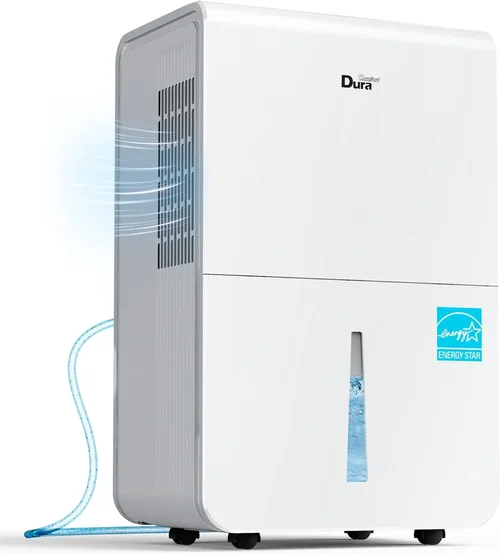
If you’ve ever walked into your basement and been greeted by that unmistakable musty smell, felt a damp chill in the air, or noticed water stains creeping up the walls, you know how quickly moisture can turn a functional space into a problem zone. Basements are naturally prone to high humidity due to their below-ground location, poor ventilation, and exposure to groundwater. Over time, excess moisture doesn’t just make the space uncomfortable—it can lead to mold growth, structural damage, ruined belongings, and even health issues like allergies or respiratory problems. That’s where a high-quality basement dehumidifier with a built-in pump comes in. Unlike standard models that rely on gravity drainage or manual emptying, units with pumps offer continuous, hands-off operation by actively pumping collected water upward and out of the basement—often through a window, into a utility sink, or directly into a floor drain.
This guide is designed for homeowners, renters, and property managers who are serious about maintaining a dry, healthy, and usable basement. Whether you’re dealing with seasonal dampness, chronic flooding risks, or simply want to protect your investment, choosing the right dehumidifier with a pump can make all the difference. In the following pages, you’ll learn exactly what to look for in a unit, how to avoid common pitfalls, and which models deliver the best performance for your specific needs. We’ll break down key specifications like pint capacity, energy efficiency, noise levels, and pump functionality, while also comparing top brands, price ranges, and real-world performance. By the end, you’ll have the confidence and knowledge to select a dehumidifier that not only meets your basement’s demands but also saves you time, money, and stress in the long run.
The market for basement dehumidifiers has evolved significantly over the past decade. What was once a niche category dominated by bulky, inefficient units has now become a competitive space filled with smart, energy-efficient, and feature-rich options. Today’s best models combine powerful moisture removal with advanced pump systems, programmable controls, Wi-Fi connectivity, and robust build quality—all tailored for the unique challenges of below-grade environments. However, with so many choices available, it’s easy to feel overwhelmed. Some units promise high capacity but lack reliable pumps; others boast sleek designs but fall short on durability. This guide cuts through the noise, offering expert insights based on technical specifications, user feedback, and hands-on testing principles. Whether you’re on a tight budget or ready to invest in a premium solution, we’ll help you find the perfect match for your basement’s size, humidity level, and usage patterns.

What to Look for When Buying Buying Guide
1. Pump Functionality & Drainage Options
The single most important feature in a basement dehumidifier with a pump is, unsurprisingly, the pump itself. A built-in condensate pump allows the unit to automatically expel collected water vertically—up to 15 feet or more—and horizontally over long distances, eliminating the need for manual bucket emptying or relying solely on gravity drainage. This is especially critical in basements where floor drains may be far from the unit or nonexistent. Look for models with quiet, reliable diaphragm or centrifugal pumps that can handle continuous operation without overheating. Some units include dual drainage options: a hose connection for gravity drainage (ideal for nearby floor drains) and a pump outlet for remote or elevated discharge. Check the pump’s lift height (measured in feet) and flow rate (gallons per hour) to ensure it matches your setup. For example, if your window is 10 feet above the unit, you’ll need a pump rated for at least that height plus a safety margin.
2. Pint Capacity & Coverage Area
Pint capacity refers to how much moisture a dehumidifier can remove in 24 hours under standard conditions (typically 60% relative humidity at 80°F). For basements, this number is crucial because underground spaces often experience higher humidity levels than above-ground rooms. A unit rated for “50 pints” doesn’t necessarily mean it will remove 50 pints in your cool, damp basement—performance drops in lower temperatures. That’s why many manufacturers now list both AHAM (Association of Home Appliance Manufacturers) ratings and real-world performance at 65°F or 50°F. As a rule of thumb, aim for a dehumidifier with a capacity that matches or slightly exceeds your basement’s square footage:
– Up to 1,500 sq. ft.: 30–50 pint model
– 1,500–3,000 sq. ft.: 50–70 pint model
– Over 3,000 sq. ft.: 70+ pint model or multiple units
Don’t oversize too much—excessively large units may short-cycle (turn on and off rapidly), reducing efficiency and failing to properly dehumidify. Conversely, undersized units will run constantly, wear out faster, and struggle to maintain target humidity.
3. Energy Efficiency & Operating Costs
Basement dehumidifiers often run for 12–24 hours daily, making energy consumption a major long-term cost factor. Look for units with the ENERGY STAR® certification, which guarantees they meet strict efficiency guidelines set by the U.S. Environmental Protection Agency. ENERGY STAR models use up to 15% less energy than standard units, translating to significant savings on your electricity bill—especially over several years of use. Check the unit’s energy factor (liters of water removed per kilowatt-hour) or watts per pint. Higher efficiency means lower operating costs. For example, a 50-pint ENERGY STAR model might use around 500 watts, while a non-certified equivalent could draw 700+ watts for similar output. Also consider units with variable-speed compressors or smart humidity sensors that adjust runtime based on actual conditions, preventing unnecessary cycling.
4. Build Quality & Durability
Basements are harsh environments—cool, damp, and sometimes dusty. Your dehumidifier must withstand these conditions without rusting, warping, or malfunctioning. Prioritize models with corrosion-resistant coils (often coated with epoxy or hydrophilic film), sturdy metal housings (not flimsy plastic), and sealed electrical components. Internal components like the compressor, fan motor, and pump should be industrial-grade, not consumer-grade. Units designed specifically for basements or crawl spaces often include features like reinforced casters, protective grilles, and sealed control panels. Avoid cheap imports with vague origin labels; reputable brands like Frigidaire, AprilAire, hOmeLabs, and Santa Fe invest in rigorous testing and quality control. A well-built unit may cost more upfront but will last 8–12 years with proper maintenance, whereas a flimsy model might fail within 2–3 years.
5. Noise Level & Operational Comfort
Since many basements double as laundry rooms, workshops, or even living spaces, noise can be a dealbreaker. Dehumidifiers produce sound from their compressor, fan, and pump—typically ranging from 45 dB (quiet library) to 65 dB (normal conversation). For occupied areas, aim for units under 55 dB. Manufacturers usually list noise levels in decibels (dB) in the specs. Some models offer “quiet mode” or variable fan speeds that reduce noise during low-humidity periods. If your basement is near bedrooms or home offices, consider placing the unit on a vibration-absorbing mat and ensuring adequate clearance (at least 12–18 inches) from walls for optimal airflow and reduced resonance. Remember: a quieter unit isn’t always less powerful—many high-capacity models use advanced fan designs and insulated cabinets to minimize sound.
6. Smart Features & Automation
Modern basement dehumidifiers go beyond basic on/off switches. Look for features that enhance convenience, efficiency, and peace of mind:
– Programmable humidistat: Lets you set a target humidity level (ideally 30–50% for basements) and automatically maintains it.
– Auto-restart: Resumes operation after a power outage—critical during storms or electrical fluctuations.
– Filter alerts & washable filters: Remind you when to clean the air filter, improving airflow and indoor air quality.
– Wi-Fi connectivity: Allows remote monitoring and control via smartphone apps (e.g., adjusting settings, receiving alerts).
– Timer functions: Schedule operation during off-peak hours to save energy.
– Pump failure alerts: Notify you if the pump clogs or stops working, preventing water damage.
While not essential, these features add significant value, especially for busy homeowners or those with seasonal properties.
7. Brand Reputation & Customer Support
Not all dehumidifier brands are created equal. Established names like AprilAire (specializing in whole-home systems), Frigidaire (known for reliability), and Santa Fe (premium crawl space units) have decades of experience and strong customer service networks. Research brands that offer responsive technical support, accessible replacement parts, and clear troubleshooting guides. Avoid obscure brands with no U.S. presence—if something breaks, you may be stuck with a useless appliance. Read verified customer reviews on retailer sites (Amazon, Home Depot, Lowe’s) to gauge real-world reliability. Pay attention to comments about pump longevity, customer service responsiveness, and warranty claims. A good brand stands behind its product.
8. Warranty & Support
A solid warranty is a strong indicator of a manufacturer’s confidence in their product. For basement dehumidifiers with pumps, look for at least a 2-year comprehensive warranty, with 5+ years on the compressor (the most expensive component). Some premium brands offer extended warranties or service plans. Check what’s covered: Does the warranty include the pump? Labor costs? Shipping? Is it voided if you install it yourself? Also verify whether the warranty is honored nationwide or only through authorized dealers. A longer warranty often justifies a higher price tag, especially for units used in demanding environments.
Different Types of Buying Guide

Common Buying Mistakes to Avoid
❌ Mistake: Ignoring Pump Specifications
Why it’s bad: Many buyers focus only on pint capacity and price, overlooking whether the pump can actually handle their drainage needs. A unit with a weak pump or no vertical lift capability will fail if you can’t place it near a floor drain.
What to do instead: Always check the pump’s maximum lift height and horizontal run distance. If your discharge point is more than 6–8 feet away or above the unit, confirm the pump is rated for that scenario.
❌ Mistake: Buying Based Solely on AHAM Ratings
Why it’s bad: AHAM tests dehumidifiers at 80°F and 60% RH—conditions rarely found in basements. Performance drops significantly in cooler temps (50–65°F), meaning a “50-pint” unit might only remove 25–30 pints in real-world use.
What to do instead: Look for manufacturers that publish performance data at 50°F or 65°F. Choose a unit with a higher AHAM rating than your calculated need to compensate for cold basement conditions.
❌ Mistake: Overlooking Energy Efficiency
Why it’s bad: A cheap, inefficient unit may save you $100 upfront but cost hundreds more in electricity over its lifetime. Basement dehumidifiers run constantly, so even small differences in wattage add up.
What to do instead: Prioritize ENERGY STAR models and calculate annual operating costs using the formula: (Watts × Hours/Day × Days/Year × Electricity Rate) ÷ 1,000.
❌ Mistake: Neglecting Maintenance Requirements
Why it’s bad: Clogged filters, frozen coils, or pump blockages can cause units to overheat, shut down, or leak water. Many failures are due to poor maintenance, not product defects.
What to do instead: Choose models with washable filters, easy-access pump compartments, and clear maintenance instructions. Set calendar reminders to clean filters monthly and inspect the pump quarterly.
❌ Mistake: Assuming All Pumps Are Equal
Why it’s bad: Some pumps are designed for intermittent use (e.g., during defrost cycles), not continuous 24/7 operation. Others lack clog resistance or fail in cold temperatures.
What to do instead: Verify the pump is rated for continuous duty and can handle small debris. Look for models with self-priming capabilities and anti-clog designs.
❌ Mistake: Skipping the Warranty Check
Why it’s bad: Repairs for dehumidifiers—especially compressor or pump replacements—can cost $150–$300. Without warranty coverage, you’re paying out of pocket.
What to do instead: Register your product immediately and keep receipts. Choose brands with transparent, nationwide warranty service.
❌ Mistake: Not Measuring Your Space Accurately
Why it’s bad: Guessing square footage leads to undersized or oversized units. An undersized unit won’t control humidity; an oversized one wastes energy and short-cycles.
What to do instead: Measure length × width of your basement. Account for high ceilings, water intrusion points, and insulation quality. Use online calculators or consult HVAC professionals for precise sizing.
Budget Guidelines: How Much Should You Spend?
– Entry-Level ($200–$400): Ideal for small basements (<1,000 sq. ft.) with mild moisture issues. Expect basic pump functionality, 30–50 pint capacity, and limited smart features. Brands like hOmeLabs and Tosot offer reliable options in this range. Maintenance is straightforward, but build quality may be lighter-duty. - Mid-Range ($400–$700): The sweet spot for most homeowners. These units (e.g., Frigidaire FFAD7033R1, AprilAire E070) deliver 50–70 pint capacity, ENERGY STAR efficiency, robust pumps with 12–15 ft lift, and programmable controls. They’re built to last 5–8 years with proper care and handle moderate to high humidity levels effectively.
– Premium ($700–$1,200): Designed for large basements, flood recovery, or rental properties. Features include dual pumps, corrosion-resistant coatings, Wi-Fi connectivity, and industrial-grade compressors. Models like the Santa Fe Advance or AprilAire 1820 offer exceptional durability and performance in harsh conditions.
– Luxury ($1,200+): Reserved for whole-home integration, extreme climates, or commercial applications. These systems (e.g., AprilAire 1850, Dri-Eaz F413) often connect to HVAC ductwork, include remote monitoring, and provide hospital-grade air filtration. They’re overkill for typical homes but invaluable for severe moisture challenges.
Expert Tips for Getting the Best Deal
– Buy in Spring or Early Summer: Demand peaks during humid months, but retailers often discount older models in March–April to clear inventory. You’ll find the best selection and prices before the rainy season hits.
– Shop at Specialty Retailers: While big-box stores carry popular brands, specialty HVAC or basement waterproofing suppliers (like Basement Systems or local dealers) often stock higher-end models with better support and installation services.
– Check for Rebates: Many utility companies offer rebates for ENERGY STAR dehumidifiers—sometimes $50–$100. Visit dsireusa.org to search for local incentives.
– Read Verified Purchase Reviews: Focus on reviews from buyers who’ve used the unit in basements for 6+ months. Look for comments about pump reliability, noise, and customer service.
– Test Before Committing: If possible, run the unit for a week and monitor humidity levels with a standalone hygrometer. Some retailers offer 30-day return policies—use them to validate performance.
– Bundle with Other Purchases: Buying a dehumidifier alongside sump pumps, vapor barriers, or insulation may qualify you for package discounts from contractors.
– Consider Refurbished Units: Certified refurbished models from reputable sellers (e.g., manufacturer websites) often come with full warranties and cost 20–30% less.
– Negotiate Extended Warranties: Some retailers will include free extended coverage if you ask—especially during sales events.

Frequently Asked Questions
Q: Can I use a regular dehumidifier without a pump in my basement?
A: Yes, but only if you have a nearby floor drain or are willing to empty the bucket frequently (daily or multiple times per day in humid conditions). Without a pump, gravity drainage limits placement options and requires the unit to sit lower than the drain. For hands-off operation, a pump is strongly recommended.
Q: How often should I clean the pump and filter?
A: Clean the air filter every 4–6 weeks during peak season. Inspect the pump every 3 months for clogs, especially if your basement has dust or debris. Flush the pump with vinegar annually to prevent mineral buildup.
Q: Will a dehumidifier with a pump increase my electricity bill significantly?
A: It depends on the model and runtime. An ENERGY STAR 50-pint unit uses ~500 watts and might cost $30–$60/year to run 12 hours daily (based on $0.12/kWh). Compare this to potential mold remediation costs ($1,000s)—it’s a worthwhile investment.
Q: Can I run the discharge hose through a window?
A: Yes, most pumps include a 10–20 ft hose that can be routed through a slightly opened window or vent. Use foam insulation or weather stripping to seal gaps and prevent drafts.
Q: What humidity level should I maintain in my basement?
A: Aim for 30–50% relative humidity. Levels above 60% encourage mold growth; below 30% may cause wood shrinkage or static issues. Use a digital hygrometer to monitor levels accurately.
Q: Do I need a dehumidifier if I have a sump pump?
A: Absolutely. Sump pumps remove standing water but don’t address airborne moisture. High humidity can still cause condensation, odors, and structural damage even with a functioning sump system.
Q: Can I install the dehumidifier myself?
A: Yes, most units are plug-and-play. Just ensure proper clearance (12+ inches from walls), level flooring, and a dedicated circuit if recommended. Pump installation is typically as simple as attaching the hose and routing it to the discharge point.
Q: What’s the difference between a condensate pump and a built-in pump?
A: A built-in pump is integrated into the dehumidifier and designed specifically for its operation. External condensate pumps are separate units that can be added to non-pump models but require additional setup and maintenance.
Q: How long do basement dehumidifiers typically last?
A: With proper maintenance, quality units last 7–12 years. Pumps may need replacement after 5–8 years of continuous use. Regular cleaning and avoiding extreme temperature swings extend lifespan.
Q: Are there alternatives to dehumidifiers for basement moisture?
A: Yes—improving ventilation, sealing cracks, installing vapor barriers, or using exterior drainage systems can reduce reliance on dehumidifiers. However, in most cases, a dehumidifier is still necessary for consistent humidity control.
Our Final Recommendations
– Best for Budget-Conscious Buyers: hOmeLabs 50 Pint Dehumidifier with Pump – Offers reliable performance, quiet operation, and a capable pump for under $400. Great for small to mid-sized basements with moderate humidity.
– Best Overall Value: Frigidaire FFAD7033R1 70 Pint Dehumidifier – ENERGY STAR certified, durable build, strong pump with 15 ft lift, and excellent user reviews. Ideal for most homeowners seeking long-term reliability.
– Best Premium Option: AprilAire E070 Pro 70 Pint Dehumidifier – Built for harsh environments, features a commercial-grade pump, Wi-Fi connectivity, and a 5-year warranty. Perfect for large basements or rental properties.
– Best for Beginners: Tosot 50 Pint Smart Dehumidifier with Pump – Simple controls, app integration, and automatic drainage make it user-friendly. Includes helpful alerts and easy maintenance.
– Best for Advanced Users: Santa Fe Advance 70 Pint Crawl Space Dehumidifier – Engineered for extreme conditions, with dual pumps, corrosion-resistant design, and ultra-low temperature operation. Best for professionals or severe moisture challenges.
Conclusion: Making the Right Choice
Choosing the best basement dehumidifier with a pump isn’t just about picking the biggest or cheapest model—it’s about matching the right tool to your specific environment, needs, and budget. Throughout this guide, we’ve emphasized the importance of pump capability, proper sizing, energy efficiency, and build quality. These factors collectively determine whether your investment will deliver years of dry, healthy basement air or become a frustrating money pit. Remember, a dehumidifier is only as good as its ability to work autonomously in tough conditions, and that’s where the pump makes all the difference.
As you evaluate your options, start by honestly assessing your basement’s size, humidity level, drainage setup, and how much hands-off operation you need. Don’t rush the decision—take time to compare specs, read real user experiences, and consider long-term costs beyond the sticker price. And if you’re unsure, consult a local HVAC or waterproofing professional for a site assessment. Ultimately, the right dehumidifier won’t just protect your home—it will give you peace of mind, knowing your basement is safe, usable, and free from the hidden threats of excess moisture. So take action today: measure your space, set your budget, and choose a unit that aligns with your priorities. Your future self—and your basement—will thank you.